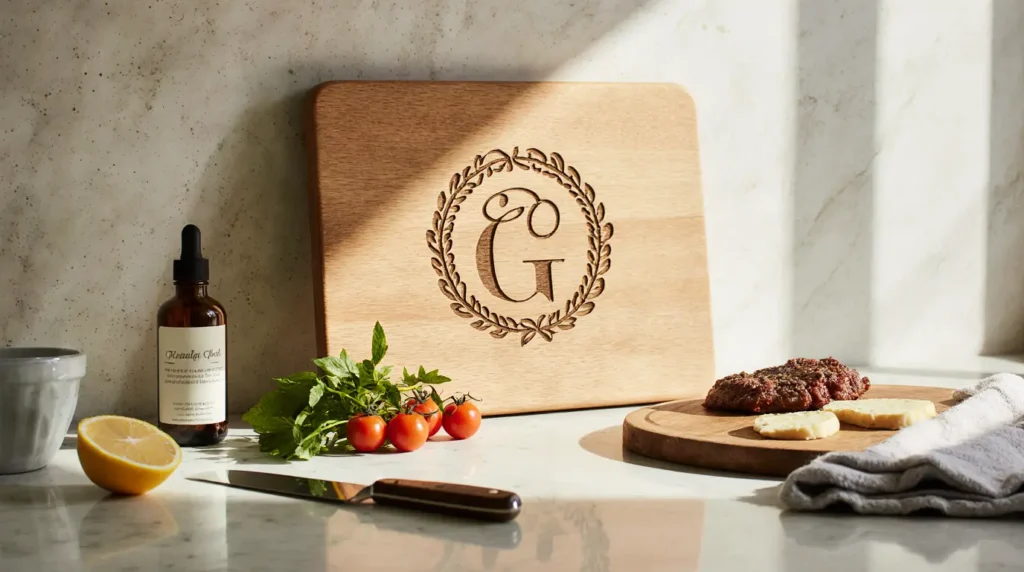
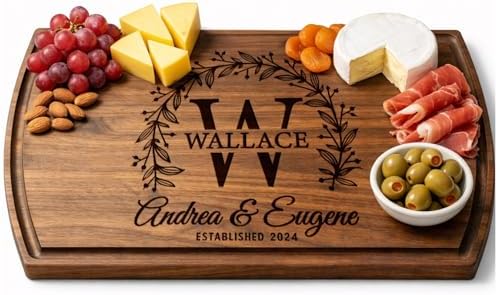
An engraved cutting board is a wooden board, often made of maple, olive, walnut, or bamboo. It has a custom design, name, monogram, or message burned or carved into it. It’s both a useful prep surface and a decorative piece that adds a personal touch to any kitchen.
This review is for home cooks, gift shoppers, and anyone in the United States looking to enhance their kitchen or find a special gift. I share my personal experience and insights on what to look for in a custom wood cutting board or a wooden cutting board with design.
In this article, I’ll look at materials, engraving methods, finishes, care, and gift options. I’ll also discuss alternatives like rubber boards. My aim is to guide you in deciding if an engraved cutting board is the right choice. I’ll cover what to expect in terms of price and quality.


Why I Recommend Personalized Cutting Boards for Home Cooks
I pick personalized cutting boards for their mix of function and flair. They add to the kitchen’s look, whether on counters or hanging. Plus, they’re great for photos and make meal prep look stylish.
Emotional and aesthetic appeal
Adding personal touches like names or special dates makes a cutting board more than just a tool. I display a monogrammed board on my open shelves to bring warmth. These boards can match any kitchen style, from sleek to rustic, and spark conversations at dinner.
Practical benefits in everyday use
A top-notch personalized cutting board offers a stable surface that’s better for knives than glass or stone. It’s also great for serving food, adding to the presentation. I look for boards that are sturdy yet easy to move, perfect for daily use and entertaining.
How personalization adds value for gifting
When I give engraved kitchen gifts, they remind the recipient of the special moment for years. A monogrammed cutting board is a thoughtful gift for many occasions. Options like font and placement let me make it just right for the person or event.
| Situation | Recommended Personalization | Why It Works |
|---|---|---|
| New home | Last name and move-in date | Creates a keepsake that marks a milestone and suits countertop display |
| Professional chef gift | Simple logo or initials | Maintains a professional look while offering a durable, knife-friendly surface |
| Family heirloom | Full family name and small illustration | Designs age well and become meaningful across generations |
| Entertaining host | Engraved serving measurement or monogram | Enhances presentation when used for charcuterie or hors d’oeuvres |
Features That Make a Great Engraved Cutting Board
I look for three key things in a custom wood cutting board: the wood type, engraving method, and finish. Each one affects how the board looks, feels, and stays safe for food.
Wood types and durability: Maple cutting boards are great because they’re tough and have a tight grain. This makes them perfect for certain engraving styles. Walnut boards, on the other hand, have a rich color but might feel softer under heavy use.
Bamboo boards are made from grass and are eco-friendly. They’re hard but can be brittle and might dull knives faster. I choose based on hardness and how well the engraving shows up.
Engraving methods: Laser engraving is precise and works well for detailed designs. Handmade boards have a unique touch but need to be sealed to stay clean. Sellers should tell me about the process and how long it lasts. You can read more about engraving techniques
Finish and food-safe treatments:I only use FDA-approved oils or wax for my boards. The right finish can make the grain look better and the engraving stand out. I avoid finishes not meant for food.
Small details matter too: Non-slip feet keep the board steady, and the finish should stick well if I add pads. A well-made board with clear info about materials and care is a great gift.
engraved cutting board
I search for exact wording when looking for a custom piece. Using “engraved cutting board” in titles and descriptions helps find what I want. This is different from searching for “custom” or “personalized” cutting boards, which might offer more options.
I suggest using the exact term to find shops that provide detailed options. They should offer depth control, font samples, and proof approvals.
I type “engraved cutting board” for a lasting mark, not just a painted name. Sellers who use this term show detailed photos of engraving. They also list depths and examples on different woods.
This makes it easier to filter results and ask for mockups.
Popular design types and best placements
Centered monograms make a cutting board look like art. Lower-right corner engravings are good for everyday use. Full-surface patterns or recipe fragments are great for serving.
Engraving on the reverse side keeps the front clean. It preserves the personal touch with careful prep work.
Monogram style comparisons
I compare monogram styles for different looks. Single initials are simple, while Victorian monograms are elegant. Stacked initials are modern.
Maple shows light engraving well, while walnut needs deeper engraving. Bamboo’s grain can hide fine scripts, so choose bold fonts or deep cuts.
I always ask for a proof before making a purchase. A mockup lets me check the design. Using exact search phrases like “engraved cutting board” helps find sellers with clear previews and consistent finishes.
Comparing Custom Wood Cutting Board Options
I look at size, shape, and build when picking a custom wood cutting board. Small 8×10″ boards are great for serving and light prep. Large 18×24″ boards are perfect for big roasts and heavy chopping.
Thickness matters too. Boards can be 3/8″ for thin serving pieces or 1.5″ or more for heavy-duty use. Thicker boards are less likely to warp and can handle cleavers well. Thin boards are lighter and easier to carry.
Size and thickness considerations
I choose thickness based on how I’ll use it. For daily chopping, I prefer 1″ to 1.5″ slabs for stability. For serving or gifts, a 3/8″ or 1/2″ board is elegant.
End-grain boards are durable but heavier. Edge grain boards are lighter and easier to resurface. I avoid thin boards for heavy prep to prevent warping.
Edge styles, juice grooves, and handles
I like beveled edges for easy lifting and squared edges for a modern look. Handles or cutouts make serving easier. Juice grooves catch drips when carving, keeping counters clean.
Make sure engraving is clear of grooves and handles for best results.
Handmade engraved cutting board vs. mass-produced options
I prefer handmade engraved cutting boards for their quality and lasting designs. Local artisans use better lumber and test finishes for safety. Mass-produced boards are cheaper but may use lower-quality materials and shallow engraving.
Check warranties and return policies before buying. Handmade makers might offer repair or refinishing. Big brands offer broader return windows but less personal service.
To prevent slipping, add rubber feet or request them. For multi-piece designs, ensure engraving matches seams. These details enhance daily use and make great gifts.
Best Engraved Kitchen Gifts and Occasions
I choose engraved kitchen gifts that match the person and the event. They are both useful and look great. Here are ideas for chefs, couples, and new homeowners. I also share tips on messages and monograms, and how to make the unboxing special.
Gift ideas by recipient
For chefs, I pick thick end-grain boards with simple engraving. They last long and don’t get damaged by knives. For couples, a cutting board with their shared last name or a special date is perfect. For new homeowners, a medium serving board with a bold design is great for showing off.
Choosing a personalized message or monogram
I suggest short phrases, initials, or dates for easy reading. Choose fonts that are clear and simple. Avoid small or fancy fonts that might fade or lose detail. Examples include a simple date or initials in a clean block.
Packaging, presentation, and unboxing experience
How you present a gift makes a big difference. Look for sellers who include nice packaging like kraft boxes and branded tissue. Adding extras like oil, feet, or utensils makes it feel complete. A ribbon and a personal note can turn it into a keepsake.
| Recipient | Board Type | Engraving Style | Suggested Add-ons |
|---|---|---|---|
| Professional chef | Thick end-grain, walnut or maple | Subtle name or logo, shallow depth | Cutting board oil, non-slip feet |
| Newlyweds | Large edge-grain serving board | Couple name, wedding date, short recipe line | Branded tissue, ribbon, care card |
| Housewarming host | Medium serving/charcuterie board | Bold monogrammed cutting board at center | Matching utensils, kraft gift box |
| Corporate or event gift | Durable mixed-wood boards | Company logo or short tagline | Custom packaging, care instructions |
Maintenance and Care for Wooden Engraved Cutting Boards
To keep my engraved cutting board in top shape, I follow a few easy steps. These steps protect the wood, maintain the design’s sharpness, and prevent the spread of germs. Let’s explore how to clean, oil, and restore the board, and when to display it instead of using it for prep.

Cleaning and drying to preserve engraving and wood
I wash my boards by hand with warm soapy water right after they’re used. I never put them in the dishwasher or let them soak for too long. This can cause the wood to warp and the engraving to lose its sharpness.
After washing, I dry the board upright. This lets air reach both sides and the engraved grooves. It prevents moisture from getting trapped, which can lead to stains or mildew.
Oiling, sanding, and restoring surface appearance
I oil my cutting board regularly to keep the wood moist. For boards I use often, I apply food-grade mineral oil or butcher block conditioner every one to two months. This makes the wood grain look richer and the engraving more defined.
If the board shows scratches or the engraving fades, I lightly sand it with 220–400 grit sandpaper. Then, I wipe it clean and reapply oil to bring back the shine.

- FOOD GRADE – This butcher block conditioner is lab tested to ensure that it meets food safety standards, and is also col…
- PROTECTION – Use this mineral oil for cutting board restoration and protection to prevent cracking and drying. It also m…
- EASY APPLICATION – This butcher block oil has a push-applicator cap and squeeze-bottle design that makes maintenance a b…
When to use a cutting board for display vs. heavy prep
I save my decorative cutting boards for serving and display. This way, I protect the artwork. For heavy tasks like meat prep, I use a dedicated work board or a rubber cutting board. This prevents deep scratches and keeps the board clean.
I also add rubber feet to my cutting boards. This keeps them stable during use and protects my countertops from scratches.
I always follow safe-use guidelines. I don’t use the same board for raw meat and ready-to-eat foods without a thorough clean. And if a board gets too damaged, I replace or refinish it. These habits help keep my engraved cutting boards looking great and safe to use every day.
Integrating Non-Wood Options and Rubber Cutting Board Notes

I explore how rubber cutting boards compare to wood for heavy kitchen tasks. I find that a natural or synthetic rubber cutting board is ideal for certain jobs. This helps you choose the best option for your needs and budget.
Wooden boards are great for presentation and light chopping. But for heavy butchery, rubber cutting boards are better. They are tough and can heal from small cuts, staying clean with proper care. This makes them popular in professional kitchens for meat and fish prep.

- KITCHEN ESSENTIAL: These cutting boards are expertly designed to provide an exceptional experience, whether for cutting,…
- DURABLE: Crafted from rubberwood, these boards are engineered to maintain their shape over time for long-lasting durabil…
- MODERN DESIGN: Boards feature a reversible surface, perfect for both meal prep and entertaining.
For those who care about sustainability and a soft surface, natural rubber cutting boards are a good choice. They are made from tapped rubber tree latex and are gentle on blades. Synthetic rubber boards offer more options in density and color, and some resist stains and chemicals well.
Before buying, I check the board’s density and if it’s food-safe. Denser boards last longer but are harder to cut into. Softer boards are easier to cut but may not last as long. Look for brands like Asahi or Hasegawa for quality and durability.
I also consider the board’s size and weight. Large, heavy boards are stable but hard to lift and store. Small, light boards are easier to handle but may move during heavy use. Some boards have a wooden top and rubber underside for the best of both worlds.
For heavy-duty use, look for boards with rubber feet or anti-slip backing. These add stability and protect countertops, keeping the wooden surface safe.
Below, I compare common choices to help you find the best rubber cutting board for your needs.
| Attribute | Natural Rubber Cutting Board | Synthetic Rubber Cutting Board | Asahi Rubber Cutting Board | Hasegawa Rubber Cutting Board |
|---|---|---|---|---|
| Source | Sustainably harvested latex | Petrochemical or blended polymers | Manufactured in Japan, professional grade | Manufactured in Japan, consistent density |
| Feel under knife | Softer, more forgiving | Varies; can be firmer | Balanced density, good self-heal | Designed for long-term use, steady resistance |
| Durability | Good; may age naturally | High resistance to chemicals and stains | High durability for pro kitchens | Durable with tight manufacturing tolerances |
| Sanitation | Sanitary when cleaned correctly | Often easier to sanitize and bleach-safe | Meets commercial sanitation needs | Trusted by many commercial chefs |
| Weight | Light to moderate | Range from light to heavy | Typically moderate to heavy | Moderate with uniform thickness |
| Best use | Cooks who value eco-features and forgiving surface | Workflows needing chemical resistance and color-coding | Butchers, chefs in busy kitchens | Long-term heavy use with consistent performance |
| Maintenance tip | Clean with mild detergent; air dry | Can tolerate stronger cleaners; rinse well | Follow maker care guidelines for sanitation | Check weight and dimensions before purchase |
Where to Buy and What to Look For When Ordering
I look for personalized cutting boards in various places. Etsy is great for finding small makers who share their work and customer feedback. For quality and reliable service, I check out Williams Sonoma, Crate & Barrel, and Sur La Table.

Trusted marketplaces, artisan shops, and direct makers
I always read reviews and look at photos before buying. Shops that show detailed photos of their work are trustworthy. Retailers like Williams Sonoma provide important details like food-safe finishes and warranties.
If a shop doesn’t offer clear return policies or show real photos, I don’t buy from them.
Turnaround time, proof approvals, and customization limits
For quick orders, mass-produced boards ship in a few days. Handmade boards take longer, usually one to three weeks for production plus shipping. It’s important to get a digital proof before finalizing the order.
I check the mockup for spelling and capitalization. I also look at customization limits to ensure the design fits the board.
Price ranges for monogrammed cutting board and custom options
Basic personalized cutting boards start at $30–$50. Mid-range handmade boards cost $75–$200, depending on the wood and engraving.
High-end, custom boards can be over $300. I consider the wood, engraving, and extras when deciding on value. I also think about shipping and potential remake costs.
It’s crucial to check if the seller offers a food-safe finish and a return policy. This protects me when I order a custom piece or compare prices.
Conclusion
I suggest an engraved cutting board for its mix of function and style. Maple or walnut is best for most home cooks. They offer durability and clear engraving.
Before buying, ask for a proof and make sure the finish is safe for food. This ensures the board is good for daily use.
Here’s a quick guide to buy the right cutting board: choose the wood and size, pick engraving and font, and check the finish is safe. Decide if it’s for display or heavy use. Also, look at return and delivery times.
Comparing different makers and asking for proofs is smart. Add a care kit with oil and rubber feet. This way, your cutting board stays useful and beautiful.
other for produce or serving. Wooden boards are safe with proper cleaning, but engraved designs can trap juices. For raw meat, a rubber cutting board or non-porous plastic is safer and easier to sanitize.
Engraved Cutting Board FAQs
An engraved cutting board is a wooden board, often made of maple, walnut, or bamboo. It has a custom design, name, monogram, or message burned or carved into its surface. You can choose between laser engraving for precise details or hand-carved for a unique look. It’s both a useful prep surface and a personalized kitchen accessory.
Home cooks, gift shoppers, and anyone looking to upgrade their kitchen should consider a personalized cutting board. It’s perfect for weddings, housewarmings, and gifts for chefs. For heavy-duty meat prep, pair it with a rubber cutting board.
The choice depends on your needs and preferences. Maple is durable and has a tight grain, making it great for engraving. Walnut offers a darker look but is slightly softer. Bamboo is sustainable but can be brittle and dull knives faster. Maple or walnut is usually the best choice for longevity and engraving clarity.
Laser engraving is precise and perfect for logos or fine fonts. Hand-carved or routed engraving adds an artisanal touch but can be more expensive. Laser engraving is faster and more consistent, while hand carving offers uniqueness.
Yes, but it depends on the finish. Reputable makers use FDA-compliant oils or wax blends. Avoid industrial polymer finishes. Always ask about the finish and reapply food-safe oil to maintain the board.
Wash it by hand with warm, soapy water and avoid dishwashers or soaking. Dry it upright for airflow. Reapply food-grade oil every 1–2 months. For light restoration, sand with fine grit and re-oil. Reserve decorative boards for serving and display.
Yes, oiling can darken the wood and temporarily enhance engraving contrast. Repeated oiling maintains the wood and can deepen color over time. Test on a sample or request seller photos to ensure consistent contrast.
Sizes range from small 8×10″ for serving to large 18×24″ for heavy prep. Thickness varies from 3/8″ for thin boards to 1.5″ or more for heavy-duty boards. Thicker boards are better for chopping, while thinner boards are great for presentation.
Yes, placement can impact usability. Centered or full-surface designs are great for display but might hinder chopping. Corner or bottom-right placements are less obtrusive during prep. Some choose reverse-side engraving for a pristine serving face. Verify placement with a proof.
Rubber feet are recommended for stability and to protect counters. They reduce shifting and help air-dry the board. Some makers offer integrated rubber or hybrid designs for both aesthetics and grip. Rubber feet are practical for heavy prep.