
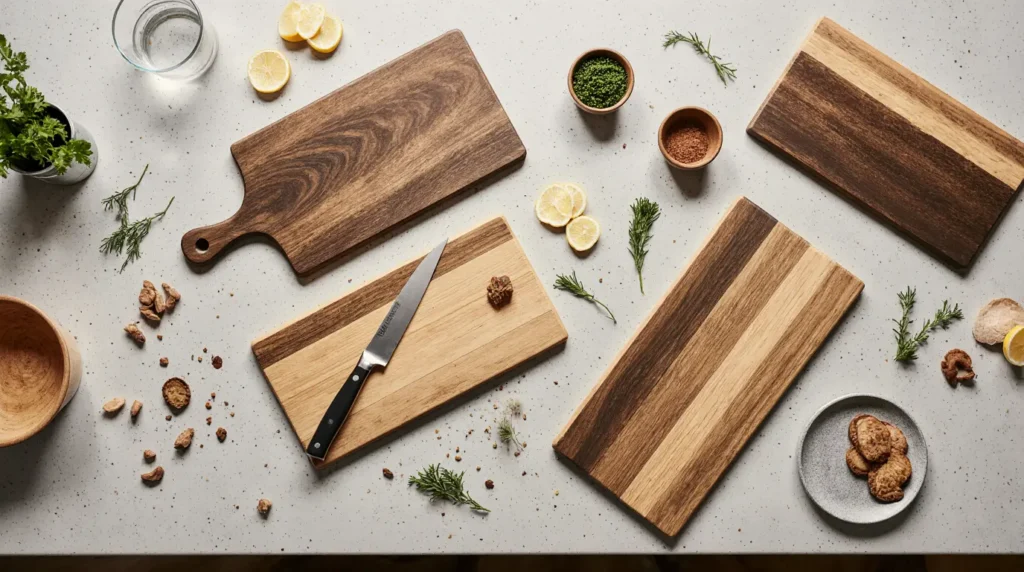
What is the Best Wood for a Cutting Board? is a question that comes up all the time in my kitchen, because the wood you choose directly affects food safety, durability, and how long your knives stay sharp.
In this guide, we’ll break down what is the best wood for a cutting board by looking at hardness, porosity, grain orientation, and maintenance, so you can confidently pick a board that fits your cooking style and keeps your prep surface safe, beautiful, and long lasting.

I’ll show you the most common woods for cutting boards. I’ll talk about their good points and downsides. This will help you choose the best wood for your needs.
Understanding Cutting Board Woods: Why Material Matters
Choosing the right wood for your cutting board is key for food safety and knife life. The wood type greatly affects the cutting board’s performance.
The Impact of Wood Choice on Food Safety
The wood of your cutting board can either attract or repel bacteria. Hardwoods like maple and walnut are safer because they’re less absorbent than softwoods. Important factors for food safety include:
- The wood’s porosity
- The density of the wood grain
- The wood finish
Hardwoods with dense grains are less likely to hold bacteria, making them safer for cutting boards according to food safety guidance from Michigan State University.
For more on cutting boards and food safety, see current guidance from university extensions and USDA-aligned resources.
How Wood Type Affects Knife Durability
The durability of your knives also depends on the cutting board’s wood. Softwoods are softer on knives but less durable. Hardwoods, though harsher, last longer. Consider these points:
- Hardwoods like oak can be too rough on knives.
- Softwoods may need to be replaced more often.
- Hardwoods like maple are gentle on knives and durable.
Knowing how wood choice affects food safety and knife durability helps you choose the best cutting board.
What is the Best Wood for a Cutting Board? Key Factors to Consider
Finding the perfect cutting board wood involves looking at several important traits. When choosing a cutting board wood, think about how it performs, lasts, and keeps you safe, using measures like the Janka hardness test to understand dent resistance..
Hardness and Durability Ratings
The wood’s hardness is key because it affects how long the cutting board lasts. The Janka hardness scale shows how well wood resists dents and wear. Harder woods like maple and walnut are more durable and less likely to get scratched or cut.
A tough cutting board can handle lots of use and cleaning without breaking down.
Porosity and Moisture Resistance
The wood’s porosity is important for fighting moisture, which is key for a cutting board. Low-porosity woods, like maple, are better at keeping bacteria away and are easier to clean. High-porosity woods, like oak, need more care to avoid moisture and bacteria issues.
Knowing how different woods handle moisture helps pick a board that looks good and works well.
Maintenance Requirements
Woods need different levels of care. Some, like teak and walnut, naturally resist moisture and need little upkeep. Others, like cherry, might need oiling to stay looking good and avoid cracking.
Thinking about how much care a wood needs is crucial to keep your cutting board in top shape.
By looking at hardness, porosity, and maintenance, you can choose the best wood for your cutting board. Whether you’re a pro chef or a home cook, the right board can make cooking better and last for years.
End-Grain vs. Edge-Grain: Construction Matters
The way a cutting board is made affects how long it lasts and how well it works.
The classic butcher block you see in professional kitchens is an example of end‑grain construction, where the wood fibers absorb cuts rather than resisting them like a hard surface.
Knowing the difference between end-grain and edge-grain is key. It helps you pick the right cutting board for your cooking.
End-Grain Cutting Boards: Benefits and Drawbacks
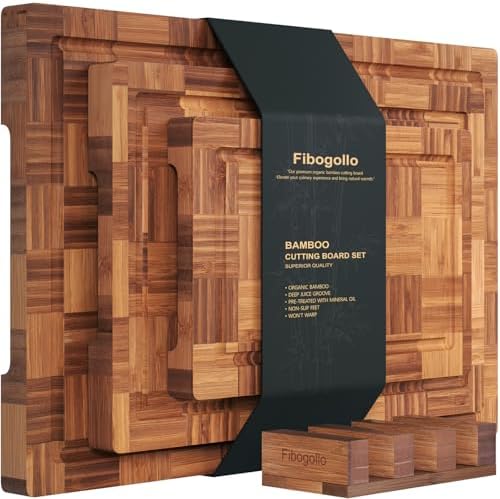
- 【Splicing Craft,Innovative Design】This chopping board features a bamboo unique splicing craft design, crafted with a fin…
- 【Natural Bamboo Material】Crafted from high-quality natural bamboo,each piece is meticulously selected to ensure toughnes…
- 【Bamboo Cutting Boards with Mineral Oil Treatment】 This bamboo cutting board is pre-treated with mineral oil to create a…
End-grain cutting boards have wood pieces with the end facing up. They are tough and nice to knives. The good points are:
- Knife Preservation: They are easy on knives, making them last longer.
- Durability: These boards don’t get scratched or cut easily, keeping them looking good.
But, end-grain cutting boards cost more and need more care than edge-grain ones.
Edge-Grain Cutting Boards: Benefits and Drawbacks

- LONG LASTING DURABLE EDGE GRAIN ACACIA: Our Acacia Edge Grain Cutting Boards are built of durable solid construction, th…
- LARGE SURFACE, REVERSIBLE, VERSATILE: Cut, chop, and dice on this edge grain acacia wood cutting board for all your cutt…
- DEEP JUICE GROOVE, BUILT-IN HANDLES: Say Goodbye to Mess countertop. Our chopping board features a dual-sided wood block…
Edge-grain cutting boards have wood grain running along the surface. They look and feel traditional. The benefits are:
- Aesthetic Appeal: They show off the wood’s natural beauty with a straight grain.
- Cost-Effective: They are cheaper to make, making them a budget-friendly choice.
But, they might not be as kind to knives as end-grain boards. Also, the seams can be weak if not sealed well.
| Feature | End-Grain | Edge-Grain |
|---|---|---|
| Knife Friendliness | High | Medium |
| Durability | High | Medium |
| Aesthetic Appeal | Medium | High |
| Cost | High | Medium to Low |
In conclusion, picking between end-grain and edge-grain cutting boards depends on what you value most. Do you want durability and knife care, or do you prefer looks and a lower price? Thinking about these points helps you choose the best cutting board for you.
Maple: The Gold Standard for Cutting Boards
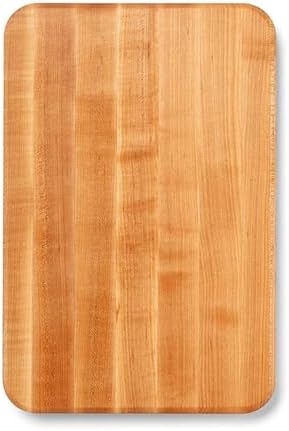
- Wood Cutting Board with Integrated Finger Grips: Elevate your food prep with a Chop-N-Slice series wood cutting board wi…
- Crafted for Your Home: This wooden charcuterie board boasts reversible sides, eased corners, an oil finish, and a level …
- Made for Life: Versatile for different serving and charcuterie-board needs, this 18″L x 12″W cutting board features a 1….
Maple is known as the top choice for cutting boards, especially hard maple (sugar maple), which is dense and fine‑grained. It’s durable, resistant to wear, and has a light, neutral color that suits almost any kitchen.
Looking for a premium maple board? Try the highly-rated John Boos Chop-N-Slice Maple Cutting Board for a classic, durable option.
Both professional chefs and home cooks love maple because it balances hardness, knife friendliness, and low porosity, making it one of the best everyday picks. Many independent tests and reviews highlight hard maple as a reliable, all‑purpose option.
Hard Maple vs. Soft Maple: Important Distinctions
“Maple” covers several species, but the main distinction for cutting boards is between hard maple and soft maple. Hard maple is denser and less porous, which makes it more resistant to cuts, dents, and moisture intrusion under normal kitchen use.
Soft maple is a bit softer and more likely to show scratches and wear sooner, so it’s better suited to lighter or occasional use rather than heavy chopping.
Pros and Cons of Maple Cutting Boards
Pros:
- Durable and resistant to knife marks
- Fine, tight grain that helps limit moisture and bacteria absorption
- Light color that makes it easy to see food and debris while prepping
Cons:
- Can dry out if not oiled regularly
- May show stains if left in contact with strong‑colored foods or water
Price Range and Value Assessment
The cost of maple cutting boards varies depending on size, thickness, and whether it’s end‑grain or edge‑grain. A good maple cutting board can cost between $50 and $200, with thicker end‑grain models at the upper end.
Independent product tests also consistently highlight hard maple boards for everyday kitchen use. Despite the price, maple’s durability and long life make it a worthwhile investment for almost any kitchen.
Walnut: The Elegant Alternative

- Fashionable & Sturdy: The checkered cutting board is carved with a three-dimensional chessboard pattern, spliced with tw…
- Natural Solid Wood & Food Grade Oil Cating: PUREBURST wood cutting boards for kitchen are made of natural solid wood, em…
- High Durability & Easy Maintenance: Kitchen cutting boards are made of natural materials such as walnut and rubberwood, …
Walnut is becoming a top pick for chefs and homeowners who value aesthetics as much as performance. It offers a rich, dark color with beautiful grain patterns that instantly elevate the look of your counter.
As a hardwood, walnut is tough enough for everyday use but typically a bit softer than hard maple, which can be gentler on knives than some very hard tropical species. Some editorial cutting board reviews specifically call out walnut for its balance of looks and performance.
For a functional and beautiful option, check out the Sonder LA Large Walnut Cutting Board with juice groove and elegant grain.
Aesthetic and Functional Properties
Walnut cutting boards are loved for their deep, dark color and unique grain patterns. They bring elegance to any kitchen. The wood’s natural beauty and durability and resistance to wear make it a smart choice for cutting boards.
Pros and Cons of Walnut Cutting Boards
Walnut cutting boards have many benefits, like their aesthetic appeal and toughness. But, they can be denser, which might be tough on knives. Here’s a quick rundown:
| Pros | Cons |
|---|---|
| Attractive dark color and grain pattern | Can be harder on knives due to density |
| Durable and resistant to wear | May require more maintenance than softer woods |
| Antimicrobial properties | Can be more expensive than some other hardwoods |
Price Range and Value Assessment
The cost of walnut cutting boards depends on size, thickness, and craftsmanship. Prices usually range from $50 to $200 for a top-notch walnut cutting board. Although it might be pricier than other materials, walnut’s durability and beauty make it a worthwhile investment for many.
In summary, walnut cutting boards are a great mix of style, durability, and function. They’re a top choice for those looking for a premium cutting board.
Cherry: Beauty Meets Functionality

- Solid Wooden Cutting Board: Elevate your food prep with a John Boos R-Board series wood cutting board. It’s ideal for sl…
- Crafted for Your Home: This thick wooden charcuterie board boasts reversible sides, recessed finger grips, an oil finish…
- Made for Life: Available in 3 different sizes for your serving and charcuterie-board needs, this large wooden cutting bo…
Cherry cutting boards are a great choice for those who want a warm, inviting look without sacrificing performance. Cherry wood has a rich, reddish-brown color that deepens and develops a beautiful patina over time.
It adds elegance to any kitchen and pairs especially well with classic or farmhouse styles. Cherry is often mentioned alongside maple and walnut among premium wooden cutting boards in buying guides and reviews.

Distinctive Characteristics of Cherry Wood
Cherry wood is known for its fine grain and smooth texture. It’s a joy to work with and easy to keep clean. Its density makes it hard enough to handle knife cuts but soft enough not to get too damaged.
One of the coolest things about cherry wood is how it develops a stunning patina as it ages. The wood gets darker and more beautiful, adding charm to your kitchen.
Pros and Cons of Cherry Cutting Boards
Cherry cutting boards are not just pretty; they’re also durable. They have a moderate porosity that helps prevent bacteria growth. But, they can be pricier than other hardwoods and need regular care to stay in top shape.
Key Benefits:
- Aesthetic appeal with a rich, reddish-brown color
- Fine grain and smooth texture
- Develops a beautiful patina over time
Considerations:
- Moderately priced, leaning towards the higher end
- Requires regular maintenance
Price Range and Value Assessment

- Multiple Sizes Available – Choose the perfect fit for your kitchen or gift: Petite Walnut Snack Board (small & thin, ide…
- Premium Wood & Personalization – Crafted from rich Walnut, Cherry, or Maple, each board is laser engraved with your cust…
- Durable & Food-Safe – Built for daily chopping, slicing, and carving, yet elegant enough to serve cheese, charcuterie, o…
The price of a cutting board is important. Cherry cutting boards are in the mid-to-high range. They might not be the cheapest, but their durability and beauty make them a good investment.
In summary, cherry cutting boards are a great choice. They offer both beauty and function, making them a solid option for anyone looking for a new cutting board.
Exotic Woods: Teak, Acacia, and Bamboo
Exotic woods like teak, acacia, and bamboo are great for cutting boards. They bring unique qualities to your cooking.
These woods are loved for their strength and beauty. Let’s explore teak, acacia, and bamboo to see their good and bad sides.
Teak: The Premium Option

- Built for the Grill Master’s Spread: Whether you’re slicing brisket fresh off the smoker this summer or laying out shows…
- Responsibly Sourced. Seriously Built: The Teakhaus professional cutting board is crafted from 100% FSC-certified teak—a …
- Eternal Teak Masterpiece: The Teakhaus wood carving board can go straight from kitchen to table. This teak cutting board…
Teak is known for being very durable and water-resistant. Its natural oils keep it from warping or cracking.
- Advantages: Highly durable, resistant to moisture, and easy to care for.
- Disadvantages: It can be pricey, and its oils might affect some foods.
Acacia: The Budget-Friendly Choice
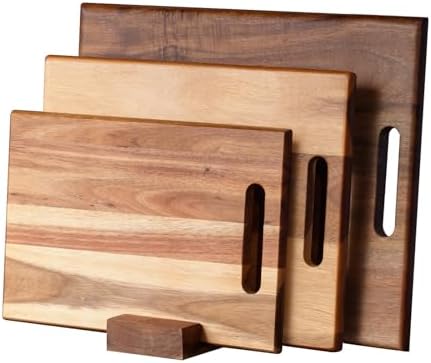
- Natural Acacia Wood, Stable and Long-Lasting: The handle cutting board is crafted from high-quality natural acacia wood …
- Ideal Size: This 3-piece chopping board set comes in three sizes: 16″x12″, 14″x10″, and 12″x8″. It meets the needs of ha…
- Flippable and easy to handle: The wooden cutting board’s handle is hollowed out and ergonomically designed for a secure …
Acacia wood is a good pick for cutting boards. It’s durable and affordable. Plus, it has cool grain patterns that make your kitchen look better.
- Advantages: Durable, affordable, and looks great.
- Disadvantages: Needs more care than teak and can get scratched easily.
Bamboo: Sustainable but Controversial
Bamboo is eco-friendly and sustainable. But, its lasting power as a cutting board is up for debate.
- Advantages: Green, light, and keeps moisture out.
- Disadvantages: May get scratched and cracked, and its durability is not sure.
In summary, teak, acacia, and bamboo each have their own pluses and minuses. Think about durability, eco-friendliness, and cost to pick the best one for you.

- BAMBOO CUTTING BOARD of 3 – Keechee bamboo cutting boards for kitchen include 3 practical sizes: 15×10 in, 12×8 in, and …
- UPGRADE BAMBOO CUTTING BOARDS – Our bamboo cutting boards undergo high-temperature carbonization at 500°F (260°C), reduc…
- STURDY CUTTING BOARDS -Each wood cutting board is made using a cross-laminated bamboo structure, where multiple layers a…
Beech and Birch: Affordable European Favorites

Beech and birch are top picks for affordable cutting boards in many European kitchens. They offer a solid balance of hardness, workability, and price, making them great everyday options.
Their light color and fine to medium grain can also fit seamlessly into most kitchen aesthetics, and their hardness aligns well with general Janka hardness guidance for mid‑range hardwoods.
Beech Wood: Durable and Budget-Friendly

- A BOX INCLUDES: One beechwood cutting board. Measures 16 x 10 x 1 inches.
- NOURISH IS OUR NATURE: bloomhouse is a collection of modern-day kitchen and dining pieces that empower spirits, honor ou…
- ONE TREE PLANTED PER SET SOLD: In partnership with One Tree Planted, bloomhouse will plant a tree around the world for e…
Beech wood is famous for being strong and resistant to wear. It’s perfect for cutting boards that get a lot of use. Its tight grain helps keep it clean by stopping bacteria from growing. Plus, Beech wood cutting boards are affordable, costing less than some exotic hardwoods.
Birch: Lightweight with Good Density

- Made entirely from FSC-certified Birch Wood, our wood cutting boards are eco-friendly, non-toxic kitchen essentials. No …
- FOOD-SAFE FINISH: Featuring a food-safe mineral oil and wax finish, our wooden cutting board ensures not only your safet…
- EFFORTLESS PREP ORGANIZATION: Each food-safe cutting board is designed with a versatile recessed indent that helps keep …
Birch wood is loved for being light and dense. It makes for a smooth cutting surface and is gentle on knives. Birch can also be stained or finished in many ways, making it versatile for different kitchen styles.
Pros, Cons, and Maintenance Considerations
Beech and Birch both have their good and bad points. Beech is tough but heavy, while Birch is light but not as strong. To keep your Beech or Birch cutting board in great shape, oil it regularly to prevent cracks and extend its life.
| Wood Type | Durability | Maintenance | Price Range |
|---|---|---|---|
| Beech | High | Regular oiling | $20-$50 |
| Birch | Medium | Regular oiling | $15-$40 |
In summary, Beech and Birch are great choices for those looking for quality cutting boards without spending a lot. Knowing their strengths, weaknesses, and care needs will help you pick the best wood for your needs.
Caring for Your Wooden Cutting Board
How well you care for your wooden cutting board affects its life and performance. Proper care ensures it stays clean and lasts longer, no matter the wood type.
Seasoning and Oiling Best Practices
Seasoning and oiling are key for your cutting board’s health and durability. Use a food-safe oil like mineral oil or beeswax. Apply a thin layer and let it soak in before wiping off any extra. Do this often, about once a month, based on how much you use it.

- Cutting Board Oil is a deep penetrating 100% Pure USP Food Grade Mineral Oil that is tasteless, odorless, colorless, and…
- Cutting Board Oil rejuvenates dry wood, including: cutting boards, butcher blocks, countertops, wooden bowls and utensil…
- Deeply penetrates into wood pores, bringing out the rich natural wood color and helps prevent drying and cracking
Daily Cleaning and Sanitizing
For daily cleaning, wash your cutting board with mild soap and warm water. Use a soft sponge to avoid scratches. For sanitizing, mix equal parts water and white vinegar. Rinse well and dry with a clean towel to avoid moisture.
Long-Term Maintenance and Resurfacing
As your cutting board ages, it may wear out. To keep it looking good, you’ll need to resurface it sometimes. Lightly sand the surface to remove scratches and old oil. Clean it well after sanding and then apply oil again.
| Maintenance Task | Frequency | Benefits |
|---|---|---|
| Oiling | Monthly | Prevents drying out, maintains appearance |
| Cleaning | After each use | Ensures hygiene, prevents bacterial growth |
| Resurfacing | As needed | Removes scratches, restores surface quality |
By following these care tips, you can make your wooden cutting board last longer and stay in great shape.
Woods to Avoid for Cutting Boards
Some types of wood are not good for cutting boards. The wrong wood can cause problems like poor durability and health risks. When choosing a cutting board wood, it’s key to know what makes a wood good or bad for this use.
Softwoods: Pine, Cedar, and Redwood
Softwoods like pine, cedar, and redwood are not the best for cutting boards. They are soft and can get scratches and cracks where bacteria can hide. Also, softwoods can give food a bad taste or smell, like cedar’s strong scent.
Toxic or Problematic Hardwoods
Hardwoods are usually better for cutting boards, but some are bad or even toxic. For example, some tropical hardwoods have oils or chemicals that are bad if eaten. When evaluating hardwood cutting board options, it’s important to check the wood’s origin and what it’s made of. Even among hardwoods, some are better than others.
Knowing which woods to avoid helps you pick a cutting board that’s both strong and safe for food.
Selecting the Perfect Wood for Your Cutting Board Needs
Choosing the right wood for your cutting board is key for durability and food safety. We’ve looked at many wood types. Some really stand out for their durability and how well they perform.
Hardwoods like Maple, Walnut, and Cherry are top picks for cutting boards. They’re dense and can handle a lot of wear. These woods give you a cutting surface that lasts a long time.
When picking a wood, think about how easy it is to clean, its porosity, and how it looks. By considering these, you can find a cutting board that fits your needs and makes your kitchen better.
In the end, the best wood for your cutting board depends on what you like and how you cook. Choosing a high-quality, durable wood means you’ll have a safe and reliable cutting surface for many years.
Cutting Board FAQ
The best wood for a cutting board depends on several factors, including durability, porosity, and how easy it is to maintain.
Hardwoods like maple, walnut, and cherry are popular because they are dense and resist scratches and cracks well while still being gentle on knife edges.
Hardwood cutting boards are durable and resistant to scratches and cracks, so they can handle heavy daily use in the kitchen.
They also tend to have natural antimicrobial properties and tighter grain, making them a hygienic and reliable choice for food preparation.
To keep your wooden cutting board in good shape, season and oil it regularly with a food-safe oil or board cream.
Clean it daily with mild soap and water, dry it thoroughly, and sanitize it periodically to prevent odors, stains, and bacterial growth.
End-grain cutting boards are made by gluing wood pieces together with the grain facing upwards, letting the knife slip between the fibers.
Edge-grain cutting boards have the grain running horizontally; end-grain boards are more durable and scratch-resistant, while edge-grain boards are less expensive but still perform well.
Yes, exotic woods like teak and acacia can be excellent for cutting boards when properly sourced and finished.
Teak is naturally durable and moisture-resistant, while acacia is more budget-friendly yet still offers solid performance and attractive grain.
Avoid softwoods like pine, cedar, and redwood because they are soft, can splinter, and develop deep grooves that trap bacteria.
You should also avoid toxic or problematic hardwoods like black locust and Osage orange, as their natural compounds can pose health risks.
Yes, you can use a wooden cutting board for both raw meat and vegetables as long as you clean and sanitize it properly after each use.
This helps prevent cross-contamination; regular maintenance and proper care will keep your cutting board safe and hygienic.
Consider your specific cooking habits and counter space when choosing a cutting board.
A larger board gives you more room for prep and less mess, while a thicker board is more durable, more stable, and less likely to warp over time.