Are titanium cutting boards worth it for your kitchen? These premium surfaces range from $45 to $300+, creating confusion among home cooks who’ve seen the marketing hype but remain skeptical about value. Most “titanium” boards aren’t solid titanium—they’re TiN-coated stainless steel with a gold finish. Understanding whether are titanium cutting boards worth it requires examining real-world performance, knife impact, hygiene benefits, and honest trade-offs against traditional materials like wood cutting boards.
What You’re Actually Paying For
The titanium cutting board market splits into two distinct categories with vastly different materials and price points.
TiN-coated stainless steel boards ($45–$80) dominate the consumer market. These feature a titanium nitride coating over stainless steel, creating that signature gold appearance. The coating reaches approximately 2,400 Vickers hardness (HV), offering scratch resistance and antimicrobial properties—but at a significant cost to your knives. This category represents what most buyers encounter when searching “Best Titanium Cutting Boards in 2025 You’ll Love.”
Pure titanium boards ($150–$300+) use medical-grade titanium (Grade 1, 99.89% pure) and command premium prices due to manufacturing complexity. Pure titanium metal measures around 150 HV, softer than the coated alternatives but still substantially harder than maple or walnut. These remain rare in the market, with legitimate certified options difficult to source.
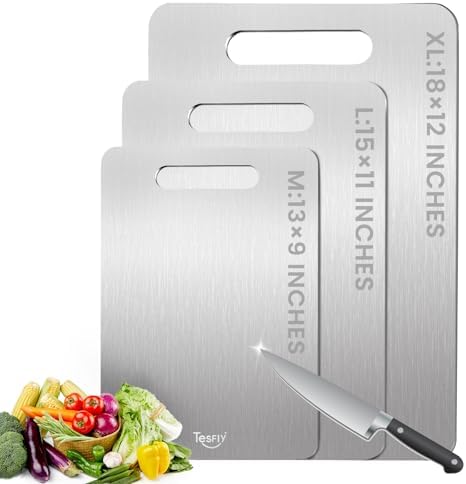
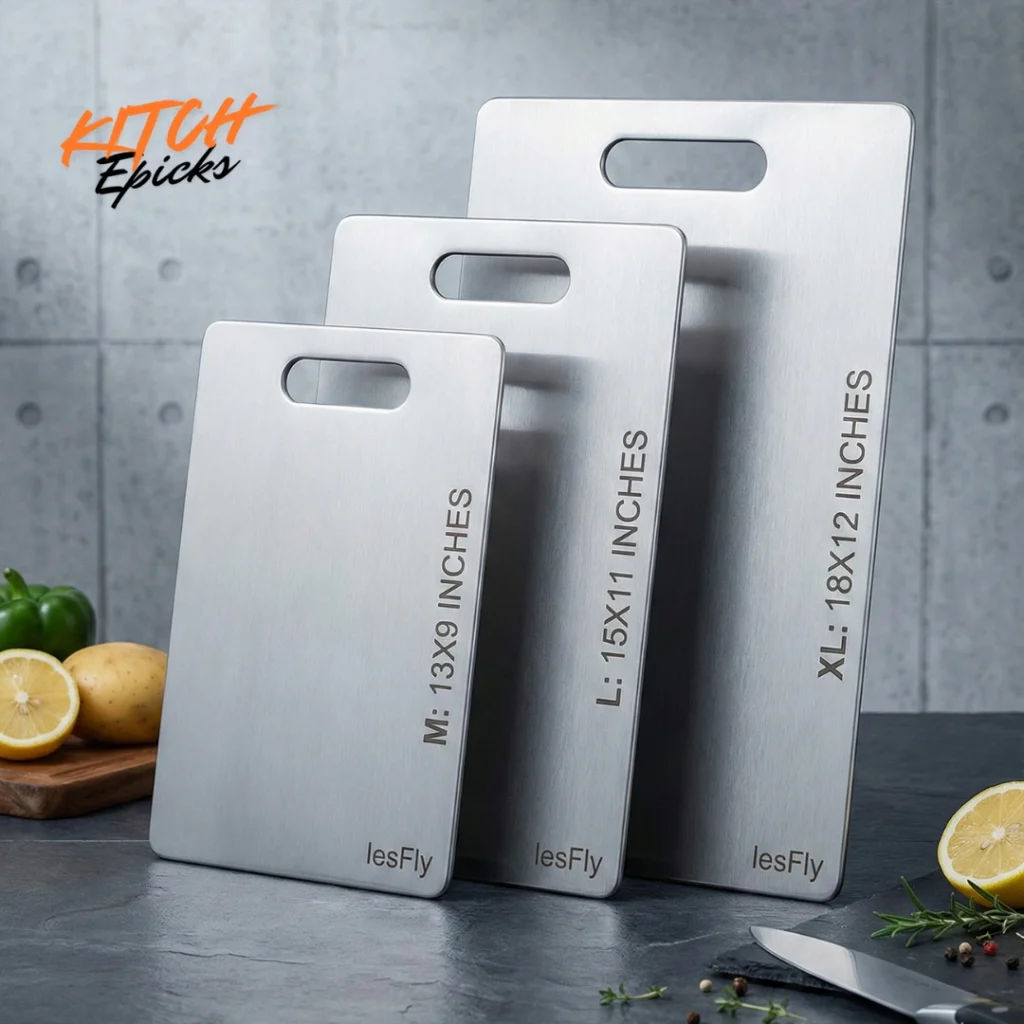
- bout this item Plastic-Free Safety: Our titanium chopping board offers a safer and healthier alternative to plastic boar…
- Crack-Resistant Strength: Bid farewell to the cracking and splintering issues common with wooden boards. Crafted for dur…
- d ingredients for your dishes without lengthy waiting periods
The “titanium” label often functions as marketing rather than a material guarantee. Many budget options under $50 use mixed alloys with minimal actual titanium content, making verification essential before purchase. When evaluating are titanium cutting boards worth it, understanding this material distinction becomes critical to making an informed decision.
Where They Shine (Real Benefits)
- Non-porous, bacteria-resistant surface: Titanium’s natural oxide layer prevents bacterial colonization through its biocompatible properties, making it ideal for handling raw meat or managing cross-contamination in allergy-sensitive households
- Extreme durability and longevity: Won’t crack, warp, split, or stain like wood—titanium alloy boards withstand heavy use with minimal surface wear and can last decades
- Zero maintenance requirements: No oiling cycles, no seasoning treatments, dishwasher-safe cleaning, and resistant to chemicals and high temperatures up to 1,668°F
- Modern aesthetic appeal: Sleek, minimalist design with metallic finish fits contemporary kitchen styles better than traditional wood or plastic boards
- Odor and stain resistance: The non-absorbent surface prevents garlic, onion, or raw protein odors from penetrating, unlike porous wooden alternatives
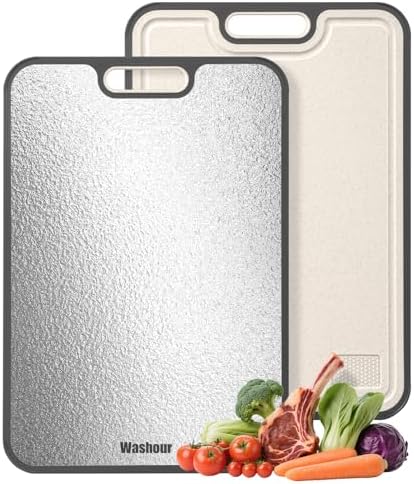
- Non Toxic Cutting Board for Kitchen– SAFE and EASY TO CLEAN: Crafted with high-quality materials, the stainless steel cu…
- Kitchen Cutting Board – A Great Upgrade for Your Home: Say goodbye to the hygiene troubles of old cutting boards. Our st…
- Practical Cutting Boards – Thoughtful Design for Convenience: Designed for real cooking scenarios, this stainless steel …
Where They Disappoint (Key Drawbacks)
- Accelerated knife dulling and edge damage: TiN-coated boards retain only 60% of knife sharpness after 100 cuts, requiring sharpening 2-3 times more frequently than wood cutting surfaces. Metal-on-metal friction causes micro-scratching and edge rolling even though titanium is technically softer than hardened steel blades
- Loud, disruptive metallic noise: The hard surface creates a clanging sound during use that many find annoying in daily cooking environments, especially during high-volume meal preparation
- Slippery cutting surface without grip: The smooth titanium finish offers minimal traction—food slides around during cutting, reducing control and precision compared to textured wood grain
- High price for limited daily functionality: At $45–$300, these boards cost significantly more than high-quality maple or bamboo alternatives that perform better for everyday chopping tasks
- No self-healing properties: Unlike end-grain wood that closes around knife marks, every cut leaves a permanent micro-scratch that accumulates over time
Which Is Better: Titanium or Wood Cutting Board?
Wood cutting boards win decisively for daily kitchen performance, particularly for knife preservation and cutting comfort. Hard maple registers around 40-50 on the Brinell hardness scale compared to titanium’s 70+, meaning wood absorbs knife impact rather than resisting it. This “give” in the surface extends blade sharpness significantly—professional chefs typically sharpen knives every 6-12 months when using wood versus every 2-4 months with titanium.
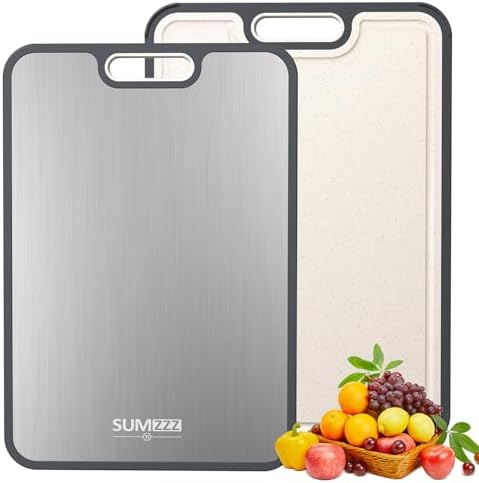
- 【2 IN 1 Cutting Board 】Cutting board is a versatile 2 in 1 kitchen tool, with one side made of food-grade 99.9%Pure Tita…
- 【High Quality】Titanium cutting board completely improves the shortcomings of traditional cutting boards traditional cutt…
- 【Saving-Time Design】Built-in juice groove and garlic grinding area cutting board, deep groove that doesn’t spill liquids…
End-grain wood boards offer a unique self-healing property where wood fibers close back up after knife cuts, maintaining a smooth surface over years of use. This characteristic doesn’t exist with titanium—every cut leaves a permanent micro-scratch that accumulates over time, though the hard surface resists visible gouging better than plastic. Premium options like walnut cutting boards provide both durability and knife-friendly surfaces that titanium cannot match.
Hygiene represents titanium’s strongest advantage. Wood’s porous structure absorbs liquids and requires regular oiling to prevent bacterial growth in deep cuts, while titanium’s non-porous surface eliminates absorption entirely. For households handling raw poultry frequently or managing severe food allergies, this difference matters substantially. However, research shows properly maintained hardwood—especially maple—possesses natural antimicrobial properties that inhibit bacterial growth, narrowing the hygiene gap when care routines are followed.
Maintenance demands favor titanium significantly—no oiling, no conditioning, dishwasher-safe cleaning. Wood requires hand-washing, periodic mineral oil treatments, and occasional sanding to remove deep cuts. Exotic woods like olive cutting boards demand even more careful maintenance despite their elegant appearance. For time-strapped cooks, this 10-15 minutes of monthly maintenance may tip the scale toward titanium despite the knife trade-off.
If you decide titanium matches your needs, explore options in our comprehensive guide to Best Titanium Cutting Boards in 2025 You’ll Love for specific product recommendations.
Cost-effectiveness depends entirely on usage patterns. A quality maple board costs $40-80 and lasts 10+ years with proper care, comparable to titanium’s purchase price but with superior knife performance. Titanium’s longevity advantage only matters if you frequently neglect maintenance—the board itself may outlast wood, but your knives will require professional sharpening services 2-3 times more often, adding $60-90 annually to long-term costs. When weighing are titanium cutting boards worth it from a financial perspective, factor in these hidden sharpening expenses.
What Do Chefs Think of Titanium Cutting Boards?
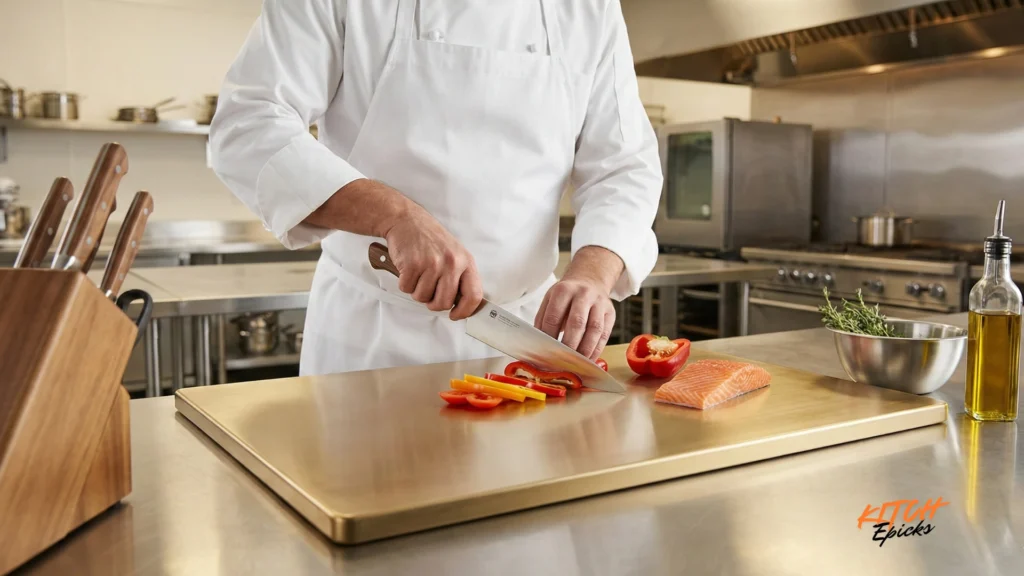
Professional chefs overwhelmingly favor wood or commercial-grade rubber over titanium for restaurant kitchen environments. The culinary industry prioritizes knife edge retention above all else—a dull knife creates safety hazards, slows prep work, and produces inconsistent cuts that affect food presentation and cooking evenness. Titanium’s extreme hardness conflicts directly with this priority, making the question “are titanium cutting boards worth it” easy to answer in professional settings: almost never.
In restaurant settings, commercial rubber cutting boards dominate for sanitation reasons. Commercial-grade rubber (not household plastic) offers similar non-porous benefits to titanium while remaining significantly softer on knife edges. These boards can be refinished with sandpaper when scored, dishwasher-sanitized at high temperatures, and replaced affordably when worn—practical advantages that matter more than titanium’s superior scratch resistance.
Chefs who’ve tested titanium boards consistently cite the same frustrations: the metallic clang during high-volume prep becomes unbearable in professional environments; food slides across the slick surface, slowing precision knife work; and the accelerated knife dulling creates bottlenecks when multiple cooks share blade sets during service. One professional review noted that after extensive testing in both home and restaurant contexts, the board “solves problems you didn’t know you had while creating problems you can’t ignore”.
The subset of chefs who appreciate titanium boards typically use them for specialized applications only. Raw protein portioning benefits from the zero-absorption surface—no odor transfer between salmon, chicken, and beef service. Charcuterie and cheese presentation leverages titanium’s aesthetic appeal for front-of-house displays. Some pastry chefs favor the smooth, cool surface for chocolate work and dough rolling, though dedicated marble or granite achieves similar results at lower cost.
Notably absent from professional kitchens: titanium as a primary prep surface. Even advocates acknowledge it’s a supplementary tool, not a replacement for traditional materials. The consensus among culinary professionals mirrors home cook sentiment: titanium cutting boards serve narrow use cases well but fail as general-purpose workhorses. For everyday cooking demands—vegetable prep, protein butchery, herb mincing—wood’s knife-friendly surface and rubber’s durability-hygiene balance remain unmatched by titanium’s sterility-first design.
Who Should Buy One? (Ideal Use Cases)
Determining are titanium cutting boards worth it depends entirely on your specific kitchen needs and priorities.
Best suited for: Design-focused kitchens prioritizing modern aesthetics over daily performance; health-conscious users with compromised immune systems or severe food allergies requiring maximum sterility; light-duty tasks like slicing cheese, bread, charcuterie boards, or pre-cooked proteins where knife preservation matters less; outdoor enthusiasts needing indestructible camping or RV cutting surfaces.
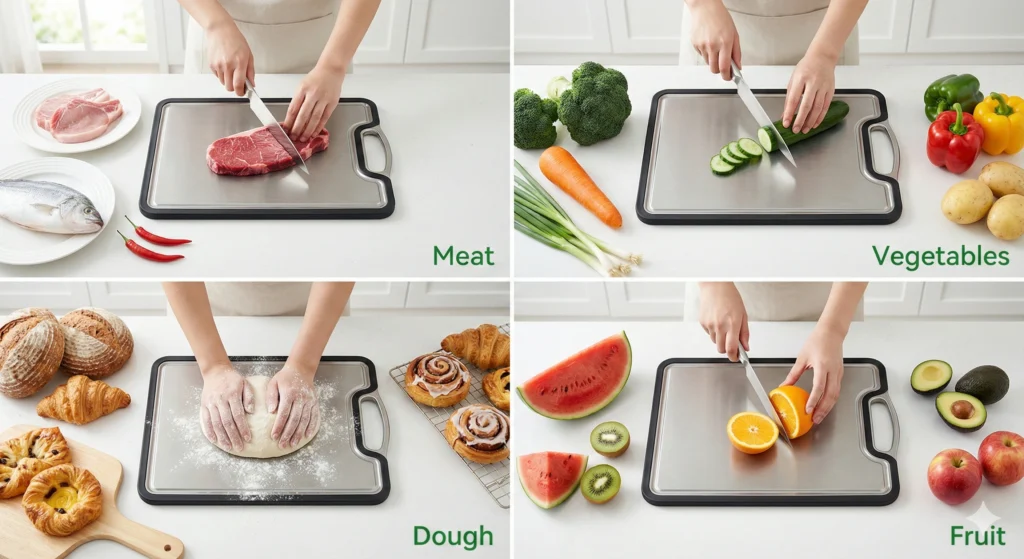
Not recommended for: Daily meal preppers who chop vegetables and proteins regularly; owners of Japanese or high-carbon steel knives which dull faster on hard surfaces; budget-conscious cooks who can’t justify 3-4x sharpening frequency; anyone who values quiet, knife-friendly prep work; home cooks satisfied with traditional wood options.
If you decide titanium matches your needs, explore options in our comprehensive guide to Best Titanium Cutting Boards in 2025 You’ll Love for specific product recommendations.
Final Verdict: Worth It—If It Matches Your Needs
So, are titanium cutting boards worth it? For most home cooks, a high-quality maple board offers superior daily performance, better knife preservation, and lower long-term maintenance costs. Traditional wood surfaces provide the optimal balance of functionality, knife care, and value for everyday cooking tasks.
But if you prioritize sterility over knife longevity, appreciate modern design, accept frequent sharpening as the trade-off, and use your board primarily for light prep work—a TiN-coated titanium board justifies the $50–$80 price range for specialized use cases. The antimicrobial advantages are genuine, maintenance is virtually nonexistent, and durability exceeds all organic materials.
Pure titanium boards at $150–$300+ remain a luxury purchase with marginal practical benefits over coated alternatives. The antimicrobial and durability advantages are real, but they don’t compensate for the knife dulling, noise, and cost unless hygiene is your absolute top priority.
The bottom line: Are titanium cutting boards worth it? Only if your kitchen priorities align with their strengths—sterility, zero maintenance, and modern aesthetics—while accepting their significant compromises in knife care and cutting experience. For traditional cooking performance, explore what is the best wood for a cutting board to find options that serve most home cooks better.
For a full comparison of materials, top real-world product picks, and safety details, see our complete titanium cutting boards buyer’s guide.