
I still remember the day I invested in my first premium titanium cutting board. It felt like a promise—a commitment to a healthier, more organized kitchen life. That sleek surface represented a step up from my old, stained plastic and worn wooden options.

That promise, however, comes with a simple responsibility. To protect your investment and ensure top-notch food safety, proper care is non-negotiable. If you’re still deciding whether a titanium board is right for you, check out my guide on whether titanium cutting boards are worth the investment. This material’s non-porous nature is a game-changer for hygiene, but it still deserves consistent attention.
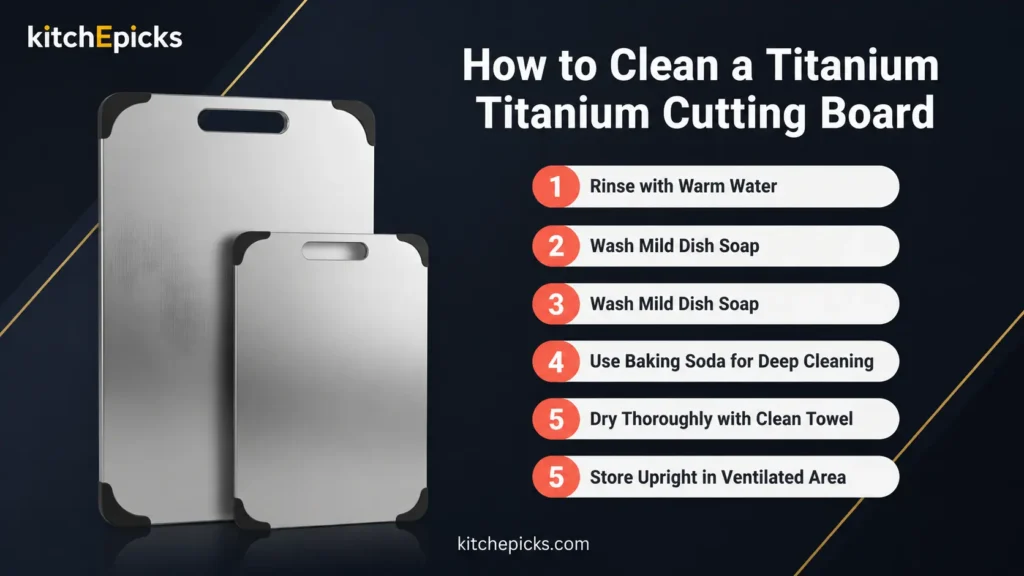
In this guide, I’ll walk you through the entire process of how to clean a titanium cutting board. We’ll cover everything from a quick rinse after preparing dinner to deeper sanitizing methods. My goal is to help you maintain that pristine look and optimal performance for years to come.
By following these straightforward steps, you’ll ensure your cutting board remains a safe, reliable partner in your culinary adventures. Let’s get started on preserving that brilliant titanium finish.
Materials and Tools for Cleaning Your Titanium Cutting Board
Proper maintenance begins with gathering the appropriate cleaning materials for your kitchen tool. Having the right supplies ensures effective care without damaging the surface.
I recommend organizing your tools into two categories. This approach simplifies the process and keeps your workspace efficient.
Everyday Cleaning Essentials
For daily use, you’ll need mild dish soap and warm water. These basic materials handle most routine tasks effectively.
A soft sponge or microfiber cloth is essential. These gentle tools prevent scratches while ensuring thorough cleaning.
Always have a clean drying rack or towel nearby. Proper drying prevents bacterial growth in your kitchen.
Optional Deep Cleaning Supplies
For tougher jobs, keep baking soda on hand. This natural abrasive lifts stubborn stains gently.
White vinegar works well for odor removal. Dilute it with water before use on your titanium cutting board.
A soft-bristled brush helps with textured surfaces. Most smooth boards won’t need this tool regularly.
Your titanium cutting board is dishwasher safe. This offers convenient cleaning when you’re short on time.
Immediate Cleaning Steps After Use
Post-meal prep care starts immediately to ensure optimal hygiene and longevity. This routine prevents food particles from setting and maintains your kitchen tool’s pristine condition.

Consistent attention after each use forms the foundation of proper maintenance. These simple actions take just minutes but deliver significant benefits over time.
Rinse and Soap Application
Begin by rinsing the surface under warm running water. This initial step removes loose debris before it can harden. Gentle water flow effectively clears food remnants.
Apply a small amount of mild dish soap across the entire area. A soft sponge distributes the solution evenly. Circular motions ensure thorough coverage without excessive pressure.
This gentle scrubbing technique protects the material while removing contaminants. Even cleaning prevents buildup in hard-to-reach spots.
Drying Techniques to Prevent Bacteria Growth
Thorough rinsing follows the washing process. Remove all soap residue to maintain food safety standards. Clean water ensures no chemical traces remain.
Immediate drying is crucial for preventing moisture retention. Use a clean towel or place the item on a drying rack. Proper air circulation discourages bacterial development.
This final step completes the hygiene cycle. Your kitchen surface remains ready for future culinary tasks.
How to Clean a Titanium Cutting Board: Techniques for Long-Term Use
Beyond routine care, your premium surface deserves periodic intensive attention to maintain its pristine condition. Even durable materials benefit from thorough sessions targeting what daily routines might miss.
While wooden boards like walnut require oil conditioning, titanium needs different deep cleaning approaches. Weekly deep treatment removes embedded residues and stubborn odors that accumulate over time.
Weekly deep treatment removes embedded residues and stubborn odors that accumulate over time. This practice ensures your titanium cutting board remains hygienic and odor-free.
Using Baking Soda and Vinegar for Stubborn Stains
Create a powerful paste by mixing baking soda with water until thick and spreadable. Apply this mixture evenly across the entire board, focusing on areas with frequent food contact.
The paste acts as a gentle abrasive that lifts stubborn grime without damaging your cutting board. Pay special attention to visible stains for optimal results.

Employing a Soft-Bristled Brush on Textured Areas
Use a soft-bristled brush to gently scrub the paste using circular motions. This technique effectively cleans textured spots and corners where particles hide.
For persistent odors from pungent food items, consider a vinegar rinse. A 1:1 mixture of white vinegar and water neutralizes smells naturally.
Complete the process with a warm water rinse to remove all residue. Thorough drying prevents moisture issues and maintains your clean titanium surface.
This comprehensive cleaning approach keeps your board in excellent condition for years of reliable use.
What Not to Do: Avoiding Cleaning Mistakes
Protecting your investment means knowing what to avoid as much as what to do. Simple missteps can compromise the integrity and appearance of your premium kitchen tool over time.

Prevention is the best strategy for maintaining a pristine and hygienic workspace. Let’s review the key pitfalls to steer clear of.
Steering Clear of Harsh Chemicals
Aggressive cleaners like bleach or ammonia are a major threat. These corrosive ingredients can degrade the protective finish.
They also pose a potential health risk if not rinsed completely. Stick to mild dish soap for everyday cleaning and overall safety.
Avoiding Abrasive Scrubbers and Steel Wool
Rough pads and steel wool are enemies of a smooth surface. They create tiny scratches that dull the shine.
These micro-abrasions can also trap food particles. Always use a soft sponge or cloth to preserve the board‘s condition.
Other critical errors include:
- Improper dishwasher placement: Keep it away from the heating element to prevent warping.
- Extended soaking: Unlike wood, prolonged water immersion offers no benefit and can dull the finish.
- Overusing acidic solutions: Frequent vinegar use can slowly erode the titanium sheen.
- Ignoring cross-contamination: Always wash between preparing different food types, like raw meat and vegetables.
Avoiding these habits ensures your titanium cutting board remains a safe, beautiful centerpiece in your kitchen for years.
Maintenance Tips to Preserve Your Titanium Cutting Board
Long-term care for your kitchen tool revolves around immediate action and smart organization. Consistent habits protect your investment and ensure top food safety.

These simple practices transform upkeep from a chore into a seamless routine. They preserve both function and appearance over time.
Regular Washing Versus Dishwasher Use
I recommend hand washing for daily use. This method lets you target specific areas and control the process. It helps maintain the surface’s pristine condition.
The dishwasher offers convenience for busy days. Alternate between methods for the best maintenance results. Always clean promptly after each meal prep.
Proper Storage Practices to Prevent Moisture
Complete drying is crucial for preventing moisture issues. Use a clean towel immediately after rinsing. Then store the item upright in a dry, ventilated spot.
This position allows air circulation around the entire board. It stops water from pooling and promotes good hygiene.
I also suggest designating sides for different foods. Use one for raw meats and the other for produce. This strategy greatly reduces cross-contamination risks between kitchen tasks.
Avoid heavy-impact jobs like chopping frozen items. These can damage the surface and complicate future maintenance. Your titanium cutting board will thank you for the gentle care.
How to Clean Titanium Cutting Board: Best Practices
Mastering proper care transforms your premium kitchen tool into a lasting investment. These essential habits ensure your surface remains hygienic and functional for years.

Establishing a consistent routine is the foundation of effective maintenance. I always rinse my surface immediately after meal preparation. Thorough washing with mild soap follows every use.
Complete drying before storage prevents moisture issues. This simple three-step process takes minutes but delivers significant long-term benefits.
Gentle, food-safe products preserve the material’s integrity. Avoid harsh chemicals that might seem more effective initially. Natural solutions like baking soda handle stubborn residues safely.
Periodic deep treatment sessions address accumulated odors. I schedule these intensive cleanings monthly. They complement daily care without damaging the finish.
Regular inspection identifies areas needing extra attention. Look for residue buildup or surface changes during routine washing. Proactive care prevents minor issues from becoming serious problems.
| Maintenance Aspect | Daily Routine | Monthly Deep Care |
|---|---|---|
| Cleaning Method | Mild soap and warm water | Baking soda paste or diluted vinegar |
| Time Investment | 2-3 minutes after use | 10-15 minute session |
| Primary Benefit | Immediate hygiene maintenance | Stubborn residue removal |
| Storage Position | Upright in ventilated space | Complete air drying required |
Proper storage means ensuring complete dryness before putting the item away. An upright position in a well-ventilated area promotes air circulation. This practice safeguards against bacterial growth.
The time invested in these practices is minimal compared to the rewards. You’ll enjoy a reliably hygienic prep surface and extended product lifespan. Consistent care unlocks the full advantages of this modern kitchen choice.
Understanding the Advantages of Titanium in the Kitchen
When selecting kitchen essentials, the underlying material science matters immensely for performance. My experience with various cutting boards has shown that titanium offers a unique set of benefits. These advantages fundamentally improve food safety and the overall cooking experience.
This knowledge helps justify the care routines we’ve discussed. Preserving these inherent properties ensures your tool remains a top performer for years.
Non-Porous Surface and Bacteria Resistance
The most significant benefit I’ve found is its completely non-porous surface. Unlike wood or plastic, it doesn’t absorb liquids, food juices, or odors. For comparison, traditional wood cutting boards require different care routines due to their porous nature. This creates a natural barrier against bacteria penetration. The USDA recommends non-porous cutting board materials because they are easier to clean and sanitize effectively. This creates a natural barrier against bacteria penetration.
Titanium is inherently hostile to microbial growth. It provides a safer zone for food prep without chemical coatings. Traditional plastic develops grooves that trap particles, but this material resists such scarring.
Stains and smells from pungent foods simply rinse away. This is a stark contrast to other materials that retain contaminants.

Enhanced Durability and Knife-Friendliness
The durability of these boards is exceptional. They resist scratches and will never rust or corrode, even with daily use. Titanium’s natural corrosion resistance comes from a thin protective oxide layer that forms on its surface, making it one of the most durable metals for kitchen applications. This corrosion-proof nature guarantees long-term reliability.
Surprisingly, titanium cutting is gentle on knife edges. The metal is softer than steel blades, helping maintain their sharpness. This is a major advantage over glass or ceramic surfaces.
Choosing this option is also a sustainable decision. It offers a planet-friendly, reusable alternative to disposable plastic cutting boards. If you’re exploring other durable options, rubber cutting boards also offer excellent knife-friendliness and quieter chopping. The thoughtful design and material properties make it a worthwhile investment for any kitchen. The thoughtful design and material properties make it a worthwhile investment for any kitchen.
Proper Kitchen Hygiene: Storage and Cross-Contamination Prevention
A truly hygienic kitchen requires more than just surface-level cleaning. Proper storage and handling complete the safety cycle for all your kitchen tools.

I focus on creating systems that prevent bacteria transfer during food prep. This approach ensures comprehensive safety for every meal.
Designating Sides for Specific Foods
I assign one side of my cutting board exclusively for raw meats. The opposite side handles vegetables and ready-to-eat items.
This simple practice dramatically reduces cross-contamination risks, following CDC food safety guidelines that emphasize keeping raw meats separate from other foods.
Between tasks, I always wash and dry thoroughly. This maintains separation even when preparing multiple ingredients.
Safe Placement and Air Drying Techniques
Proper drying is essential for preventing microbial growth. I stand my titanium cutting board upright in a ventilated space.
This position allows air circulation around both surfaces. It prevents moisture buildup that encourages bacteria development.
I also sanitize high-touch areas like faucet handles and drawer pulls. Comprehensive hygiene extends beyond the cutting board itself.
These practices work together to create a safer food preparation environment. They complement regular cleaning for complete kitchen safety.
Advanced Care for Premium Titanium Boards
Owning a premium titanium cutting board elevates your kitchen routine, and with that comes the opportunity for advanced maintenance. If you’re still deciding which board to purchase, my Titanium Cutting Board: Ultimate Buyer’s Guide (2025) covers all the top brands and features. Models like those from ChopChop USA, crafted from aerospace-grade material, offer exceptional durability.
This superior design deserves specific attention to maintain its performance for many years. A little extra effort ensures it remains a centerpiece in your home.
Regular Inspection for Residue and Buildup
I make it a habit to inspect my board weekly under bright light. This simple check helps spot subtle residue or water spots early.
Run your clean fingers across the surface. Feel for any sticky areas, especially near the edges. Catching buildup promptly makes it easier to clean.
This proactive approach prevents minor issues from becoming stubborn problems. It keeps your cutting boards looking and feeling new.
Tips to Extend the Board’s Lifespan
Rotate the sections you use most frequently for chopping. Distributing wear evenly across the surface prevents localized damage over years.
For dual-sided boards, care for each material appropriately. The titanium side is incredibly resilient, while the wheat-fiber side may need gentler handling.
These simple tips significantly enhance the long-term durability of your investment. Your titanium surface will reward you with decades of reliable service in the home.
| Care Aspect | Inspection Focus | Lifespan Benefit |
|---|---|---|
| Surface Feel | Check for sticky residue | Prevents permanent staining |
| Visual Check | Look for water spots | Maintains aesthetic appeal |
| Usage Rotation | Monitor wear patterns | Ensures even surface longevity |
Overcoming Common Pitfalls in Board Cleaning
Many users unknowingly develop habits that undermine their board’s longevity. I’ve identified several frequent errors that complicate what should be an easy clean process.
Inconsistent schedules create unnecessary work. Skipping immediate washing allows food residues to harden. This leads to staining issues that require intensive scrubbing later.
Aggressive scrubbing is another major concern. People often believe harder pressure yields better results. Gentle motions with proper tools actually preserve the surface better.
Using incorrect products damages the material over time. Harsh chemicals degrade the finish while abrasive pads create micro-scratches. Stick to mild solutions for safe maintenance.
Inadequate drying invites hygiene concerns. Even non-porous surfaces benefit from thorough moisture removal. Proper air circulation prevents bacterial development.
Neglecting deep sessions allows invisible residue accumulation. Periodic intensive treatment maintains optimal performance. Combine daily care with monthly thorough attention.
Improper storage compromises condition. Avoid stacking damp items without ventilation. Upright positioning in open spaces ensures complete drying.
Correcting these patterns establishes more effective routines. Your kitchen tool will reward you with years of reliable service.
Conclusion
Maintaining a pristine kitchen workspace requires consistent attention to your essential tools. This guide has shown that caring for a titanium cutting board is a straightforward process.
Simple routines, from quick rinses to weekly deep sessions, ensure peak condition. This manageable maintenance protects your investment and guarantees top hygiene.
These surfaces offer clear benefits over traditional wood or plastic options. Their non-porous nature resists bacteria and stains effectively.
Establishing good habits now prevents stubborn residue buildup later. Your efforts will be rewarded with years of reliable service.
Consider a high-quality option like those from ChopChop USA for superior durability. Start implementing these tips today for a safer, more enjoyable cooking experience in your home.
FAQ
Is it safe to put my titanium cutting board in the dishwasher?
I do not recommend using a dishwasher for my board. While the material itself is durable, the intense heat and harsh detergents can degrade the surface over time. Hand washing with warm water and mild soap preserves its non-porous surface and ensures a longer lifespan for my kitchen tool.
How do I remove stubborn stains or lingering food odors?
For deep cleaning, I create a paste using baking soda and a little water. I gently scrub the area with a soft sponge or cloth, then rinse thoroughly. This method effectively tackles residue and odors without scratching the surface, maintaining both safety and hygiene for food prep.
Can I use abrasive scrubbers or steel wool on this surface?
Absolutely not. I avoid abrasive scrubbers and steel wool at all costs. These materials can create micro-scratches that compromise the board’s integrity. I stick to a soft sponge or cloth to protect the surface and prevent any potential for bacteria to hide in scratches.
What is the biggest advantage of a titanium board over plastic or wood?
The main benefit I’ve found is its non-porous nature. Unlike wood or plastic, it doesn’t absorb moisture or harbor bacteria from foods like raw meats. This design makes it incredibly easy to clean and significantly enhances kitchen safety by reducing the risk of cross-contamination.
What is the best way to dry and store my board?
After washing, I always dry it immediately with a clean towel. I then store it upright in a dry, well-ventilated area. This practice prevents moisture buildup, which is crucial for maintaining hygiene and preventing warping or damage over years of use.