
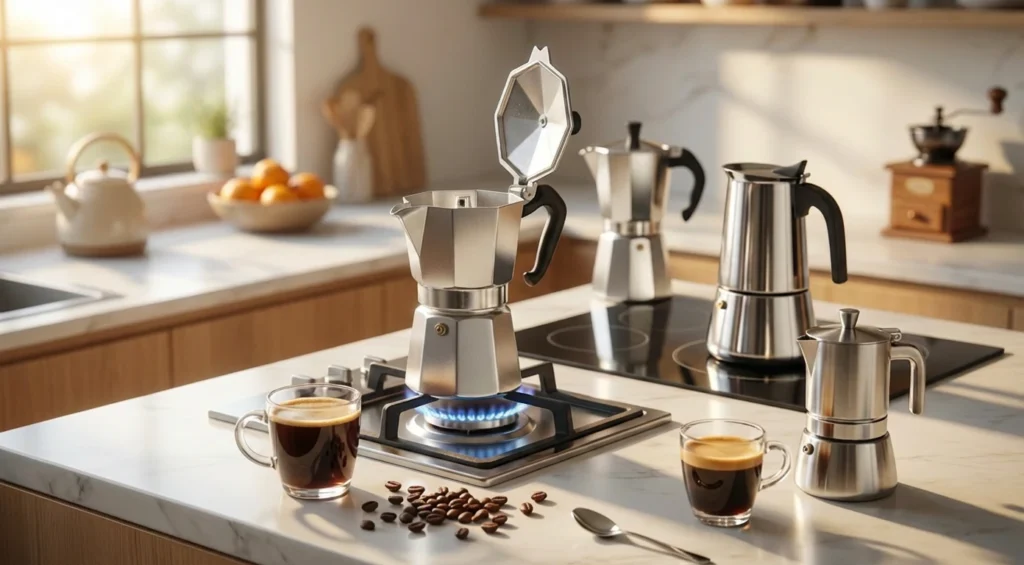
Moka pots—also called stovetop espresso makers—are experiencing a renaissance in 2026 as coffee lovers rediscover the joy of brewing rich, concentrated coffee without expensive machines. These iconic Italian brewers produce bold, espresso-like coffee using simple physics and cost a fraction of what you’d spend on an espresso machine. Whether you’re seeking an authentic morning ritual or a budget-friendly way to make lattes at home, moka pots deliver cafe-quality results with minimal investment.
What Is a Moka Pot (Stovetop Espresso Maker)?

A moka pot and a stovetop espresso maker are identical brewing devices that produce concentrated, espresso-style coffee on your stove. Invented by Italian engineer Alfonso Bialetti in 1933, this ingenious three-chamber design revolutionized home coffee brewing by making strong coffee accessible without electricity or complex machinery. The original Bialetti Moka Express remains the world’s most popular coffee maker, with over 300 million units sold globally since its introduction.
The brewing mechanism relies on three distinct chambers working in harmony. The bottom chamber holds water, the middle section contains a filter basket filled with ground coffee, and the top chamber collects the finished brew. As water heats in the base, steam pressure forces it upward through the coffee grounds and into the upper chamber, extracting rich flavors and oils along the way. This pressurized extraction creates a concentrated coffee that’s stronger than drip or French press but distinct from true espresso.
The beauty of moka pots lies in their simplicity—no moving parts, no electronics, just elegant engineering that transforms heat into pressure. This reliability has made them camping favorites and daily drivers in millions of kitchens worldwide. The iconic octagonal aluminum design isn’t purely aesthetic; it ensures even heat distribution across the base for consistent extraction every time.
How Moka Pots Work vs Espresso Machines
The fundamental difference between moka pots and espresso machines comes down to pressure generation. Moka pots create approximately 1.5 to 2 bars of pressure through steam, while espresso machines use electric pumps to generate 9 bars of pressure for true espresso extraction. This pressure difference means moka pots produce strong, concentrated coffee rather than authentic espresso—though the distinction matters more to purists than casual drinkers.
Because of the lower pressure, moka pot coffee doesn’t naturally develop crema—the golden foam layer that tops properly pulled espresso shots. The resulting brew is rich and full-bodied but lacks the thick, syrupy consistency and complex layering of cafe espresso. However, for milk-based drinks like lattes and cappuccinos, this difference becomes negligible once you add steamed milk.
The 9Barista stands as the notable exception in the stovetop category. This precision-engineered device uses a twin-boiler system to achieve true 9-bar pressure on a stovetop, producing authentic espresso complete with crema. While it costs significantly more than traditional moka pots ($400-480 versus $20-70), it bridges the gap between stovetop convenience and espresso machine performance for serious home baristas.
Moka Pot vs Drip, Pour-Over, and French Press
Moka pots occupy a unique position in the coffee brewing spectrum, producing results dramatically different from other popular methods. Drip coffee and pour-over techniques create cleaner, brighter cups with more nuanced flavor profiles—ideal for appreciating single-origin beans with floral or fruity notes. French press coffee delivers heavy body and prominent oils with some sediment, offering rich mouthfeel but less clarity than filtered methods.
Moka pot coffee sits between these extremes with concentrated, bold flavors and full body that approaches espresso intensity. The metal filter allows natural oils to pass through while blocking most sediment, creating a heavier texture than paper-filtered methods but cleaner than French press. This makes moka coffee particularly well-suited for milk drinks, where you need enough intensity to cut through steamed milk without becoming muddy or bitter.
The brewing time also differs considerably—moka pots complete extraction in 3-6 minutes depending on your method, while pour-over takes 3-4 minutes, French press steeps for 4 minutes, and drip coffee requires 5-8 minutes. For morning routines, this speed advantage makes moka pots attractive alternatives to espresso machines when you want strong coffee quickly without the complexity or cost of pressurized systems.
Is a Moka Pot the Same as a Stovetop Espresso Maker?
Yes, “moka pot” and “stovetop espresso maker” refer to the exact same brewing device. The term “moka pot” comes from the Italian “moka” (referencing the Yemeni city of Mocha, famous for coffee), while “stovetop espresso maker” emerged as an English marketing translation that emphasizes the espresso-like results. Both names describe Bialetti’s three-chamber pressurized brewer, and you’ll find manufacturers and coffee communities using the terms interchangeably throughout product listings, reviews, and brewing guides.
How to Choose the Best Top Stove Coffee Maker
Selecting the right moka pot depends on four key factors: material composition, brewing capacity, stove compatibility, and design features. Your cooking equipment, household size, and aesthetic preferences will guide your decision more than brand loyalty, though build quality varies significantly across price points.
Material: Aluminum vs Stainless Steel
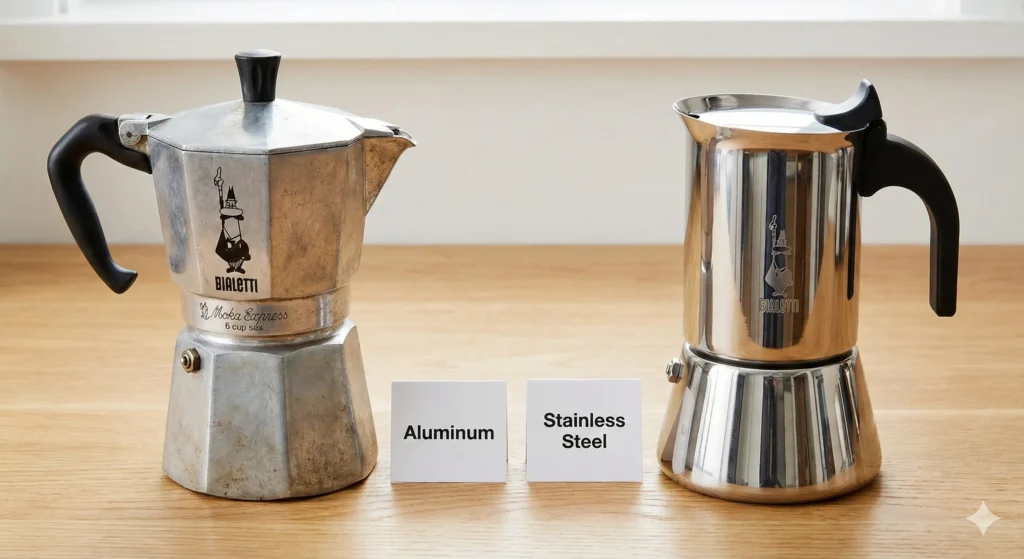
The material choice represents the most consequential decision when purchasing a moka pot. Aluminum moka pots dominated the market since Bialetti’s original 1933 design, chosen for superior heat conductivity, lightweight portability, and affordability. Stainless steel models emerged later to address induction cooktop compatibility and durability concerns, though they sacrifice some of aluminum’s practical advantages.
Both materials produce excellent coffee when used correctly, but they offer different ownership experiences. Aluminum heats rapidly and costs less, making it ideal for traditionalists who value authentic Italian brewing rituals and own gas or electric stoves. Stainless steel requires higher initial investment but provides induction compatibility, easier maintenance, and decades-long durability that justifies the premium for some buyers.
Your stove type often makes this decision for you—induction cooktop owners must either choose stainless steel models or purchase adapter discs for aluminum pots. Gas and electric stove users enjoy full freedom to prioritize other factors like heat-up speed, cleaning requirements, and budget constraints.
Pros and Cons of Aluminum Moka Pots

- CRAFT COFFEE AT HOME: Produces six demitasse/espresso servings of rich, smooth espresso coffee in minutes. Craft your ow…
- DURABLE DESIGN: Carefully crafted with cast aluminum for long-lasting durability. Provides thorough and even heat distri…
- EASY TO USE: Simply fill the lower chamber with water, add ground coffee or espresso to the filter and place on stovetop…
Pros:
- Fast heat conduction delivers 3-6 minute brew times, perfect for rushed mornings
- Lightweight construction (7-8 oz for 6-cup models) makes them ideal for camping and travel
- Affordable price range ($20-$40) allows risk-free experimentation for beginners
- Develops protective patina over time that some enthusiasts claim enhances flavor depth
- Authentic traditional Italian brewing experience with iconic octagonal design
Cons:
- Not induction-compatible without magnetic adapter discs
- Oxidizes naturally, developing dark interior coating that looks dirty but protects aluminum
- Hand-wash only—dish soap strips protective patina, dishwashers cause corrosion
- Less durable construction can develop pinhole leaks after 3-5 years of daily use
- Incompatible with acidic cleaners that damage aluminum surface
Pros and Cons of Stainless Steel / Induction-Safe Pots
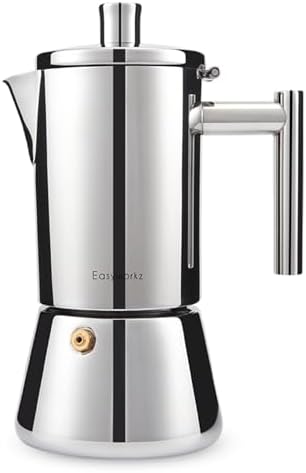
- [Elegant and Heat Resistant Design] Used the latest manufacturing technology and combined aesthetics to design this eleg…
- [Premium Quality 18/8 Stainless Steel Moka Coffee Pot] Made of 18/8 Stainless Steel with high mirror polishing processed…
- [6 Cups of Espresso ] Could brew 6 full espresso cups (10 fl.oz/300ml). Brew with our coffee maker, your coffee will be …
Pros:
- Induction-compatible design works on all stove types including modern glass cooktops
- Corrosion-resistant material maintains polished appearance indefinitely
- Dishwasher-safe construction simplifies cleanup (top rack recommended)
- Superior durability lasts 10-20+ years with proper gasket replacement
- Retains heat longer after brewing, keeping coffee hot for minutes
- Modern aesthetic suits contemporary kitchen design better than aluminum
Cons:
- Slower heating requires 5-8 minutes to complete brewing
- Heavier weight (12-16 oz for 6-cup models) reduces portability
- Higher cost ($40-$150+) creates steeper entry barrier for curious beginners
- Requires annual silicone gasket replacement as heat degrades seals faster
- Some users report slight metallic taste during initial uses before seasoning develops
Capacity and Cup Size Guide
Moka pot sizing confuses new buyers because manufacturers measure capacity in 2-ounce espresso “cups” rather than standard 8-ounce coffee mugs. A 6-cup moka pot produces approximately 10 ounces of concentrated coffee—enough for three small Americanos or two generous milk-based drinks. Understanding this unconventional measurement system prevents disappointment when your “6-cup” brewer fills only two actual mugs.
You cannot partially fill moka pots; the brewing mechanism requires using the full water capacity and filling the basket completely for proper extraction pressure. This means you’ll need to match your pot size to your typical consumption rather than adjusting batch sizes. Multiple small pots work better than one large pot for households with varying coffee habits.
1-2 Cup Moka Pots (Single-Serve)

- Mini Express is the ultimate combination of creativity and innovation, delivering a perfect italian espresso directly in…
- This unmistakable red Bialetti Mini Express features a support plate and two matching Bialetti-branded espresso cups
- How to use Bialetti Mini Express: fill the boiler with water up to the valve level, fill the basket with coffee and scre…
Single-serve moka pots (1-2 cups, producing 2-4 oz total) cater to solo coffee drinkers, minimalist kitchens, and outdoor enthusiasts. The Bialetti Mini Express represents the most compact option with its integrated serving platform that allows brewing directly into an espresso cup. These tiny brewers heat quickly on camping stoves and backpacking setups, though their premium pricing ($50-60) exceeds larger models on a per-ounce basis.
One-cup models produce a single concentrated shot (approximately 2 oz) comparable to a cafe doppio, while 2-cup versions yield enough for one American-style coffee drink or two Italian-style espressos. The compact size makes them perfect for office desks, RV kitchens, and travel bags, though daily users often find themselves brewing multiple consecutive batches when entertaining guests or craving seconds.
4-6 Cup Moka Pots (Daily Use)
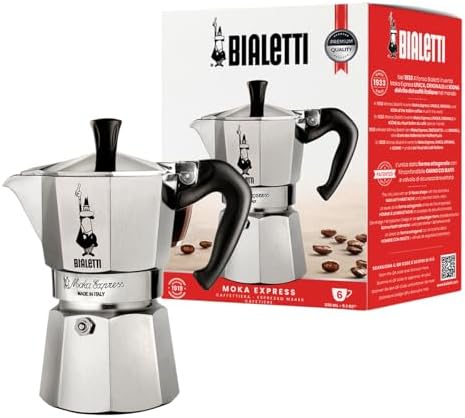
- The original moka coffee pot: Moka Express is the original stovetop espresso maker, it provides the experience of the re…
- Made in Italy: it is Made in Italy and its quality is enhanced by the patented safety valve which makes it easy to clean…
- How to prepare the coffee: fill the boiler up to the safety valve, fill it up with ground coffee without pressing, close…
Four to six-cup models (200-300ml capacity) represent the sweet spot for 1-2 daily coffee drinkers. The Bialetti Moka Express 6-cup stands as the world’s best-selling size, producing enough concentrated coffee for two generous lattes or three straight servings. This capacity accommodates morning routines without excessive waste or storage bulk.
These mid-size brewers work on all burner sizes and heat efficiently without requiring high-BTU ranges or oversized induction zones. The 4-cup version suits couples who drink coffee straight or prefer smaller milk drinks, while the 6-cup handles guests or larger beverages comfortably. Most households find this range meets 90% of their needs, relegating larger pots to special occasions.
9-12 Cup Moka Pots (Family & Guests)
Large-capacity moka pots (450-600ml for 9-12 cups) serve families, offices, and frequent entertainers who regularly brew for groups. A 12-cup model produces approximately 20 ounces of concentrated coffee—enough for 4-5 people to enjoy milk drinks simultaneously. However, these larger brewers require powerful burners with high BTU output or expansive induction zones to heat evenly and prevent scorching.
The inability to partially fill moka pots makes large models impractical for daily solo use, as you’ll waste significant coffee when brewing full batches for one person. Smart buyers keep a 6-cup model for everyday brewing and deploy larger sizes only when hosting. Additionally, 12-cup pots take 8-12 minutes to reach brewing temperature, eliminating the speed advantage that makes smaller moka pots attractive.
Stove Compatibility and Heat Source
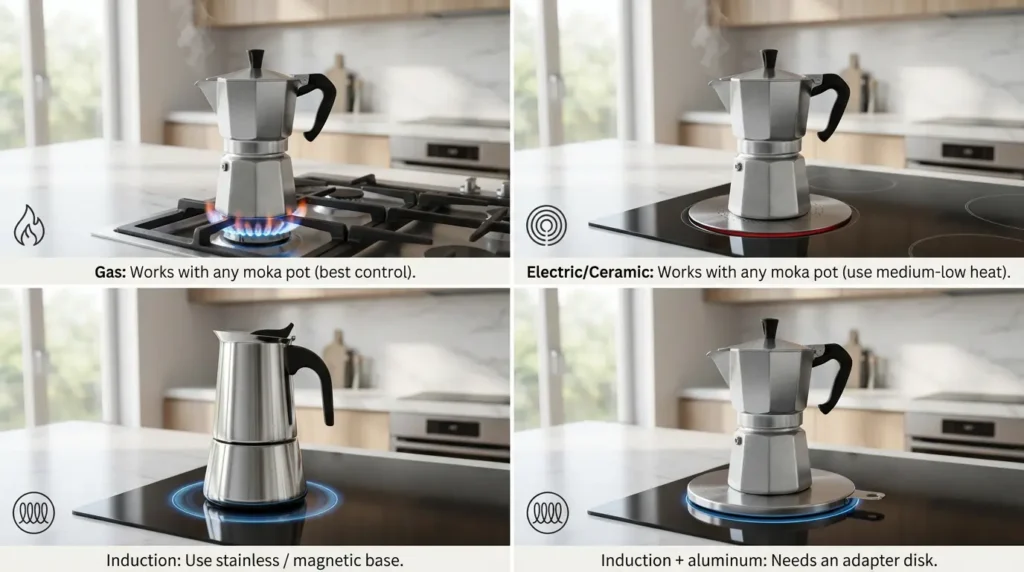
Stove compatibility determines which moka pots will function in your kitchen, making it a deal-breaker specification rather than a preference. Induction cooktops specifically require magnetic bases that aluminum naturally lacks, while gas and electric stoves accommodate any material.
Gas, Electric, Ceramic, and Induction Hobs
Gas stoves represent the ideal heat source for moka pots, offering precise flame control and even heat distribution across the octagonal base. The visible flame allows you to monitor heat levels intuitively, and the instant response when adjusting knobs prevents overheating or underextraction. Both aluminum and stainless steel moka pots perform identically on gas ranges.
Electric and ceramic cooktops work with all moka pot materials but respond more slowly to temperature adjustments. The residual heat in electric coils means you’ll need to physically move your pot when reducing heat rather than simply turning a knob. Heat diffuser plates help distribute warmth evenly across the base when burner size mismatches your pot diameter.
Induction cooktops require ferromagnetic bases to generate heat, which means traditional aluminum moka pots won’t work without adapter discs. Stainless steel models designed for induction feature magnetic bottom plates that couple efficiently with induction coils, though the heating pattern differs from gas flames. Camping stoves function well with any material, though aluminum’s faster heating makes it preferable for backpacking where fuel conservation matters.
Using Adapters and Heat Diffusers Safely
Induction adapter discs provide a workaround for using aluminum moka pots on induction cooktops by creating a magnetic intermediary that heats conductively. These flat steel plates (typically 5-7 inches in diameter) sit between your cooktop and pot, converting magnetic induction to traditional heat transfer. However, adapters reduce efficiency by adding a heat transfer step, increase brew times by 2-3 minutes, and provide less precise temperature control than direct induction coupling.
Heat diffusers—thicker metal plates that spread heat across a broader surface—prevent hotspots when your burner size mismatches your pot diameter. They’re particularly useful on electric coils where concentrated heat can scorch coffee or create uneven extraction. Always use medium-low heat regardless of stove type, as excessive temperature produces bitter, burnt-tasting coffee and can damage gaskets prematurely.
Design & Usability Features
Beyond core functionality, thoughtful design details significantly impact daily user experience and long-term satisfaction with your moka pot. Ergonomic handles, intuitive lids, and practical spouts separate premium models from budget alternatives.
Handle Comfort, Lid, and Knob Design
Heat-resistant handle materials prevent burns during brewing and pouring. Phenolic resin (hard black plastic) represents the traditional choice, offering excellent insulation and durability. Silicone-wrapped handles provide softer grip and slightly better heat protection, while wooden handles deliver premium aesthetics but require more maintenance. Metal handles—found on some premium models like the Alessi 9090—look striking but become dangerously hot if you exceed recommended heat levels.
Lid mechanisms vary between flip-top designs (spring-loaded hinges) and traditional knobs (lift-off caps). Flip-tops offer one-handed operation when pouring, though some budget models flop open sloppily during use. Knob lids provide more secure sealing but require setting down to open, and cheap plastic knobs melt if exposed to excessive heat. The best designs feature stay-cool knobs positioned high enough to avoid steam exposure during brewing.
Spout design affects pouring control and drip prevention. Traditional straight spouts work adequately for most users, while engineered V-shaped designs like the Alessi Pulcina claim to reduce bitterness by controlling flow rate during pouring. Wide spouts enable faster decanting but increase spillage risk, whereas narrow spouts offer precision at the cost of pour speed.
Filter Basket Size, Interior Color, and Visibility While Brewing
Filter basket depth determines how much coffee your pot holds and affects extraction dynamics. Deeper baskets allow more coffee contact time as water percolates through, while shallow baskets extract faster with potentially less complexity. The basket should fill completely without tamping—leveling grounds gently to the rim produces optimal results.
Interior chamber color—silver aluminum versus black-coated stainless steel—impacts your ability to see coffee oil buildup and calcium deposits. Polished aluminum shows staining clearly, helping you track when descaling is needed, while dark interiors hide residue that may affect flavor over time. Some stainless models feature polished interiors that combine visibility with corrosion resistance.
Transparent knobs and clear collection chamber sections (rare features) allow monitoring brew progress without opening the lid and disrupting pressure. These design elements appeal to enthusiasts who want to perfect their technique by observing flow rate and color changes during extraction, though traditional opaque designs work perfectly well for casual brewers.
Best Moka Pots & Stovetop Espresso Makers (Top Picks 2026)
After testing dozens of models and analyzing thousands of user reviews, these moka pots represent the best options across price points, materials, and use cases. Each recommendation balances build quality, brewing performance, value, and real-world reliability.
Best Overall Moka Pot (Aluminum)
Bialetti Moka Express (6-Cup)

- The original moka coffee pot: Moka Express is the original stovetop espresso maker, it provides the experience of the re…
- Made in Italy: it is Made in Italy and its quality is enhanced by the patented safety valve which makes it easy to clean…
- How to prepare the coffee: fill the boiler up to the safety valve, fill it up with ground coffee without pressing, close…
The Bialetti Moka Express remains the undisputed champion of stovetop coffee makers, earning its reputation through 90+ years of consistent performance and iconic design. With over 87,000 Amazon ratings averaging 4.5 stars, this aluminum classic produces rich, full-bodied coffee that captures authentic Italian espresso culture. The patented octagonal base ensures even heat distribution, while the ergonomic phenolic handle stays cool throughout brewing.
Performance-wise, the Moka Express delivers remarkably consistent results across brewing sessions, taking 5-6 minutes on medium heat to produce concentrated coffee with chocolate and caramel notes. The signature three-chamber design includes a safety valve that prevents dangerous pressure buildup, making it foolproof even for complete beginners. Build quality exceeds budget competitors through thicker aluminum walls and reinforced threading that withstand daily use for 3-5 years minimum.
At $34.99-$40 depending on size, the Moka Express offers unbeatable value for anyone seeking authentic stovetop espresso without the learning curve of higher-end models. It’s ideal for traditionalists who appreciate Italian coffee heritage, daily drinkers on gas or electric stoves, and beginners exploring concentrated coffee for the first time. The only notable limitation is the lack of induction compatibility, requiring an adapter disc for modern glass cooktops.
Minor drawbacks include hand-wash-only maintenance (dish soap strips the protective patina) and the natural aluminum oxidation that darkens the interior over time—a cosmetic change that doesn’t affect flavor but concerns some users aesthetically. For 95% of home brewers, the Moka Express represents the perfect balance of performance, tradition, and affordability.
Best Stainless Steel / Induction Moka Pot
Bialetti Venus (6-Cup)
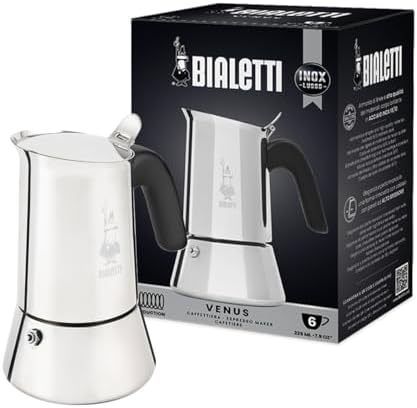
- Venus is the perfect combination of tradition and innovation: the original induction coffee maker that prepares a perfec…
- Bialetti Venus is made in 18/10 stainless steel of the highest quality to guarantee durability over time and an unmistak…
- How to use Bialetti Venus: fill it up with ground coffee, close the pot and place it on the stovetop, as soon as Bialett…
The Bialetti Venus translates the Moka Express’s proven brewing excellence into induction-compatible stainless steel construction. This premium variant produces the same bold, concentrated coffee as its aluminum sibling while adding compatibility with modern glass cooktops and simplified maintenance. The polished stainless finish maintains its luster indefinitely without the darkening patina that characterizes aluminum models.
Brewing performance matches the Moka Express in flavor intensity and body, though the stainless steel construction retains heat longer after brewing—keeping your coffee hot for 5-10 minutes in the pot. The magnetic base couples efficiently with induction coils, though total brew time extends to 6-8 minutes due to stainless steel’s slower heat conductivity. The dishwasher-safe design appeals to users who want low-maintenance cleanup without hand-washing rituals.
Priced at $50-$70, the Venus costs nearly double the Moka Express but justifies the premium for induction cooktop owners who otherwise cannot use traditional aluminum pots. It’s the logical choice for modern kitchens with glass cooktops, durability seekers who want decades of service life, and users who prefer stainless aesthetics over classic aluminum. The premium feel and polished appearance make it gift-worthy for coffee enthusiasts.
Downsides include the heavier weight (approximately 12-14 oz versus 7-8 oz for aluminum), slower heating that tests patience during rushed mornings, and gasket replacement requirements every 12 months as the heat-retaining steel degrades seals faster. Some users report a slight metallic taste during initial uses that disappears after 5-10 brewing cycles. Despite these minor compromises, the Venus represents the best stainless steel moka pot for most buyers.
Best Budget Top Stove Coffee Maker
Grosche Milano (6-Cup) / Primula Classic Stovetop Espresso Maker

- ⭐ [Moka Espresso Coffee] Stovetop espresso maker, Moka pot, & manual coffee percolator machine. Available in 3 cups, 6 c…
- ⭐ [Easy to use Moka Espresso coffee Maker & Cuban Coffee maker] will work on all gas and electric stove top and propane …
- ⭐ [Highest quality stove top espresso at home] You can easily make a moka coffee, also called a low pressure stovetop es…
The Grosche Milano punches well above its $25-$30 price point, delivering coffee quality that approaches the Bialetti Moka Express at half the cost. This aluminum brewer features the same three-chamber design, octagonal heat distribution, and phenolic handle as premium models, sacrificing only minor build refinements and brand prestige. For budget-conscious buyers or first-time moka pot users, the Milano provides an exceptional entry point without significant performance compromises.
The Primula Classic represents the ultra-budget option at $19.99 for the 1-cup model, making it cheaper than many bags of specialty coffee beans. While build quality trails the Grosche with thinner aluminum walls and less refined threading, it functions reliably for occasional use, travel, or testing whether you’ll enjoy moka pot coffee before investing in premium models. Both budget options work on gas and electric stoves but lack induction compatibility.
These affordable alternatives excel for secondary pots (keeping one at the office or in an RV), gift-giving when budget matters, and experimenting with moka brewing without financial commitment. College students, casual coffee drinkers, and anyone uncertain about stovetop espresso should start here before upgrading. The cost savings allow buying a quality burr grinder—which impacts coffee quality more than pot brand above a basic functionality threshold.
Expect shorter lifespan (2-3 years with daily use) compared to Bialetti’s 5+ year durability due to thinner material and less precise manufacturing tolerances. The Milano represents smart frugality; the Primula represents acceptable minimalism. Neither delivers the heirloom quality of premium models, but both make excellent coffee for their price.
Best Premium / Design-Focused Moka Pot
Alessi 9090 (6-Cup) / Alessi Pulcina

- Stovetop espresso moka with magnetic bottom, suitable for induction stoves
- Designer: Richard Sapper
- Material: 18/10 stainless steel
The Alessi 9090, designed by renowned industrial designer Richard Sapper, elevates moka pot aesthetics to museum-worthy art while delivering exceptional brewing performance. This stainless steel masterpiece features extra-thick silicone gaskets, precision-machined threading, and a sculptural profile that earned permanent placement in the Museum of Modern Art collection. The coffee quality rivals the best moka pots tested, producing rich, creamy brews with remarkable consistency.
The Alessi Pulcina takes a different design approach with its distinctive V-shaped spout engineered specifically to reduce bitterness by controlling pour rate and aeration. The avant-garde silhouette makes it a conversation piece and kitchen showpiece beyond its functional coffee-making role. Both models feature induction-compatible stainless steel construction, dishwasher-safe components, and build quality that justifies “buy it for life” status.
At $120-$180 depending on size and model, Alessi moka pots cost 3-5 times more than the Bialetti Moka Express without producing proportionally better coffee. You’re paying primarily for design excellence, premium materials, and the prestige of owning an iconic piece. These pots suit design enthusiasts who appreciate industrial art, gift-givers seeking impressive presentations, and collectors who want showpiece brewing equipment.
Practical downsides include the metal handle that becomes dangerously hot if you exceed proper heat levels (a safety concern absent from phenolic-handled competitors) and the extra filter component that complicates cleaning. The novel attachment mechanism, while elegant, can confuse new users about chamber orientation. Unless you highly value design aesthetics or want a luxury gift, the Bialetti Venus delivers 95% of the functionality at one-third the cost.
Best Single-Serve Moka Pot
Bialetti Mini Express (1-Cup)

- The coffee maker designed for a very special appointment with the pleasure of taste
- Innovative dispensing: coffee is served directly in the cups, kept warm thanks to the special aluminium plate
- Style Details: saucer and cup shape handle with bialetti logo
The Bialetti Mini Express redefines single-serve coffee through its ingenious integrated cup platform that allows brewing directly into an espresso cup. This compact design produces one concentrated 50ml shot—perfect for straight espresso-style servings or as the base for a single cappuccino. The miniature aluminum construction heats rapidly (3-4 minutes) on camping stoves, RV burners, and compact single-burner hotplates where larger pots struggle.
The integrated platform eliminates the need for separately placing cups and catches drips elegantly during pouring. Despite its tiny size, build quality matches the standard Moka Express with authentic Bialetti engineering and materials. The ultra-compact footprint (approximately 4 inches tall) fits in backpacking gear, office desk drawers, and hotel luggage without sacrificing brewing performance.
At $59.95, the Mini Express costs more than many 6-cup models despite producing one-sixth the volume. This premium reflects the specialized design and compact engineering rather than improved coffee quality. It’s ideal for backpackers who want trail espresso without French press sediment, van life minimalists with limited space, solo drinkers who never brew for guests, and office workers maintaining desk coffee setups.
The plastic cup holder platform feels less premium than the aluminum body, and the tiny capacity frustrates anyone who drinks more than one small serving per session. You cannot make milk drinks directly without brewing into a separate container first. For dedicated single-serve needs—especially portable and travel applications—it excels, but most households benefit more from standard 3-4 cup models that accommodate solo and small group brewing.
Best Moka Pot for Camping & Travel
GSI Outdoors Glacier Stainless (6-Cup) / GSI MiniEspresso Set

The 12 fl. oz. capacity (approximately 6 cup equivalent) produces enough coffee for 2-3 campers to enjoy morning brews simultaneously. Induction compatibility means it works on portable induction hotplates at powered campsites in addition to gas camping stoves. The wide base provides stability on uneven camp surfaces, and the corrosion-resistant stainless steel tolerates creek water and stream rinsing without aluminum oxidation concerns.
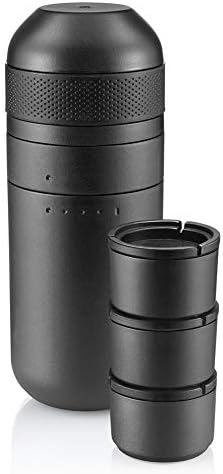
The GSI MiniEspresso Set offers an ultralight alternative at 4 ounces total weight with 50ml capacity, ideal for solo backpackers counting grams. Both models prioritize durability over refinement—build quality trails Bialetti standards with less precise threading and thinner gaskets that require more frequent replacement. Priced at $39.95-$49.95, they cost more than home-use equivalents while delivering camping-specific features that justify the premium for outdoor enthusiasts.
These pots excel for car camping, overlanding, and basecamp setups where durability matters more than brewing nuance. Serious backpackers should consider the MiniEspresso’s weight advantage, while group campers benefit from the Glacier’s larger capacity. Neither suits daily home use as well as traditional moka pots, but both withstand outdoor conditions that would destroy standard models.
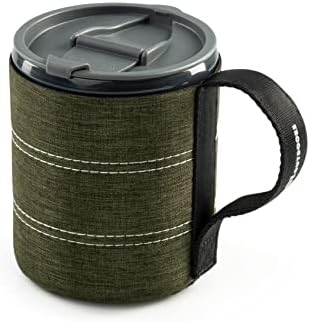

The GSI Outdoors Glacier Stainless brings rugged outdoor reliability to moka pot brewing with reinforced stainless steel construction designed for campfire abuse and backcountry conditions. The nesting design stacks components efficiently for pack transport, and the included folding handles lock securely during brewing before collapsing for storage. At 31.5 ounces with accessories, it’s heavier than the Bialetti Moka Express but far more durable for outdoor environments.
Best Electric “Stovetop Style” Espresso Maker
9Barista Mk.2

- 【Upgrade Design】Add 120ml of water can extract 100ml of coffee liquid.The double-valve system ensures a consistent press…
- 【High quality and Safe Use】High quality aluminum material,The ergonomic handle is comfortable to hold,heat resistant and…
- 【Built-in Thermostat Extractor】The Moka Pot is equipped with a thermostat, which reduces the temperature. Water is infus…
The 9Barista Mk.2 represents a category unto itself—the only stovetop device that produces authentic 9-bar espresso with proper crema. This British-engineered marvel uses a twin-boiler system where the lower chamber generates high-pressure steam that forces water through the upper brewing chamber at precisely 9 bars and 93°C—matching commercial espresso machine specifications. The result is cafe-quality espresso shots indistinguishable from professional pulls, complete with golden crema and complex flavor layering.
The precision engineering reflects in every detail: each machine undergoes 150+ quality inspections, features medical-grade stainless steel construction, and includes a built-in pressure gauge and temperature indicator. Unlike traditional moka pots that operate around 1-2 bars, the 9Barista‘s pressurized system extracts espresso properly, revealing subtle flavor notes and aromatic compounds that lower-pressure methods miss. It works on gas, induction, and camping stoves without electricity—perfect for off-grid setups and power outages.
At $400-$480, the 9Barista costs six times more than premium moka pots and approaches entry-level espresso machine prices without the convenience of electronic automation. Heat-up requires 15 minutes compared to moka pots’ 3-6 minutes, and operation demands more skill and attention to detail. It’s designed for espresso purists who want true cafe-quality shots, home baristas seeking portable precision, and off-grid enthusiasts who refuse to compromise on coffee quality.
For traditional moka pot buyers, the 9Barista represents overkill—you’re paying for true espresso capability most users won’t appreciate or need. But for anyone who finds moka coffee “almost but not quite” satisfying, this device delivers the real thing. Alternative: The De’Longhi Alicia Electric Moka offers electric convenience at $80-100 for budget-conscious buyers seeking automated stovetop-style brewing without manual monitoring.
Product Comparison Table: Top Moka Pots & Stovetop Espresso Makers
| Product Name | Type/Category | Material | Capacity | Stove Compatibility | Induction Safe | Key Pros | Key Cons | Best For | Price Range |
|---|---|---|---|---|---|---|---|---|---|
| Bialetti Moka Express 6-Cup | Best Overall | Aluminum | 6 cups / 300ml | Gas, Electric, Ceramic | No | Iconic design, consistent quality, affordable, 87K+ ratings | Hand-wash only, not induction-compatible | Beginners, traditionalists, daily use | $34.99-$40 |
| Bialetti Venus 6-Cup | Best Induction | Stainless Steel | 6 cups / 300ml | All types including induction | Yes | Induction-compatible, dishwasher-safe, durable | Heavier, slower heating, higher cost | Induction cooktop owners, modern kitchens | $50-$70 |
| Grosche Milano 6-Cup | Best Budget | Aluminum | 6 cups / 300ml | Gas, Electric, Ceramic | No | Excellent value, near-Bialetti quality | Thinner construction, shorter lifespan | Budget buyers, first-time users | $25-$30 |
| Primula Classic 1-Cup | Ultra-Budget | Aluminum | 1 cup / 50ml | Gas, Electric, Ceramic | No | Ultra-affordable, compact | Basic build quality, minimal capacity | Testing, travel, secondary unit | $19.99 |
| Alessi 9090 6-Cup | Best Premium | Stainless Steel | 6 cups / 300ml | All types including induction | Yes | Museum-quality design, exceptional coffee | Very expensive, metal handle heats up | Design enthusiasts, collectors, gifts | $120-$180 |
| Alessi Pulcina 3-Cup | Design Focus | Stainless Steel | 3 cups / 150ml | All types including induction | Yes | Anti-bitter spout, sculptural design | Expensive for capacity, smaller size | Kitchen showpiece, design lovers | $120-$150 |
| Bialetti Mini Express 1-Cup | Best Single-Serve | Aluminum | 1 cup / 50ml | Gas, Electric, Ceramic | No | Most compact, integrated platform | Expensive per ounce, plastic components | Camping, solo drinkers, travel | $59.95 |
| GSI Glacier Stainless 6-Cup | Best Camping | Stainless Steel | 12 oz / 350ml | All including camping stoves | Yes | Rugged, nesting design, includes cups | Heavy, lower build quality than Bialetti | Car camping, overlanding, outdoors | $39.95-$49.95 |
| 9Barista Mk.2 | True Espresso | Stainless Steel | 60ml espresso | Gas, Induction, Camping | Yes | True 9-bar espresso, cafe quality, crema | Very expensive, 15-min heat-up, complex | Espresso purists, home baristas | $400-$480 |
| De’Longhi Alicia | Electric | Aluminum/Plastic | 4 cups / 200ml | Electric only | N/A | Automated, no stove needed | Lower quality, plastic components | Convenience seekers, offices | $80-$100 |
Step-by-Step: How to Use a Moka Pot (Modern Method)
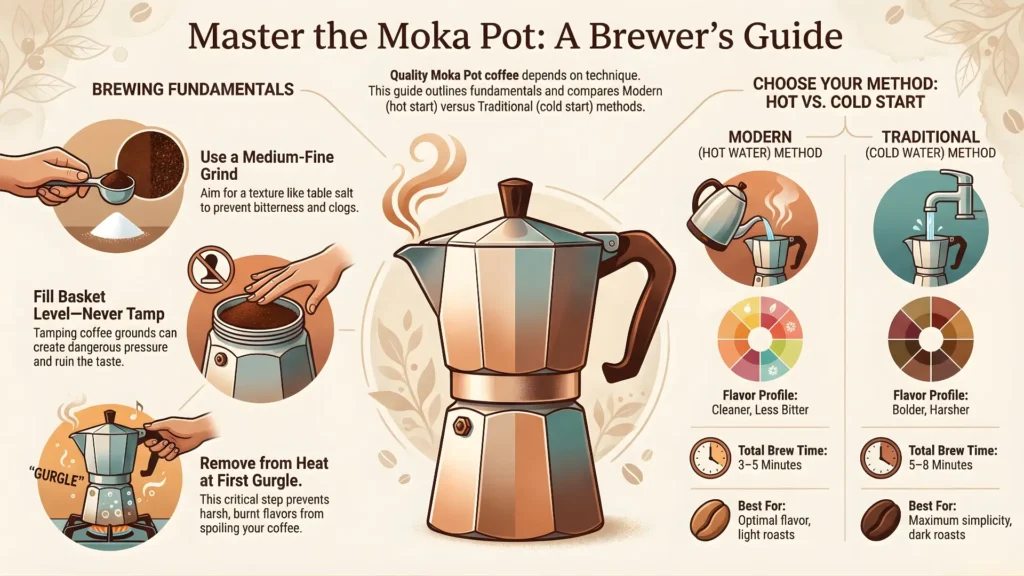
Brewing technique affects moka pot coffee quality as much as bean selection or grind size. The modern “hot water method” reduces bitterness, shortens extraction time, and produces cleaner-tasting coffee compared to traditional cold-start brewing. Understanding proper technique transforms mediocre results into consistently excellent cups.
Ideal Grind Size, Dose, and Coffee-to-Water Ratio
Moka pots require medium-fine grind—finer than drip coffee but coarser than espresso—resembling fine table salt or beach sand. The specific grind size falls between 360-660 microns, which provides enough resistance to build pressure without clogging the filter or causing over-extraction. If using grinder settings, aim for Baratza Encore #6, Niche Zero #25, or 14-16 on a 1-30 numbered scale.
Grind too fine and you’ll extract bitter, over-concentrated coffee while risking dangerous pressure buildup that forces grounds into your finished brew. Grind too coarse and water flows through too quickly, producing weak, watery coffee lacking body and intensity. Most home grinders require experimentation across 2-3 settings to find the sweet spot for your specific beans and roast level.
Coffee dose naturally corresponds to your basket capacity—fill the filter to the rim without compressing or tamping. A 4-cup moka pot typically holds 15-17g of coffee, while 6-cup models accommodate 20-30g depending on manufacturer. The coffee-to-water ratio naturally falls between 1:7 and 1:10 based on chamber design, which produces concentrated coffee perfect for drinking straight or diluting into Americano-style servings. Never tamp grounds as you would for espresso—simply level gently with your finger and wipe the rim clean to ensure proper seal.
Brewing Instructions: Modern (Hot Water) Method
The hot water method dramatically improves moka pot coffee by reducing the time grounds spend exposed to heat, preventing bitter over-extraction. Follow these steps for optimal results:
- Boil water separately in an electric kettle or small pot while preparing your coffee grounds
- Fill the bottom chamber with freshly boiled water just below the safety valve—use a towel to hold the hot base
- Insert the filter basket and fill with medium-fine grounds to the rim without compressing
- Level grounds gently with your finger, ensuring even distribution, then wipe any stray grounds from the rim threads
- Screw the top chamber firmly onto the base (use a towel if it’s too hot to handle) until snug but not over-tightened
- Place on medium-low heat with the lid open so you can monitor brewing progress visually
- Watch for coffee flow beginning after 1-2 minutes—it should emerge as a steady dark brown stream
- Listen for the hissing/gurgling sound that signals the brew is nearly complete—remove from heat immediately when you hear it
- Close the lid and let residual pressure in the base complete extraction off heat for 15-30 seconds
- Serve immediately or dilute with hot water (1:1 ratio) for Americano-style coffee with mellower intensity
This method reduces total brew time to 3-5 minutes while producing noticeably cleaner, less bitter coffee than cold-start techniques. The key insight is minimizing the duration grounds spend heating, which prevents burnt flavors from developing.
Brewing Instructions: Traditional (Cold Water) Method
The original Italian method starts with cold water in the bottom chamber, requiring no separate kettle or pre-heating. Simply fill the base with room-temperature or cold water below the valve, assemble with coffee-filled basket, and place on medium heat with the lid open. Total brew time extends to 5-8 minutes as the entire pot heats from cold.
This traditional approach offers simplicity—no hot water handling or towels needed for assembly—making it appealing for rushed mornings or when you’re still groggy. Many Italian families have used this method for generations with satisfactory results, and it remains widely practiced despite producing less refined flavor profiles. The extended heat exposure creates more bitter compounds and can scorch delicate light-roast beans.
The cold method works acceptably for dark roasts and robusta-blend beans that withstand aggressive extraction, but medium and light roasts suffer noticeably compared to hot-start brewing. If you prioritize convenience over optimal flavor, this method remains perfectly functional—just expect bolder, slightly harsher coffee than the hot water technique produces. Many moka pot enthusiasts start with cold water brewing before graduating to hot-start methods after tasting the difference.
How to Know When Your Stovetop Coffee Is Done
Two sensory signals indicate brewing completion: visual and auditory cues that tell you when to remove your moka pot from heat. Visually, watch the coffee stream emerging from the central spout—it starts as thick, dark brown liquid and gradually lightens to honey-blonde as extraction progresses. When the color shifts noticeably lighter, your brew is nearly finished.
Simultaneously, listen for the characteristic hissing, sputtering, gurgling sounds that indicate the water chamber is nearly empty and steam is beginning to pass through the grounds. This audio cue represents your critical moment—remove from heat immediately to prevent burnt flavors. The final 15-30 seconds of extraction that occur if you leave the pot on heat produce harsh bitterness that ruins otherwise excellent coffee.
After removing from heat, close the lid and let residual pressure complete extraction naturally. The pot will continue gurgling and hissing for 20-30 seconds as the remaining water pushes through—this is normal and produces your final ounce of brew. Resist the temptation to force the last drops by leaving it on heat or running cold water over the base, as these techniques introduce unpleasant flavors. Perfect timing produces smooth, rich coffee; excessive extraction creates bitterness that no amount of milk or sugar can mask.
Brew Quality, Recipes, and Drink Ideas
Moka pot coffee’s concentrated strength and rich body make it exceptionally versatile for various drink styles beyond straight espresso-style servings. Understanding the flavor profile and ideal applications helps you maximize your brewing investment.
What Coffee Tastes Like from a Moka Pot
Moka pot coffee delivers bold, rich, full-bodied flavor that sits between strong French press and genuine espresso in intensity. The concentrated extraction produces prominent chocolate, caramel, and nutty notes with low acidity and heavy mouthfeel. Unlike paper-filtered methods, the metal filter allows natural oils to pass through, creating silky texture and lingering finish similar to French press without the sediment.
The absence of crema distinguishes moka coffee from true espresso—you won’t get the thick golden foam layer that tops properly pulled shots. However, the liquid underneath rivals espresso in concentration and body, making this difference negligible once you add milk. The slight oiliness provides rich mouthfeel that coats your palate, and the concentrated format means you’re consuming less volume while receiving similar caffeine to a full mug of drip coffee.
Properly brewed moka coffee should taste clean and smooth without harsh bitterness or burnt notes. If your results taste overly bitter or scorched, you’re likely using excessive heat or allowing the final extraction phase to complete on the burner rather than off heat. When executed correctly, moka brewing produces intensely satisfying coffee ideal for drinking straight as a small serving or diluting into American-style cups.
Best Coffee Beans and Roast Profiles for Moka Pots
Medium to medium-dark roasts work best in moka pots, providing enough body and sweetness to withstand the aggressive extraction without becoming overwhelmingly bitter. Traditional Italian and French roasts pair naturally with moka brewing, though some modern ultra-dark roasts verge on charcoal and overpower the concentrated format. Light roasts typically taste too acidic and bright for moka pots, lacking the caramelized sugars and developed body that balance high-pressure extraction.
Look for beans with low acidity and flavor profiles emphasizing chocolate, caramel, nuts, and baking spices—these characteristics shine in moka preparation. Single-origin coffees can work beautifully if chosen carefully, but blends specifically designed for milk drinks excel by providing balanced intensity without requiring precise brewing parameters. Avoid delicate, floral, or fruit-forward beans that showcase better in pour-over methods where subtle notes can emerge.
Freshness matters significantly—use beans within 2-4 weeks of their roasting date for optimal results. Stale coffee produces flat, lifeless moka brews that lack the vibrancy and aroma that make this method special. Buy from local roasters who date their bags, or choose online sellers who roast to order. Pre-ground supermarket coffee technically works but sacrifices much of moka brewing’s potential through oxidation and staling.
Moka Pot “Latte”, Flat White, and Iced Coffee Ideas

Moka coffee’s strength makes it an ideal base for milk drinks that would overwhelm standard drip coffee. Create a moka latte by combining one part moka coffee with three parts steamed milk and topping with a thin layer of foam—the concentrated brew cuts through dairy beautifully without disappearing. For a “poor man’s cappuccino,” froth milk using a French press plunger or handheld whisk and layer over your moka coffee for impressive cafe-style presentation without espresso machine investment.
Iced moka coffee transforms hot concentrated brew into refreshing cold drinks by pouring directly over ice and adding cold milk or sugar to taste. The ice dilution brings the intense concentration to more drinkable levels while maintaining full body and flavor. For an elegant Italian dessert, try affogato: pour hot moka coffee over a scoop of vanilla gelato or ice cream and watch the creamy sweet base transform into an indulgent coffee float.
The trendy moka tonic combines concentrated moka coffee with tonic water over ice for a refreshing, slightly bitter beverage popular in modern cafes. Use a 1:2 ratio of coffee to tonic and add ice immediately to prevent bitterness. Moka coffee also substitutes for espresso in cocktails like espresso martinis (though you’ll miss the crema for garnish). The concentrated format provides endless experimentation opportunities for home baristas.
Strength Adjustments: Americano-Style Moka and Concentrated Shots
Diluting moka coffee with hot water creates Americano-style servings that resemble standard drip coffee in volume while maintaining richer body and intensity. Use a 1:1 ratio (equal parts moka coffee and hot water) for a strong 6-8 oz cup, or 2:1 water-to-coffee for milder results approximating regular coffee strength. This approach lets you enjoy moka brewing while producing familiar serving sizes rather than tiny espresso-style shots.
For concentrated shots closer to true espresso, use the full basket capacity with slightly finer grind and minimal dilution. This maximizes extraction intensity and produces 2-3 oz servings comparable to cafe doppio shots. However, remember that moka pots cannot match true espresso’s 9-bar pressure and crema regardless of technique—the physics simply differ.
You cannot adjust strength by partially filling moka pots, as the brewing mechanism requires full water capacity and complete basket filling to generate proper pressure. This fixed-ratio design means you’ll need different pot sizes for different serving needs rather than adjusting batch sizes like you would with pour-over or drip methods. The inability to pre-infuse or control flow rate limits your technique variables compared to manual espresso, though most users find the consistent results reassuring rather than limiting.
Care, Cleaning, and Safety
Proper maintenance extends moka pot lifespan from a few years to decades while ensuring consistent brewing performance and user safety. Material-specific care requirements differ dramatically between aluminum and stainless steel models.
How to Clean Aluminum vs Stainless Steel Moka Pots
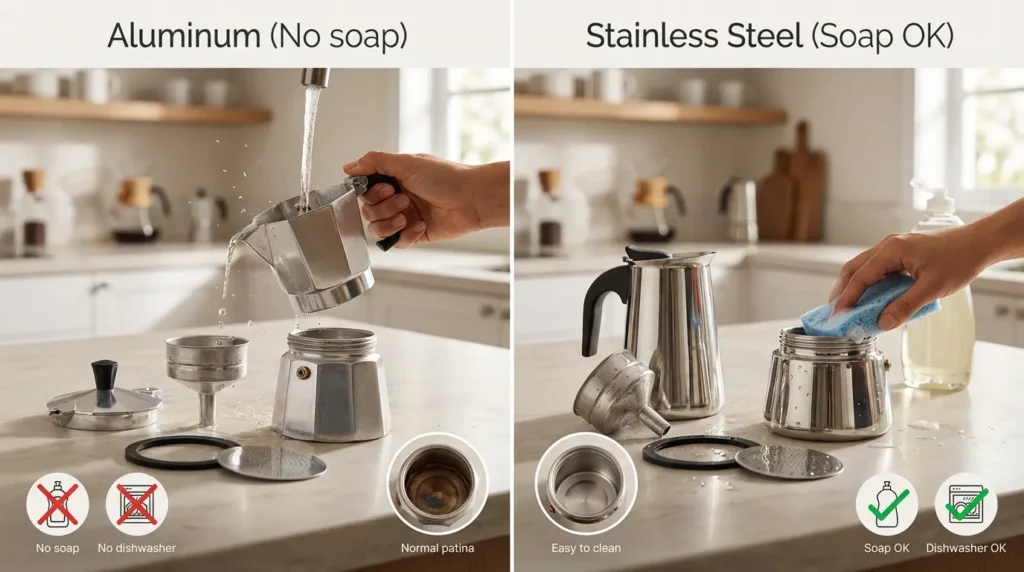
Aluminum moka pots require gentle hand-washing with hot water only—never use dish soap, which strips the protective patina that develops over time and prevents metallic taste. The coffee oil buildup inside the chamber actually improves flavor by seasoning the aluminum, similar to cast iron skillets. Simply rinse all components with hot water after each use, hand-dry immediately to prevent water spots, and allow the natural darkening to occur as part of the seasoning process.
Never put aluminum moka pots in dishwashers, as the harsh detergents and high heat cause severe oxidation, pitting, and corrosion that ruins the pot permanently. Some users mistakenly interpret the dark interior coating as dirty and scrub aggressively with abrasive pads—this removes protective seasoning and requires rebuilding the patina through 10-15 brewing cycles. Accept the darkened aluminum as normal and desirable rather than a cleaning failure.
Stainless steel moka pots tolerate dishwasher cleaning (top rack recommended) and mild dish soap without damage. You can use soft sponges to remove coffee stains, and steel wool works for stubborn buildup without harming the material. The easier maintenance partially justifies stainless steel’s higher purchase price, especially for users who prefer simple cleanup routines. Despite the dishwasher compatibility, hand-washing remains gentler and extends gasket lifespan.
Descaling and Removing Limescale Build-Up
Hard water leaves mineral deposits inside moka pot chambers that restrict flow, alter taste, and eventually clog the safety valve—requiring regular descaling every 2-3 months in hard water areas or every 6 months with soft water. For aluminum pots, mix 1 tablespoon lemon juice with 1 tablespoon white vinegar in the water chamber, let soak for 2-4 hours, then rinse thoroughly with fresh water. Never use commercial descaling solutions or CLR on aluminum, as these harsh chemicals corrode the metal.
Stainless steel models tolerate standard descaling solutions—add 10ml descaler to the water chamber, heat the base to 60°C (140°F) on your stove, remove from heat, and let sit for 5 minutes before rinsing thoroughly. You can also use diluted white vinegar (1:3 vinegar to water ratio) for a gentler natural alternative. Always run one full water-only brewing cycle after descaling to remove any residual taste before making coffee.
Check the safety valve monthly by gently pressing it with a toothpick to ensure it moves freely. Mineral buildup can block this critical pressure relief mechanism, creating dangerous conditions. If the valve seems stuck, soak the base in vinegar solution specifically targeting the valve area. The filter plate also accumulates coffee oils and minerals in its perforations—scrub gently with a soft brush under running water or soak in warm water to maintain unrestricted flow.
Common Safety Tips (Pressure, Valves, and Leaks)
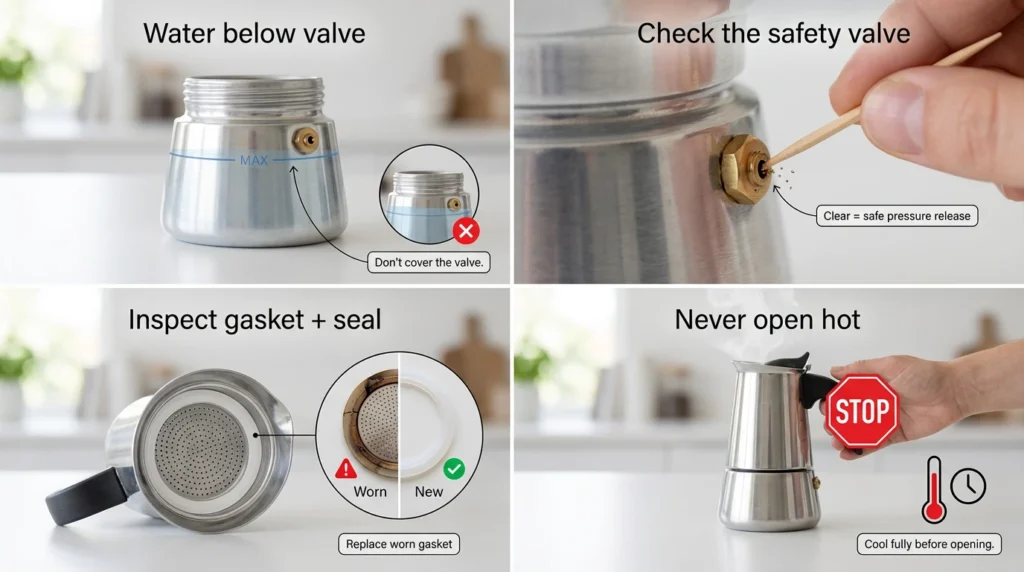
Moka pot safety relies on maintaining clear safety valves, intact gaskets, and proper assembly. Always ensure the safety valve moves freely by testing monthly—this spring-loaded mechanism releases excess pressure if steam buildup exceeds safe levels. Never seal, block, or modify the valve, as this creates explosion risk from uncontrolled pressure accumulation. If coffee grounds or mineral deposits obstruct the valve, clean immediately before using the pot again.
Check the silicone gasket regularly for cracks, hardening, or deformation that compromises the seal between chambers. Replace gaskets every 6-12 months depending on usage frequency—a worn gasket leaks steam, reduces pressure, and produces weak coffee while potentially spraying hot liquid from the midsection. Replacement gaskets cost $5-8 and install in seconds, making them consumable maintenance items rather than repairs.
Never overtighten the chambers when screwing them together, as excessive force strips threading and warps the aluminum base. Tighten firmly by hand until snug, but stop when you meet resistance—no tools needed. Never open the pot until it’s fully cooled and depressurized; forcing the chambers apart while hot can spray scalding coffee and damage threading. Keep brewing moka pots away from children and pets, as the metal surfaces become hot enough to cause burns. Use medium-low heat exclusively to prevent overheating, gasket damage, and dangerous pressure spikes.
How Long a Moka Pot Should Last (Durability & Materials)
Aluminum moka pots typically last 3-5 years with daily use, though careful maintenance can extend lifespan to 10+ years. The primary failure modes include pinhole leaks developing in the base chamber from repeated heating cycles, stripped threading from overtightening, and general thinning of aluminum walls that reduces structural integrity. Budget aluminum models from lesser-known brands typically fail sooner (2-3 years) due to thinner material and less precise manufacturing tolerances.
Stainless steel moka pots deliver dramatically longer service life—10 to 20+ years or more with proper gasket replacement. The corrosion-resistant material withstands thousands of heating cycles without developing leaks, and the robust threading resists stripping even with moderate overtightening. Premium models like the Alessi 9090 and Bialetti Venus qualify as “buy it for life” purchases that can serve multiple generations with basic maintenance.
Replacement parts availability extends moka pot longevity significantly beyond the original components. Gaskets ($5-8), filter plates ($8-12), and entire filter baskets are widely available for major brands like Bialetti and Alessi, allowing you to refresh worn pots rather than replacing them entirely. Lesser-known budget brands often lack replacement part support, forcing disposal when gaskets fail—a hidden cost that erodes their apparent value advantage. The combination of stainless steel durability and part availability makes premium models more economical over 10+ year timespans despite higher upfront costs.
Troubleshooting Your Stovetop Coffee Maker
Even experienced moka pot users encounter brewing problems that compromise coffee quality. Understanding common issues and their solutions transforms frustrating failures into consistently excellent results.
Why Is My Moka Pot Coffee Bitter or Burnt?
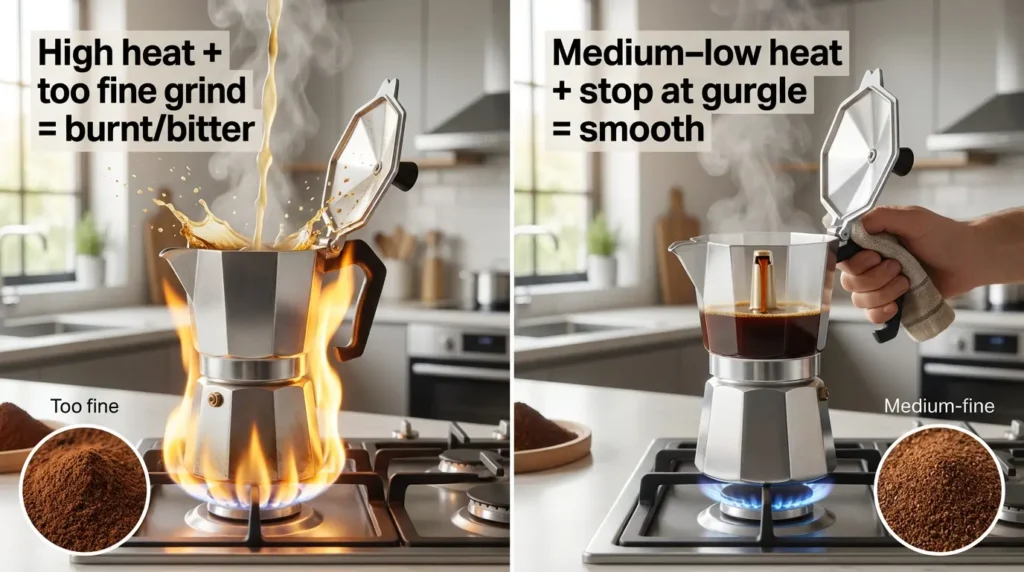
Excessive bitterness represents the most common moka pot complaint, typically resulting from heat management errors rather than equipment defects. Using heat levels above medium-low scorches coffee grounds before water fully extracts through them, creating harsh burnt flavors that overpower natural sweetness. Electric stoves with residual heat particularly cause this problem—you must remove the pot when gurgling starts rather than simply turning off the burner.
Grind size dramatically affects bitterness levels—coffee ground too fine over-extracts during the pressurized brewing process, pulling excessive tannins and bitter compounds from the beans. Adjust your grinder 1-2 settings coarser if you consistently experience harsh, astringent coffee. Conversely, allowing the final extraction phase to complete on heat rather than removing the pot when gurgling begins forces steam through already-extracted grounds, creating the burnt taste many associate with moka pots.
Over-roasted beans (French roast and darker) can taste excessively bitter in moka pots due to the concentrated extraction amplifying charred flavors. Try medium or medium-dark roasts instead of ultra-dark beans. Finally, aluminum oxidation and coffee oil buildup can impart stale, bitter flavors if you never descale—perform the lemon juice and vinegar soak every 2-3 months to refresh your pot’s interior.
Solutions:
- Use medium-low heat exclusively; never rush brewing with high heat
- Coarsen grind by 1-2 settings toward drip coffee consistency
- Remove from heat immediately when gurgling begins
- Try medium roast beans instead of French or Italian roasts
- Descale quarterly if you have hard water
- Use the hot water method to reduce ground exposure time
Why Is My Stovetop Espresso Weak or Watery?

Weak, watery moka coffee signals insufficient extraction from grounds that are too coarse, underdosed, or inadequately heated. Coffee ground too coarse allows water to flow through too quickly without building proper pressure or extracting sufficient solubles. Adjust your grinder 1-2 settings finer toward espresso consistency (but not quite reaching espresso fineness) to increase resistance and extraction.
Underdosing the basket—failing to fill it completely to the rim—reduces the bed depth water must percolate through, shortening contact time and producing thin, weak coffee. Always fill the basket generously to the rim without tamping, then wipe the rim clean before assembly. Excessive water in the bottom chamber (above the safety valve) dilutes the coffee-to-water ratio beyond optimal concentration, though this requires deliberate overfilling to cause noticeable weakness.
Heat levels that are too low prevent generating adequate pressure for proper extraction, particularly on electric stoves with poor heat transfer or oversized burners that don’t match pot diameter. Increase heat slightly toward medium if your coffee consistently tastes weak, but monitor carefully to avoid overshooting into bitter territory. Stale coffee beans lose volatile aromatics and flavors that make moka coffee satisfying—always use beans within one month of roasting.
Solutions:
- Grind finer by 1-2 settings toward espresso (but coarser than true espresso)
- Fill basket completely to rim without gaps or voids
- Ensure water level stays just below safety valve, not above it
- Increase heat from low to medium-low for better pressure generation
- Replace stale beans with freshly roasted coffee (within 1 month)
- Use dark or medium-dark roasts rather than light roasts
Leaking, Spitting, and Sputtering: Causes and Fixes

Steam and water leaking from the midsection seam indicates gasket failure, coffee grounds on the threading, or assembly problems. The silicone gasket creates an airtight seal between chambers—when it hardens, cracks, or deforms from age and heat exposure, it fails to seal properly. Replace gaskets every 6-12 months as preventive maintenance, or immediately if you notice leaking. Generic universal gaskets work but fit less precisely than brand-specific replacements.
Coffee grounds trapped on the rim threads or gasket surface prevent proper sealing even with new gaskets. Always wipe the rim completely clean after filling the basket and before screwing chambers together. A single ground particle can create a leak path for pressurized steam. Cross-threaded chambers—misaligning the threading during assembly—also cause leaks and damage threads permanently if forced. Unscrew completely and realign carefully if you feel unusual resistance when tightening.
Overtightening seems counterintuitive but actually causes leaking by compressing the gasket unevenly, warping the aluminum base, or stripping threads that prevent proper seal. Tighten firmly by hand until snug, then stop—gorilla strength and tools aren’t necessary or beneficial. Spitting and sputtering at the end of brewing cycles is normal as the water chamber empties and steam passes through; excessive spitting throughout brewing indicates heat that’s too high or a partially clogged filter plate.
Solutions for leaking:
- Replace worn or cracked gasket immediately (inspect monthly)
- Wipe rim and threads completely clean of all grounds before assembly
- Unscrew and realign chambers if cross-threaded; never force
- Tighten firmly by hand but avoid excessive force that warps base
Solutions for spitting:
- Reduce heat—most sputtering results from excessive temperature
- Clean filter plate holes with soft brush to remove coffee oil buildup
- Descale water chamber to remove mineral deposits restricting flow
Uneven Flow or Only One Spout Pouring (Mini / Dual-Spout Pots)
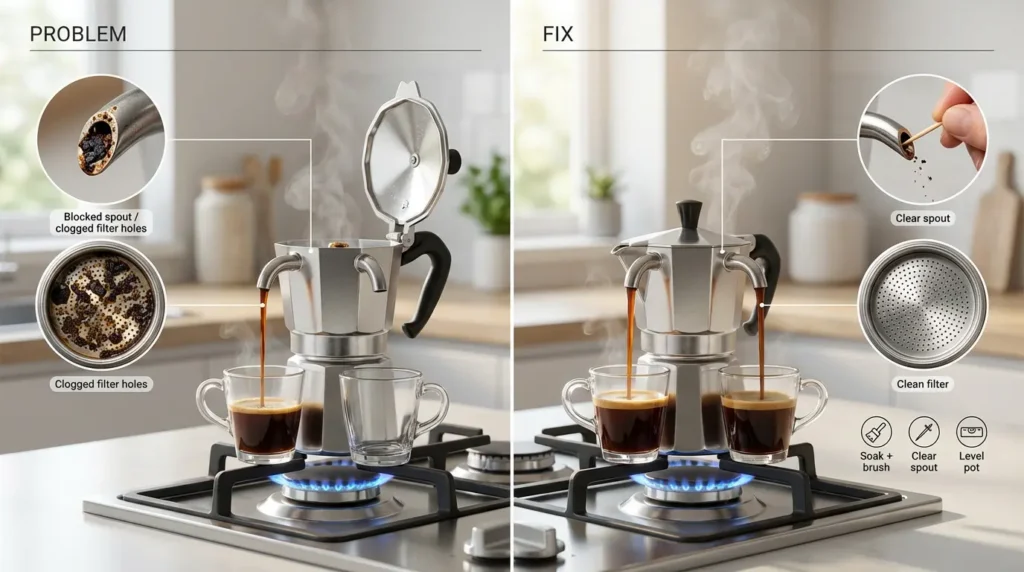
Uneven coffee distribution during brewing—where liquid emerges from one side of the collection chamber but not the other—indicates clogged filter holes or tilted pot placement. Coffee oils and mineral deposits accumulate in the tiny perforations of the filter plate over time, blocking some holes while leaving others open. This forces water to follow the path of least resistance rather than distributing evenly through all grounds.
Soak the filter basket and plate in very hot water for 15-20 minutes to soften oils, then scrub gently with a soft brush or toothpick to clear individual holes. For stubborn buildup, use the descaling solution soak method—but never use abrasive pads on aluminum filters as scratching creates more places for oils to accumulate. The filter plate should allow light to pass through all holes when held up to a window.
Tilted pot placement on unlevel burners causes liquid to pool on one side of the collection chamber rather than distributing evenly. This particularly affects mini and single-serve models with smaller diameter bases. Ensure your pot sits level on the burner grate or induction surface. Dual-spout models sometimes develop one blocked spout from dried coffee residue—check both spouts for obstructions and clean with a toothpick or small brush under running water.
Solutions:
- Soak filter basket in hot water 15-20 minutes, then scrub holes gently
- Check that pot sits level on burner; adjust grate position if needed
- Clear blocked spouts with toothpick and rinse thoroughly
- Descale if mineral deposits clog filter perforations
- Replace filter plate if holes are damaged or permanently clogged ($8-12)
FAQs About Moka Pots and Top Stove Coffee Makers
Are moka pots and stovetop espresso makers the same thing?
Yes, they are completely identical brewing devices with different names. “Moka pot” comes from the Italian “moka” referring to the Yemeni city of Mocha famous for coffee, while “stovetop espresso maker” emerged as an English marketing term emphasizing the espresso-like results. Both names describe Alfonso Bialetti’s three-chamber pressurized coffee brewer invented in 1933. You’ll find manufacturers, retailers, and coffee communities using the terms interchangeably throughout product listings and brewing guides.
Do moka pots make real espresso or just strong coffee?
Moka pots produce concentrated coffee, not true espresso. They generate 1.5 to 2 bars of pressure through steam, while authentic espresso requires 9 bars of pressure from electric pumps. The result is bold, espresso-like coffee without natural crema—ideal for drinking straight or using as a base for milk drinks like lattes and cappuccinos. The 9Barista represents the only exception, achieving true 9-bar espresso on a stovetop through specialized twin-boiler engineering. For most purposes, the distinction between moka coffee and espresso matters more to purists than casual drinkers who simply want strong, concentrated coffee.
What size moka pot should I buy for 1, 2, or 4 people?
For one person drinking straight moka coffee, choose a 1-2 cup model (50-100ml) that makes one concentrated serving. For two people, a 3-4 cup (150-200ml) works for straight coffee, while a 6-cup (300ml) better suits milk drinks like lattes that require more concentrated base. For four people, select a 9-12 cup model (450-600ml) to serve multiple guests simultaneously. Remember that moka pot “cups” measure 2-ounce espresso servings, not 8-ounce coffee mugs—a 6-cup moka pot produces approximately 10 ounces total, enough for two or three actual servings depending on dilution.
Can I use a moka pot on an induction stove?
Only stainless steel moka pots with magnetic bases work directly on induction cooktops. Traditional aluminum models require induction adapter discs—flat magnetic steel plates placed between the pot and cooktop that convert magnetic induction to conductive heat transfer. Recommended induction-compatible models include the Bialetti Venus, Alessi 9090, and any stainless steel moka pot specifically labeled as induction-safe. Adapters function adequately but reduce efficiency, increase brew time by 2-3 minutes, and provide less precise temperature control than direct induction coupling.
Which is better: aluminum or stainless steel moka pots?
Aluminum heats faster (3-6 minutes), costs less ($20-40), and delivers authentic Italian flavor but requires hand-washing and doesn’t work on induction cooktops. Stainless steel is induction-compatible, dishwasher-safe, and more durable (lasting 10-20+ years) but weighs more, heats slower, and costs significantly more ($40-150+). Choose aluminum for traditional brewing on gas or electric stoves when you value speed and affordability; select stainless steel for induction cooktops, easier maintenance, and maximum longevity. Both materials produce excellent coffee—your stove type and lifestyle preferences matter more than material composition.
How fine should I grind coffee for a moka pot?
Use medium-fine grind—finer than drip coffee but coarser than espresso. The grounds should resemble fine table salt or beach sand with individual particles visible rather than the powder-like consistency of espresso. Specific grinder settings vary by model: Baratza Encore #6, Niche Zero #25, or 14-16 on a 1-30 numbered scale. Grind too fine and you’ll extract bitter, over-concentrated coffee while risking clogged filters and dangerous pressure buildup; grind too coarse and water flows through too quickly, producing weak, watery results lacking body. Most users need 2-3 test batches to dial in their specific grinder for optimal moka pot extraction.
Should I tamp coffee in a stovetop espresso maker?
Never tamp coffee in a moka pot. Simply fill the filter basket to the rim with grounds, level gently with your finger to remove gaps and air pockets, then wipe excess coffee from the rim threads. Tamping compresses grounds too densely, restricting water flow and creating dangerous pressure buildup that can force coffee grounds into your finished brew or even damage your pot. Unlike espresso machines designed for 9-bar tamped extraction, moka pots rely on looser, unpacked grounds that allow proper water percolation at lower 1-2 bar pressure.
How long does it take to brew coffee in a moka pot?
With the modern hot water method, brewing takes 3-5 minutes on medium-low heat. The traditional cold water method requires 5-8 minutes as the entire pot heats from room temperature. Brew time varies based on stove type (gas heats fastest), heat level (higher isn’t better—use medium-low), and pot material (aluminum heats faster than stainless steel). Induction cooktops with stainless steel pots typically take 6-8 minutes. Remove from heat immediately when you hear gurgling sounds to prevent burnt flavor—the final 30 seconds on heat creates bitterness that ruins otherwise excellent coffee.
How do I know when my stovetop coffee is ready?
Watch for two signals: visually, the coffee stream turns from dark brown to honey-blonde color, and audibly, you’ll hear distinctive hissing and gurgling sounds. These signs indicate the water chamber is nearly empty and steam is beginning to pass through the grounds. Remove from heat immediately when gurgling begins—don’t wait for it to finish completely on the burner. The final 15-30 seconds of extraction that occur if left on heat produce harsh bitterness. After removing from heat, close the lid and let residual pressure complete extraction naturally off the burner for optimal flavor.
How often should I descale or deep-clean my moka pot?
Descale every 2-3 months if you have hard water, or every 6 months with soft water. Deep cleaning to remove coffee oil buildup should occur every 2-4 weeks for aluminum models, less frequently for stainless steel that tolerates dishwasher cleaning. Replace the silicone gasket every 6-12 months depending on usage frequency—daily brewers need annual replacement while occasional users can extend to 18 months. Inspect the safety valve monthly by pressing it gently with a toothpick to ensure it moves freely and isn’t blocked by mineral deposits or coffee grounds. Regular maintenance prevents flavor degradation and safety issues from clogged valves or worn seals.
Can I make a latte or cappuccino with a moka pot?
Yes—moka coffee works excellently for milk drinks due to its strength and intensity. Make a moka latte by combining one part moka coffee with three parts steamed milk, creating a rich drink that rivals cafe quality. For a “poor man’s cappuccino,” froth milk using a French press plunger, handheld milk frother, or manual whisk, then pour over your moka coffee for impressive presentation without espresso machine investment. You won’t achieve the microfoam texture that professional steam wands produce, but the result tastes delicious and authentic. The concentrated coffee cuts through milk beautifully without disappearing the way standard drip coffee would.
Is a moka pot a healthy way to drink coffee?
Moka pot coffee is healthy and contains beneficial antioxidants like other brewing methods. Unlike French press, the metal filter removes most sediment and cafestol—a compound found in unfiltered coffee that can raise cholesterol levels in some individuals. A 6-cup moka pot produces approximately 200-240mg of caffeine total, similar to 12-16 ounces of drip coffee. The concentrated format means you’re drinking less total volume while receiving comparable caffeine. As with all coffee, moderate consumption (3-4 cups daily) offers health benefits including reduced risk of certain diseases, though excessive intake can cause jitters, anxiety, or sleep disruption.
What is the best brand of moka pot for beginners?
The Bialetti Moka Express represents the best beginner choice at $34.99-40, offering foolproof operation, consistent coffee quality, and the reassurance of 87,000+ positive Amazon ratings. It’s the world’s most popular moka pot for good reason—durable aluminum construction, iconic octagonal design, and forgiving brewing characteristics that produce excellent results even with imperfect technique. For induction cooktop owners, choose the Bialetti Venus instead, which offers the same reliable performance in stainless steel format. Budget alternative: the Grosche Milano delivers approximately 90% of Bialetti’s quality at half the price ($25-30), making it ideal for testing whether you’ll enjoy moka brewing before committing to premium models.
Conclusion
Moka pots offer unbeatable value for coffee enthusiasts seeking rich, concentrated coffee without the expense and complexity of espresso machines. These elegant Italian brewers produce bold, full-bodied coffee using simple physics and minimal investment—qualities that explain their enduring popularity nine decades after Alfonso Bialetti’s invention. Whether you’re brewing morning lattes, camping espresso, or straight shots that rival cafe quality, moka pots deliver consistent results that justify their modest cost many times over.
The Bialetti Moka Express remains the default choice for most buyers, combining authentic design, reliable performance, and affordable pricing that makes it accessible to everyone. Induction cooktop owners should choose the Bialetti Venus for seamless compatibility, while budget-conscious shoppers can start with the Grosche Milano without sacrificing significant quality. Premium options like the Alessi 9090 suit design enthusiasts who appreciate museum-quality craftsmanship, and outdoor adventurers benefit from the GSI Glacier’s rugged construction.
Experiment with grind size, heat levels, and coffee roast profiles to discover your perfect moka pot technique—the hot water method significantly improves flavor by reducing bitterness. With proper care and maintenance, your moka pot will deliver thousands of satisfying cups over years or even decades of service. Start your stovetop espresso journey today and discover why millions of coffee lovers worldwide choose moka pots as their daily brewing ritual.
Read More
How to Clean Aluminum vs Stainless Steel Moka Pots