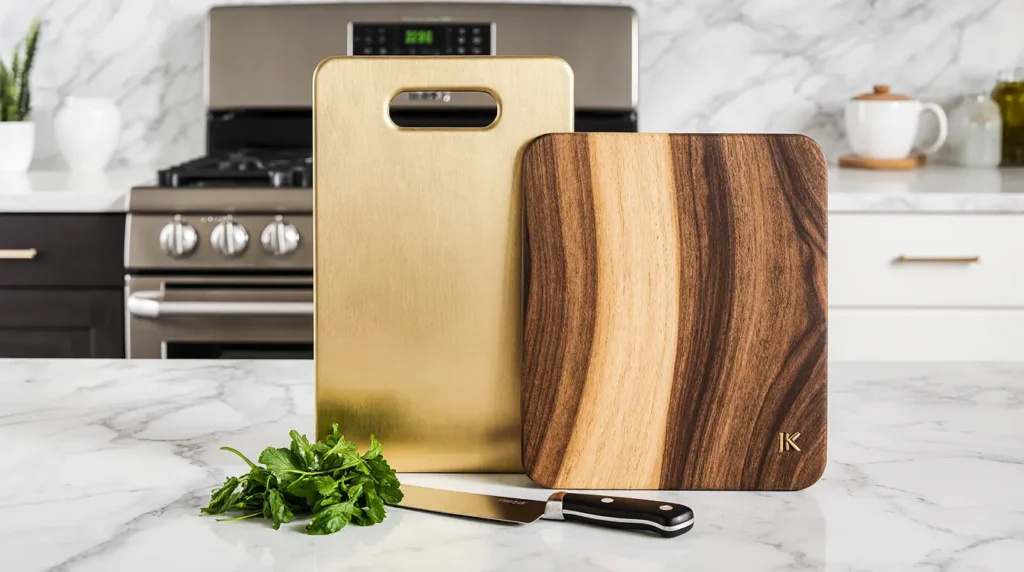
You’ve just invested in a premium chef’s knife—now comes the next dilemma: should you pair it with a sleek titanium cutting board or stick with traditional wood? The debate over titanium vs wooden cutting boards centers on a clear trade-off: titanium boards promise effortless maintenance and superior hygiene, while wooden boards are revered for preserving knife edges and adding warmth to your kitchen. This guide compares titanium vs wooden cutting boards across durability, hygiene, knife-friendliness, maintenance, and real-world use cases to help you make the right choice. For in-depth titanium board reviews and top picks, see our Best Titanium Cutting Boards in 2025 You’ll Love.
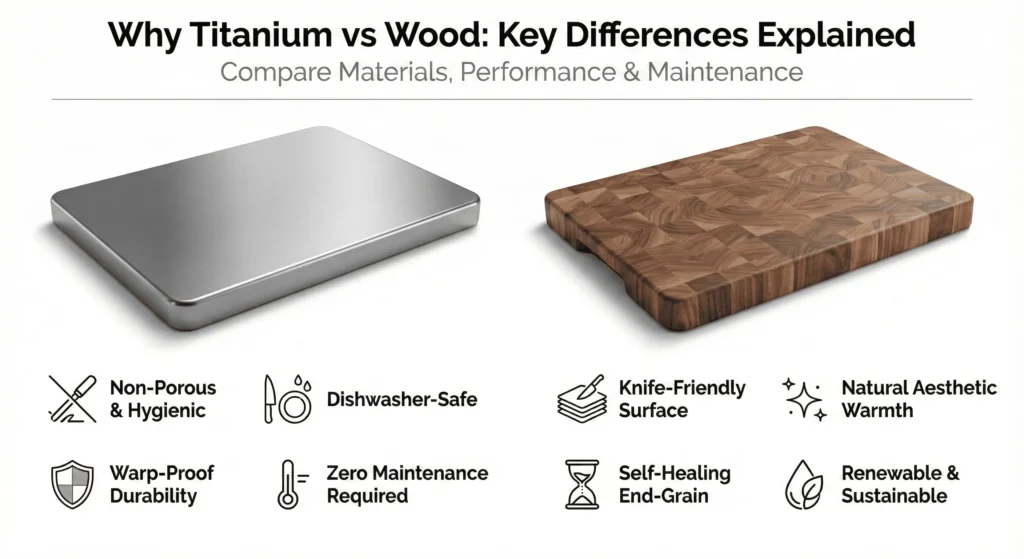
Titanium vs Wooden Cutting Boards: Comparison Table



Now let’s examine each factor in detail to determine which material suits your knives, habits, and kitchen style best.
Knife-Friendliness: Which Preserves Your Blades?
End-grain wooden boards are the gold standard for knife preservation. The vertical wood fibers allow knife edges to slip between them, creating a “self-healing” surface that closes after each cut. This softer contact keeps blades sharper longer, especially critical for thin Japanese knives made from hard carbon steel.
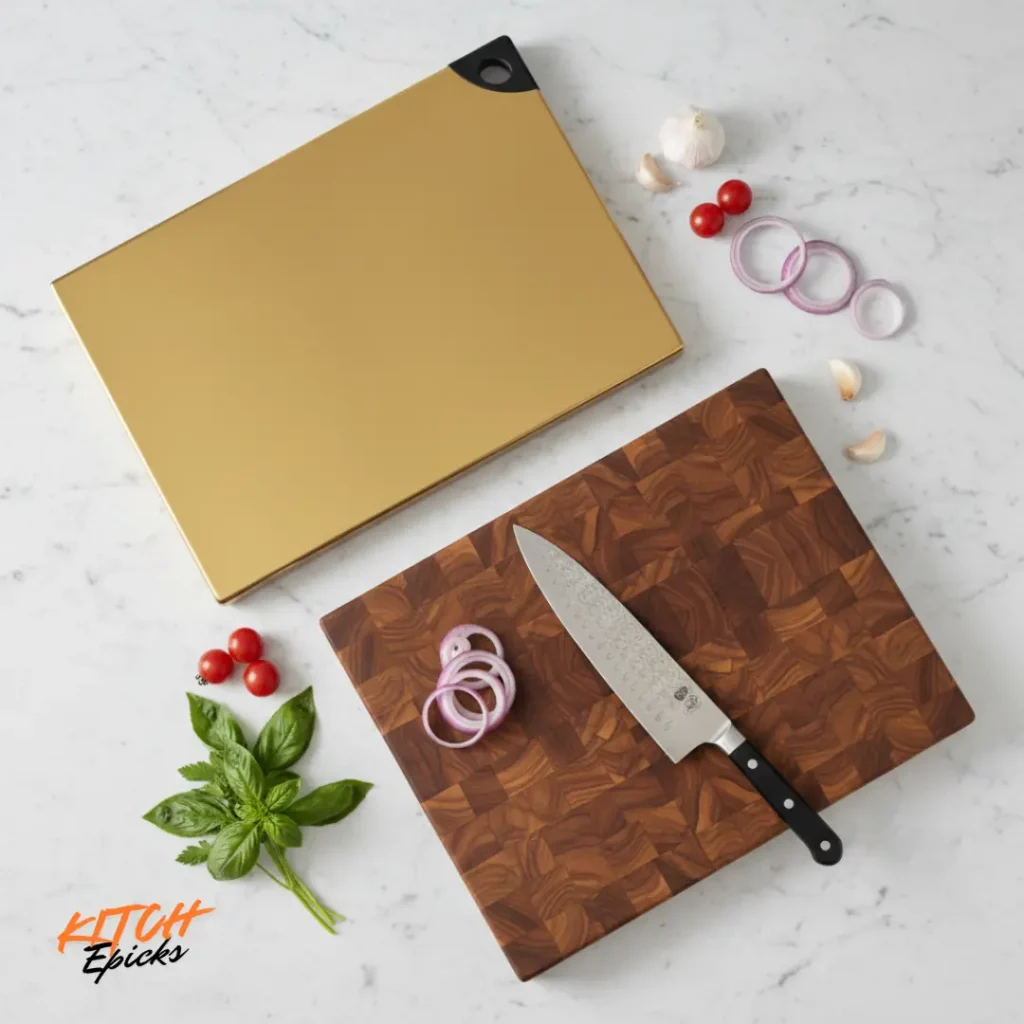
Titanium cutting boards—most of which are actually TiN (titanium nitride)-coated stainless steel, not pure titanium—present a much harder surface, with coating hardness around 2,400 HV. This rigidity can dull knife edges faster, particularly premium blades. Users on Reddit and YouTube reviews frequently report increased sharpening frequency after switching to titanium boards. For a detailed analysis of this issue, read our guide Do Titanium Cutting Boards Dull Knives? Expert Answer 2025. For daily chopping with high-quality knives, end-grain wood remains the gentler, blade-preserving choice.
Hygiene & Bacteria Resistance
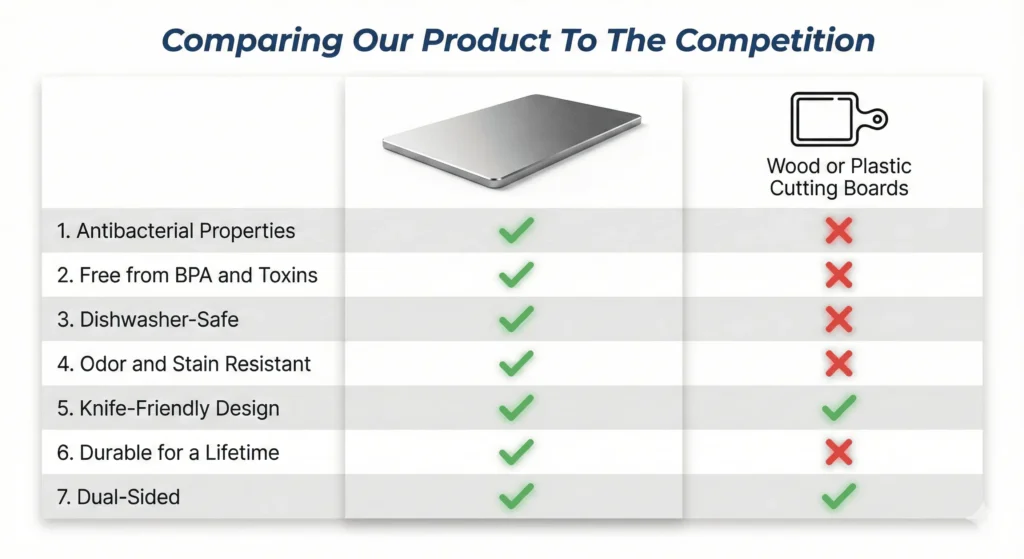
Titanium boards excel in sanitation: their non-porous surface resists bacterial penetration and tolerates dishwasher heat for thorough sterilization. The FDA recognizes titanium as a biocompatible, non-toxic material safe for food contact.
Wood, despite being porous, possesses natural antimicrobial properties. University of Wisconsin research found that 99.9 percent of bacteria on wooden boards died within three minutes, while bacteria survived on plastic surfaces. However, this protection depends on proper maintenance—dry, cracked wood can harbor bacteria in deep grooves. Well-oiled wooden boards stay hygienic, but titanium wins for zero-effort sanitizing.
Durability & Longevity
Titanium boards are virtually indestructible: they won’t warp, crack, or absorb moisture, and they resist scratches and stains. With minimal care, a quality titanium board can last 10+ years.
Wooden boards require more attention to maintain longevity. Exposure to heat, moisture, or prolonged dryness causes warping and splitting. Regular oiling (monthly) preserves structural integrity and extends lifespan to 5–10 years. While titanium stays pristine, wood develops a natural patina that many cooks appreciate. For low-maintenance households, titanium clearly outlasts wood.
Maintenance Requirements
Titanium boards are effortless: wipe them down or toss them in the dishwasher—no conditioning, no special care. Wooden boards demand regular attention: hand-wash only, dry immediately, and apply food-grade mineral oil or board cream monthly to prevent cracking. The annual cost for wood maintenance runs around $10–15 for oil.
However, there’s a hidden maintenance cost with titanium: increased knife sharpening. If titanium’s harder surface requires you to sharpen knives twice as often (4 times yearly vs. 2 times), professional sharpening costs ($15–20 per knife) can add $40–80 annually. Titanium suits busy cooks who value convenience; wood rewards those who enjoy hands-on kitchen rituals.
Aesthetics and Kitchen Fit
Titanium boards bring modern, industrial style—gold TiN coatings or brushed steel finishes complement contemporary kitchens. Wooden boards offer warm, natural grain patterns that suit farmhouse, rustic, or traditional décor. If you’re looking for a sustainable, beautiful wooden option, explore our High-Quality Acacia Wood Cutting Board for Cooking. Wood also doubles as a charcuterie or bread board for tableside serving, while titanium remains purely utilitarian. Choose titanium for sleek minimalism, wood for warmth and versatility.
When to Choose Titanium (Ideal Use Cases)
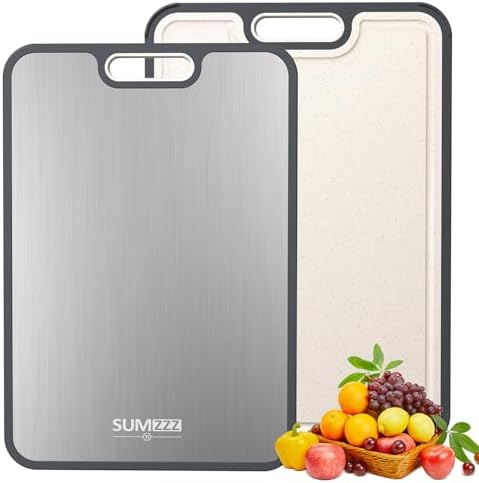
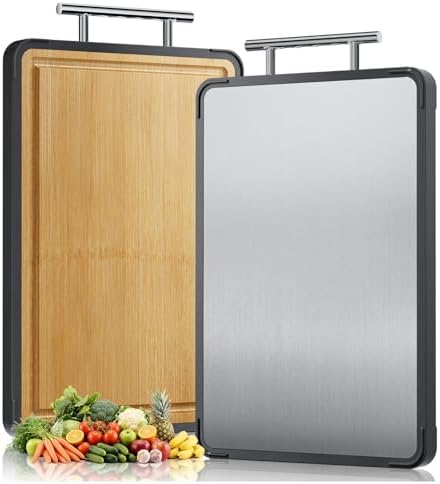
- 【2 IN 1 Cutting Board 】Cutting board is a versatile 2 in 1 kitchen tool, with one side made of food-grade 99.9%Pure Tita…
- 【High Quality】Titanium cutting board completely improves the shortcomings of traditional cutting boards traditional cutt…
- 【Saving-Time Design】Built-in juice groove and garlic grinding area cutting board, deep groove that doesn’t spill liquids…
Titanium cutting boards are the better choice when:
- You frequently prep raw meat or fish and want dishwasher-safe sanitizing
- You have limited time for board maintenance and prefer wipe-and-go convenience
- You live in humid climates where wooden boards warp easily
- You prefer modern, industrial kitchen aesthetics
- You use budget or serrated knives where edge wear is less concerning
Titanium excels in high-hygiene, low-maintenance scenarios—but it’s not ideal for knife preservation. For a comprehensive cost-benefit analysis, see Are Titanium Cutting Boards Worth It? 2025 Guide.
When to Choose Wood (Ideal Use Cases)
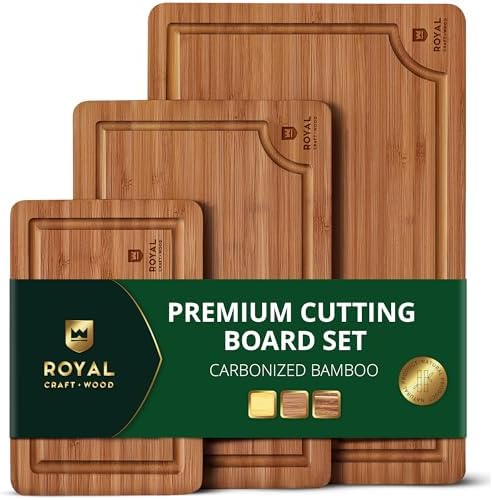
- THREE IDEAL SIZES FOR EVERY TASK – This bamboo cutting board set includes three essential cutting board sizes – 15×10”, …
- DESIGNED FOR FUNCTIONAL ELEGANCE – Crafted from 100% natural bamboo, these non toxic wooden cutting boards for kitchen c…
- BUILT-IN SIDE HANDLES FOR EASY USE – Thoughtfully designed side handles make it easy to move ingredients or serve dishes…
Wooden cutting boards remain the top pick when:
- You own high-quality chef’s knives or Japanese steel and want to protect edges
- You enjoy kitchen care rituals like oiling and maintaining your tools
- You want a board that doubles as a serving platter for cheese, bread, or charcuterie
- You value natural, sustainable materials—look for FSC-certified hardwood to ensure responsible forest management
- You prefer the warm, organic look of wood grain in your kitchen
Wood remains the gold standard for knife-conscious home cooks and professional chefs.
Can You Use Both? A Hybrid Approach
Many experienced cooks use both materials strategically: titanium for raw proteins (easy sanitizing, no cross-contamination risk) and wood for vegetables, herbs, and daily prep (knife preservation). Color-coding helps: designate your titanium board exclusively for meat to avoid cross-contamination, while reserving wood for produce.
This hybrid setup is cost-effective, too—one titanium board (~$80) plus one quality end-grain wooden board (~$60) covers all your cutting needs for under $150.
Final Verdict: Which Is Right for You?
The best cutting board depends on your priorities:
- Choose titanium if low maintenance, high hygiene, and modern aesthetics matter most
- Choose wood if knife longevity, traditional craftsmanship, and serving versatility are your priorities
- Choose both if you want specialized tools for different tasks—titanium for protein, wood for produce
The best cutting board isn’t one-size-fits-all—match the material to your knives, cooking habits, and kitchen style.
Frequently Asked Questions
Is a wooden cutting board more sanitary than titanium?
Both are sanitary when properly maintained. Titanium is non-porous and dishwasher-safe, while wood has natural antimicrobial properties but requires regular oiling to prevent bacteria in cracks.
Can I use a titanium board for daily chopping?
Yes, but it may dull knives faster than wood. Titanium is best for tasks where hygiene is critical—like raw meat prep—or when using budget knives.
Which is better for Japanese knives: wood or titanium?
Wood, especially end-grain, is gentler on thin, hard Japanese steel. Titanium’s harder surface can chip delicate edges over time.
Do wooden boards really need monthly oiling?
Yes, monthly mineral oil applications prevent cracking, warping, and bacteria buildup. Each treatment costs about $1–2 in oil.
What does “titanium cutting board” actually mean?
Most are TiN (titanium nitride)-coated stainless steel, not pure titanium. The TiN coating provides hardness (~2,400 HV) and the characteristic gold color.
Can you put wooden cutting boards in the dishwasher?
No—high heat and moisture cause warping and cracking. Always hand-wash wooden boards and dry them immediately.