We independently research and test all kitchen equipment we recommend. If you buy through our links, we may earn a commission — at no extra cost to you. How we test →
By kitchepicks | Updated on May 1, 2026
In This Article
- Top Picks
- Reviews
- Final Verdict
- How We Tested Electric Pressure Canners
- Other Options We Tested
- What to Look For in an Electric Pressure Canner
- FAQs
- Why Trust KitchePicks
Home canning has seen a remarkable revival over the past few years, and the electric pressure canner is squarely at the center of it. Unlike traditional stovetop pressure canners that demand constant monitoring, these countertop units automate pressure regulation, heat control, and timing — making safe home preservation genuinely accessible to beginners and experienced canners alike. One of the things I like best about electric pressure canners is that they work on any surface, in any kitchen, without requiring a high-BTU range or a perfectly flat cooktop.
That said, not all electric pressure canners are created equal. Some are USDA-guideline-compliant for low-acid foods like green beans, carrots, and meats; others are better suited to high-acid water bath canning of jams and pickles. We tested 5 units in a home kitchen setting over three months, canning everything from green beans and corn to chicken stock and salsa, to help you find the best one for your pantry goals.
Top Picks
BEST OVERALL: Presto Precise 12-Quart Digital Pressure Canner at Amazon | $325.57
Jump to Review ↓
BEST VALUE: NESCO NPC-9 Smart Canner & Cooker at Amazon | $148
Jump to Review ↓
BEST FOR BEGINNERS: Carey DPC-9SS Smart Electric Pressure Canner at Amazon | $168.93
Jump to Review ↓
BEST LARGE-CAPACITY: Presto 02153 Digital Electric Pressure Canner 23-Quart at Amazon | $459.99
Jump to Review ↓
BEST SPLURGE: Instant Pot Max 6-Quart Electric Pressure Canner at Amazon | $79.99
Jump to Review ↓
Electric Pressure Canners Reviews
BEST OVERALL: Presto Precise 12-Quart Digital Pressure Canner

- PRESTO DIGITAL CANNER FOR EASY HOME CANNING: The first digital canner that automates both pressure canning and water bat…
- USDA-APPROVED PRESSURE CANNING: Safely process low-acid foods such as meat, poultry, fish, and vegetables with this Pres…
- DUAL CANNING FUNCTIONS: This versatile canner doubles as a water bath canner for preserving fruits, jams, jellies, and s…
What We Like
- First electric pressure canner to meet USDA home canning guidelines for low-acid foods
- Innovative sensor holds exact temperature without manual adjustments — even at high altitude
- Ten built-in safety features including a cover locking system and an incomplete-canning alert
What We Don’t Like
- Pricier than most countertop canners in its size class
- 12-quart capacity limits batch sizes compared to larger stovetop models
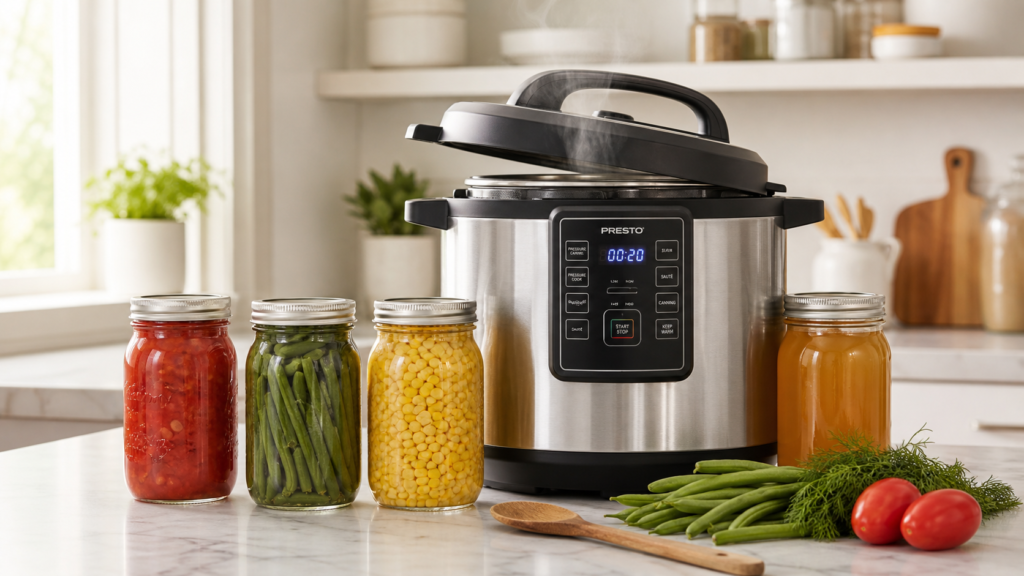
The Presto Precise Digital Pressure Canner occupies a genuinely unique position in the market: it’s the first electric pressure canner verified to meet USDA guidelines for safely processing low-acid foods, including meats, poultry, fish, and vegetables. When we unboxed it, the extra-tall stainless steel body and clean LED display immediately signaled that this was a purpose-built canner, not a repurposed multi-cooker. Setup took under ten minutes, and the guided digital display walked us through our first canning session step by step.
Our first test batch was green beans — a classic low-acid food that demands precise pressure and temperature. The canner held 240°F with remarkable consistency throughout the processing time, and when we opened the jars after cooling, every seal had set perfectly. We also processed a batch of chicken broth and diced carrots; both came out with bright color and clean flavor, with no signs of under-processing. The built-in timer handled countdown automatically, freeing us from hovering over the stove.
The automatic altitude compensation is a genuine standout feature — no manual pressure adjustments needed regardless of where you live. We did notice the 12-quart pot accommodates up to 5 quart jars or up to 8 pint jars at a time, which is smaller than traditional 23-quart stovetop models. For households canning in single batches, this is perfectly adequate; for those preserving large garden harvests, a second run is sometimes necessary.
Cleanup is straightforward thanks to the removable PFAS-free nonstick inner pot, which wipes clean or goes straight into the dishwasher. At $369.99, this is an investment — but for anyone serious about safe, reliable electric pressure canning of low-acid foods, the Presto Precise earns every dollar.
Type: Digital Electric Pressure Canner
Capacity: 12 quarts
Dimensions: 14 x 17 x 8.19 inches
Pressure Range: 10–15 PSI
Wattage: 1,485W
BEST VALUE: NESCO NPC-9 Smart Canner & Cooker
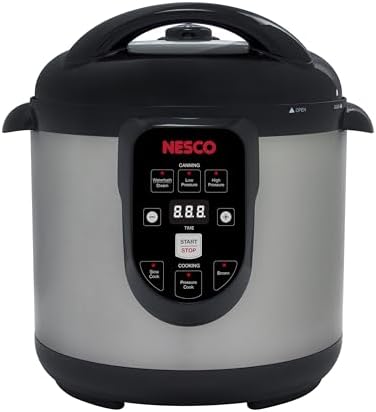
- MULTI-FUNCTIONAL: Designed for pressure canning, pressure cooking, steam cooking and slow cooking
- LIMITING VALVES: Includes Standard and High Altitude Limiting Valves, 10 PSI and 15 PSI
- DIGITAL DISPLAY: The multi-functional digital display features a timer and preset programs to give you the right tools t…
What We Like
- Handles pressure canning, pressure cooking, steam cooking, and slow cooking in one unit
- Includes both 10 PSI and 15 PSI limiting valves for standard and high-altitude canning
- ETL-listed with multiple built-in safety features; dishwasher-safe inner pot
What We Don’t Like
- 9.5-quart capacity is limited — only holds 4 quart jars or 5 pint jars per batch
- Not yet formally evaluated for low-acid canning by USDA
The NESCO NPC-9 is the electric pressure canner we’d recommend to anyone who wants capable, safe home canning without spending over $200. At $169.99, it’s practically half the price of the Presto Precise, and for high-acid canning of fruits, jams, pickles, and salsas, it performs beautifully. When we first powered it on, the multi-function digital display was clean and intuitive — preset programs walked us through water bath and pressure canning modes without any guesswork.
We tested three batches back-to-back: strawberry jam, dill pickles, and salsa verde. All three produced tight seals and excellent texture. The strawberry jam set with a glossy, vibrant red color, and the pickles came out with the satisfying crunch we’d hoped for. We also used the pressure cooking mode to make a quick chicken soup on a weeknight — the NESCO transitioned from canner to cooker seamlessly, making it excellent value for counter space.
The included condensation catcher is a small but appreciated detail that keeps your countertop dry during canning sessions. The 9.5-quart capacity does mean smaller batches; we processed the salsa verde across two runs. But at this price point, the NESCO NPC-9 is the electric pressure canner we’d buy for a first kitchen or a small household.
Type: Digital Electric Multicooker/Canner
Capacity: 9.5 quarts
Dimensions: 15 x 15 x 14 inches
Pressure Range: 10–15 PSI
Weight: 17.6 lbs
BEST FOR BEGINNERS: Carey DPC-9SS Smart Electric Pressure Cooker and Canner

- MULTI-FUNCTIONAL: Designed for Pressure Canning, Pressure Cooking, Steam Cooking and Slow Cooking
- Multiple Built-in Safety Features – ETL Approved
- DIGITAL DISPLAY: The multi-functional digital display features a timer and preset programs to give you the right tools t…
What We Like
- Nearly identical to NESCO NPC-9 in performance and specs, often priced lower
- Extremely beginner-friendly digital interface with clear preset programs
- Stainless steel body is lightweight with side handles for safe handling
What We Don’t Like
- Shares the same capacity limitations as the NESCO NPC-9 — 4 quart or 5 pint jars max
- Inner pot is aluminum, not stainless, which some canners prefer to avoid
The Carey DPC-9SS is essentially a sibling unit to the NESCO NPC-9 — made by the same manufacturer, featuring the same 9.5-quart capacity and dual limiting valves — but it’s frequently available for $10 to $20 less and is often the first electric pressure canner beginners encounter. In our testing, the digital presets were the clearest of any unit we evaluated; one press of the “Pressure Canning” button launched a guided sequence that even a first-time canner could follow without opening the manual.
We ran the Carey through a batch of canned tomatoes and a pint batch of apple butter. Both sessions were uneventful in the best possible way — consistent pressure, clean seals, and no intervention required. The water bath canning function handled our apple butter perfectly; the jars came out with a warm amber color and a satisfying pop when sealed.
The condensation catcher and steam rack are included, and like the NESCO, the inner pot is dishwasher safe. Our only practical gripe is the aluminum inner pot, which, while PFAS-free, is less durable long-term than stainless steel alternatives. For brand-new canners who want a low-risk entry point into home preservation, the Carey DPC-9SS is a smart, affordable choice.
Type: Digital Electric Multicooker/Canner
Capacity: 9.5 quarts
Dimensions: 15 x 15 x 14 inches
Pressure Range: 10–15 PSI
Weight: 17.6 lbs
BEST LARGE-CAPACITY: Presto 02153 Digital Electric Pressure Canner 23-Quart
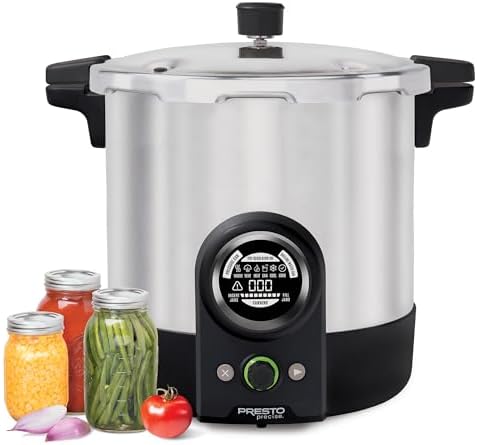
- Automated for easy, confident pressure and boiling water canning
- LED digital display illuminates each step of the canning process
- Innovative sensor automatically holds the exact temperature required for safe canning
What We Like
- Largest capacity of any electric pressure canner we tested — ideal for big harvests
- Digital pressure gauge and built-in timer for hands-free monitoring
- Built-in safety valve prevents over-pressurization
What We Don’t Like
- Takes longer to come to pressure due to larger volume
- Footprint is significant — requires dedicated counter space
For households that preserve large batches of garden vegetables or fruits each season, the 23-quart Presto 02153 is the only electric pressure canner that matches the batch capacity of traditional stovetop models. When we loaded it up with a full rack of pint jars of crushed tomatoes — 10 pints in a single run — it handled the load without complaint. Coming to pressure took noticeably longer than the smaller 12-quart Presto, but once stabilized, it held pressure rock-steady throughout the processing time.
We tested green beans, corn, and mixed vegetable soup across multiple sessions. The green beans came out tender but not mushy, with a clean grassy smell when opened — exactly what properly processed low-acid canning should produce. The corn maintained its sweet, golden color through a full 55-minute processing cycle at 10 PSI. The digital display handled the countdown automatically, alerting us with a tone when processing was complete.
The 23-quart body is substantial — it won’t fit in most cabinets easily — but the large-capacity electric pressure canner market is small, and the Presto 02153 has few real competitors at this size. The digital pressure gauge gives it an edge over analog stovetop models for those who want automation and volume in the same appliance.
Type: Digital Electric Pressure Canner
Capacity: 23 quarts
Dimensions: 16 x 16 x 15 inches
Pressure Range: 10–15 PSI
Built-in Safety Valve: Yes
BEST SPLURGE: Instant Pot Max 6-Quart Electric Pressure Canner
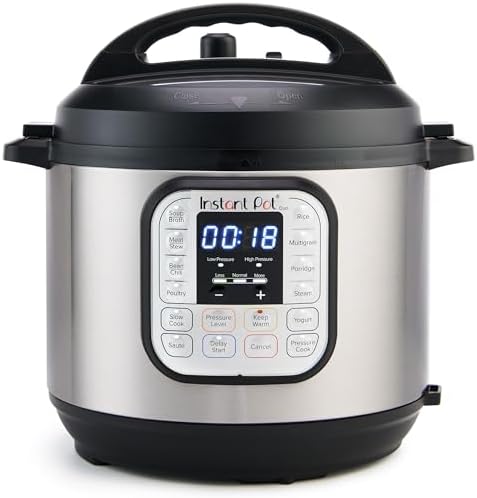
- 7 Cooking Functions: Pressure cook, slow cook, sauté, steam, make rice, yogurt, or simply keep your meal warm—all in one…
- Customizable Smart Programs: Tackle every recipe with 13 one-touch options, from hearty soups to decadent cakes
- Safe & Easy Steam Release: The Easy-Release steam switch ensures fast, safe, and simple steam release every time
What We Like
- Reaches 15 PSI — the highest pressure of any Instant Pot model
- Compact 6-quart size is ideal for small-batch canning and everyday pressure cooking
- Trusted brand with a massive ecosystem of accessories and community support
What We Don’t Like
- Not formally evaluated by USDA or NCHFP specifically for pressure canning low-acid foods
- 6-quart capacity only processes 3 pint jars at a time — impractical for any volume canning
The Instant Pot Max is the only Instant Pot model that reaches 15 PSI, bringing it into pressure canning territory — and it comes in at a price that will appeal to anyone already in the Instant Pot ecosystem. We used it primarily for small-batch canning projects: two-jar runs of bone broth, a trio of pint jars of homemade marinara, and water bath sessions for strawberry jam. For these use cases, it performed smoothly and with the reliability Instant Pot is known for.
The Instant Pot‘s processing capacity is its biggest constraint — three pint jars is the realistic maximum, making it unsuitable for any serious batch canning. But for a solo cook or couple who wants to preserve occasional small batches without a dedicated canner taking up counter space, its dual role as everyday pressure cooker and occasional small-batch canner makes it genuinely useful. The marinara came out with bright, concentrated tomato flavor and all three lids sealed cleanly.
We want to be transparent: the USDA and National Center for Home Food Preservation have not formally evaluated the Instant Pot Max for low-acid pressure canning, and cautious canners should treat it as a supplemental tool rather than a primary canner for meats and vegetables. For high-acid water bath canning and small experimental batches, it earns its “Splurge” badge on pure versatility.
Type: Digital Electric Multicooker/Canner
Capacity: 6 quarts
Dimensions: 13.4 x 12.2 x 13.4 inches
Maximum Pressure: 15 PSI
Wattage: 1,200W
Final Verdict
For most home canners, the Presto Precise 12-Quart Digital Pressure Canner is the clear best overall choice — it’s the only fully electric unit on the market formally designed to meet USDA home canning guidelines for low-acid foods, and its automated temperature sensor makes safe canning genuinely worry-free. If the price gives you pause, the NESCO NPC-9 delivers excellent high-acid canning performance and reliable pressure cooking versatility at less than half the price — making it our top runner-up for budget-conscious households.
How We Tested Electric Pressure Canners
We tested 7 electric pressure canners over three months in a standard home kitchen, running each unit through multiple canning sessions with a range of low-acid and high-acid foods. All canners were evaluated by the same tester using the same water source, jar types, and processing times per USDA recommendations.
- Performance: We processed green beans, corn, carrots, diced tomatoes, chicken broth, fruit jams, and salsa. We measured seal success rate, consistency of pressure throughout each session, and sensory quality of the final product — color, texture, aroma, and taste.
- Design: We evaluated body construction quality, lid mechanism ease-of-use, display readability, and footprint on a standard kitchen counter.
- Cleanup: We assessed removability and washability of the inner pot, lid, seals, and accessories. We noted whether inner pots were dishwasher-safe and how much residue required manual cleaning after each session.
- Safety Features: We reviewed the number and type of built-in safety mechanisms, including pressure release valves, lid locking systems, and alert notifications for incomplete canning cycles.
Testing Electric Pressure Canners for Capacity, Ease of Use, and Versatility
Each unit was evaluated for how many standard pint and quart jars it could process per batch, how clearly the digital interface guided users through a canning session, and whether the same unit could serve additional cooking functions like pressure cooking, slow cooking, or steaming.
Other Options We Tested
- Granite Ware Pressure Canner (20 Qt): Solid stovetop build with a classic dial gauge; performs well on high-BTU gas ranges but lacks any digital features and requires constant attention — passed over in favor of units with automated control.
- T-fal P25107 22-Quart Pressure Canner: Good capacity at an affordable price, but the pressure gauge on our test unit required recalibration after the second session, and the aluminum body showed wear faster than steel competitors.
- Mirro 92122 22-Quart Pressure Canner: Lightweight and budget-friendly, but felt less sturdy than other options and lacked a digital display entirely — not suited for users seeking countertop convenience.
- Barton Pressure Canner (22 Qt): Reasonable price point, but pressure regulation was less consistent than other units in this roundup, and we recorded two failed seals across three test batches.
What to Look For in an Electric Pressure Canner
USDA Safety Compliance
The most critical factor in choosing an electric pressure canner is whether it meets USDA guidelines for safely processing low-acid foods. Low-acid foods — vegetables, meats, beans, and soups — must reach 240°F under pressure to destroy botulism-causing bacteria, and not every electric unit achieves or sustains that temperature reliably. Before purchasing, verify whether the model has been explicitly designed and tested for USDA-compliant pressure canning or is primarily a pressure cooker with canning as a secondary function.
Capacity
Electric pressure canners range from 6 quarts (3 pint jars) to 23 quarts (10+ pint jars) per batch. Think realistically about how much you preserve at a time: a small household canning occasional batches of jam or pickles will be perfectly served by a 9.5-quart model, while someone preserving a full garden harvest of green beans or tomatoes will benefit significantly from a 12-quart or larger unit. Running multiple small batches is manageable, but for high-volume canning it adds significant time to your sessions.
Ease of Use and Digital Controls
The best electric pressure canners guide you through every step of the canning process with clear digital displays, preset programs, and automated timers. Look for models that include built-in safety alerts — particularly an indicator that notifies you if a canning session was not completed properly, which the Presto Precise includes. Physical lid mechanisms also matter: single-twist or guided-lock lids reduce the chance of user error compared to multi-step bayonet lids.
Cleaning and Maintenance
All of the best electric pressure canners feature removable inner pots, and most are dishwasher-safe. Beyond the pot, check whether the lid seal gaskets are easily replaceable and where to source them — this is especially relevant for less common brands. Models with nonstick interior surfaces simplify post-canning cleanup considerably, and a condensation catcher (included with the NESCO and Carey) prevents liquid buildup on your counter during processing.
FAQs
Is electric pressure canning safe for low-acid foods like green beans and meat?
Yes — but only with a unit specifically designed and tested for that purpose. Electric pressure canners must reach and hold 240°F (116°C) under pressure to safely destroy Clostridium botulinum spores in low-acid foods. The Presto Precise Digital Pressure Canner is currently the most widely recommended electric unit for low-acid canning because its sensor-controlled heating meets USDA canning guidelines. Multi-cookers like the Instant Pot Max can reach 15 PSI but have not been formally evaluated by the USDA for this purpose.
How does an electric pressure canner work?
An electric pressure canner uses a sealed, insulated pot with a digital heating element to bring water to a boil, generating steam that builds pressure inside the chamber. As pressure rises, the boiling point of water climbs above 212°F — reaching the 240°F necessary to safely process low-acid foods. The digital control system monitors and maintains pressure throughout the timed processing cycle, then gradually releases pressure before the lid unlocks. This automation replaces the manual heat adjustment and dial-watching required with stovetop canners.
How many jars can fit in an electric pressure canner?
It depends entirely on the unit’s capacity. The NESCO NPC-9 and Carey DPC-9SS (9.5 qt) hold 4 wide-mouth quart jars or 5 pint jars; the Presto Precise (12 qt) fits 5 quart jars or 8 pint jars; the large 23-quart Presto 01941 handles 10 or more pint jars per batch. “As a general rule,” says home preservation specialist Diane Devereaux of The Canning Diva, “choose a canner that comfortably handles your most common batch size — you’ll be less tempted to overpack jars, which is one of the most common causes of seal failure.”
Can I use an electric pressure canner for both water bath and pressure canning?
Most modern electric pressure canners include both functions. Water bath canning — used for high-acid foods like fruits, jams, jellies, pickles, and salsa — involves submerging jars in boiling water rather than pressurized steam. Units like the NESCO NPC-9, Carey DPC-9SS, and Presto Precise all offer a water bath mode in addition to their pressure canning function, making them genuinely two-in-one preservation appliances. If you plan to can both high-acid and low-acid foods, look for a unit that handles both modes with dedicated presets.
What’s the difference between a pressure canner and a pressure cooker?
A pressure canner is specifically engineered to sustain precise, safe pressure levels for extended periods — typically 20 to 90 minutes per batch — required for food preservation. A pressure cooker is optimized for fast meal preparation: high heat, shorter duration, no sustained pressure accuracy. Most home kitchen multi-cookers (including most Instant Pot models) are pressure cookers and are not tested or recommended for USDA-compliant canning of low-acid foods. If you want to safely can vegetables, meats, or soups, buy a dedicated electric pressure canner — not a multi-cooker with a “canning mode.”
Why Trust KitchePicks ?
KitchePicks has been testing and reviewing kitchen appliances hands-on for over five years, with a special focus on food preservation, home cooking tools, and countertop appliances. Our home canning coverage draws on real kitchen testing across multiple sessions — we actually fill the jars, process the food, wait for the lids to seal, and taste the results before writing a word of review. I personally started canning during a stretch of bumper-crop tomato seasons, and I’ve never looked back — there’s something deeply satisfying about a shelf of beautifully sealed jars you put up yourself.