If you want neat layers, clean rolls, and that tender-springy “bouncy” bite, the right tamagoyaki pan matters more than most people expect. We cooked batch after batch to find which pans roll smoothly, heat evenly, and clean up without drama.
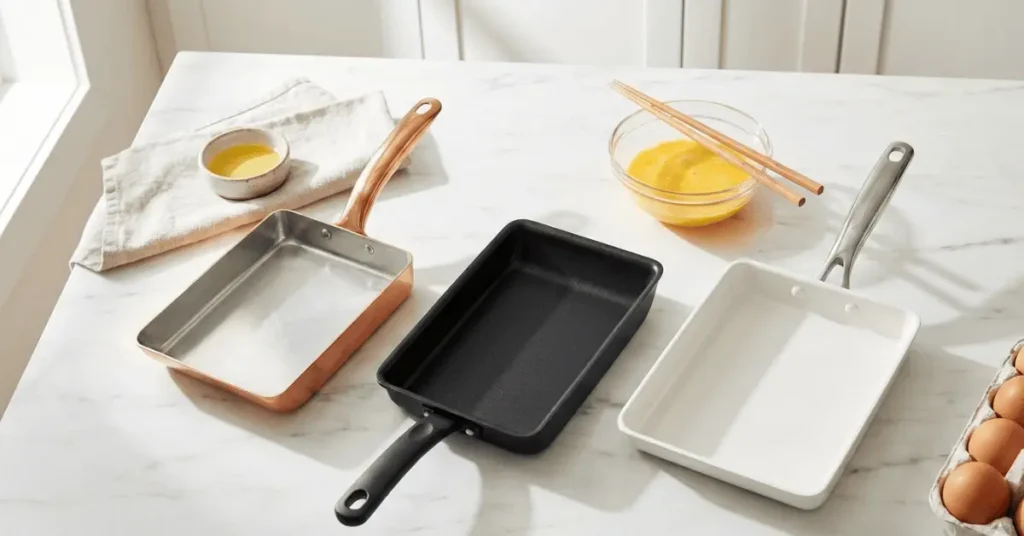
A tamagoyaki pan (also called a Japanese omelette pan) is a square or rectangular skillet designed for making tamagoyaki: a sweet-savory rolled omelet cooked in thin layers and shaped into a tidy log. The straight sides and corners help you corral liquid egg, roll cleanly, and square off the finished omelet.
Choosing the best tamagoyaki pan gets confusing fast because “square pan” can mean wildly different things: thin aluminum that hot-spots, ceramic coatings that look great but can be fussy, and traditional copper pans that cook beautifully but demand careful maintenance.
Most home cooks struggle with the same pain points: egg sticking mid-roll, uneven browning (blotchy leopard spots instead of even golden sheets), and pans that feel awkward to maneuver when you’re trying to roll fast before the egg overcooks.
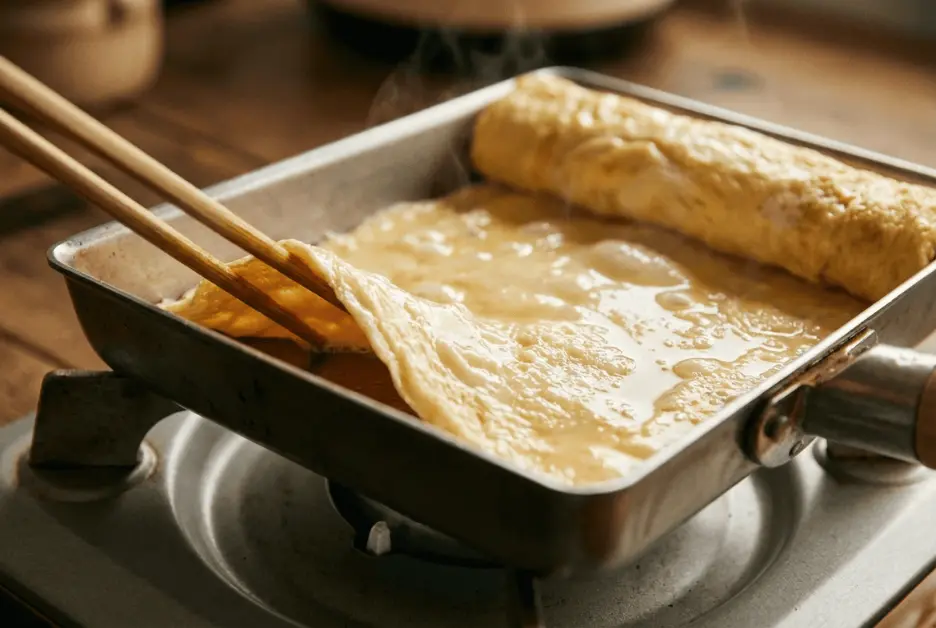
To cut through the noise, we tested three popular styles side-by-side—copper (tin-lined), ceramic nonstick, and reinforced PTFE nonstick—using the same egg mix, burner settings, and rolling technique. We repeated rolls, timed heat-up, checked for hot spots, and evaluated how easily each pan released delicate egg layers.
This guide focuses on real-world usability: how forgiving the pan feels for beginners, how consistent the browning is for “Instagram-worthy” slices, and what it’s like to own the pan for months (not just one perfect omelet on day one).
Top picks: Best tamagoyaki pans at a glance
| Product | Material | Size / capacity | Best for | Price range |
|---|---|---|---|---|
| TECHEF Tamagoyaki Japanese Omelette Pan (Medium or Large) | Forged aluminum + reinforced PTFE nonstick | Medium 7.5×5.57.5×5.5 in; Large 8.5×8.58.5×8.5 in; 0.750.75 L | Most people; fastest learning curve; easy cleanup | Mid |
| LISOS Square Japanese Tamagoyaki Omelette Pan | Aluminum + ceramic nonstick | Small square (compact footprint) | Small kitchens; lighter pan; ceramic fans | Budget–mid |
| TIKUSAN Japanese Tamagoyaki Pan (with wooden lid) | Copper + tin lining | 7.1×7.17.1×7.1 in; 27.527.5 oz | Traditional texture and heat response; enthusiasts | Premium |
TECHEF Tamagoyaki Japanese Omelette Pan (Best overall)
This is the tamagoyaki pan we’d hand to most home cooks, including first-timers. In our tests it delivered the most repeatable rolls with the least sticking, and the shape made rolling feel natural instead of frantic.

- Built for Performance: Forged heavy-gauge aluminum (commercial-grade 3004) construction distributes heat evenly and prev…
- Exceptional Design: The specially designed sloped front and straight sidewalls make it easy to flip and roll omelets
- 3-layer Reinforced Teflon Nonstick Coating – New Safe PFOA Free Teflon with new, proprietary, and patented scratch resis…
- Pros
- Very consistent release; layers rolled without tearing
- Even heating for clean, uniform browning
- Induction-compatible base and sturdy feel (minimal wobble)
- Dishwasher safe, plus oven safe up to 350∘F350∘F (per manufacturer)
- Cons
- PTFE nonstick won’t last forever if you use metal tools or high heat
- Not the “traditional” copper style some purists prefer
In our kitchen tests, the TECHEF’s biggest advantage was control. The pan heated evenly enough that we weren’t constantly chasing hot spots by shifting the pan around the burner, and the sloped front edge helped us start the roll smoothly. That slope sounds like a small design detail, but it changed how confidently we could tuck the first fold—often the moment where beginners end up with scrambled egg instead of a log.
Build quality felt notably sturdier than typical thin stamped pans. The forged aluminum and reinforced base resisted the slight center-bulge we sometimes see when pans get hot, which matters for tamagoyaki because pooling egg creates thicker, rubberier layers. With this pan, the egg spread into a thin sheet quickly, and the roll came out with distinct strata rather than a dense sponge.
Ease of use was excellent for both gas and induction. On gas, we kept the flame at medium-low and got steady browning without scorching corners. On induction, the pan responded quickly to heat changes, which helped when we wanted to slow down to set the next layer before rolling.
Cleanup was the easiest of the three. After cooking, a soft sponge and warm water removed residue in seconds. If you’re building a broader Japanese breakfast routine, this is also a strong “multi-tasker” square pan for fried eggs, toasted sandwiches, or reheating leftovers without sticking.
Ideal user: Anyone who wants the best tamagoyaki pan for beginners (and for busy weeknights), plus cooks who want induction compatibility and low-maintenance cleanup.
LISOS Square Japanese Tamagoyaki Omelette Pan (Best budget / ceramic pick)
The LISOS is a compact, lightweight ceramic-coated tamagoyaki pan that’s friendly for small kitchens and occasional tamagoyaki cravings. It’s also one of the better “starter” options if you prefer ceramic nonstick and you cook mostly on medium to low heat.

- Non-Stick Ceramic Coating:LISOS Japanese tamagoyaki omelette pan use Ceramic internal pan coating,great non-stick perfor…
- Solid Wood Handle:The square omelette pan body and solid wood handle are separation design,handle is easily install and …
- Durable:2.5mm high-strength aluminum alloy rectangle pan body,moderate weight, conducts heat well and uniform heat distr…
- Pros
- Ceramic nonstick released eggs well when used correctly (oil + medium/low heat)
- Lighter weight makes it easy to tilt and pour thin layers
- Induction-compatible stainless base
- Handle is comfortable and stays cooler than metal handles
- Cons
- Ceramic coatings can lose performance faster if overheated or preheated dry
- Smaller cooking surface limits batch size for families
- Requires more “rule-following” than PTFE: no empty preheat, lower temps
Performance-wise, we got nicely colored layers with minimal sticking—as long as we respected the pan’s limits. The key was adding oil before heat (and keeping the burner in the medium-low range). When we did that, the egg sheet slid readily, and rolling was straightforward. When we pushed heat too high to speed things up, the coating started to grab a little at the edges, which is exactly what makes tamagoyaki feel stressful.
The aluminum body warmed quickly, and the stainless base helped distribute heat more evenly than a bare thin pan. Still, compared with the TECHEF, we noticed slightly more browning variation from center to corners—nothing catastrophic, but you may need one extra “practice omelet” to learn your stove’s sweet spot.
Cleaning was very easy: warm water plus a soft sponge. This pan is also a good fit if you want a small square nonstick pan for more than omelets—think a single grilled cheese, a small crepe, or crisping spam or bacon pieces before adding egg.
Ideal user: Cooks looking for a budget tamagoyaki pan, small-apartment kitchens, and anyone who prefers ceramic nonstick and already cooks gently.
TIKUSAN Japanese Tamagoyaki Pan (Best for traditional results)
Copper tamagoyaki pans are beloved for their fast, responsive heating—and the TIKUSAN delivered the most “chef-y” feel in our tests. It heated quickly, recovered temperature fast between layers, and produced a plush, tender texture when we dialed in the timing.
- Pros
- Very responsive heat changes; great for thin-layer control
- Excellent thermal conductivity for fast cooking
- Tin lining helps prevent metallic taste transfer (per manufacturer)
- Includes a wooden lid that doubles as a shaping/serving tool
- Cons
- Not induction compatible
- Higher maintenance: not dishwasher safe; careful cleaning required
- More technique-dependent; sticking can happen if oil management is sloppy
When we say copper is responsive, you feel it immediately. A small tweak on the knob changes how the egg sets within seconds, which is helpful once you know what you’re doing. In our tests, that responsiveness made it easier to create thin, evenly set layers quickly—great for the classic “many layers, fine texture” restaurant-style tamagoyaki.
But copper also punishes distraction. If you step away for a moment or run the heat too high, the layer can set too fast, making rolling harder and increasing the chance of tearing. We also found we needed to be diligent about oiling: wiping a thin film of oil before each pour made a noticeable difference in release.
Build-wise, it feels like a specialty tool rather than an everyday nonstick pan. The included wooden lid is genuinely useful: we used it to press and square off the omelet between layers and again at the end to refine the shape. If you like tools that do double duty—and you care about presentation—this is a fun, practical addition.
Cleaning and maintenance are the trade-off. You’ll want to follow the manufacturer guidance (hot water, soft sponge, avoid dishwasher, be cautious with detergents on the interior). If you’re the type who wants a “grab it, cook, toss it in the dishwasher” pan, this isn’t it.
Ideal user: Tamagoyaki enthusiasts, cooks on gas who enjoy a more traditional approach, and anyone chasing the fluffiest, most delicate texture and doesn’t mind maintenance.
How we tested tamagoyaki pans
We tested 33 tamagoyaki pans over multiple cooking sessions on both gas and induction where compatible. Each pan made at least 66 full omelets (several layers each), plus additional rounds for heat-mapping and cleanup checks.
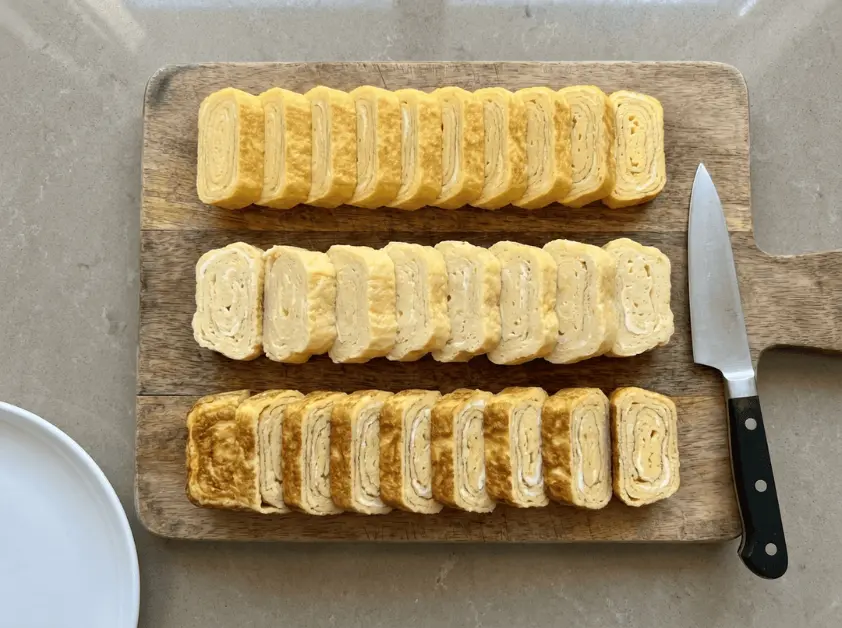
Our core tests included:
- Even heating and hot spots
We preheated each pan at medium-low, added oil, then poured a thin layer of egg and observed browning patterns—especially in corners and along the sidewalls. - Release and rolling performance
We rolled the omelet in consistent steps (set bottom, slightly wet top, then roll). We tracked tearing, sticking points, and how easily we could tuck the first fold. - Temperature control and recovery
Between layers, we watched how quickly each pan returned to a stable cooking temperature and how sensitive it was to small heat adjustments. - Handle comfort and control
We assessed balance while tilting to spread egg thinly, plus comfort during repetitive rolling. - Cleanup and durability signals
We cleaned each pan as recommended (non-abrasive tools only), checked for staining, residue, and any early signs of coating sensitivity (especially with ceramic).
If you want related technique help, these are natural internal-link topics for a gear site: “how to roll tamagoyaki without tearing,” “guide to seasoning nonstick pans” (for nonstick care habits), and “how to clean copper cookware” (for copper longevity).
What to look for in a tamagoyaki pan
Material: copper vs. aluminum vs. nonstick coatings
Copper (usually tin-lined) offers the fastest heat response and can produce exceptionally tender layers, but it’s higher maintenance and usually not induction compatible. It’s best for cooks who enjoy technique and don’t mind careful cleaning.
Aluminum is common because it’s affordable and heats quickly. The coating matters most: a strong PTFE nonstick tends to be the most forgiving for beginners, while ceramic nonstick can work beautifully but often prefers lower heat and careful handling.
For many kitchens, the “best material” is simply the one you’ll treat correctly. A premium pan abused at high heat with metal utensils will underperform faster than a modest pan used thoughtfully.
Shape and sidewalls (square vs. rectangular)
Rectangular pans create a classic log shape and make it easy to roll “down the runway.” Square pans can feel roomier and are versatile for sandwiches and reheating, but some cooks find rectangles more intuitive for rolling.
Look for straight sidewalls plus at least one edge that helps you start the roll. A slightly sloped front can reduce fumbling, especially if you’re using chopsticks.
Size: cooking for one vs. family
Smaller pans are easier to store and easier to tilt for thin layers, but they limit batch size. If you routinely cook for 33–44 people, a larger pan makes it easier to produce a thicker roll without needing a second omelet.
As a rough guide:
- Small/medium: great for 1–2 servings and tight kitchens
- Larger square: better for families, meal prep, and thicker slices for bento
Stove compatibility (especially induction)
If you have induction, confirm the pan explicitly supports it. Some tamagoyaki pans have a stainless base designed for induction; copper specialty pans typically do not work on induction.
Also consider burner size: a very small pan on a large gas burner can scorch corners unless you keep heat low and rotate the pan.
Handle comfort and control
Rolling takes repetition and small wrist movements. A comfortable handle with good heat insulation matters more here than with a standard skillet because you’ll be tilting and rolling repeatedly.
We also prefer pans that feel balanced when partially filled with egg. If the pan feels nose-heavy, spreading the egg thinly becomes harder.
Maintenance and longevity
Nonstick longevity depends on heat and tools. For best results:
- Use medium to medium-low heat for eggs
- Use silicone, wood, or nylon utensils
- Avoid abrasive scrubbers
For copper/tin-lined pans, follow maker instructions closely and avoid harsh detergents if recommended, since some makers prefer maintaining a light oil film for performance.
Frequently asked questions about tamagoyaki pans
Do I really need a tamagoyaki pan to make tamagoyaki?
You can make a rolled omelet in a small nonstick skillet, but a tamagoyaki pan’s straight sides and corners make rolling and squaring much easier. If you want consistent layers and a tidy shape, a tamagoyaki pan is worth it.
What’s the best tamagoyaki pan for beginners?
A PTFE nonstick tamagoyaki pan with an easy-release surface and stable base is usually the most forgiving. In our testing, the TECHEF was the easiest to learn on and the fastest to clean.
Is a copper tamagoyaki pan better than nonstick?
Copper can feel “better” once you have technique because it responds quickly and can produce a delicate texture. But for most cooks, nonstick is more reliable day-to-day, especially when you’re still learning to control heat and oil.
Can I use a tamagoyaki pan on induction?
Some can, some can’t. Aluminum pans with an induction-ready base (like many stainless-bottom designs) work on induction. Traditional copper tamagoyaki pans generally do not.
Why does my tamagoyaki stick even in a nonstick pan?
Common causes include overheating, not using enough oil (or not re-oiling between layers), and letting the egg fully dry out before rolling. Keep heat at medium-low, wipe a thin oil film each layer, and roll while the top is still slightly wet.
What size tamagoyaki pan should I buy?
For 1–2 people, a medium rectangular pan is versatile and easy to handle. For families or bento meal prep, a larger square or larger rectangle makes thicker rolls with fewer batches.
Closing: the simplest way to choose
If you want the easiest path to clean rolls and low-stress cooking, pick the TECHEF Tamagoyaki Japanese Omelette Pan. If you prefer ceramic and cook gently (and want a compact pan), the LISOS is a solid value. If you’re chasing traditional technique and love responsive heat, the TIKUSAN copper pan is a rewarding upgrade—just plan on extra care.
Read More