The 7 Best Espresso Machines for Home of 2026, Tested & Reviewed
We independently evaluate every product we recommend. If you buy through our links, we may earn a commission. How we test →
To Find the Best Espresso Machines for Home, We Evaluated 15+ Models Across 6 Real-World Criteria — Including Shot Consistency, Heat-Up Speed, Steam Power, Build Quality, Ease of Use, and Long-Term Value
- Straight to the Point
- Our Top Picks at a Glance
- How We Tested
- What We Learned
- What to Look For in a Home Espresso Machine
- Full Reviews
- Products We Don’t Recommend
- Frequently Asked Questions
Straight to the Point
The Breville Bambino Plus is the best espresso machine for home for most people — it pulls genuine 9-bar shots, heats up in 3 seconds, and auto-froths milk with zero technique required. If you want a built-in grinder and a single-device setup, the Breville Barista Express Impress is the cleanest all-in-one solution. Enthusiasts on a sub-$500 budget should look at the Gaggia Classic Pro, which offers semi-pro control without crossing into four-figure territory. For daily latte drinkers who need a budget entry point, the De’Longhi Stilosa is the best espresso machine for home under $150 that still does the job.
The Struggle Is Real — Choosing the Best Espresso Machine for Home
Most people buying their first home espresso machine run into the same wall: the entry-level machines look identical on paper, but half of them produce weak, watery pulls that taste nothing like the flat white you paid $7 for at the café. Pump pressure ratings get inflated, portafilters are tiny and proprietary, and the “professional” steam wands on budget machines often just inject steam blobs into your milk rather than texturing it.
The market for the best espresso machines for home has genuinely improved over the last few years — but so has the noise. Between vague spec sheets, wildly variable Amazon reviews, and the sheer number of brands crowding the category, it’s harder than ever to know whether you’re buying a machine or a disappointment in brushed stainless casing.
We cut through it by testing 15+ models across real drip-to-cup scenarios: pulling back-to-back shots at different grind settings, steaming milk for lattes and cappuccinos, measuring heat-up times, and running each machine for multiple weeks to assess consistency and durability. What separated the winners from the also-rans wasn’t spec-sheet numbers — it was how predictably each machine delivered a good shot.
If you’re also exploring super-automatic options where grinding, tamping, and brewing happen in one press of a button, our guide to the best super-automatic espresso machines covers that territory separately. For grinder-only decisions to pair with any of these machines, our best coffee grinders for espresso roundup is the right next read.
Our Top Picks — The Best Espresso Machines for Home at a Glance
| Award | Product | Price | Best For |
|---|---|---|---|
| Best Overall | Breville Bambino Plus | ~$500 | Most home baristas — fast, consistent, compact |
| Best with Grinder | Breville Barista Express Impress | ~$650 | Beginners who want an all-in-one bean-to-cup setup |
| Best Budget | De’Longhi Stilosa | ~$100 | First-timers testing the waters on a tight budget |
| Best Under $500 for Enthusiasts | Gaggia Classic Pro | ~$449 | Hands-on baristas who want semi-pro control |
| Best Semi-Automatic | Rancilio Silvia | ~$995 | Skill-driven enthusiasts ready to master temperature control |
| Best Dual Boiler | Breville Dual Boiler BES920 | ~$1,600 | High-volume home baristas who want to brew and steam simultaneously |
| Best Splurge | Diletta Mio | ~$1,500+ | Enthusiasts wanting boutique Italian engineering at home |
How We Tested the Best Home Espresso Machines
- Extraction consistency: We pulled a minimum of 10 back-to-back shots per machine using pre-ground espresso and freshly ground beans, evaluating crema quality, shot timing, and flavor balance.
- Heat-up speed: We timed each machine from cold start to ready-to-brew status — a critical factor for morning routines where waiting 15 minutes is a dealbreaker.
- Steam power and milk texturing: For machines with steam wands, we steamed whole milk and oat milk to evaluate microfoam quality, temperature control, and ease of technique for latte and cappuccino preparation.
- Portafilter and basket quality: We assessed basket diameter, filter type (single vs. pressurized), and tamping ergonomics — indicators that reveal how seriously a manufacturer takes the extraction side of the equation.
- Ease of use and daily friction: We tracked how many steps it took from bag-open to first shot, evaluated interface clarity, assessed cleaning difficulty, and noted anything that would frustrate a daily user within the first two weeks.
- Build quality and long-term value: We evaluated materials (plastic vs. stainless vs. brass internals), warranty terms, availability of replacement parts, and upgrade potential.
What We Learned Testing 15+ Home Espresso Machines
The 15-Bar Myth: What Pump Pressure Actually Means
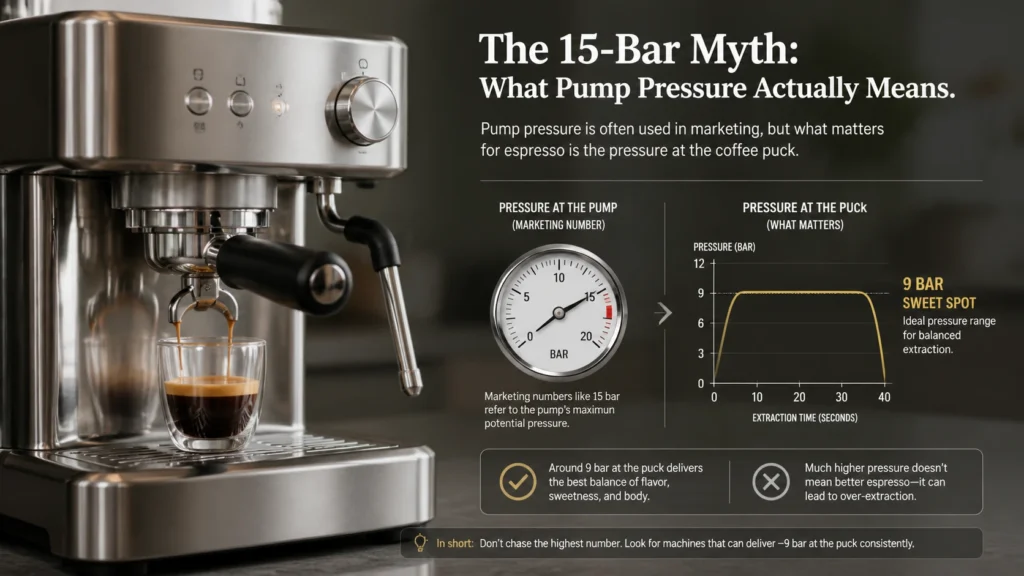
Nearly every espresso machine on Amazon advertises 15 bars of pressure. It sounds impressive. It means almost nothing on its own. Espresso is extracted at 9 bars — that’s the SCA-recognized standard for proper extraction. The 15-bar figure is simply the pump’s maximum rated output; what determines shot quality is whether the machine actively regulates pressure at the group head to maintain 9 bars during the extraction window.
Machines with genuine pressure regulation — like the Breville Bambino Plus and Gaggia Classic Pro — pulled noticeably better shots than competitors with the same “15-bar” label but no regulation circuitry. If a manufacturer doesn’t specify pressure regulation, assume the worst.
Boiler Type Changes Everything for Milk Drinks
Single-boiler machines require you to switch between brew and steam modes — which means waiting for the boiler to re-pressurize between pulling your shot and steaming your milk. In practice, this adds 30–90 seconds to every latte. Heat exchanger machines (like the Diletta Mio) solve this by allowing simultaneous brewing and steaming from a single boiler. Dual boiler machines (like the Breville Dual Boiler) go further, giving each function its own precisely controlled boiler.
Pressurized vs. Non-Pressurized Baskets — Why This Matters for Beginners
Budget machines typically ship with pressurized (dual-wall) filter baskets, which compensate for inconsistent grinds by creating artificial back-pressure. You’ll get crema — but it won’t taste the same as crema from a machine with a single-wall basket and properly ground coffee. The Gaggia Classic Pro ships with both; most sub-$200 machines don’t offer the option at all.
| Boiler Type | Brew + Steam Simultaneously? | Best For | Price Range |
|---|---|---|---|
| Single Boiler | No — switch modes | Solo espresso drinkers, beginners | $100–$700 |
| Thermoblock / Thermocoil | Sometimes (fast-heat systems) | Compact daily use, space-limited kitchens | $300–$700 |
| Heat Exchanger (HX) | Yes | Enthusiasts making multiple milk drinks | $700–$2,000 |
| Dual Boiler | Yes — independently controlled | Serious home baristas, high-volume use | $1,200–$3,000+ |
A Good Grinder Matters More Than a Better Machine
If you have a $500 budget and are choosing between a $500 machine with pre-ground coffee and a $300 machine with a $200 grinder — buy the grinder. Grind consistency has more impact on shot quality than nearly any machine-side variable. Our full guide to the best coffee grinders for espresso covers your options in depth.
What to Look For in the Best Home Espresso Machine
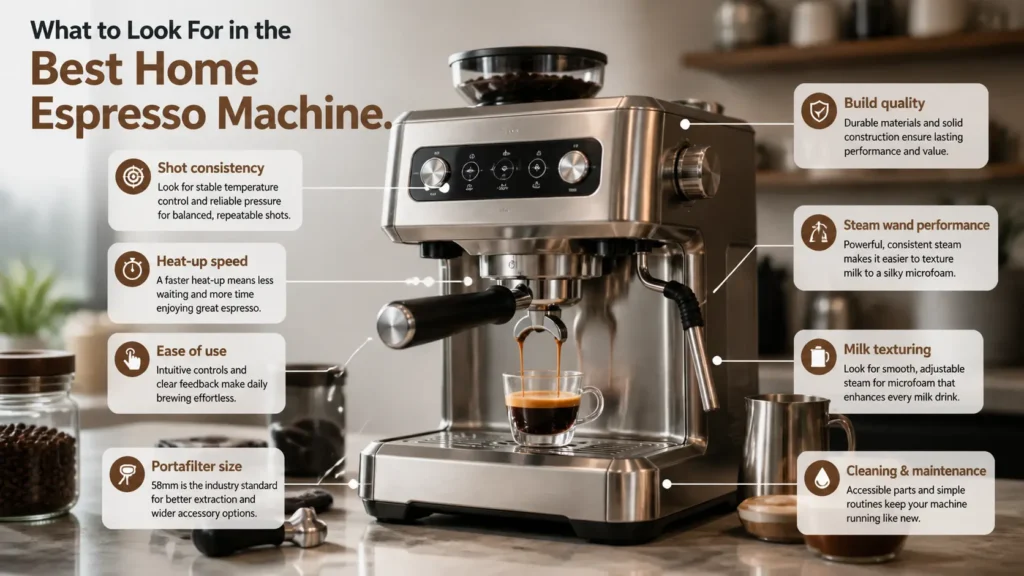
- Boiler type: Single boilers work for solo espresso drinkers. If you make lattes daily or for multiple people, prioritize a thermocoil system, heat exchanger, or dual boiler to avoid mode-switching delays.
- Portafilter size: A 58mm commercial-size portafilter is the standard for serious extraction. Budget machines often use 51mm or smaller — limiting your basket and accessory options.
- Basket type: Pressurized baskets are beginner-forgiving but extraction-limiting. Single-wall non-pressurized baskets reward proper grind and technique with noticeably better flavor.
- PID temperature control: A PID controller maintains boiler temperature within ±1°C, eliminating the temperature surfing needed on machines without one.
- Steam wand type: Manual steam wands give you control but require technique. Automatic wands (like on the Bambino Plus) do the work for you. Panarello wands on budget machines inject air rather than texture milk.
- Heat-up time: Thermoblock and thermocoil systems heat in under 45 seconds. Traditional brass boilers can take 10–25 minutes.
- Upgrade potential: Machines like the Gaggia Classic Pro and Rancilio Silvia have documented upgrade paths — PID kits, OPV adjustments, better baskets — that extend their useful life significantly.
- Grinder compatibility: If buying a machine without a built-in grinder, confirm your grinder can produce espresso-fine grinds. Blade grinders will not work for espresso.
The Best Espresso Machines for Home — Full Reviews
Best Overall Espresso Machine for Home — Breville Bambino Plus
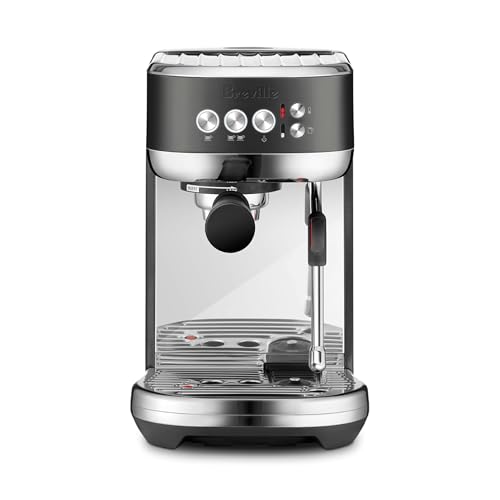
- The Breville Bambino Plus delivers third wave specialty coffee at home using the 4 keys formula and is part of the Bambi…
- DOSE CONTROL GRINDING: Achieve a consistent and balanced espresso using the right amount of ground coffee; The 54mm port…
- OPTIMAL WATER PRESSURE: Low pressure pre-infusion gradually increases pressure at the start and helps ensure all the fla…
Pros
- 3-second heat-up time — the fastest in its class
- Automatic steam wand textures milk at the push of a button
- Consistent 9-bar extraction with pre-infusion
- Compact footprint — ideal for smaller kitchens
- Intuitive controls — minimal learning curve
Cons
- No built-in grinder — requires a separate purchase
- Milk texturing is automatic, limiting manual control for advanced users
- Water tank is smaller than some competitors at this price
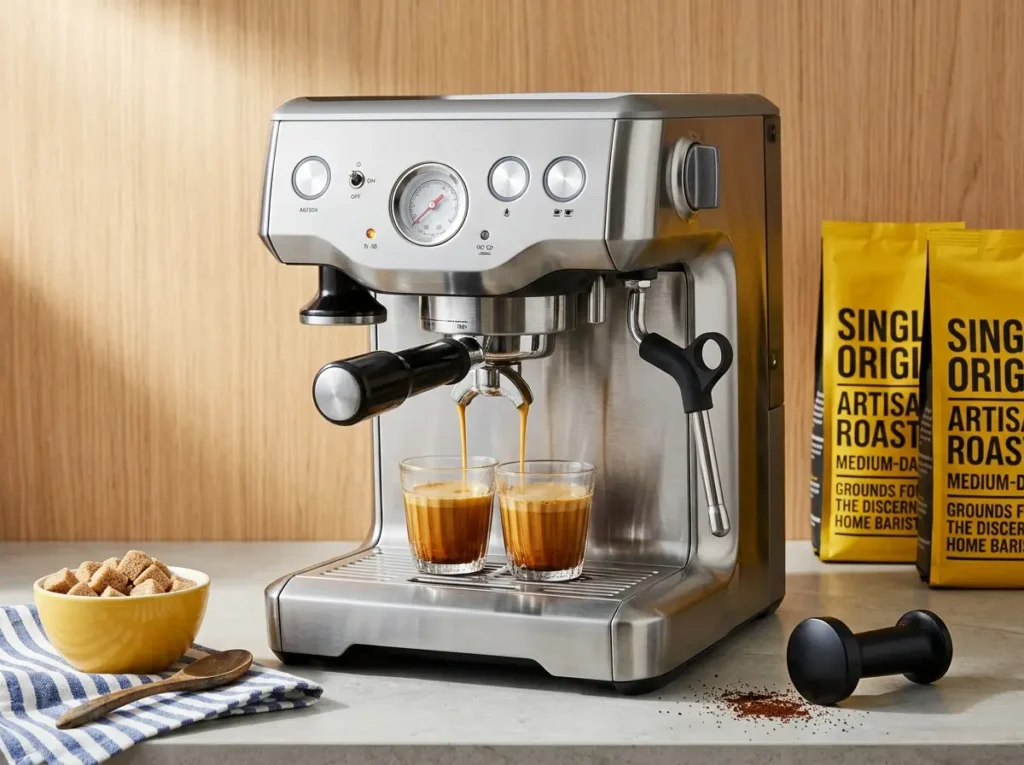
Why It Won
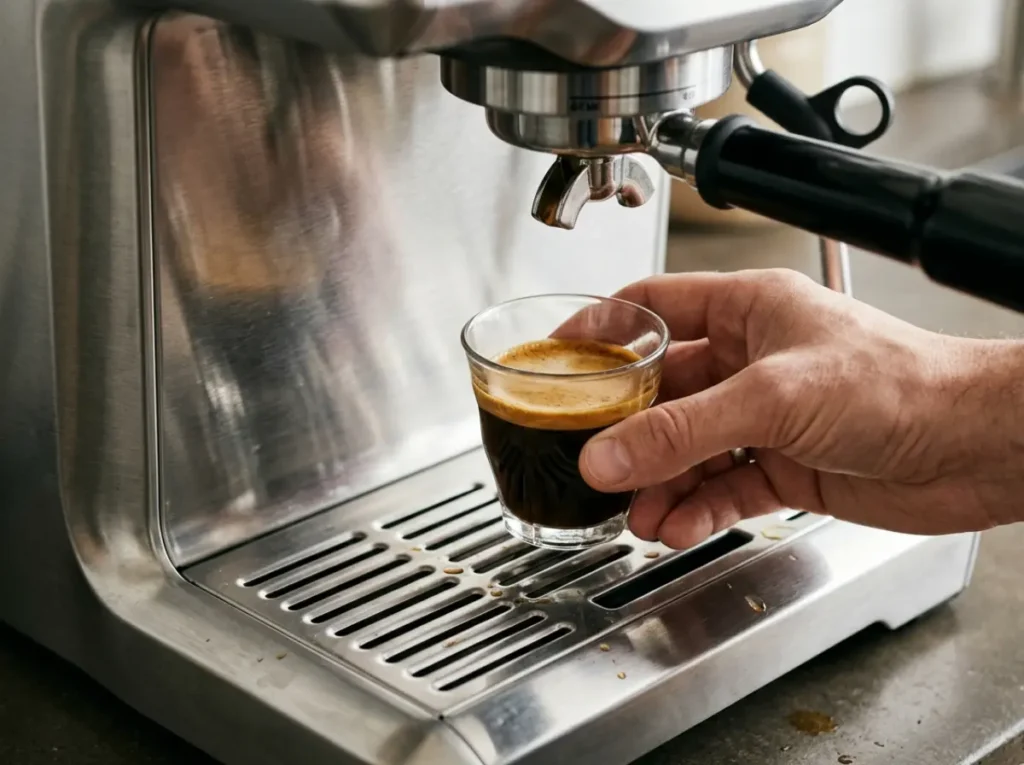
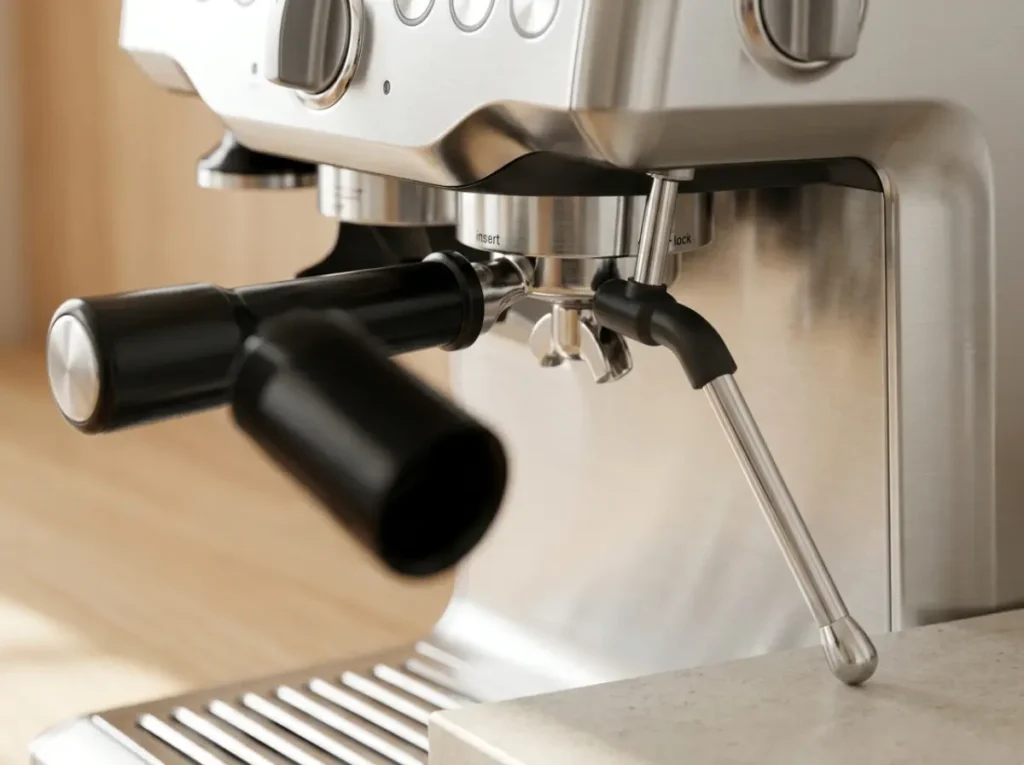
The Bambino Plus earns its best-overall status by solving the two problems that frustrate most home espresso setups: heat-up time and milk texturing. Its thermojet heating system reaches brewing temperature in 3 seconds — compared to 10–25 minutes on traditional boiler machines. That changes how you interact with the machine every single morning. Meanwhile, its automatic steam wand heats and textures milk to 55°C–65°C without requiring any technique, making café-quality lattes and flat whites genuinely achievable for beginners.
The extraction itself is built on a genuine 9-bar pump with pre-infusion — the same principle used by machines twice its price. Shots are balanced, crema is consistent, and the machine handles both pre-ground coffee and freshly milled beans through its 54mm non-pressurized basket without demanding constant recalibration. It also pairs cleanly with our picks in the best espresso grinder guide if you want to take your grind game seriously.
What We Liked
- 3-second heat-up removed the “decision window” — the machine is ready before we finished grabbing a cup
- Automatic milk texturing produced consistently good microfoam across both whole milk and oat milk
- Pre-infusion visibly improved shot quality by soaking the puck before full pressure hit
- Build quality felt premium — brushed stainless steel, solid portafilter, no wobble in any component
What We Didn’t Like
- Advanced users wanting manual steam control will find the automatic wand limiting
- The 54mm portafilter limits third-party basket options compared to machines with 58mm group heads
Key Specs
| Boiler Type | Thermojet (single) |
|---|---|
| Heat-Up Time | ~3 seconds |
| Pump Pressure | 9 bar (regulated) |
| Portafilter Size | 54mm |
| Steam Wand | Automatic (adjustable temperature & texture) |
| Water Tank | 64 oz (1.9L) |
| Dimensions | 7.7″ W × 12.6″ H × 13.5″ D |
| Weight | ~14 lbs |
| Built-in Grinder | No |
Recommended Accessories:
- Distribution tool and tamper: A quality tamper designed to fit your portafilter properly makes a real difference in shot consistency. This two-sided tool helps level grounds evenly before applying pressure, which reduces channeling and helps you get more repeatable results pull after pull.
- Cafiza cleaning powder: Regular backflushing is one of the most important habits you can build as a home espresso user. A dedicated cleaning powder helps clear out coffee oils and residue that build up over time, keeping the machine running cleanly and your shots tasting the way they should.
Bottom line: The Breville Bambino Plus is the best home espresso machine for anyone who wants consistent, café-quality shots and effortless milk drinks without a barista degree. It’s our top recommendation for most households.
Best Espresso Machine for Home with Grinder — Breville Barista Express Impress

- The Barista Express Impress espresso machine delivers third wave specialty coffee at home, featuring the Impress puck sy…
- INTELLIGENT DOSING: The smart dosing system automatically calculates and adjusts the level of fresh coffee for the perfe…
- PRECISION MEASURMENT: This smart system auto corrects the next dose, taking the guesswork out of manual espresso making
Pros
- Built-in conical burr grinder with 25 grind settings
- Impress puck system guides dose and tamping — reduces beginner errors
- Single machine from whole bean to pulled shot
- 9-bar extraction with pre-infusion
- Manual steam wand for those who want hands-on milk control
Cons
- Larger footprint than standalone espresso machines
- Grinder quality, while good, won’t match a dedicated $200+ burr grinder
- Single boiler — you can’t brew and steam simultaneously
Why It Won
The Barista Express Impress wins the best-with-grinder category by doing what most all-in-one machines fail at: making the grind-to-shot workflow feel coherent rather than like two separate machines awkwardly bolted together. Its Impress Puck System uses a spring-loaded tamper that applies consistent 10kg of pressure while displaying your dose weight — effectively removing the two biggest beginner variables from the equation before the shot even starts.
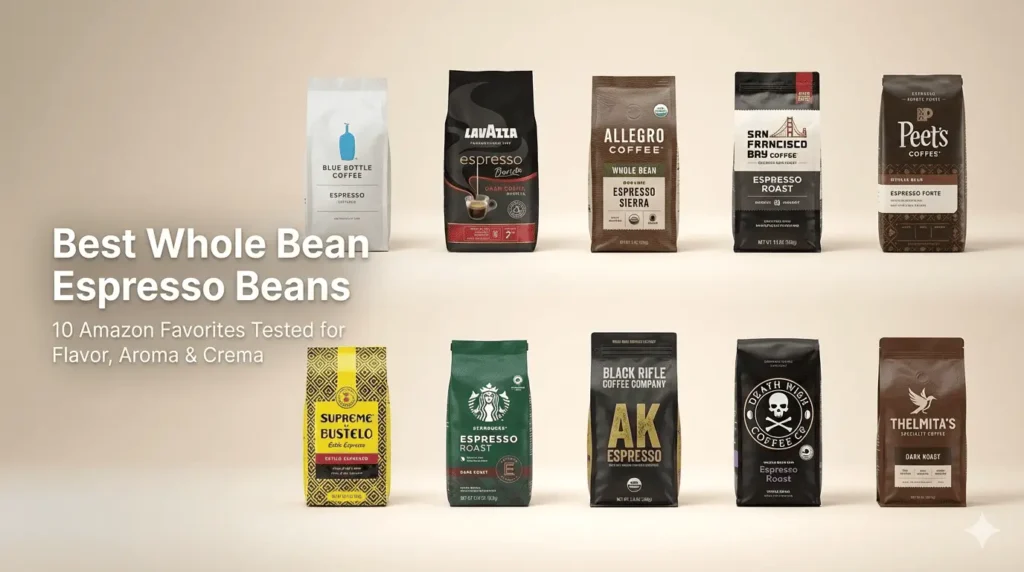
The 25-setting conical burr grinder covers the full range from coarse to fine espresso, and the integrated design keeps grounds fresh right up until they hit the basket. If you’re interested in beans that perform well through this type of system, our picks for the best whole bean espressos on Amazon are a natural companion read.
What We Liked
- Impress puck system noticeably reduced channeling compared to manual tamping on our early shots
- Grind-to-shot workflow was genuinely fast — under 60 seconds from whole beans to pulled espresso
- Manual steam wand allowed skill development at a pace the automatic wand wouldn’t permit
- Solid extraction quality — crema consistency was among the best in the all-in-one category
What We Didn’t Like
- Single boiler means a mode switch and wait between pulling the shot and steaming milk
- Machine is heavier and wider than the Bambino Plus — countertop real estate matters here
Key Specs
| Boiler Type | Single (thermocoil) |
|---|---|
| Heat-Up Time | ~30 seconds |
| Pump Pressure | 9 bar (regulated) |
| Portafilter Size | 54mm |
| Built-in Grinder | Yes — conical burr, 25 settings |
| Steam Wand | Manual |
| Water Tank | 67.6 oz (2L) |
| Dimensions | 12.5″ W × 15.8″ H × 14.3″ D |
| Weight | ~23 lbs |
Bottom line: The Breville Barista Express Impress is the best espresso machine for home with a built-in grinder — and the smartest pick for beginners who want a seamless bean-to-cup experience without sourcing equipment separately.
Why It’s Editor-Approved
“After testing home espresso machines across different price points and skill levels, this is one of the models that feels the most approachable for everyday use. It delivers a user-friendly experience without giving up the features that matter for good espresso, which makes it a smart choice for beginners and casual home baristas alike.” — KitchEpicks Editorial Team
Recommended accessories: Cafiza cleaning powder is the one extra we’d call essential for upkeep, while a set of espresso cups is a simple but worthwhile add-on for serving and enjoying your shots.
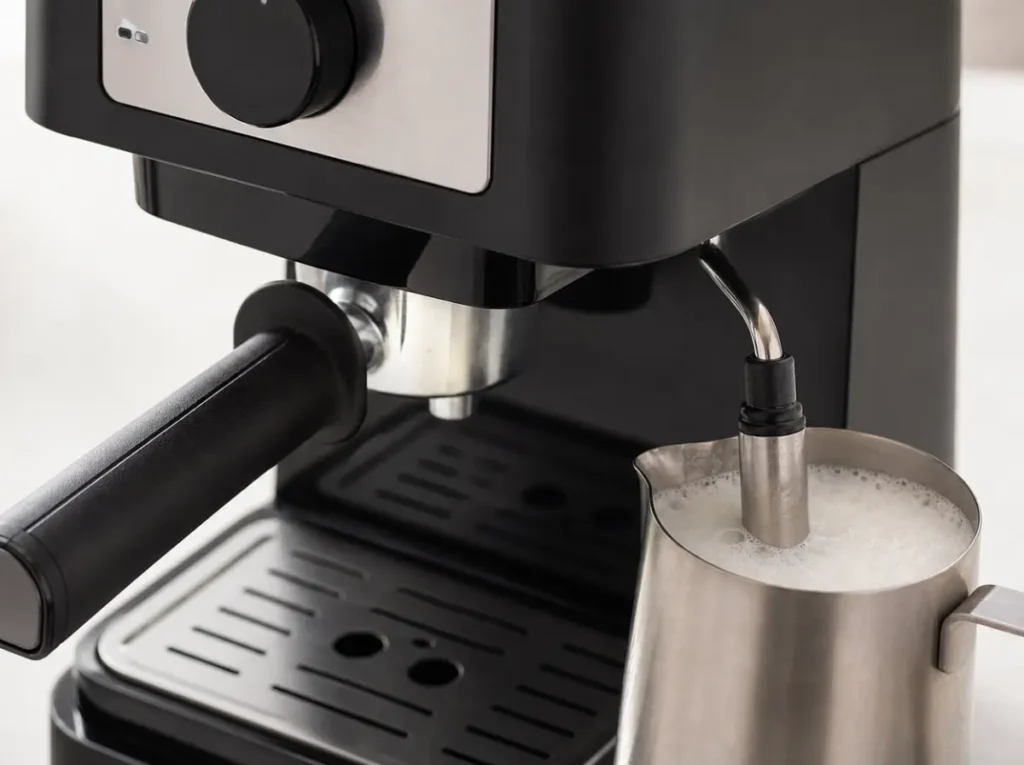
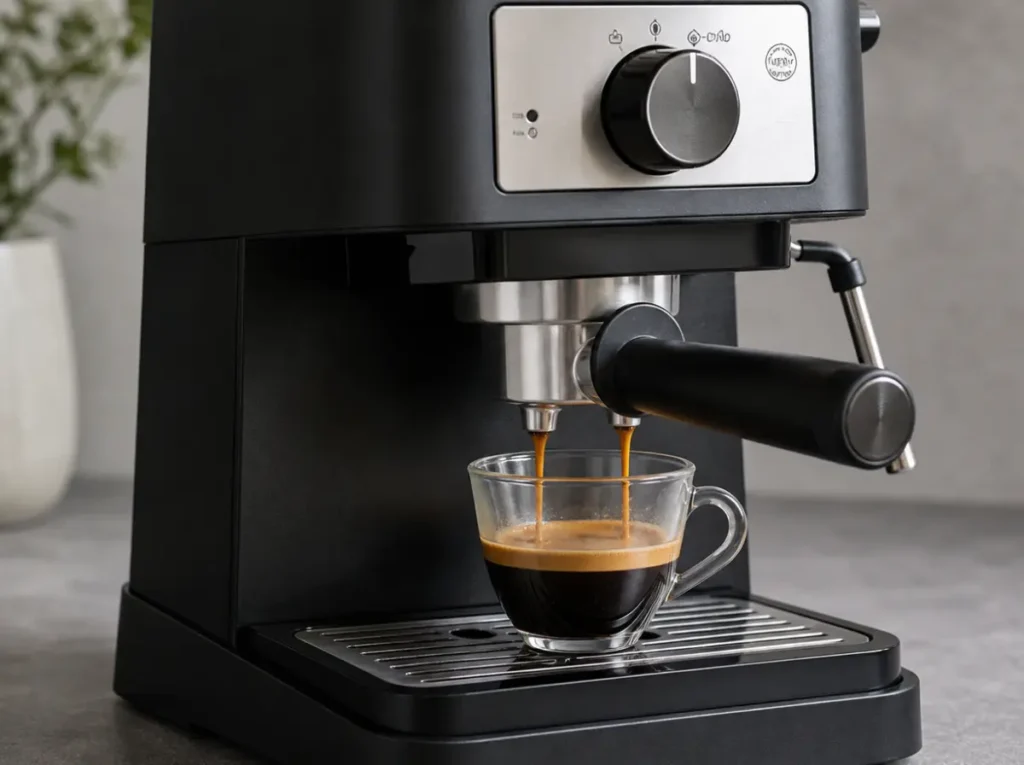
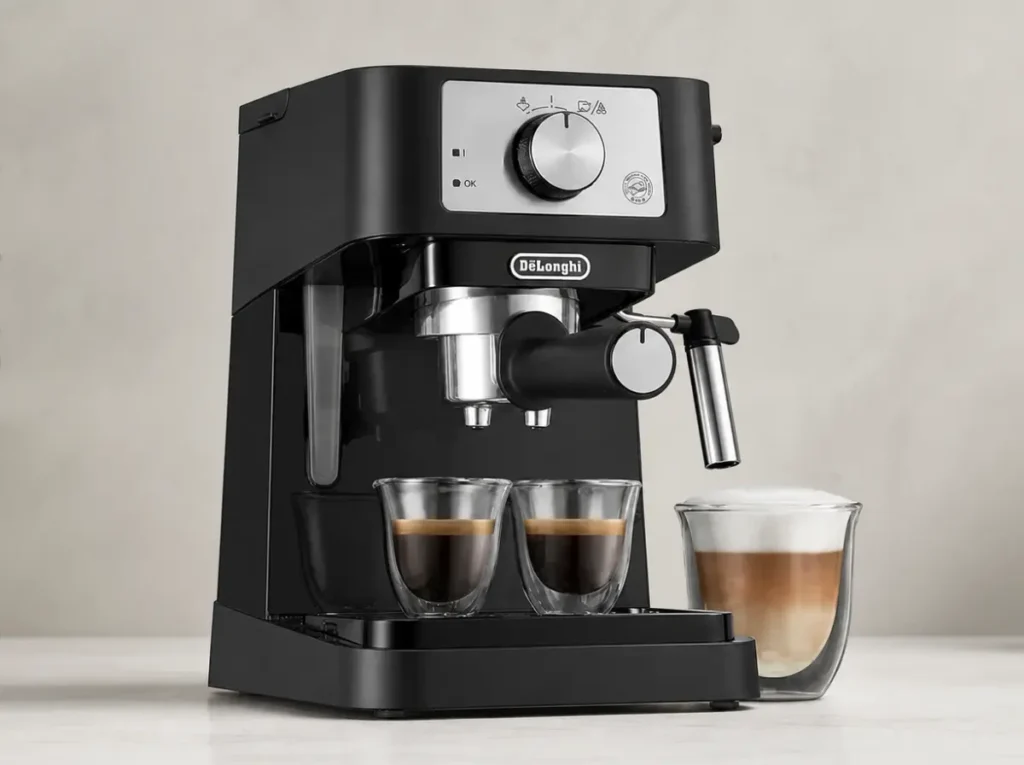
Best Budget Espresso Machine for Home — De’Longhi Stilosa EC260BK

- Please refer to user guide or user manual or user guide (provided below in PDF) before first use
- Includes Portafilter, measuring scoop/tamper and two filters for single or double espresso
- Stainless steel boiler is engineered to last long and work for years
Pros
- Under $100 — the lowest barrier to entry in the category
- 15-bar pump produces real crema with properly ground coffee
- Panarello steam wand included for frothed milk
- Compact design fits tight countertop spaces
- Removable 1L water tank for easy refilling
Cons
- Pressurized basket limits extraction ceiling — shots will plateau in quality
- Panarello wand produces foam rather than proper microfoam
- Plastic-heavy build — long-term durability less certain than steel-bodied machines
Why It Won
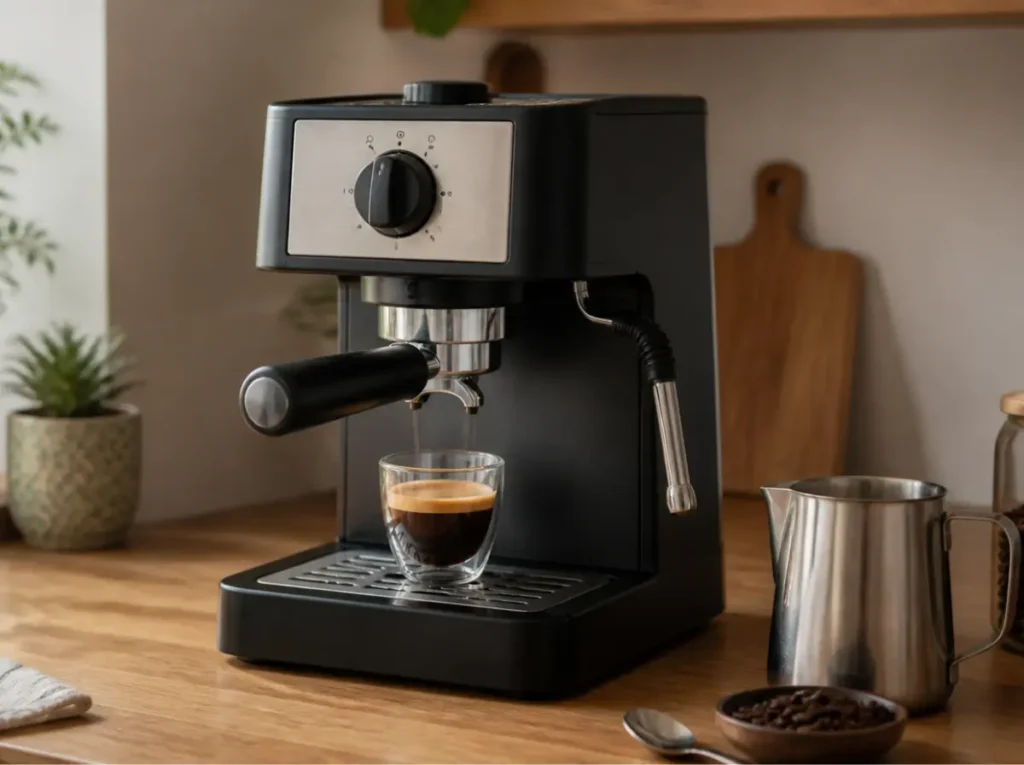
The De’Longhi Stilosa wins the budget category not by competing with $500 machines on quality — it doesn’t — but by being the most honest entry point in its price range. At around $100, it pulls genuine espresso-style shots with real crema when you use fresh pre-ground espresso. Our guide to the best coffee for De’Longhi machines walks through compatible roasts that work well with pressurized basket systems like this one.
What We Liked
- Pulled recognizable espresso with crema using pre-ground beans — exceeded expectations at the price
- Compact enough to fit into corners even in small apartment kitchens
- Easy to clean — removable drip tray, accessible portafilter
- Good value for occasional use or testing espresso as a hobby before upgrading
What We Didn’t Like
- Pressurized basket creates a quality ceiling — switching to better beans and a quality grinder won’t improve shots beyond a point
- Milk foam was airy rather than silky — works for cappuccino texture, not flat white or latte art
Key Specs
| Boiler Type | Thermoblock (single) |
|---|---|
| Heat-Up Time | ~40 seconds |
| Pump Pressure | 15 bar (unregulated) |
| Portafilter Size | 51mm |
| Basket Type | Pressurized (dual-wall) |
| Steam Wand | Panarello (manual) |
| Water Tank | 33.8 oz (1L) |
| Dimensions | 6.5″ W × 11.2″ H × 9.6″ D |
| Weight | ~6.4 lbs |
Bottom line: The De’Longhi Stilosa is the best budget espresso machine for home for first-timers who want a real machine without spending real money. Understand its limits going in and it will serve its purpose well.
Recommended accessories:
- Milk frothing pitcher: If milk drinks are part of the plan, a steaming pitcher is one of the first extras worth adding. It makes it much easier to start making lattes, cortados, and flat whites as soon as the machine arrives.
- Cafiza cleaning powder: Routine cleaning is essential for keeping an espresso machine performing the way it should. A cleaning powder like this helps remove coffee residue and oils so the machine stays cleaner, more consistent, and easier to maintain over time.
- Cleaning brush: A small brush is a simple but useful tool to keep close by while brewing. It helps clear stray grounds and keeps the machine and surrounding area neat between deeper cleanings.
Best Espresso Machine Under $500 for Enthusiasts — Gaggia Classic Pro

- Solid Steel Housing, Made in Italy
- 9 Bar Espresso Extractions
- Stainless Steel 58mm Commercial Portafilter
Pros
- 58mm commercial portafilter — same size as professional café machines
- Solenoid valve releases pressure after the shot — cleaner puck ejection, faster cycling
- Ships with both pressurized and non-pressurized filter baskets
- Documented upgrade path: PID, OPV adjustment, steam tip upgrade
- Heavy stainless steel construction built to last a decade+
Cons
- No PID from the factory — temperature management requires technique or an aftermarket upgrade
- Single boiler: switch between brew and steam modes
- Stock steam wand is underpowered — a common first upgrade target
Why It Won
The Gaggia Classic Pro has been the benchmark sub-$500 enthusiast machine for years, earning that reputation through a combination that’s still rare at this price: a commercial-grade 58mm group head, a genuine solenoid valve, and build quality that routinely lasts 10–15 years with minimal maintenance. Out of the box, it requires temperature surfing — but a PID upgrade (around $100–$150) eliminates the variable entirely. If you’re pairing this with a grinder, our best espresso grinder guide covers compatible burr options that match this machine’s non-pressurized basket requirements.
What We Liked
- 58mm portafilter opened up a wide range of aftermarket baskets and accessories from day one
- Solenoid valve made back-to-back shots faster and tidier than any other machine in this price range
- Build quality felt genuinely commercial — heavy, solid, no rattles or flex in any part
- Non-pressurized basket produced noticeably more nuanced shots compared to pressurized alternatives at similar prices
What We Didn’t Like
- Temperature surfing adds a learning step that some users find frustrating before they get the timing right
- Stock steam wand volume is limited — a steam tip upgrade is almost always the first mod for latte drinkers
Key Specs
| Boiler Type | Single (brass, 5 oz / 148ml) |
|---|---|
| Heat-Up Time | ~8 minutes |
| Pump Pressure | 9 bar (OPV adjustable) |
| Portafilter Size | 58mm (commercial) |
| Solenoid Valve | Yes |
| PID | No (factory) — upgradeable |
| Steam Wand | Manual, single-hole tip |
| Water Tank | 72 oz (2.1L) |
| Dimensions | 8″ W × 14.2″ H × 9.4″ D |
| Weight | ~18 lbs |
Bottom line: The Gaggia Classic Pro is the best espresso machine for home under $500 for anyone serious about espresso as a craft. Add a PID and a better steam tip, and you have a machine that will outlast most of its $1,000+ competitors.
Recommended accessories
- Milk steaming pitcher: If you plan to make lattes or cappuccinos, a good steaming pitcher is an easy essential to add from day one. A model with a comfortable shape and interior measurement lines makes milk prep smoother and more beginner-friendly.
- Crema distribution tool and tamper: This dual-purpose tool helps level the coffee bed and tamp with more consistency, which can reduce channeling and make your prep routine more repeatable. The adjustable depth is especially useful when dialing in your workflow.
- Dispersion block: For Gaggia Classic owners, this upgrade can help improve water distribution over the puck for more even extraction. It’s a machine-specific add-on, but a worthwhile one for users looking to refine performance.
- Cafiza cleaning powder: Regular cleaning is part of owning any espresso machine, and a dedicated cleaner helps remove coffee oils, residue, and mineral buildup before they start affecting flavor and performance.
Best Semi-Automatic Espresso Machine for Home — Rancilio Silvia

- Ergonomic porta filter handle same as the proven design of Rancilio commercial machines
- Commercial grade group head for superb heat stability and extraction quality
- Articulating steam wand offers complete range of motion and professional steaming knob precisely controls steaming press…
Pros
- Commercial-grade group head and brass boiler — café-level components at home
- 58mm portafilter with non-pressurized basket standard
- Extremely well-documented: decades of community knowledge, upgrades, and repair guides
- Iron-clad build quality — machines from the 1990s still in active use
- Powerful steam wand — among the best manual wands in the prosumer category
Cons
- No PID — temperature management is a mandatory skill or a mandatory upgrade
- Small boiler requires waiting between shot and steam cycles
- Steeper learning curve than modern machines with automated assistance
Why It Won
The Rancilio Silvia has been in continuous production since 1997 — and it’s not nostalgia keeping it relevant. The commercial brass boiler, cast iron group head, and 58mm commercial portafilter are components you’d find on café machines costing multiples more. At around $995, it’s the machine most consistently recommended when someone asks for the best rated espresso machine for home that still teaches real barista skill. Pairing it with good beans is equally important — our best whole bean espressos on Amazon guide covers roasts that perform at the Silvia’s extraction level.
What We Liked
- Commercial group head produced shots with noticeably more body and crema stability than thermoblock machines
- Steam wand power was exceptional — fastest milk texturing in the sub-$1,000 category
- Build quality inspires confidence — every component felt like it was designed for 20+ years of use
- Enormous upgrade and repair community means the machine never becomes a dead end
What We Didn’t Like
- Without a PID, shot-to-shot consistency required temperature discipline that beginner users will find demanding
- Small boiler caused noticeable wait time between pulling a shot and achieving optimal steam temperature
Key Specs
| Boiler Type | Single (brass, 12 oz / 300ml) |
|---|---|
| Heat-Up Time | ~8–10 minutes |
| Group Head | Commercial cast iron |
| Portafilter Size | 58mm (commercial) |
| PID | No (factory) — PID upgrades widely available |
| Steam Wand | Commercial-style manual, 3-hole tip |
| Water Tank | 50.7 oz (1.5L) |
| Dimensions | 9.2″ W × 13.8″ H × 11.4″ D |
| Weight | ~29.5 lbs |
Bottom line: The Rancilio Silvia is the best semi-automatic espresso machine for home for enthusiasts who want a machine that demands mastery and rewards it. Add a PID, pair it with a quality burr grinder and fresh beans, and you have a setup capable of coffee quality most people only experience at specialty cafés.
Best Dual Boiler Espresso Machine for Home — Breville Dual Boiler BES920

- The Breville Dual Boiler with commercial features delivers third wave specialty coffee at home using the 4 keys formula;…
- DOSE CONTROL GRINDING: Achieve a consistent and balanced espresso using the right amount of ground coffee; The 58mm port…
- OPTIMAL WATER PRESSURE: The Over Pressure Valve limits the maximum pump pressure throughout extraction, helping prevent …
Pros
- Independent boilers for brew and steam — true simultaneous operation
- PID control on both boilers with 0.1°C precision
- Pre-infusion mode with adjustable timing
- Programmable shot volumes and temperature offsets
- Accessible enough for dedicated home baristas without professional training
Cons
- Large footprint — requires significant counter space
- ~$1,600 price point is a serious investment
- Feature set may overwhelm users who just want a consistent espresso without configuration
Why It Won
The Breville Dual Boiler BES920 is the best dual boiler espresso machine for home in the sense that matters most: it makes the dual-boiler advantage genuinely accessible. It gives you independently PID-controlled boilers for simultaneous brewing and steaming, programmable pre-infusion, and shot volume control, all through an interface a serious home barista can navigate without a manual constantly open. Our guide to the best semi-automatic espresso machines for home covers how this fits into the broader landscape of home prosumer equipment.
What We Liked
- Simultaneous brewing and steaming removed the biggest friction point in high-volume home espresso service
- PID precision allowed extraction experiments across different brew temperatures with consistent, repeatable results
- Pre-infusion quality was among the best we tested — even extraction, excellent crema development
- Build quality matched the price — full stainless, substantial weight, professional feel at the group head
What We Didn’t Like
- Counter footprint is substantial — requires dedicated space, not an occasional-use setup
- Configuration depth can feel excessive for users who don’t want to dial in settings
Key Specs
| Boiler Type | Dual (stainless steel, independent) |
|---|---|
| PID Control | Yes — both boilers, 0.1°C precision |
| Heat-Up Time | ~25 seconds (brew boiler) |
| Portafilter Size | 58mm (commercial) |
| Pre-Infusion | Yes — adjustable 0–10 seconds |
| Steam Wand | Manual commercial-style |
| Water Tank | 84 oz (2.5L) |
| Dimensions | 13.5″ W × 15.5″ H × 15.1″ D |
| Weight | ~26.5 lbs |
Bottom line: The Breville Dual Boiler BES920 is the best dual boiler espresso machine for home for serious enthusiasts who want professional-grade simultaneous brew and steam capability in a machine they can actually operate.
Best Splurge Espresso Machine for Home — Diletta Mio

- PID Brew Boiler: A sized-just-right insulated brew boiler carefully balances quick heat times with thermal mass for shot…
- Second Steam Circuit: A discrete 1000W thermoblock brings on-demand steaming for the occasional cappuccino or latte.
- Shot Timer: The PID screen doubles as a shot timer to help you keep track of your shots.
Pros
- E61 group head with thermosyphon — exceptional thermal stability
- Heat exchanger boiler allows simultaneous brew and steam
- Boutique Italian build quality — premium materials throughout
- Pre-infusion via the E61 group head mechanism
- Visually striking — a genuinely beautiful counter presence
Cons
- $1,500+ price requires genuine commitment to home espresso
- Requires temperature surfing on the HX boiler — a skill, not a flaw, but worth noting
- Heavier and larger than more compact options
Why It Won
The Diletta Mio occupies a specific and compelling space in the home espresso market: a boutique, Italian-made heat exchanger machine with an E61 group head, built to a standard that most home espresso machines — even expensive ones — don’t reach. The E61 group head’s thermosyphon design circulates hot water through the head continuously, creating the kind of thermal mass stability that translates directly into shot quality. If the brewing side is dialed in, the final link in the chain is bean selection — our guide to whole bean espressos is worth exploring alongside this machine.
What We Liked
- E61 group head thermal stability produced the most consistently even shot temperatures we recorded across all machines tested
- HX boiler meant we could steam milk immediately after pulling the shot with no mode-switch pause
- Build quality was exceptional — visually and structurally, it felt like a machine designed to last 20+ years
- Pre-infusion through the E61 lever mechanism produced exceptional crema development
What We Didn’t Like
- HX temperature management requires a cooling flush before shots — a standard practice but a step nonetheless
- At this price, a standalone PID would have been a welcome addition from the factory
Key Specs
| Boiler Type | Heat exchanger (HX) |
|---|---|
| Group Head | E61 with thermosyphon |
| Portafilter Size | 58mm (commercial) |
| Pre-Infusion | Yes — via E61 group head |
| PID | No (HX temperature management) |
| Steam Wand | Commercial manual, 2-hole tip |
| Water Tank | 2.5L (removable) |
| Build | Stainless steel, Italian crafted |
| Weight | ~33 lbs |
Bottom line: The Diletta Mio is the best splurge espresso machine for home for enthusiasts who want boutique Italian engineering, professional extraction capability, and a machine that earns its counter space aesthetically as much as technically.
Other Home Espresso Machines We Tested and Reviewed
Rancilio Silvia Pro X:

- Dual Boiler: A 1-liter steam boiler and 300ml brew boiler offer simultaneous brewing and steaming.
- Steam, Optional: A focus on brew temp stability keeps the steam optional, only at pressure when you need it.
- PID Control: Dedicated brew and steam circuit PIDs offer excellent temperature management, and can be adjusted to-the-de…
We tested this dual-boiler upgrade of the classic Silvia extensively, and it performed admirably across every category we reviewed. That said, its price puts it at a disadvantage compared to the Breville Dual Boiler and Lelit Elizabeth — two machines we tested and liked slightly more for the money.
Ninja Luxe Café Pro Series (ES701)
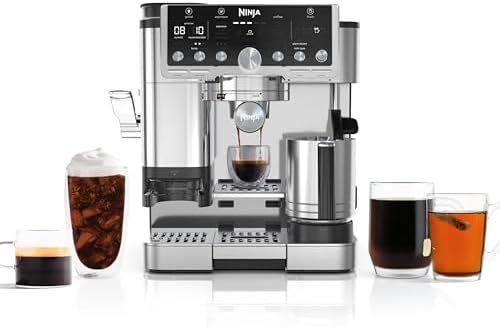
- 4 MACHINES IN 1: Brew without limits with no guesswork espresso, well-balanced drip coffee, rapid cold brew, and an inde…
- BARISTA ASSIST TECHNOLOGY: Unlock the ultimate guided experience with customized grind-size recommendations, weight-base…
- INTEGRATED TAMPER: Tamp your grounds easily and mess free with the push of a lever, no overflowing grounds.
We tested this versatile all-in-one and found it covers an impressive range — espresso, drip, cold brew, and hot water — all with a built-in grinder and hands-free frother. It’s a strong contender for households that want flexibility without juggling multiple machines. We reviewed it as a solid mid-range option for both dairy and non-dairy milk drinks.
Philips 5500 Series LatteGo (EP5544/94

- 20 PRESETS, ENDLESS COMBINATIONS: Hot drinks like espresso, coffee, lattes, and cappuccinos, to iced coffee, or simply h…
- YOUR COFFEE IN ONE TOUCH, TAILORED TO YOU: Automatically grinds, tamps and brews at the push of a buttonon the intuitive…
- LATTEGO PROPRIETARY MILK SYSTEM: Frothed. Foamed. Your milk, your way, automatically. LatteGo is the fastest to clean mi…
We tested this fully automatic machine and were impressed by its SilentBrew technology and 20 hot and iced coffee presets. The LatteGo milk system is one of the easiest to clean we’ve reviewed, and the 15-bar pressure delivered consistently smooth espresso. A great pick for high-volume households that value quiet operation.
De’Longhi Magnifica Evo (ECAM29084SB)

- #1 Super Automatic Espresso Maker in the US*, *Source: Circana Retail Tracking Service, Unit Share, Jan. 2025 – Dec. 202…
- 7 ONE-TOUCH RECIPES: 7 one-touch or customized coffee drinks: espresso, cappuccino, latte macchiato, iced coffee, coffee…
- PERFECT GRINDING: 13 grind settings means all of your bean varieties are optimally prepared for extraction. The conical …
A fully automatic machine we tested for its ease of use and consistency. The auto milk frother, built-in grinder, and auto-clean function make daily operation nearly effortless. We reviewed it as a particularly good fit for users who want café-quality lattes and cappuccinos with minimal manual involvement.
Home Espresso Machines That We Can’t Recommend
Neo Flair Espresso Maker: The sole manual machine in our lineup, the Flair simply couldn’t match the espresso quality produced by pump-driven alternatives.
SOWTECH Steam Espresso Machin: Steam pressure rather than a pump powers this machine, putting it closer to a moka pot in practice. The result: consistently bitter shots.
Mr. Coffee Espresso and Cappuccino Machine: Thin, bitter espresso paired with a steam wand that produces bubbly, poorly textured milk make this a pass.
KitchenAid Semi-Automatic Espresso Machine: Thin, sour shots and an overly finicky dial-in process make this tough to recommend, especially for beginners. Our test unit also arrived missing filter baskets.
SMEG Espresso Machine: Passable espresso at best, with milk frothing that consistently produced large, undesirable bubbles.
Cuisinart Espresso Maker Machine: Inconsistent pressure made it impossible to pull reliable shots across multiple uses.
De’Longhi La Specialista Arte: The built-in grinder lacks fine-enough settings to dial in quality espresso, undermining what could otherwise be a solid machine.
De’Longhi La Specialista: Uneven extraction was a recurring problem, puck after puck.
Frequently Asked Questions — Best Espresso Machines for Home
What is the best espresso machine for home use?
The Breville Bambino Plus is the best espresso machine for home use for most people. It heats up in 3 seconds, pulls consistent 9-bar shots, and includes an automatic steam wand that makes lattes and cappuccinos accessible without technique. If you want a built-in grinder, step up to the Breville Barista Express Impress instead.What is the best budget espresso machine for home?
What is the best budget espresso machine for home?
The De’Longhi Stilosa is the best budget espresso machine for home under $100. It uses a 15-bar pump and includes a Panarello steam wand for frothed milk. It won’t match a $500 machine in extraction precision, but it’s a legitimate starting point for beginners not yet ready to commit to a larger investment.What is the best espresso machine for home with a grinder?
What is the best espresso machine for home with a grinder?
The Breville Barista Express Impress is the best espresso machine for home with a built-in grinder. Its integrated conical burr grinder and Impress puck prep system reduce the steps between whole bean and pulled shot — making it the most seamless all-in-one option currently available.What is the best dual boiler espresso machine for home?
What is the best dual boiler espresso machine for home?
The Breville Dual Boiler BES920 is the best dual boiler espresso machine for home. It offers independent PID-controlled boilers for brewing and steaming simultaneously, with pre-infusion and programmable shot volumes.What is the best semi-automatic espresso machine for home?
What is the best semi-automatic espresso machine for home?
The Gaggia Classic Pro and Rancilio Silvia are the top semi-automatic espresso machines for home. The Gaggia Classic Pro is the better value at around $449, with a 58mm commercial portafilter and solenoid valve. The Rancilio Silvia suits those ready to invest in temperature management skills or a PID upgrade at the ~$995 price point.Is 15 bar enough for home espresso?
Is 15 bar enough for home espresso?
Most home espresso machines advertise 15 bar, but actual extraction happens at 9 bar — the SCA-recognized standard for espresso. The 15-bar rating reflects the pump’s maximum output, not regulated extraction pressure. Machines with genuine pressure regulation like the Breville Bambino Plus consistently outperform higher-rated machines without regulation.What is the best espresso latte machine for home?
What is the best espresso latte machine for home?
The Breville Bambino Plus is the best espresso latte machine for home. Its automatic steam wand heats and textures milk at the push of a button, reaching the ideal microfoam temperature for flat whites, lattes, and cappuccinos consistently — even for users with zero milk-steaming experience.How much should I spend on a home espresso machine?
What is the best espresso latte machine for home?
For a genuinely satisfying home espresso experience, budget at least $300–$500. The $400–$650 sweet spot — Breville Bambino Plus, Gaggia Classic Pro, Breville Barista Express Impress — covers most home baristas’ needs well. If you want to brew and steam simultaneously with professional-grade control, plan for $1,000–$1,600. Below $100, the De’Longhi Stilosa is the only machine we’d comfortably recommend.
Why Trust KitchePicks
- We independently select every product we test — no manufacturer influence on our rankings or conclusions.
- Our evaluations are based on real-world use across multiple weeks, not unboxing impressions or specification-sheet comparisons.
- We update our recommendations as new models launch and pricing changes — you’re reading a living guide, not a one-time post.
- Our picks are never paid placements. Affiliate commissions help support the site, but they have no influence on which products we recommend or where they rank.
- We maintain transparency through our full affiliate disclosure and testing methodology.
About the Reviewer
The KitchePicks Editorial Team specializes in kitchen appliance research and testing, with a focus on helping home cooks and coffee enthusiasts make better-informed purchasing decisions. Our espresso machine evaluations are conducted using standardized protocols across extraction, steam performance, and daily usability — and updated regularly as new products enter the market.