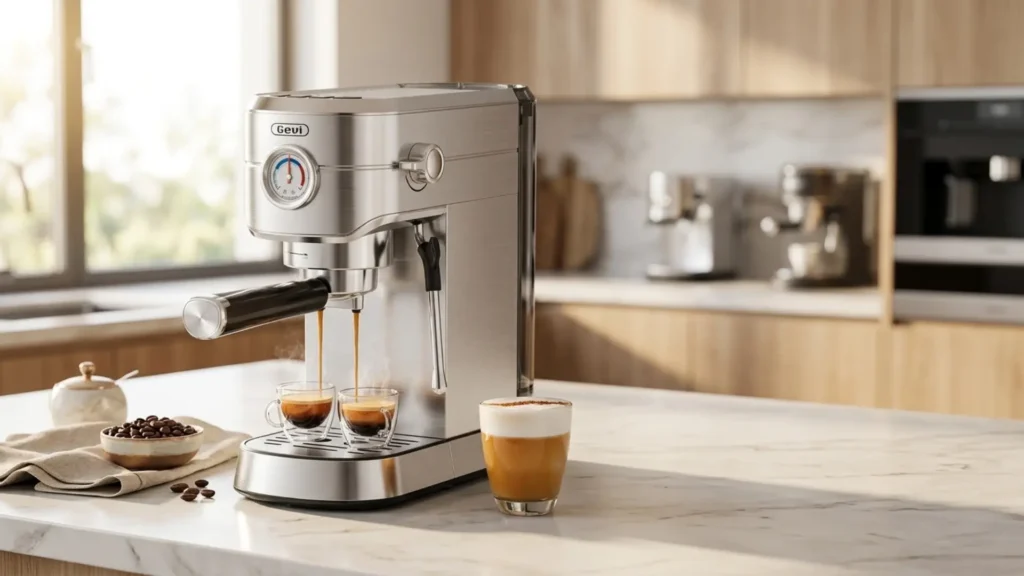
Gevi Commercial 20 Bar Espresso Machine Review (2026): Café-Quality Shots at a Home-Friendly Price?
I’ll be honest: when I first set eyes on this machine, I expected a glorified countertop decoration. A stainless steel espresso maker with a commercial-style aesthetic, a 20-bar pump, and a built-in milk frother — all at an approachable price point? I’ve seen that pitch before, and it rarely ends well.
But the Gevi Commercial 20 Bar Espresso Machine surprised me. It’s compact, it heats fast, it pulls a solid shot, and it foams milk well enough for a daily latte or cappuccino without demanding barista-level skill. Whether it earns the word “commercial” in its name is a fair debate. What’s less debatable is that, for a home machine in this price range, it delivers more than most of the competition dares to.
This is my full hands-on review after putting it through its paces — daily shot pulling, milk frothing, and testing how it holds up across back-to-back brews.

- 𝐎𝐩𝐭𝐢𝐦𝐚𝐥 𝐅𝐥𝐚𝐯𝐨𝐫 𝐄𝐱𝐭𝐫𝐚𝐜𝐭𝐢𝐨𝐧 – Equipped with a 20-bar pump, NTC temperature control, pre-infusion feature, and a pressure g…
- 𝐏𝐨𝐰𝐞𝐫𝐟𝐮𝐥 𝐒𝐭𝐞𝐚𝐦 𝐒𝐲𝐬𝐭𝐞𝐦 – The espresso coffee maker with frother features a powerful steam wand that quickly turns milk in…
- 𝐂𝐨𝐦𝐩𝐚𝐜𝐭 & 𝐃𝐮𝐫𝐚𝐛𝐥𝐞 – This cappuccino machine features a full stainless steel housing that is both stylish and durable, wi…
What’s in the Box
When you unbox the Gevi Commercial 20 Bar Espresso Machine, here’s what you’ll find:
- Stainless steel-accented espresso machine body
- Portafilter with single and double shot filter baskets (pressurized/dual-wall)
- Combo scoop/tamper (plastic)
- Removable drip tray with water level indicator
- User manual
What’s not in the box: a stainless steel milk pitcher (you’ll want one), a non-pressurized single-wall basket (for serious espresso work), and any ESE pod adapter. Budget roughly $10–$15 for a basic milk pitcher if you plan on frothing daily — it’s the one essential Gevi leaves out.
Design and Build Qua
I’ll be honest: when I first set eyes on this machine, I expected a glorified countertop decoration. A stainless steel espresso maker with a commercial-style aesthetic, a 20-bar pump, and a built-in milk frother — all at an approachable price point? I’ve seen that pitch before, and it rarely ends well.
But the Gevi Commercial 20 Bar Espresso Machine surprised me. It’s compact, it heats fast, it pulls a solid shot, and it foams milk well enough for a daily latte or cappuccino without demanding barista-level skill. Whether it earns the word “commercial” in its name is a fair debate. What’s less debatable is that, for a home machine in this price range, it delivers more than most of the competition dares to.
This is my full hands-on review after putting it through its paces — daily shot pulling, milk frothing, and testing how it holds up across back-to-back brews.
What’s in the Box
When you unbox the Gevi Commercial 20 Bar Espresso Machine, here’s what you’ll find:
- Stainless steel-accented espresso machine body
- Portafilter with single and double shot filter baskets (pressurized/dual-wall)
- Combo scoop/tamper (plastic)
- Removable drip tray with water level indicator
- User manual
What’s not in the box: a stainless steel milk pitcher (you’ll want one), a non-pressurized single-wall basket (for serious espresso work), and any ESE pod adapter. Budget roughly $10–$15 for a basic milk pitcher if you plan on frothing daily — it’s the one essential Gevi leaves out.
Design and Build Quality
The machine’s stainless steel body and chrome accents give it a legitimately handsome look on a kitchen counter. It’s narrower than many competing machines in this segment, which means it won’t eat up the real estate next to your toaster and knife block.
At roughly 9 to 10 lbs, it’s light — genuinely light. That’s a double-edged trait. On one hand, you can move it without straining your wrist. On the other, I noticed the machine drifted on my counter when I applied firm pressure locking in the portafilter. If you’re brewing on a smooth granite or glass surface, put a silicone mat underneath it. This is a real-world limitation that the spec sheet won’t tell you.
The build is predominantly plastic with stainless steel accents, which is the honest reality of any espresso machine under $200. Don’t mistake the commercial styling for commercial durability — this is a well-made home appliance, not a restaurant workhorse.
Heating System: The Thermoblock Advantage
This is where the Gevi Commercial 20 Bar separates itself from cheaper competitors at a similar price. Most budget espresso machines use a basic coil-boiler heating element, which can take 5–10 minutes to reach brewing temperature and often struggles to maintain consistent heat across sequential shots.
The Gevi uses a thermoblock heating system that gets to brew-ready temperature in under 45 seconds. Better yet, it uses two separate thermostats, one calibrated for espresso extraction and one for steaming. That matters more than the 20-bar headline: a machine that can switch cleanly between espresso temperature (~195°F) and steam temperature without a long wait is what actually makes your morning routine faster and your shots better.
In my testing, I brewed three back-to-back double shots with no meaningful temperature drop between pulls. The blue LED interface flashes during preheat and stops blinking once the machine is ready, a small UX detail that beginners will appreciate.
Espresso Performance: What the Shots Actually Taste Like
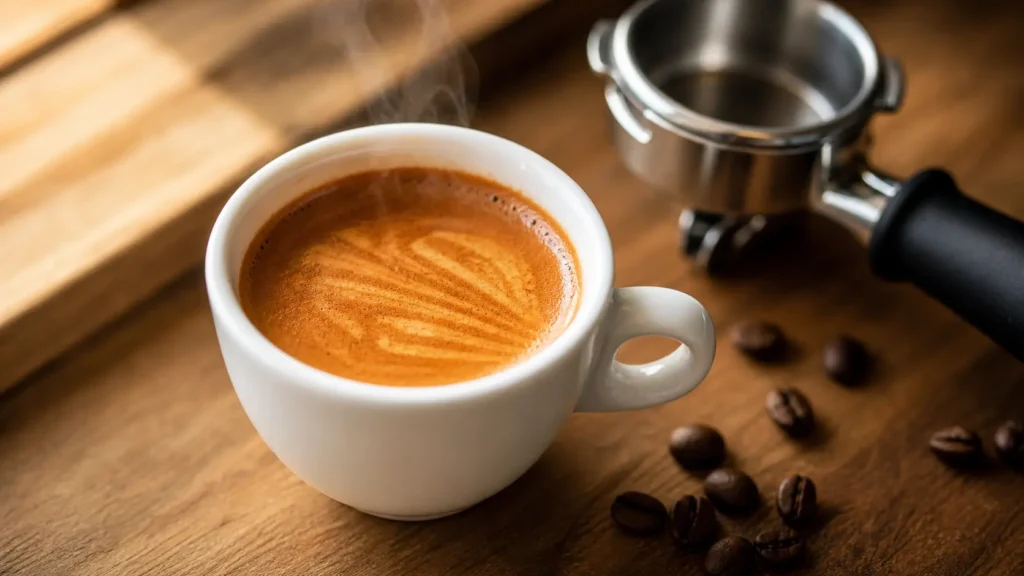
Let me be straightforward about something: the included filter baskets are dual-wall pressurized baskets, which means they inject air to simulate crema regardless of your grind quality or extraction. This is standard practice at this price point, and it’s not a dealbreaker — but it does mean you’re not seeing a true picture of your extraction quality from the crema alone.
Working within those baskets, I dialed into roughly 14g of a medium-dark single origin, ground on a Baratza Encore at a medium-fine setting, and pulled double shots into a Fellow Tally Pro scale. The preset shot volume landed consistently around 2 oz (59ml).
The espresso was bold and full-bodied with a decent hazelnut-colored crema layer on top. It had the warm, roasty notes you’d expect from a classic Italian-style profile. What it lacked was depth and complexity — the kind of nuanced brightness or fruity midtones you’d coax from a higher-end machine with PID temperature control. That’s not a criticism of this specific machine; it’s just the honest ceiling of thermoblock-only brewing without adjustable temperature settings.
If you’re grinding fresh with quality beans — and you should be — the Gevi Commercial 20 Bar will produce genuinely enjoyable espresso every morning. It won’t match a $500 machine, but at this price, it’s not supposed to.
Don’t overlook your beans. The machine can only do so much — the coffee you run through it matters just as much as the hardware. Our guide to the best coffee for espresso machines covers exactly what to look for when choosing beans.
Steam Wand: Milk Frothing That Actually Works
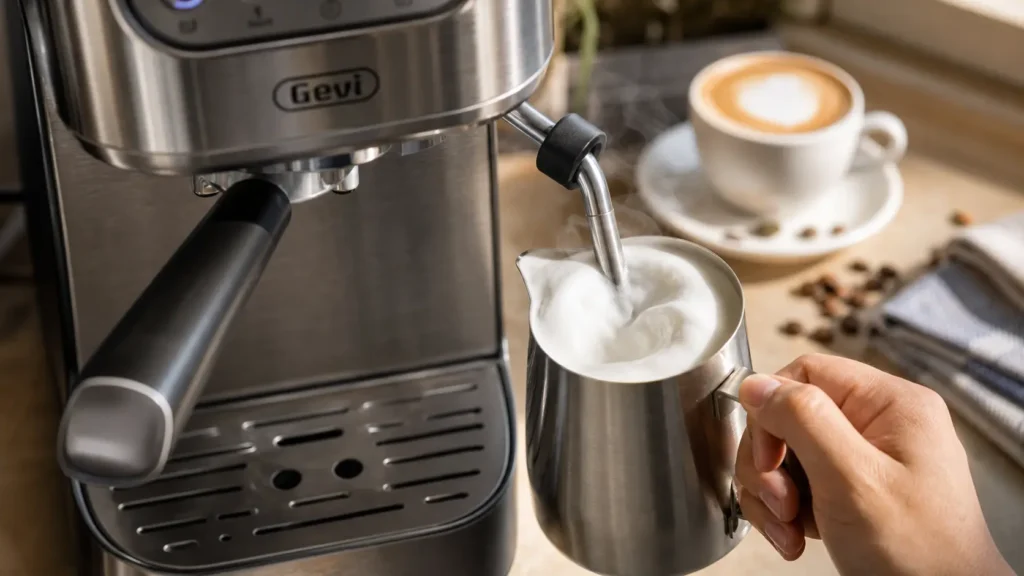
The steam wand on this machine uses a panarello-style tip, which auto-injects air into milk as it steams. That design makes frothing foolproof for beginners: you submerge the tip, turn the steam knob, and come back to thick, pillowy foam in 45–60 seconds.
In my milk tests using 6 oz of whole milk in a stainless steel pitcher, I consistently hit 140°F and produced dense, stable foam with a clean sweetness. It’s excellent for cappuccinos and works fine for lattes if you’re happy with a slightly chunkier texture.
The honest limitation: panarello wands make silky microfoam for latte art nearly impossible. The auto-aeration design sacrifices fine texture control for ease of use. If you want to create rosettes or tulips in your morning flat white, this wand — and frankly most wands under $300 — will frustrate you. For the rest of us who just want a well-frothed cappuccino without a learning curve, it does the job well.
The wand does have a heat shield near the top, which protects your fingers during frothing — a thoughtful detail that not every machine in this price tier includes.
How to Use the Gevi Commercial 20 Bar Espresso Machine
Here’s the workflow I settled into after a few days with the machine:
- Fill the water tank (located at the rear of the machine; 40.6 oz capacity)
- Power on using the rear switch — preheat takes under 45 seconds
- Dose your portafilter while the machine heats up (14g for a double shot)
- Tamp firmly, lock the portafilter into the group head
- Place your cup, wait for the LED to stop flashing, then press the double shot button
- Move the side knob to the coffee position — extraction begins automatically and stops at preset volume
- Purge the steam wand briefly before and after frothing milk
Shot volume is adjustable: hold the single or double shot button during extraction and release when you’ve reached your desired volume — the machine memorizes it. That’s a legitimately useful feature that gives you more control than most machines at this price.
Getting the grind right is non-negotiable. Pre-ground coffee will work in a pinch, but fresh grinding makes a dramatic difference. Check out our picks for the best coffee grinders for espresso to find the right grinder at every budget.
Key Specs at a Glance
| Specification | Details |
|---|---|
| Pump Pressure | 20 bar |
| Heating System | Thermoblock with dual thermostats |
| Power | 1,350W |
| Water Tank | 40.6 oz (1.2L), removable |
| Portafilter Size | 51mm |
| Filter Baskets | Dual-wall pressurized (single + double) |
| Steam Wand | Manual panarello with heat shield |
| Max Cup Height | ~4.4 inches |
| Weight | ~9–10 lbs |
| Auto Shut-Off | Yes, 15 minutes of inactivity |
| Housing | Plastic with stainless steel accents |
| Warranty | 1 year |
What I Liked
- Thermoblock heating reaches brew temperature in under 45 seconds — genuinely fast for a machine at this price
- Separate thermostats for espresso and steaming mean you can pull back-to-back shots and froth without temperature inconsistency
- LED interface is beginner-friendly and adds clarity to the preheat and brew cycle
- Steam wand has enough power to produce dense, café-quality foam for daily lattes and cappuccinos
- Cup warmer plate on top is a small but meaningful touch that keeps your espresso from losing heat the moment it hits a cold porcelain cup
- Compact size and light weight make it practical for smaller kitchens, studio apartments, or even RV living
- Auto shut-off after 15 minutes adds peace of mind
What I Didn’t Like
- Plastic housing dominates the build despite the commercial aesthetic — the stainless steel is mostly surface-level accents
- Machine shifts on the counter when locking in the portafilter — too light to stay planted without a grip mat
- Plastic tamper is flimsy and disposable; I replaced it before day two of testing
- Pressurized baskets only in the box; a non-pressurized single-wall basket costs extra and is essentially required if you want real extraction feedback
- No milk pitcher included — you’ll need to buy one separately to use the steam wand properly
- No pressure gauge on the interface, which would otherwise be a useful diagnostic tool given the “20 bar” branding
- No adjustable temperature — brewing temperature is preset, which limits your ability to optimize for lighter or more delicate roasts
How It Compares to the Competition
vs. De’Longhi ECP3420 (~$180): The De’Longhi costs slightly less but lacks thermoblock heating and an LED interface. The Gevi pulls better back-to-back shots and has a more intuitive user experience — it wins on value hands-down.
vs. De’Longhi EC702 (~$139): The EC702’s only real advantage is an included ESE pod adapter. At nearly twice the price of this Gevi, that’s not a justifiable premium for most buyers. The Gevi’s thermoblock outperforms the EC702’s single-thermostat system at a fraction of the cost.
vs. Breville Bambino Plus (~$399): The Bambino Plus is a better machine — better steam wand with micro-foam capability, auto-purge, and Breville’s build quality track record. But it costs three times as much. The Gevi is the right choice if your budget is under $200.
Cleaning and Maintenance
After each brewing session:
- Wipe down the steam wand immediately with a damp cloth — milk residue hardens quickly and the machine has no auto-purge function
- Rinse the portafilter basket in warm soapy water and knock out the spent puck
- Empty the drip tray regularly — the red float buoy indicator rises when the tray is full
For descaling, Gevi recommends a citric acid solution every 6–8 weeks depending on your water hardness. Never run any components through a dishwasher — the heat and detergent will degrade gaskets and plastic seals far faster than hand washing.
Who Should Buy This Machine?
This machine is the right call if you’re:
- A first-time espresso buyer who wants real features (thermoblock, LED interface, steam wand) without paying $400+ for them
- A daily latte or cappuccino drinker who values foam speed and consistency over microfoam precision
- Working with a smaller kitchen — the compact footprint fits comfortably on crowded counters
- Buying a gift — the stainless steel commercial aesthetic looks premium in the box and on the counter, even at this price
It’s probably not the right call if you’re:
- A latte art enthusiast who needs a commercial-style steam wand for microfoam control
- A specialty coffee drinker who wants adjustable brew temperature to highlight light roasts
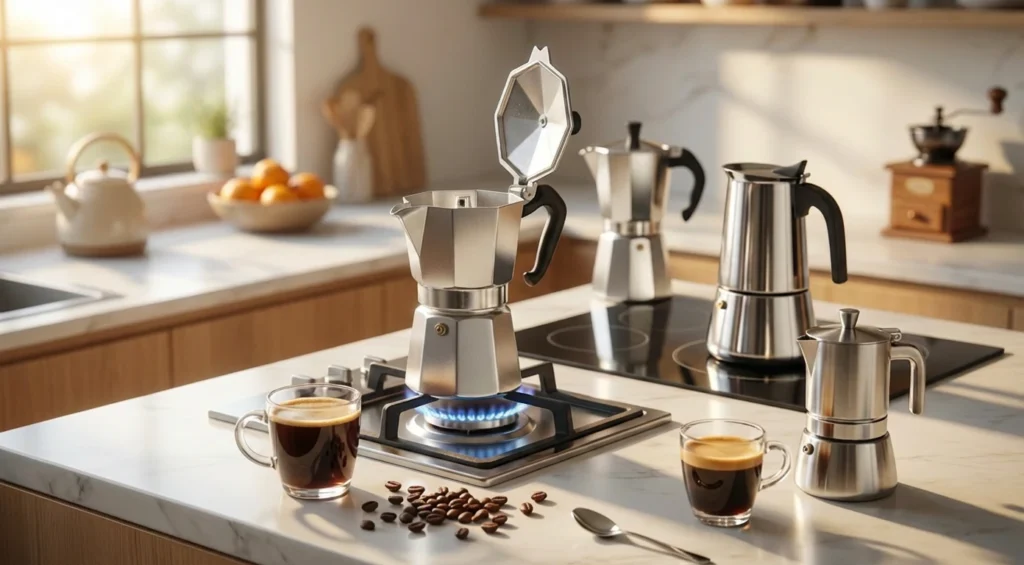
- Someone who already owns a $400+ semi-automatic and is looking for an upgradeIf you love espresso but haven’t fully committed to the semi-automatic world yet, a stovetop Moka pot is still one of the best low-cost ways to get strong, concentrated coffee at home — and it makes a great backup brewer.
The Verdict
The Gevi Commercial 20 Bar Espresso Machine doesn’t pretend to be a $600 machine, and that honesty is part of what makes it work. You get thermoblock heating, a functional steam wand, a beginner-friendly LED interface, and a compact stainless steel body — features you’d normally pay significantly more to find in the same package.
The pressurized baskets and plastic tamper are minor inconveniences you can fix for under $15. The machine shifting on the counter is solved by a $5 silicone mat. Neither issue undermines the core value proposition: consistent, hot espresso every morning, pulled in under five minutes, from a machine that looks like it belongs in a café.
Check the current price on Amazon →
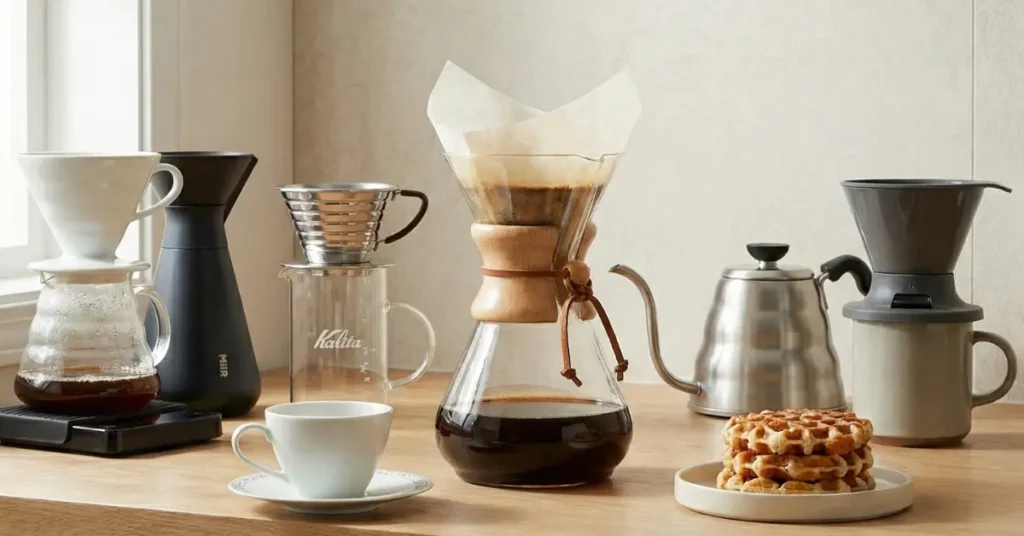
Whether you’re brewing espresso or exploring other methods, the water-to-coffee ratio and grind quality matter far more than any single piece of equipment. If you’re curious how drip-style brewing stacks up to the espresso world, our best pour-over coffee maker guide is a great read.
FAQs
Is the Gevi Commercial 20 Bar Espresso Machine actually “commercial”?
Not in the professional sense. The word “commercial” in the name refers to its design aesthetic — the stainless steel body and professional-style steam knob — rather than any commercial-grade internal components. It’s a home espresso machine built for daily domestic use. Manage those expectations and you won’t be disappointed.
Do I need a separate grinder?
Yes, and this is non-negotiable for good espresso. The Gevi Commercial 20 Bar doesn’t have a built-in grinder, so you’ll need one. Pre-ground espresso from the supermarket will work in a pinch with the pressurized baskets, but freshly ground beans make a dramatic, immediate difference in flavor depth and crema quality. Our guide to the best coffee grinders for espresso covers options from $50 manual grinders to $200 electric burr grinders.
Can I use coffee pods or capsules in this machine?
Not out of the box. The machine is compatible with ESE (Easy Serve Espresso) pods and some capsule formats, but the required adapter is sold separately by Gevi. The included baskets are designed for ground coffee only.
How often do I need to descale it?
Every 6–8 weeks for most US households with moderately hard tap water, using a citric acid descaling solution. If you use filtered or soft water, you can stretch the interval slightly. Neglecting descaling is the fastest way to shorten a thermoblock machine’s lifespan — mineral buildup clogs the heating element and reduces pressure consistency over time.
Is 20 bar pressure really better than 15 bar?
Not necessarily. Espresso extraction only requires 9 bars of pressure — the 20-bar figure describes the pump’s maximum rated capacity. Both 15-bar and 20-bar machines extract at the same 9-bar sweet spot when functioning correctly. Temperature stability, basket quality, and grind consistency have far more impact on shot quality than the pump rating printed on the box.