
Titanium cutting board have surged in popularity among home cooks and professional chefs looking for ultra-durable, low-maintenance kitchen surfaces. But before you invest in one, there’s a critical detail most brands don’t advertise: true solid titanium cutting boards are extremely rare and expensive. What most retailers sell are polymer or wood cores with titanium nitride (TiN) coatings or titanium-infused composite layers—and that difference matters for performance, knife care, and value.
What Is a Titanium Cutting Board?
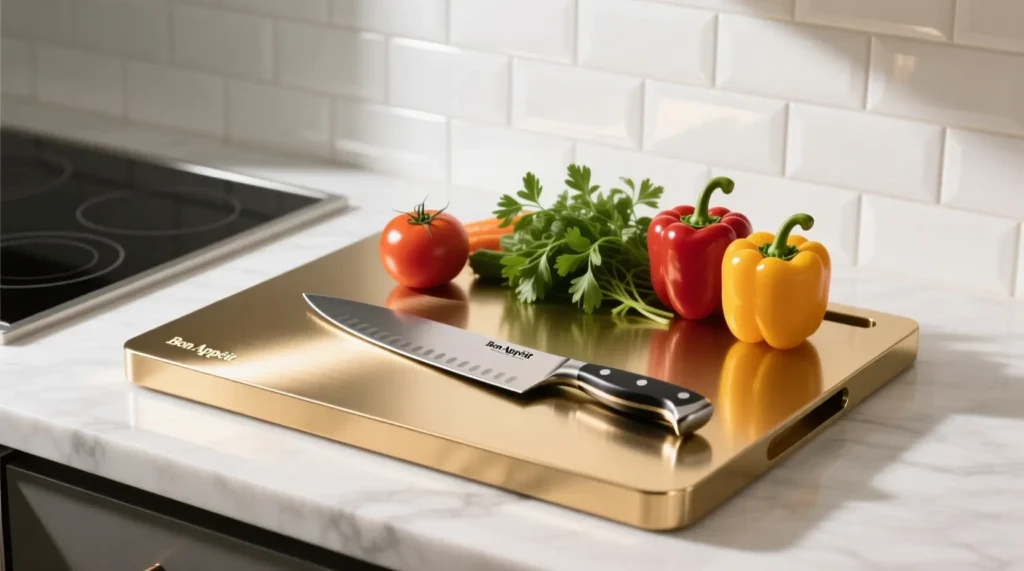
The term “titanium cutting board” can be misleading. Genuine 100% pure titanium boards do exist, typically made from commercially pure titanium (Grade 1 or Grade 2), which is FDA-compliant and biocompatible. These are lightweight yet incredibly strong, but they come with a premium price tag typically ranging from $150 to $300+.
Most products marketed as “titanium cutting boards” actually feature a titanium nitride (TiN) coating applied over a base material like stainless steel, aluminum, or composite polymer. TiN is a chemical compound of titanium and nitrogen, deposited through a physical vapor deposition (PVD) process at around 350°C. The result is a striking gold-colored surface with impressive properties:
- Extreme hardness: TiN coatings measure 2,400–2,500 Vickers Hardness (HV)
- Antimicrobial surface: Non-porous and bacteria-resistant
- Scratch and corrosion resistance: Highly durable against wear
- Temperature tolerance: Stable up to 600°C (1,100°F)
The confusion arises because manufacturers often emphasize “titanium” without clarifying whether it’s pure titanium or a TiN-coated composite. Understanding this distinction is essential for setting realistic expectations about knife wear, durability, and maintenance. Unlike traditional wood cutting boards, titanium options require very different care considerations and perform differently with various knife types.
Pros and Cons of Titanium Cutting Boards
✅ Pros
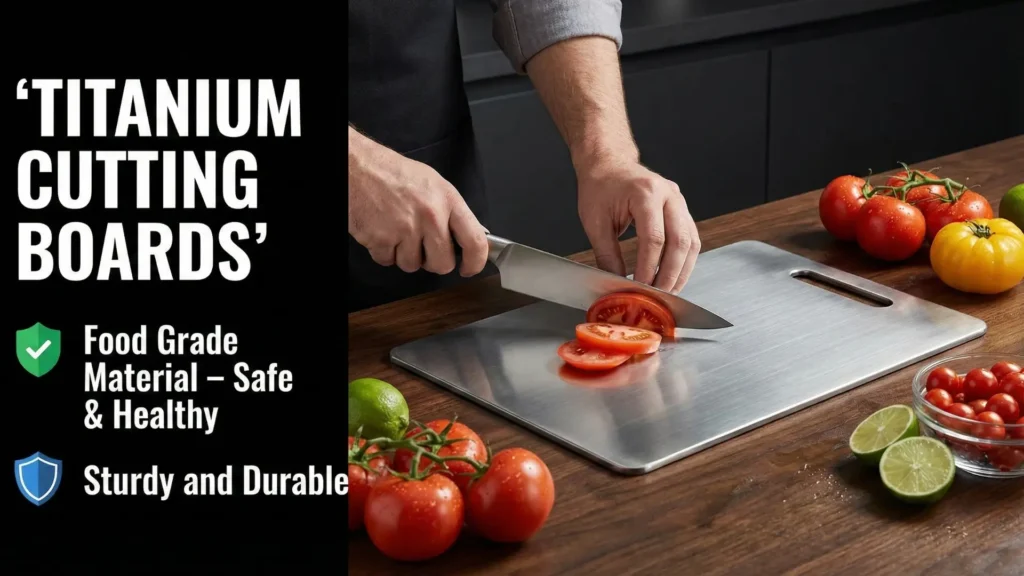
- Non-porous and hygienic: Resists bacterial growth and doesn’t absorb food odors or juices
- Exceptional durability: Won’t crack, warp, or splinter like wood; outlasts plastic boards by years
- Low maintenance: Dishwasher-safe (manufacturer-dependent) and requires no oiling or special treatment
- Corrosion-proof: Won’t rust or degrade when exposed to moisture, acids, or salt
- Heat-resistant: Can withstand high temperatures without warping or discoloration
- Modern aesthetic: Sleek, minimalist design fits contemporary kitchens
❌ Cons
- Hard on knife edges: TiN-coated boards (2,400+ HV) or even pure titanium can dull or chip knife blades faster than wood or plastic
- Noisy: Metal-on-metal contact creates loud clanging sounds during prep
- Slippery surface: Food may slide around without grip textures
- Expensive: Premium pricing ($45–$300+) compared to wood ($20–$60) or plastic ($10–$30) alternatives
- Heavier than alternatives: Less portable than bamboo or plastic
- Shows knife marks: While scratch-resistant, visible surface marks accumulate over time
Titanium vs. Other Cutting Board Materials
| Material | Knife-Friendliness | Hygiene | Durability | Maintenance | Best Use Case |
|---|---|---|---|---|---|
| Titanium | Low—hard surface dulls blades faster | Excellent—non-porous, antimicrobial | Outstanding—virtually indestructible | Very low—dishwasher-safe, no oiling | Light tasks, cheese boards, design-focused kitchens |
| Wood (Maple, Walnut) | High—soft surface preserves edges | Good—natural antimicrobial properties when maintained | Good—can last decades with care | High—requires regular oiling, hand-wash only | Daily meal prep, professional chefs |
| Bamboo | High—gentle on knives | Good—naturally antimicrobial | Moderate—prone to splitting with moisture | Moderate—needs oiling, hand-wash | Budget-conscious cooks, eco-friendly buyers |
| Plastic (HDPE) | Very high—softest option | Poor—grooves harbor bacteria | Low—needs replacement every 1–2 years | Low—dishwasher-safe | Raw meat prep, color-coded systems |
| Stainless Steel | Very low—hardest surface (200–220 HV) | Excellent—non-porous | Excellent—rust-resistant | Low—dishwasher-safe | Commercial kitchens, sanitation priority |
Wood and bamboo remain the gold standard for knife preservation and tactile comfort. For those exploring traditional wood options, understanding the difference between end grain vs edge grain cutting boards is essential, as end-grain construction offers superior knife protection. Titanium excels in hygiene and longevity but demands trade-offs in edge retention and noise.
Top Titanium Cutting Boards 2025
Note: We only recommend products available through verified retailers like Amazon. Always confirm material specifications before purchase. The products below feature titanium or titanium-composite construction, though many combine titanium with other materials like bamboo or wheat straw for improved knife-friendliness and affordability.
1. Zaucet LLC 100% Pure Titanium Cutting Board
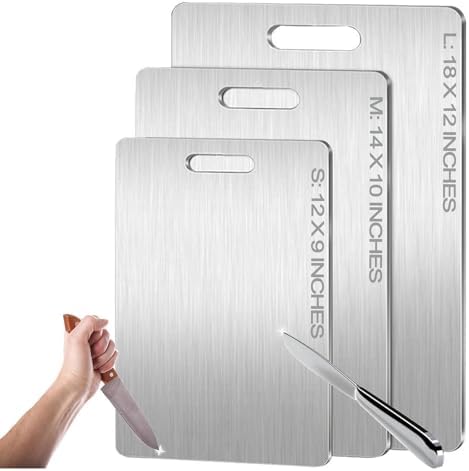
- 【PRODUCT DIMENSION】Our titanium cutting board measures 12 x 9 inch,14 x 10 inch,18 x 12 inch, providing ample space for …
- 【100% pure titanium cutting board】Pure titanium cutting board completely improves the shortcomings of traditional cuttin…
- 【Healthier and Safer】Our cutting boards are made of 100% pure titanium, which is a trusted material for surgical implant…
- Material: 100% pure titanium, double-sided
- Dimensions: 12″L × 9″W
- Rating: 4.2★ (1,364 reviews)
- Best For: Health-conscious cooks seeking genuine titanium at an affordable price
- Pros: Hygienic pure titanium construction, dishwasher safe, lightweight and portable, free international returns, 9K+ bought in past month showing strong buyer confidence
- Cons: Smaller size may not suit heavy meal prep, still harder on knives than wood alternatives
- Price: $24.99 (regularly $32.88)
2. XTBSE Titanium Cutting Board Set of 3
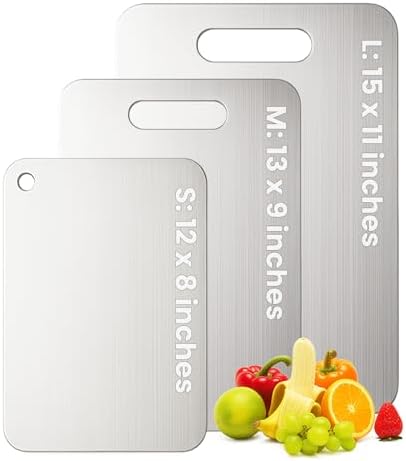
- 【Healthier and Safer】Elevate your kitchen experience with our titanium cutting board, crafted from high-quality titanium…
- 【Double-sided Design】The titanium cutting board features a double-sided design that offers exceptional versatility. One …
- 【Multiple Sizes Available】Choose the perfect size for your needs with our pure titanium cutting board, available in thre…
- Material: 100% pure titanium construction
- Dimensions: Set includes S, M, L sizes (5 size options available)
- Rating: 4.3★ (360 reviews)
- Best For: Families needing multiple board sizes for different tasks
- Pros: Excellent value at $15.97 per board, double-sided design, non-toxic and dishwasher safe, 2K+ bought in past month, includes three versatile sizes
- Cons: Pure titanium may show knife marks over time, requires regular sharpening of knives
- Price: $47.90/set (regularly $69.88)
3. Swshiiel Titanium & Bamboo Hybrid Cutting Board (Most Knife-Friendly)
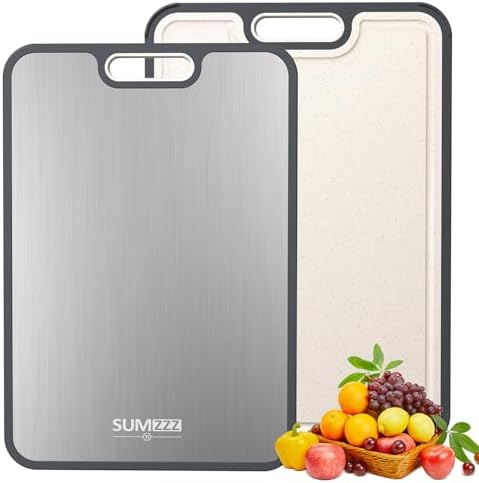
- 【2 IN 1 Cutting Board 】Cutting board is a versatile 2 in 1 kitchen tool, with one side made of food-grade 99.9%Pure Tita…
- 【High Quality】Titanium cutting board completely improves the shortcomings of traditional cutting boards traditional cutt…
- 【Saving-Time Design】Built-in juice groove and garlic grinding area cutting board, deep groove that doesn’t spill liquids…
- Material: Food-grade titanium and bamboo composite, double-sided
- Dimensions: 16″× 11″ (generous workspace)
- Rating: 4.4★ (140 reviews)
- Best For: Users wanting titanium durability with improved knife preservation
- Pros: Slip-resistant with integrated handle, bamboo side offers knife-friendly cutting option, dishwasher safe, larger size accommodates full meal prep
- Cons: Hybrid construction means not 100% titanium, bamboo side requires occasional oiling for longevity
- Price: $25.99
4. SGKBOP 2-in-1 Titanium & Wheat Straw Cutting Board (Budget Pick)

- SAFE FOR FAMILY MEALS – Certified by SGS for food-grade safety, this double-sided titanium cutting board provides a clea…
- 2-IN-1 DESIGN FOR EVERYDAY COOKING – Certified by SGS for food-grade safety, this double-sided titanium cutting board pr…
- BUILT TO LAST IN BUSY KITCHENS – Unlike wooden or plastic boards that absorb stains and odors, the titanium surface stay…
- Material: SGS food-grade certified pure titanium and wheat straw PP composite
- Dimensions: 16″× 11″
- Rating: 4.3★ (210 reviews)
- Best For: Eco-conscious buyers on a budget seeking dual-surface functionality
- Pros: SGS certification for food safety, 6K+ bought in past month, 2-in-1 design offers titanium side for hygiene and composite side for knife care, returnable until January 31, 2026
- Cons: Wheat straw composite side not as durable as pure titanium, may stain over extended use
- Price: $23.51
5. Premium Kitchen Titanium & Bamboo Charcuterie Board (Gift-Worthy)
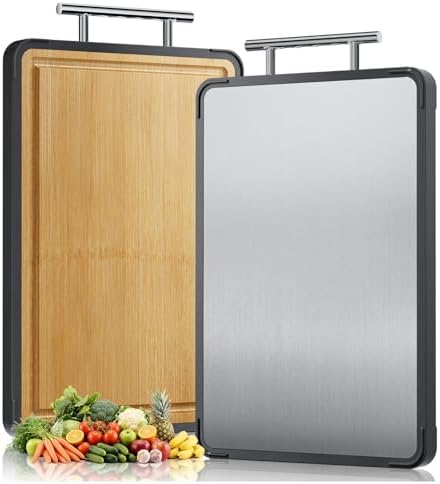
- DOUBLE SIDED CUTTING BOARD This double sided cutting board combines a titanium cutting surface on one side and a bamboo …
- TITANIUM SIDE FOR DAILY PREP Use the titanium side for meat, seafood, fruit, and vegetables when you want a smooth, easy…
- BAMBOO SIDE FOR CLASSIC CHOPPING The bamboo side delivers the natural wood cutting board feel many home cooks prefer for…
- Material: Food-grade double-sided pure titanium and bamboo
- Dimensions: Standard size with slip-resistant design
- Rating: 4.4★ (140 reviews)
- Best For: Entertaining and gift-giving, versatile charcuterie presentations
- Pros: Non-toxic construction, housewarming gift quality, dishwasher safe, 20K+ bought in past month showing exceptional popularity, dual-purpose design
- Cons: Better suited for serving than heavy chopping, bamboo requires hand-washing for best longevity
- Price: $25.99
Important Note on Material Composition: Products #3, #4, and #5 feature titanium combined with bamboo or wheat straw composite materials. While these hybrid boards sacrifice some of the pure antimicrobial properties of 100% titanium, they offer significantly improved knife-friendliness and reduce blade dulling. See our full comparison: titanium vs. wooden cutting boards for more guidance on selecting the right material for your needs.
For those seeking artisan pure titanium boards without composite materials, specialty manufacturers and select Etsy sellers offer 100% medical-grade titanium options starting at $150–$300, though availability is limited compared to these Amazon bestsellers.
For a comprehensive comparison of the best models currently available, see our detailed guide: Best Titanium Cutting Boards in 2025 You’ll Love.
Do Titanium Cutting Boards Dull Knives?
Short answer: Yes, but the degree depends on the specific material composition.

Pure titanium has a Vickers hardness of approximately 120–250 HV depending on the grade (Grade 1 being softest at ~120 HV, Grade 4 reaching ~250 HV). Most kitchen knives use high-carbon steel with hardness between 500–700 HV (or 900+ HV for premium tool steels). This means pure titanium is actually softer than most knife steels, so theoretically it should be gentler on blades than harder surfaces like glass or granite.
However, titanium nitride (TiN) coatings—common on many “titanium” boards—measure 2,400–2,500 HV, making them significantly harder than any kitchen knife. When a softer blade repeatedly contacts a harder surface, the edge experiences microscopic deformation and dulling. TiN-coated boards will accelerate this wear compared to wood or plastic alternatives.
Even pure titanium, while softer than knife steel, lacks the “give” and self-healing properties of end-grain wood, which absorbs and closes knife grooves. For knife-friendly alternatives that preserve edge retention, consider exploring options like acacia wood cutting boards, which balance durability with gentleness on blades. Additionally, stainless steel bases (common in composite boards) measure 200–220 HV, which still creates more edge wear than wood or plastic.
Practical advice: Reserve titanium boards for light tasks like slicing cheese, bread, or cooked meats. Avoid heavy chopping of raw vegetables or proteins if you use premium Japanese or carbon-steel knives.
How to Care for Your Titanium Cutting Board
Proper maintenance extends lifespan and preserves hygiene.

Daily Care:
- Wash with warm water and mild dish soap after each use
- Use soft sponges or cloths—avoid steel wool or abrasive scrubbers
- Rinse thoroughly and dry with a towel to prevent water spots
Deep Cleaning:
- Create a paste of baking soda and water for stubborn stains; rub gently, then rinse
- Spray with diluted vinegar (1:1 water-to-vinegar ratio) to neutralize odors
- Most titanium boards are dishwasher-safe, but hand-washing is recommended for longevity
Don’ts:
- Never use harsh chemical cleaners or highly acidic solutions
- Avoid extreme temperature shocks (e.g., placing frozen items directly on a hot board)
- Don’t use as a trivet for extremely heavy cast-iron pans—titanium is heat-resistant but not indestructible under concentrated weight
Storage: Store flat or hang using designated holes to prevent scratching. Keep away from sharp utensils when not in use. For those interested in personalized storage solutions, engraved cutting boards offer both functional and decorative benefits.
Are Titanium Cutting Boards Safe for Food?
Absolutely. Titanium and titanium nitride are among the safest materials for food contact.
Pure titanium is biocompatible, meaning it doesn’t react negatively with human tissue or food—which is why it’s trusted in surgical implants, dental fixtures, and pacemakers. It’s chemically inert, non-toxic, and won’t leach heavy metals into your food like some stainless steels or low-quality plastics.
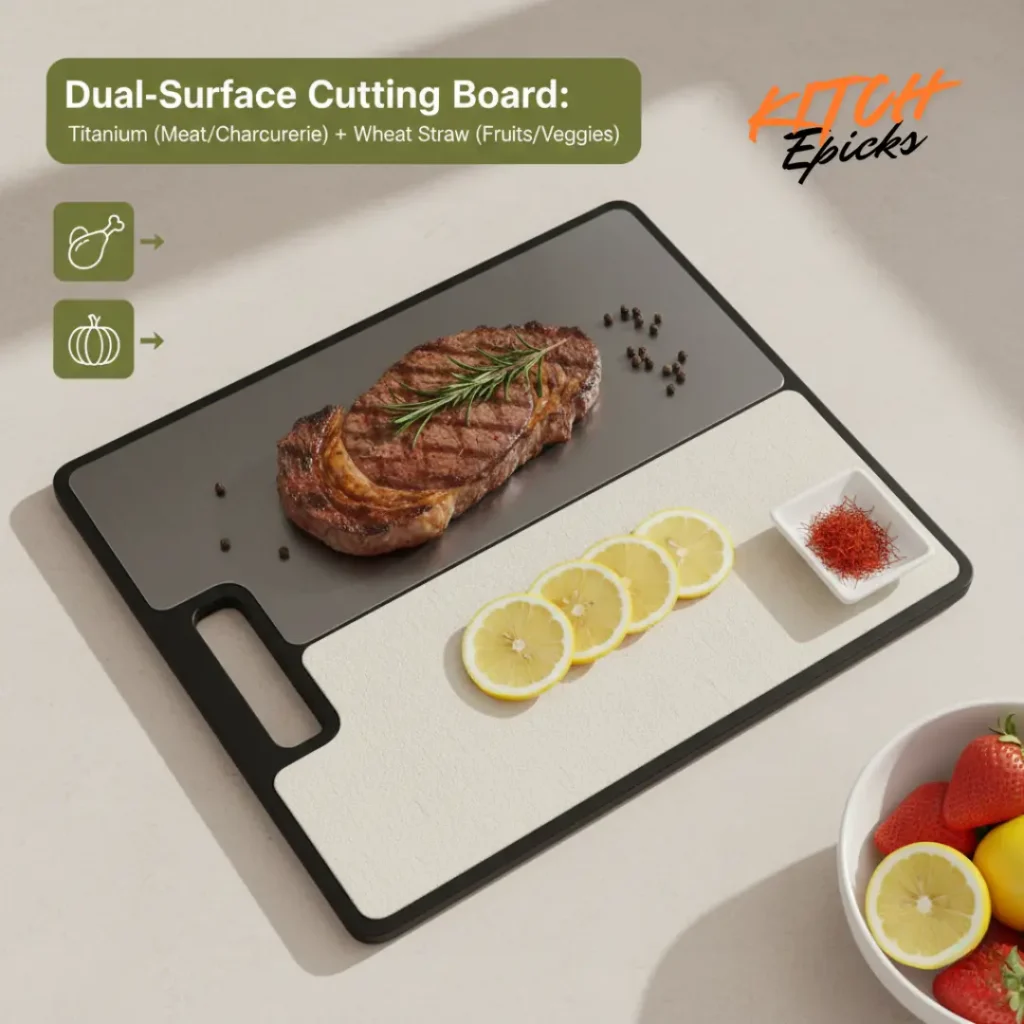
Titanium nitride coatings are equally safe. They’re FDA-compliant when properly manufactured and meet strict standards for food-contact surfaces. TiN is non-reactive, doesn’t shed particles, and resists bacterial colonization. In fact, TiN’s biocompatibility is so well-established that it’s used to coat medical implants to improve wear resistance without compromising safety.
Unlike plastic boards that shed microplastics or wooden boards that can harbor bacteria in deep grooves, titanium remains completely sterile and contamination-free. You can safely prep raw chicken, rinse the board, and immediately slice vegetables without cross-contamination risk.
Final Verdict: Who Should Buy One?
Titanium cutting boards are ideal for:
- Design enthusiasts who want a modern, statement-piece kitchen tool
- Health-conscious cooks prioritizing non-toxic, antimicrobial surfaces
- Low-maintenance users who value dishwasher convenience over traditional board care
- Allergy-sensitive households seeking hypoallergenic, non-porous materials
- Outdoor/camping cooks needing lightweight, corrosion-proof portability
Skip them if you:
- Use high-end Japanese or carbon-steel knives daily—wood or bamboo preserves edges better
- Do heavy-duty meal prep with frequent chopping—the noise and hardness become fatiguing
- Have budget constraints—quality wood boards offer better value for general use
- Prefer tactile warmth and natural aesthetics over industrial minimalism
FAQs
Are titanium cutting boards real?
Yes, but with caveats. True solid titanium boards (100% pure) exist but are rare and expensive ($150–$300+). Most “titanium” boards use titanium nitride coatings over stainless steel or composite bases.
Can you put them in the dishwasher?
Most titanium boards are dishwasher-safe, though hand-washing with mild soap extends their lifespan and preserves surface finish. Always check manufacturer guidelines.
Why are they gold-colored?
The characteristic gold hue comes from titanium nitride (TiN) coatings applied through physical vapor deposition. Pure titanium is silver-gray.
Where can I buy one?
TiN-coated stainless steel boards are widely available on Amazon from various manufacturers, typically priced $45–$85. Pure titanium boards are sold by specialty metal fabricators and select Etsy sellers—but verify material certifications before purchasing.
🔗 Related Articles
Want to go deeper? Explore our detailed guides on titanium cutting boards and kitchen material science:
- Are Titanium Cutting Boards Worth It?
Honest cost vs. value breakdown for 2025—find out if they’re a smart buy for your kitchen. - Do Titanium Cutting Boards Dull Knives?
The science of hardness, blade wear, and how to protect your chef’s knives. - Titanium vs. Wooden Cutting Boards: Which Is Better?
Head-to-head comparison of hygiene, durability, maintenance, and best use cases. - How to Clean and Maintain a Titanium Cutting Board
Step-by-step care guide to keep your board looking new—without damaging the coating. - Are Titanium Cutting Boards Safe for Food?
FDA compliance, toxicity facts, and why titanium is used in medical implants.