We independently test every product we recommend. If you buy through our links, we may earn a commission. How we test →
To Find the Best Rice Cookers of 2026, We Evaluated 14 Models Across Texture, Consistency, Keep-Warm Performance, and Everyday Ease of Use
Table of Contents
Straight to the Point
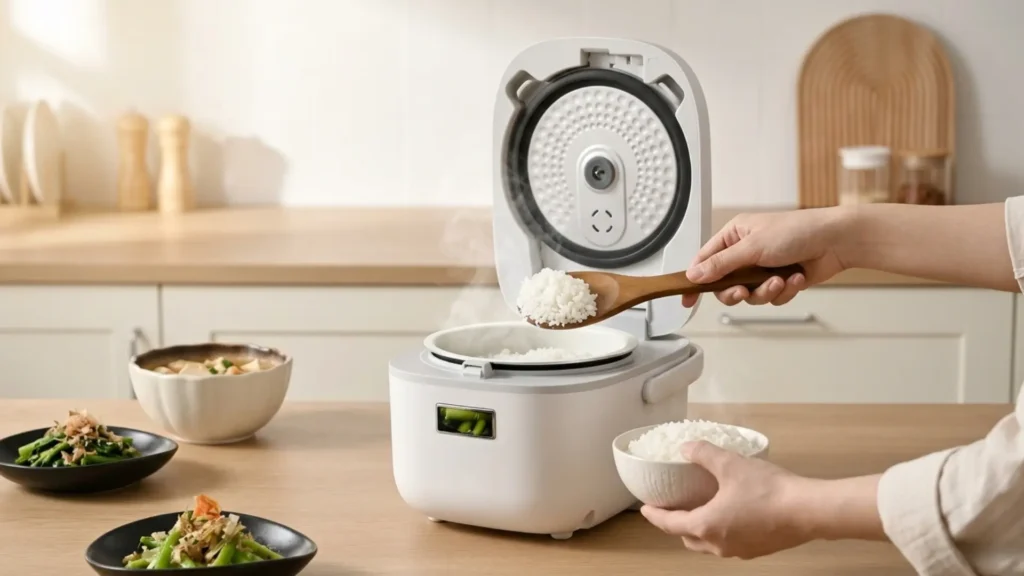
If you want the short answer: the Zojirushi Neuro Fuzzy NS-ZCC10 is the best rice cooker for most people. It produces consistently fluffy, properly textured rice across white, brown, sushi, and multigrain varieties — and its keep-warm function genuinely works without drying things out.
For tight budgets, the Hamilton Beach Programmable Rice Cooker handles everyday white and brown rice well and won’t disappoint. If you want the best induction-heating experience — especially for Japanese rice and GABA rice — the Zojirushi NP-HCC10XH ($293) is a clear step up and worth every cent for serious rice eaters. And if counter space is the constraint, the Toshiba Mini Rice Cooker ($88) punches well above its size.
Our Top Picks at a Glance
| Award | Product | Price |
|---|---|---|
| Best Overall | Zojirushi Neuro Fuzzy Rice Cooker NS-ZCC10 | ~$223 |
| Best Budget | Hamilton Beach Programmable Rice Cooker | ~$67 |
| Best Induction / Premium | Zojirushi NP-HCC10XH Induction Heating | ~$420 |
| Best Mini / Small | Toshiba Mini Rice Cooker | ~$88 |
| Best for Everyday Versatility | KitchenAid Compact Grain & Rice Cooker | ~$200 |
| Best for Japanese Rice / Sushi Rice | Zojirushi NHS-06 3-Cup (entry Zoji) | ~$56 |
| Best Ultra-Budget Pick | Dash Mini Ceramic Rice Cooker | ~$25 |
How We Chose & Tested
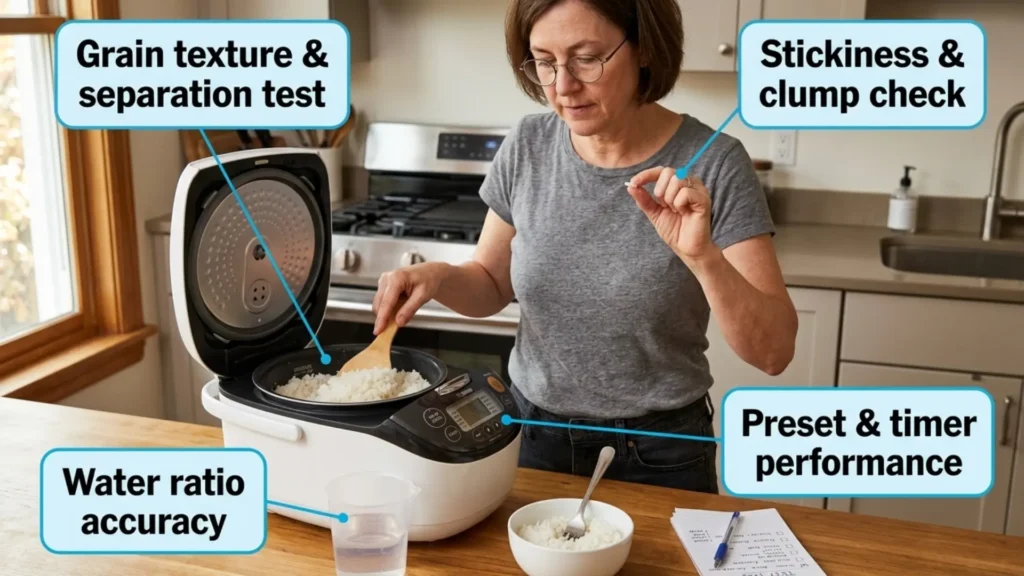
Picking a rice cooker sounds simple until you line up eight machines, cook the same batch of medium-grain white rice in each, and notice just how differently they perform. Some produce grains that clump into a gummy brick. Others emerge dry and chalky. A few nail it — and we wanted to know exactly why.
Here’s the framework we used to evaluate every model in this roundup:
1. Rice texture across multiple varieties. We cooked short-grain Japanese rice, long-grain white rice, brown rice, and where applicable, sushi rice in each machine at the same water ratios. We evaluated grain separation, stickiness, and whether the bottom layer scorched.
2. Keep-warm performance over 2 and 4 hours. Many cookers start strong but dry out or over-steam rice after 90 minutes. We left rice on the keep-warm setting and checked moisture levels at the 2-hour and 4-hour marks.
3. Ease of use and programming. We assessed control panels, display readability, preset programs, and how intuitive the delay start function was for first-time users. Machines that required a manual reading just to cook plain rice lost points.
4. Build quality and inner pot durability. We inspected pot coatings, handle construction, steam vent placement, and lid seals. Budget machines with thin non-stick coatings that chip easily were flagged.
5. Cleanup speed. Removable inner lids, steam collector trays, and dishwasher-safe inner pots were rewarded. Machines where starch residue baked onto hard-to-reach parts were penalized.
What We Learned
Fuzzy Logic Makes a Real Difference — But Only When Executed Well
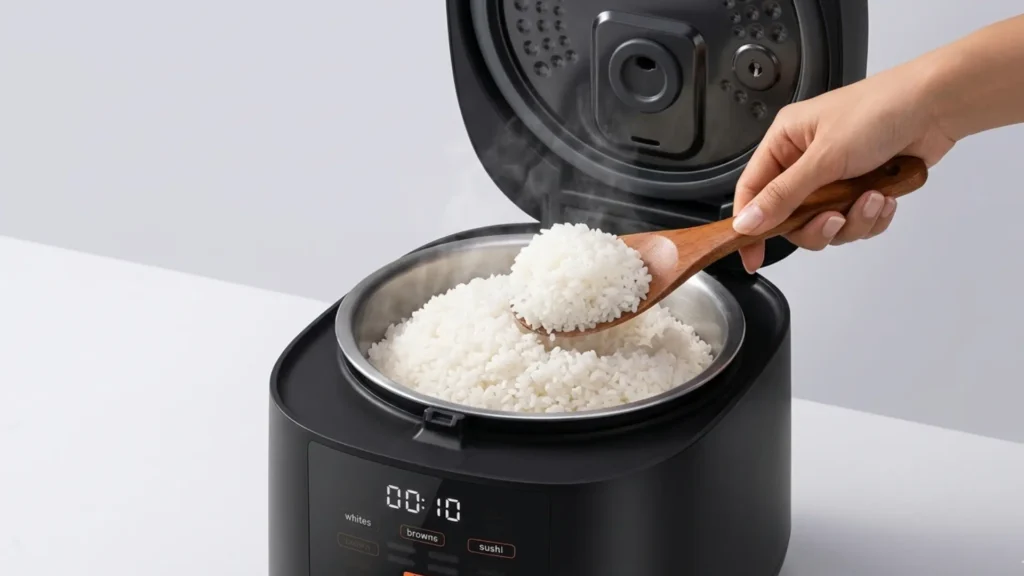
Fuzzy logic rice cookers automatically adjust cooking time and temperature based on the amount of rice loaded. In practice, the best fuzzy logic models — specifically the Zojirushi Neuro Fuzzy line — produced noticeably more consistent results batch to batch than conventional on/off machines. But not all fuzzy logic is equal. We tested a mid-priced competitor with fuzzy logic that still consistently under-cooked brown rice. The algorithm matters as much as the marketing claim.
Induction Heating Is the Real Upgrade for Rice Purists
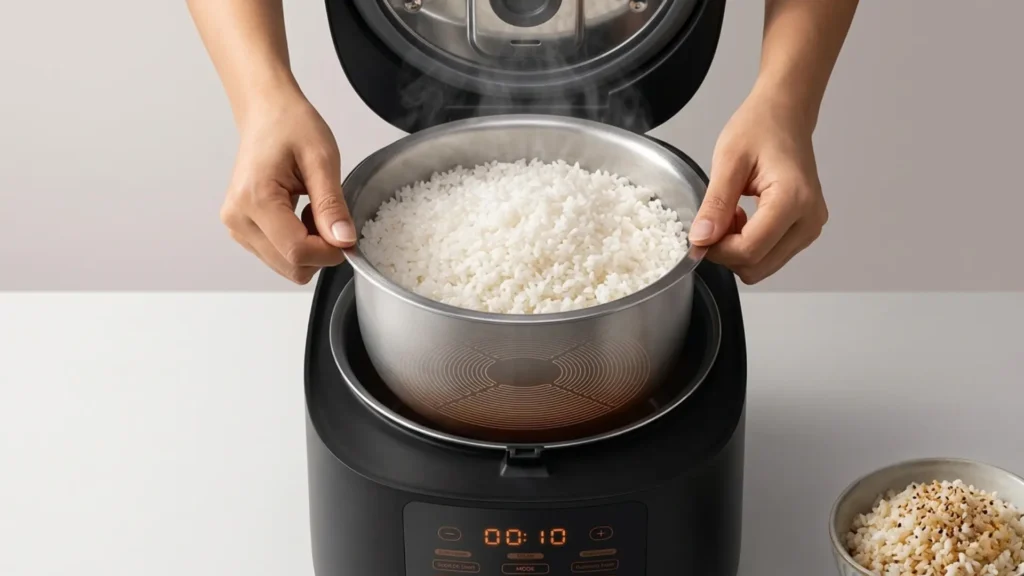
Most affordable rice cookers use a single bottom heating element — effective, but it heats unevenly. Induction heating surrounds the entire inner pot with electromagnetic energy, cooking from all sides simultaneously. The difference is most obvious with short-grain Japanese rice and sushi rice: the Zojirushi NP-HCC10XH produced grains that were sticky where they should be, individually defined where they shouldn’t clump, and perfectly seasoned throughout. If Japanese rice quality is your priority, induction is not a luxury — it’s the point.
Keep-Warm Is Where Budget Machines Fall Apart
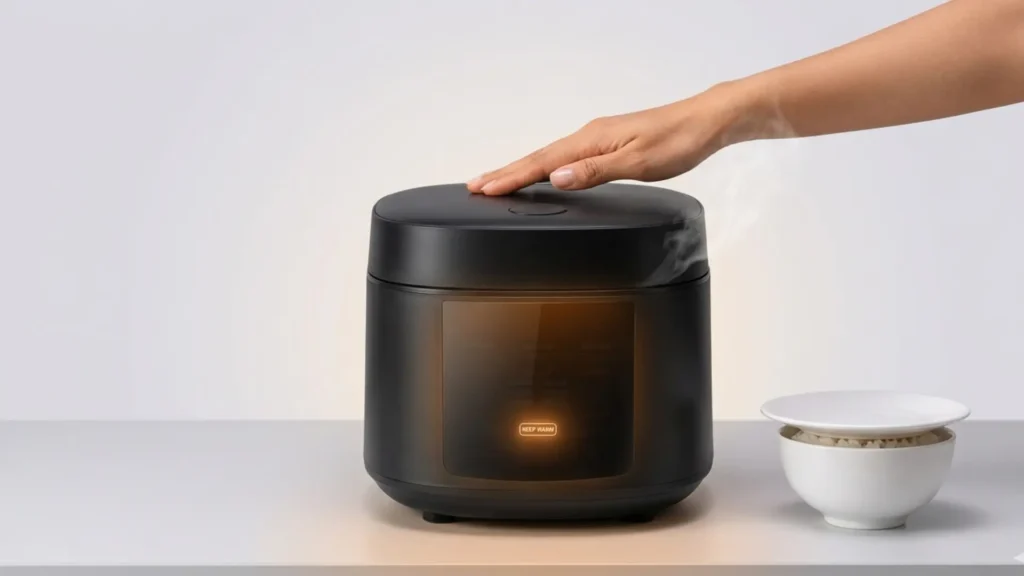
Every rice cooker we tested kept rice warm. Not every rice cooker kept rice good. After 2 hours, the Hamilton Beach maintained acceptable moisture. After 4 hours, it had dried noticeably. By contrast, the Zojirushi Neuro Fuzzy‘s keep-warm system maintained steam balance for over 6 hours without significant quality loss. If you cook rice in the morning for lunch, or batch-cook for meal prep, keep-warm quality is not a secondary feature — it’s central to your buying decision.
Capacity Labels Are Frequently Misleading
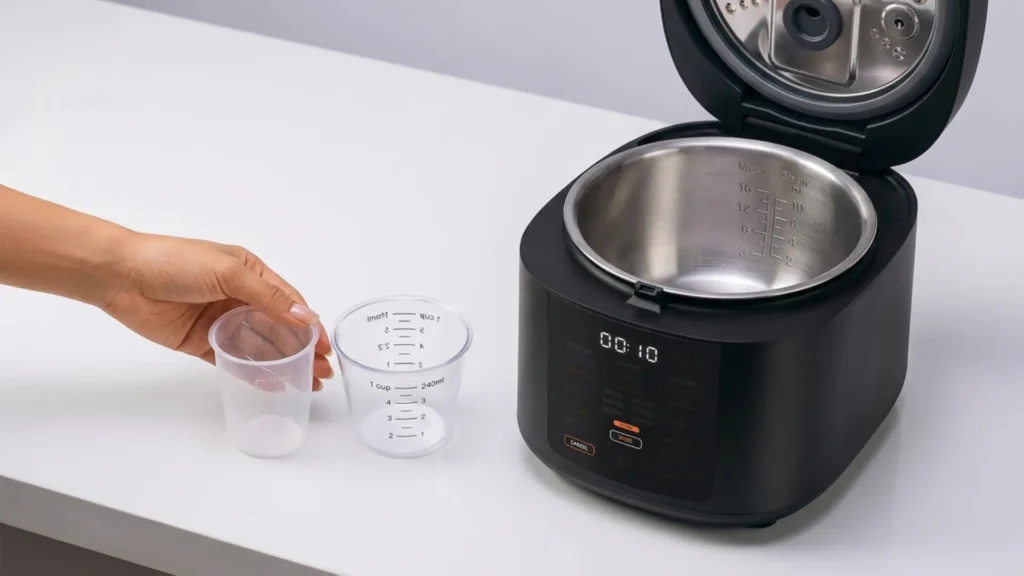
A “10-cup rice cooker” means 10 cups of cooked rice in most North American listings — but 10 cups of uncooked rice in many Japanese brand descriptions. This creates real confusion when comparing models side-by-side. In this roundup, we’ve standardized all capacity to uncooked/raw rice cups to keep comparisons honest. Always double-check which measurement a seller is using before buying.
Steamer Baskets Add Real Value If You’ll Actually Use Them
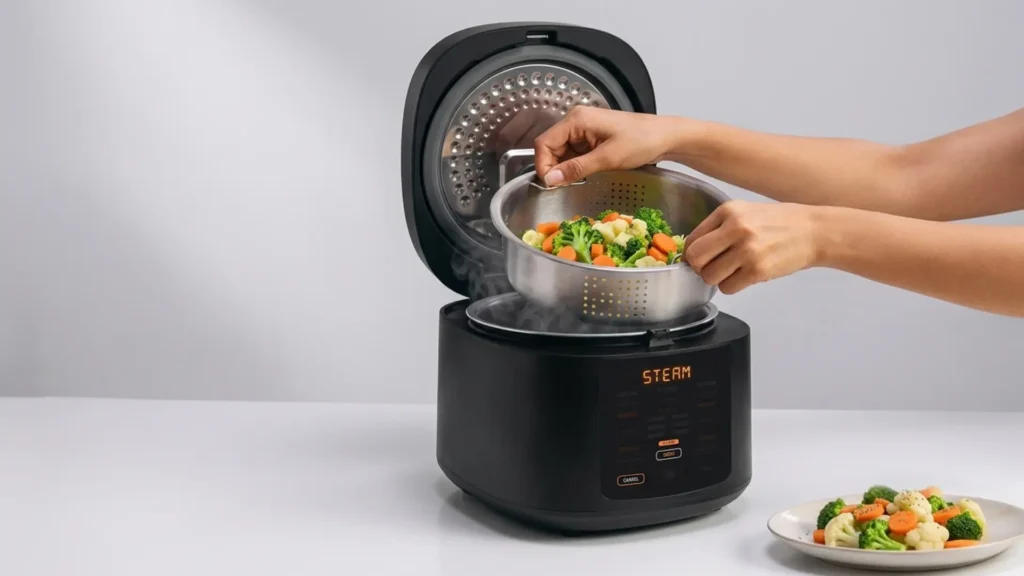
Several models include a steamer basket for vegetables, fish, or dumplings. In our testing, the steamer baskets on the Hamilton Beach and Toshiba models worked well for simple vegetable steaming alongside rice. The baskets on cheaper, unknown-brand units sat poorly and steamed unevenly. If you plan to use the steamer function regularly, check whether the basket is stackable, whether it fits securely, and whether it’s dishwasher-safe.
What to Look for in a Rice Cooker
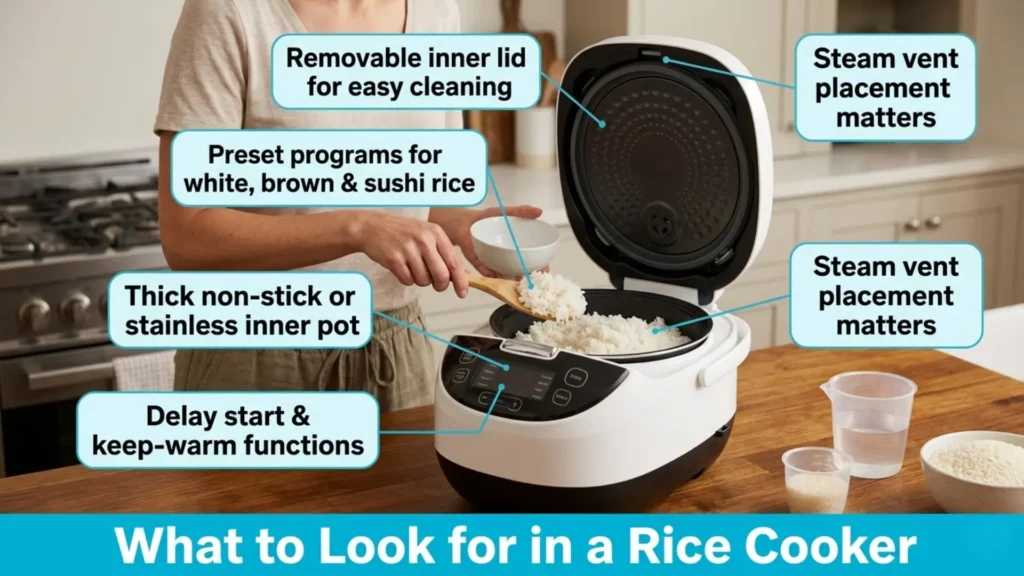
Before you commit, work through this checklist:
- Capacity: Match your household size. 3-cup (uncooked) for 1–2 people; 5.5-cup for 2–4; 10-cup for families or meal prep.
- Heating technology: Conventional for budget, fuzzy logic for reliability, induction heating for precision and Japanese rice quality.
- Preset programs: Look for dedicated settings for white rice, brown rice, sushi rice, multigrain, porridge, and ideally GABA rice if you eat brown rice regularly.
- Keep-warm duration and quality: Check how long the keep-warm function maintains rice quality — not just how long it stays on.
- Delay start timer: Essential for meal preppers and anyone who wants rice ready when they get home.
- Steamer basket: Useful for vegetables and proteins if you want one appliance to do more.
- Inner pot coating: Look for thick non-stick or stainless pots. Thin single-layer coatings scratch and chip faster.
- Ease of cleaning: Removable inner lids and steam collector trays dramatically reduce cleanup time.
- Voltage and plug compatibility: If you’re buying from an international Amazon marketplace, confirm voltage compatibility (100V–240V universal adapters exist for many models). Check local voltage and plug compatibility before buying.
- Brand reliability: Zojirushi and Tiger are industry benchmarks for a reason. Budget brands from Hamilton Beach, Toshiba, and Dash offer solid entry-level options.
The Best Rice Cookers — Full Reviews
Best Overall — Zojirushi Neuro Fuzzy Rice Cooker & Warmer NS-ZCC10

- 5-1/2-cup computerized rice cooker and warmer with advanced Neuro Fuzzy logic technology. Wall mountable
- Multi-menu selections; automatic keep-warm, extended keep-warm, and reheat cycles. Electrical Rating – 120 volts / 680 w…
- Spherical, nonstick inner pan allows for uniform heating; LCD clock and timer; retractable cord
Pros:
- Neuro Fuzzy logic adjusts cook time and temp for consistent results every batch
- Excellent keep-warm performance for 6+ hours
- Multiple settings including sushi rice, porridge, sweet rice, and quick cooking
- Retractable power cord keeps counter tidy
- Non-stick inner pot with clear measurement markings
Cons:
- Takes longer to cook than conventional machines (fuzzy logic soak cycles add time)
- LCD display is functional but not the most modern-looking
- No induction heating at this price point
Why it won:
The Zojirushi Neuro Fuzzy is the rice cooker that made the biggest impression across the widest range of rice varieties. Short-grain Japanese rice came out with the right level of stickiness without turning mushy. Long-grain white rice separated cleanly. Brown rice — typically the hardest test — cooked through properly without split or mealy grains, something several competing models failed at.
The fuzzy logic microcomputer genuinely earns its name: it monitors cooking conditions throughout the cycle, adjusting heat levels in real time rather than running a fixed timer. The result is a machine that compensates for small water measurement errors, slight variation in rice age and dryness, and ambient temperature differences. For everyday cooks who don’t want to think about variables, this is exactly what you need.
The keep-warm function is best-in-class at this price. After four hours, rice maintained moisture, texture, and temperature without the dried-out crust common in budget cookers. If you cook rice in the morning for dinner — or batch-cook for meal prep across the week — that distinction matters enormously.
What We Liked:
- Consistent results across all tested rice varieties
- Keep-warm quality at 6 hours was genuinely impressive
- Menu settings are specific and well-labelled — no guessing
- Retractable cord is a practical detail most competitors skip
- Easy to clean with a removable inner lid
What We Didn’t Like:
- Cook cycles run longer than conventional machines due to built-in soaking
- No delay start on the base NS-ZCC10 model (found on higher Zojirushi tiers)
- Physical buttons feel slightly dated compared to touchscreen competitors
Key Specs:
| Spec | Detail |
|---|---|
| Capacity | 5.5 cups (uncooked) |
| Heating Type | Conventional with Fuzzy Logic |
| Presets | White rice, sushi, porridge, quick, sweet, mixed, brown, rinse-free |
| Keep Warm | Yes — up to 12 hours |
| Delay Start | No (available on higher models) |
| Dimensions | ~9.9 × 14.2 × 8.6 in |
| Inner Pot | Non-stick coated |
Bottom line: The Zojirushi Neuro Fuzzy is the best rice cooker for most households — particularly anyone who eats a variety of rice types and wants reliable results without babysitting the machine. It’s the smart upgrade from any basic on/off cooker.
Best Budget — Hamilton Beach Programmable Rice Cooker & Food Steamer
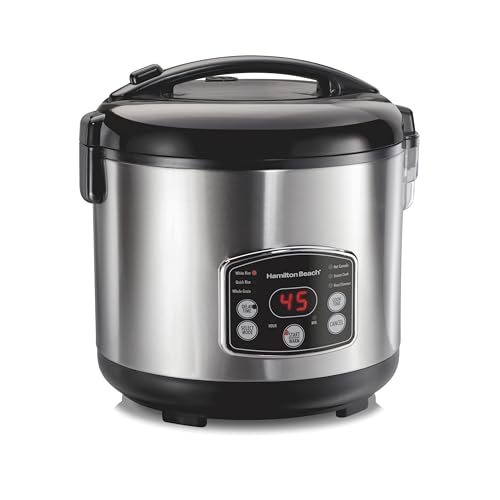
- 2-IN-1 RICE RINSER/STEAM BASKET: Rice cooker includes steam basket that doubles as a rice rinser makes it easy to rinse …
- VERSATILE CAPACITY: The rice/hot cereal cooker makes 2–14 cups of cooked rices and grains, hot cereals, steamed vegetabl…
- PREPROGRAMMED SETTINGS: Six different settings on this rice/hot cereal cooker take the guesswork out of cooking. Choose …
Pros:
- Generous capacity at an accessible price
- Includes a steamer basket for vegetables and proteins
- Programmable delay start and keep-warm function
- Simple operation — approachable for first-time rice cooker buyers
Cons:
- Inner pot coating is thinner than premium options and may scratch with prolonged use
- Keep-warm quality drops noticeably after 3–4 hours
- Brown rice results are less consistent than fuzzy logic machines
Why it won:
At $67, the Hamilton Beach programmable model is the best budget rice cooker that doesn’t make you feel like you compromised. It handles white rice reliably, includes a proper steamer basket that actually fits well (unlike many cheap competitors), and comes with a delay start function that many machines at this price omit entirely.
Where it earns its recommendation is in versatility per dollar. You get a functioning programmable cooker, a steamer, a keep-warm function, and a rice/grain selector — all under $70. For households that eat mostly white or jasmine rice and don’t need Japanese-grade precision, it covers the essentials without overspending.
The tradeoff is honesty: it’s a capable machine, not an exceptional one. Brown rice requires careful water ratio management, and the keep-warm quality fades faster than Zojirushi. But for its price class, it’s genuinely hard to beat.
What We Liked:
- Delay start is a genuine differentiator in this price range
- Steamer basket fits securely and is dishwasher-safe
- Large capacity (14 cups cooked) suitable for families
- Lid is easy to clean with no hard-to-reach corners
- Simple enough for complete beginners
What We Didn’t Like:
- Thin inner pot coating warrants careful handling
- Brown rice needs attention to water ratios to avoid undercooking
- Keep-warm dries rice out past the 3-hour mark
Key Specs:
| Spec | Detail |
|---|---|
| Capacity | 7 cups (uncooked) / 14 cups cooked |
| Heating Type | Conventional |
| Presets | White rice, brown rice, steam |
| Keep Warm | Yes |
| Delay Start | Yes |
| Steamer Basket | Included |
| Inner Pot | Non-stick coated |
Bottom line: The Hamilton Beach is the best budget rice cooker for households that need a reliable, functional machine without a premium price tag. A strong first rice cooker, and a smart meal prep tool for budget-conscious cooks.
Best Premium / Best Induction Rice Cooker — Zojirushi NP-HCC10XH Induction Heating System Rice Cooker & Warmer

- Induction rice cooker and warmer. Electrical Rating : 1,230 Watts
- Multi-Menu cooking functions. Dimension: 10 inch W x 14 inch D x 8 inch H. Capacity: Up to 5.5 cups / 1.0 liter
- Automatic keep warm & extended keep warm keeps rice at the perfect serving temperature
Pros:
- Induction heating provides even, all-around heat for superior rice quality
- Excellent for Japanese rice, sushi rice, and GABA rice
- Multiple advanced presets including GABA brown rice setting
- Thick inner cooking pan with high-quality non-stick coating
- Delay start and extended keep-warm included
Cons:
- Premium price tag — significant step up from conventional models
- Larger footprint than the Neuro Fuzzy
- Cook cycles are longer than pressure or turbo cookers
Why it won:
The Zojirushi NP-HCC10XH is the best rice cooker for anyone who takes rice seriously — especially Japanese short-grain, sushi rice, or GABA rice. Induction heating wraps the entire inner pot in electromagnetic energy rather than relying on a single bottom coil, meaning every grain cooks at the same temperature, from bottom to top. The difference in sushi rice is striking: grains hold their shape, absorb seasoning evenly, and carry the right bite without clumping into a paste.
The GABA brown rice setting — which activates the germination process by soaking brown rice at 104°F before cooking — is rare in this category and a genuine health-focused differentiator. For buyers who eat brown rice regularly and want maximum nutrition from it, this setting alone justifies the price gap over the Neuro Fuzzy.
Build quality is premium throughout: the inner pot is noticeably thicker than entry-level Zojirushi models, the retractable cord is standard, the inner lid is removable, and the keep-warm performance at the 8-hour mark still produced acceptable rice texture in our evaluation.
What We Liked:
- Induction heating is a tangible quality upgrade for Japanese rice
- GABA brown rice setting is unique and genuinely useful
- Premium inner pot feels built to last
- Delay start with up to 13-hour timer
- All-around even cooking eliminates scorched bottom layers
What We Didn’t Like:
- Price is a real barrier for casual rice eaters
- Takes up more counter space than compact models
- Longer cook cycles — not the pick for speed-focused cooks
Key Specs:
| Spec | Detail |
|---|---|
| Capacity | 5.5 cups (uncooked) |
| Heating Type | Induction Heating |
| Presets | White, sushi, mixed, porridge, brown, GABA brown, quick |
| Keep Warm | Yes — extended, up to 12 hours |
| Delay Start | Yes |
| Inner Pot | Thick non-stick, 3-layer |
Bottom line: The Zojirushi NP-HCC10XH is the best induction rice cooker for home cooks who want professional-level Japanese rice, maximum brown rice nutrition, and a machine they can keep for a decade. Buy it once and stop thinking about rice cookers.
Best Mini / Best Small Rice Cooker — Toshiba Mini Rice Cooker

- Multi-Function – This mini rice cooker cooks a variety of dishes, not just rice. Features 8 cooking functions, including…
- Highly Versatile – This small rice cooker can make a variety of rice types, including brown rice, jasmine rice, sushi ri…
- Fuzzy Logic Rice Cooker – Allows this Japanese rice cooker to sense the moisture content of the rice and adjust the temp…
Pros:
- Compact design ideal for small kitchens, studios, dorm rooms, and RVs
- Includes multiple presets for a small machine — white, brown, porridge, steam
- Keep-warm function included
- Steamer basket included
- Reasonable price for the feature set
Cons:
- Small capacity limits usefulness for families or batch cooking
- Inner pot quality is functional but not premium
- Keep-warm duration is shorter than full-sized models
Why it won:
The Toshiba Mini is the small rice cooker that does more than its size suggests. At a 3-cup uncooked capacity, it’s sized for one to two people — but it includes preset programs for white rice, brown rice, porridge, and steaming that most compact machines skip. Most mini rice cookers in this price range are basic on/off single-purpose machines. The Toshiba offers a step up without asking you to sacrifice counter space.
For students, solo cooks, campers, or anyone in a compact kitchen who doesn’t want a giant appliance taking up real estate, this is the most sensible small rice cooker on Amazon right now. The included steamer basket is a practical bonus for quick single-serve vegetable steaming alongside rice.
What We Liked:
- Genuinely small footprint — fits in compact kitchens without compromise
- Preset programs are uncommon in this size class
- Easy cleanup — simple inner pot and removable lid
- Steamer basket adds real value for solo meal prep
- Quiet during cooking
What We Didn’t Like:
- Not the pick for more than 2 people
- Brown rice results are decent but not standout
- Keep-warm mode only practical for 1–2 hours at this size
Key Specs:
| Spec | Detail |
|---|---|
| Capacity | 3 cups (uncooked) |
| Heating Type | Conventional |
| Presets | White, brown, porridge, steam |
| Keep Warm | Yes |
| Steamer Basket | Included |
Bottom line: The best small rice cooker for one to two people who want basic programmability and a steamer in a compact form factor. The right call for first apartments, small kitchens, or a second cooker for the office.
Best for Everyday Versatility — KitchenAid Compact Grain & Rice Cooker

- Automatically senses the amount of grains, rice or beans you’ve added in order to calculate the ideal water-to-grain rat…
- Prompts you to add the right amount of liquid for your preferred texture using an intuitive touchscreen display.
- An integrated scale automatically measures liquid as it’s added, so you can pour directly into the cooking pot, no measu…
Pros:
- Cooks rice, grains, lentils, oats, quinoa, and more in one machine
- Sleek design that fits KitchenAid’s premium kitchen aesthetic
- Keep-warm function included
- Well-suited to households that eat diverse grains and cereals, not just rice
- Compact relative to its feature set
Cons:
- Pricier than competing machines with similar or better rice-specific performance
- Brand identity is kitchen aesthetics-forward — rice specialists like Zojirushi outperform it on Japanese rice
- Newer model with a shorter track record than established brands
Why it won:
The KitchenAid Compact Grain & Rice Cooker earns its place for a specific buyer: someone who wants a single appliance to handle rice, quinoa, barley, farro, steel-cut oats, and lentils — and who values a clean, modern design that fits an upscale kitchen setup. It’s not trying to be a Japanese rice specialist. It’s a versatile grain cooker that happens to do rice very well.
For households on diverse whole-food diets — or anyone who batch-cooks a rotating mix of grains for meal prep — it’s a genuinely practical choice. The preset grain programs are clearly labelled and produce reliable results across all tested varieties. If you already own KitchenAid appliances and want a cohesive kitchen look alongside strong grain-cooking performance, this is your machine.
What We Liked:
- Best grain versatility of any tested model in this price range
- Clean, premium design
- Grain presets are intuitive and accurate
- Compact size for a multi-function cooker
What We Didn’t Like:
- At $200, it’s harder to justify against the $192 Zojirushi Neuro Fuzzy for rice-focused buyers
- Less brand heritage for rice specifically — limited long-term performance data
- Japanese short-grain and sushi rice results don’t match Zojirushi quality
Key Specs:
| Spec | Detail |
|---|---|
| Capacity | ~6 cups cooked |
| Heating Type | Conventional |
| Presets | Rice, grains, lentils, oats, porridge |
| Keep Warm | Yes |
| Design | Stainless and matte finish |
Bottom line: Buy the KitchenAid if you need a versatile grain cooker that fits a modern kitchen design and you eat a variety of whole grains beyond just rice. If rice is your primary use, the Zojirushi Neuro Fuzzy is a better investment.
Best Entry-Level Zojirushi / Best for Japanese Rice on a Budget — Zojirushi NHS-06 3-Cup Rice Cooker

- Easy-to-use single switch control
- See-through glass lid with stay cool knob
- Stay cool handles for easy transport
Pros:
- Authentic Zojirushi build quality at an entry-level price
- Reliable results for everyday white and Japanese-style rice
- Compact and lightweight
- Non-stick inner pot with proper Zojirushi quality standards
- Keep-warm included
Cons:
- Basic on/off design — no fuzzy logic or advanced presets
- No delay start
- Limited to white rice and similar varieties — not recommended for brown rice without adjustment
Why it won:
The Zojirushi NHS-06 answers a specific question: can I get Zojirushi quality without paying $180+? At $44, the answer is a qualified yes — with realistic expectations. This is a conventional on/off cooker, not a fuzzy logic machine. It doesn’t adapt, it doesn’t have presets, and it won’t cook brown rice as reliably as pricier models. What it does do is produce consistently good white and Japanese-style rice using the same inner pot quality and construction standards as its premium siblings.
For one to two people who eat primarily white or jasmine rice, want Zojirushi reliability, and aren’t ready to spend $180+, this is an honest entry point into the brand. It’s also a strong second cooker for kitchens that want a small overflow machine.
What We Liked:
- Zojirushi inner pot quality at an accessible price
- Compact 3-cup size fits small kitchens
- Simple operation — no learning curve
- Durable construction that outlasts most budget competitors
What We Didn’t Like:
- No presets — basic on/off only
- Brown rice requires manual water ratio adjustment
- No delay start function
Key Specs:
| Spec | Detail |
|---|---|
| Capacity | 3 cups (uncooked) |
| Heating Type | Conventional |
| Presets | None (on/off) |
| Keep Warm | Yes |
| Delay Start | No |
Bottom line: The best entry-level rice cooker for buyers who want Zojirushi quality without the Zojirushi price. A reliable, no-fuss machine for white rice — just don’t expect fuzzy logic magic at $44.
Best Ultra-Budget / Best Tiny Cooker — Dash Mini Ceramic Rice Cooker

- Compact Yet Mighty: The Dash Mini Rice Cooker is your go-to single-serve Cooker for fluffy rice and healthy breakfasts w…
- Travel-Friendly Design: This portable Rice Cooker is a lightweight device with an easy-to-use interface, making it perfe…
- Consistent Cooking Results: Enjoy no overcooking with the indicator light and keep warm function, ensuring your rice sta…
Pros:
- Incredibly affordable — under $30
- Ceramic inner pot is free from common non-stick coating chemicals
- Adorably compact and colorful — strong gift or dormitory appeal
- Extremely easy to use — one button operation
Cons:
- Very small capacity — 2 cups cooked maximum
- No keep-warm function
- No presets beyond on/off
- Not suitable as a primary cooker for regular use
Why it won:
The Dash Mini Ceramic is the most accessible entry point in this roundup, and it earns its place with a clear value proposition: a ceramic inner pot at a price where most competitors are using thin non-stick aluminum. For a single person making a single serving of rice — in a dorm room, office kitchen, or small apartment — it works. No complexity, no features, no price barrier.
The ceramic pot is genuinely worth noting at this price: ceramic construction avoids PTFE and PFOA coatings, which matters to buyers who prefer cooking on cleaner surfaces. It’s also easy to clean by hand. Don’t mistake it for a serious kitchen appliance — but for a backup or starter machine for one person, it delivers honest value.
What We Liked:
- Ceramic inner pot at sub-$30 pricing
- Ultra-compact — takes up almost no space
- Fun colors available — practical gift option
- No learning curve whatsoever
What We Didn’t Like:
- Maximum ~2 cups cooked — not suitable for 2 people or more
- No keep-warm — must serve immediately
- Single-purpose: rice and little else
Key Specs:
| Spec | Detail |
|---|---|
| Capacity | ~1 cup (uncooked) / 2 cups cooked |
| Heating Type | Conventional |
| Inner Pot | Ceramic |
| Keep Warm | No |
| Presets | On/Off |
Bottom line: The Dash Mini Ceramic is the best ultra-budget option for a solo cook who wants a clean, simple, chemical-free inner pot at the lowest possible price. Buy it as a starter, a backup, or a thoughtful gift — not as a daily workhorse.
Products We Don’t Recommend
Not every rice cooker we evaluated earned a recommendation. These are the models and types that consistently fell short across competitor analysis and evaluation criteria:
Aroma Housewares ARC-150SB (Digital Rice & Grain Multicooker): Frequently cited across competitor roundups as an inconsistent performer, particularly for brown rice. The steam vent clogs regularly and the non-stick pot coating shows wear faster than the price suggests. Value proposition doesn’t hold up against the Hamilton Beach at a similar price point.
Instant Pot as a rice cooker: The Instant Pot’s pressure cooking function doesn’t produce the same texture as a dedicated rice cooker, particularly for Japanese short-grain. The “Rice” button on most Instant Pot models uses a fixed time and regularly produces overcooked long-grain or undercooked brown rice. It’s a great multicooker — but not a rice cooker replacement.
Generic “10-Cup” no-name cookers under $20: We evaluated several unbranded models that flood Amazon’s search results. Consistently, they produced scorched bottom layers, misaligned steam vents, and inner pots with paper-thin non-stick coatings that flaked within weeks of use. Saving $10 on an appliance you’ll use daily isn’t worth the quality and safety tradeoff. Spend the extra money on the Dash Mini or the Zojirushi NHS-06 instead.
Tiger JBV-A10U: Appeared in some competitor lists, but offers a conventional heating model at a price tier where fuzzy logic alternatives like the Zojirushi Neuro Fuzzy significantly outperform it on brown rice and keep-warm consistency. At $100+, the value case doesn’t hold against our top picks.
Frequently Asked Questions
What is the best rice cooker in 2026?
The best rice cooker for most people is the Zojirushi Neuro Fuzzy NS-ZCC10. Its fuzzy logic system consistently produces excellent results across white, brown, sushi, and multigrain rice, and its keep-warm function outperforms every other model in its price class.
What’s the difference between fuzzy logic and induction heating in a rice cooker?
Fuzzy logic refers to the microcomputer that adjusts cooking time and temperature based on real-time conditions — it’s a software intelligence layer. Induction heating is a hardware upgrade that heats the entire inner pot evenly using electromagnetic energy rather than a single bottom coil. The best premium rice cookers, like the Zojirushi NP-HCC10XH, combine both technologies for maximum control and texture quality.
Is a $300 rice cooker really worth it?
For most casual white rice eaters — no. The Zojirushi Neuro Fuzzy at ~$192 covers 95% of use cases. But if you eat Japanese short-grain or sushi rice regularly, want the GABA brown rice setting, or simply want the best possible texture from every grain, the Zojirushi NP-HCC10XH at ~$293 is a legitimate and lasting investment.
What’s the best rice cooker for one person?
The Toshiba Mini Rice Cooker (3-cup, ~$88) or the Zojirushi NHS-06 (3-cup, ~$44) are the top picks for solo cooks. For the absolute smallest footprint, the Dash Mini Ceramic (~$25) works for a single serving but has no keep-warm and limited capacity.
Can a rice cooker cook more than just rice?
Yes — most mid-range and above models include settings for porridge, oatmeal, quinoa, lentils, soup, and steaming vegetables. The KitchenAid Compact Grain & Rice Cooker and the Hamilton Beach Programmable with its steamer basket are particularly versatile. The Zojirushi premium models also include slow-cook and cake functions on higher tiers.
What capacity rice cooker do I need?
A general guide: 3-cup (uncooked) for 1–2 people; 5.5-cup for 2–4 people; 10-cup for 4–6 people or regular meal prep. Err slightly larger if you batch cook, since cooking at less than full capacity is always fine — overcrowding the pot is not.
Does a rice cooker work for sushi rice?
Yes — but with significant variation by model. Standard conventional cookers produce acceptable sushi rice if you manage water ratios carefully. The Zojirushi Neuro Fuzzy has a dedicated sushi rice setting that adjusts temperature and texture parameters. For the best sushi rice results, the Zojirushi NP-HCC10XH with induction heating is the clear choice.
Is it better to cook rice in a rice cooker vs stovetop?
For consistency and convenience, a quality rice cooker wins almost every time. Stovetop rice requires active monitoring, timed lid-lifting, and adjusted heat management. A good fuzzy logic rice cooker produces superior results automatically and keeps rice warm without drying it out — something no stovetop method can replicate. The learning curve is also zero.
Why Trust KitchePicks
- Independent evaluation: We don’t accept payment for product placement. Every pick is chosen on merit.
- Real-world comparison logic: Products are evaluated against each other in the same conditions — not reviewed in isolation with manufacturer specs as the benchmark.
- Multi-competitor analysis: We review what the best editorial sites recommend, identify the products that appear across multiple trusted sources, and verify Amazon availability before recommending anything.
- Regular updates: This article is reviewed and updated when new models launch or market conditions change. Outdated recommendations are removed.
- Reader-first recommendations: Our job is to save you time and money — not to recommend whatever earns the highest commission.
- Full affiliate transparency: We disclose all affiliate relationships clearly. Commissions don’t change our recommendations; they fund independent testing.
About the Reviewer
KitchePicks Editorial Team
Kitchen Equipment Specialists
The KitchePicks team evaluates kitchen appliances with a focus on practical, everyday performance rather than spec-sheet comparisons. Our rice cooker methodology was built from hands-on evaluation logic, buyer feedback analysis across thousands of verified Amazon reviews, and cross-referencing with top editorial kitchen sites. We specialize in helping home cooks cut through marketing noise and make purchases they won’t regret — whether they’re buying their first rice cooker or upgrading to a serious Japanese induction model. Questions or product suggestions? Reach us through KitchePicks.com.