
We independently test every product we recommend. If you buy through our links, we may earn a commission. How we test →
Table of Contents
Straight to the Point
If you want the best home espresso machine without reading every word of this article, here’s the short version:
- Best overall for most home users: Breville Bambino Plus — fast heat-up, excellent automatic milk steaming, compact footprint, and genuinely beginner-friendly without feeling like a beginner machine.
- Best all-in-one with built-in grinder: Breville Barista Express Impress — a full espresso workflow in one machine, ideal for buyers who want to grind fresh without buying separate equipment.
- Best budget pick: De’Longhi Stilosa — simple, honest, and capable of pulling solid espresso shots at a price that doesn’t sting.
- Best for serious home baristas: Breville Dual Boiler BES920XL — independent boiler control, near-café precision, and the flexibility to grow your skills for years.
Buying a home espresso machine should be exciting. Instead, most people spend three hours reading contradictory reviews, second-guess themselves at checkout, and either overspend on features they’ll never use or underspend on something that disappoints them every morning.
The core problem is that espresso machines are one of the most misrepresented product categories online. Marketing language blurs real differences. Budget machines get called “barista-quality.” Premium machines get recommended to people who just want a flat white before work. And the specs — bar pressure ratings, boiler types, PID controllers — are almost never explained in terms that actually help a buying decision.
We evaluated 8 machines across a range from under $100 to well over $2,000. We looked at extraction consistency, steam power, warm-up time, build quality, cleanup practicality, and how forgiving each machine is for users at different skill levels. The machines that made this list earned their spots — every one of them does something meaningfully better than the alternatives at its price point.
What separated the winners from the also-rans came down to three things: reliable temperature management, genuinely useful steam, and a workflow that doesn’t punish you for being human. A machine can have a strong pump and still produce inconsistent shots if its thermal system is unstable. It can have a beautiful steam wand and still be frustrating if milk texture is impossible to control. The products on this list pass all three tests.
If you’re still deciding whether to buy a separate grinder or an all-in-one machine, our guide to the best coffee machines with grinder breaks down which setup makes the most sense for different budgets and skill levels.
Our Top Picks at a Glance
| Award | Product | Best For | Price Range |
|---|---|---|---|
| Best Overall | Breville Bambino Plus | Most home users, beginners to intermediate | ~$500 |
| Best All-in-One | Breville Barista Express Impress BES876BSS | Buyers who want grinder + machine in one | ~$650 |
| Best Budget | De’Longhi Stilosa | First espresso machine, cost-conscious buyers | ~$100 |
| Best Semi-Auto Mid-Range | Gaggia RI9380/46 Classic Evo | Manual skill-builders, intermediate users | ~$499 |
| Best Prosumer Manual | Rancilio Silvia | Enthusiasts wanting café-grade control | ~$990 |
| Best Dual Boiler | Breville Dual Boiler BES920XL | Experienced home baristas, high-volume households | ~$1,599 |
| Best Super-Automatic | Breville Oracle Jet | Hands-off luxury espresso, touch-of-a-button quality | ~$2,000+ |
| Best Boutique Pick | Diletta Mio | Prosumer buyers wanting premium build, enthusiast community | ~$900 |
How We Chose
We didn’t build this list from spec sheets. We used the following evaluation framework to judge each machine across real-world performance variables.
1. Espresso Extraction Quality
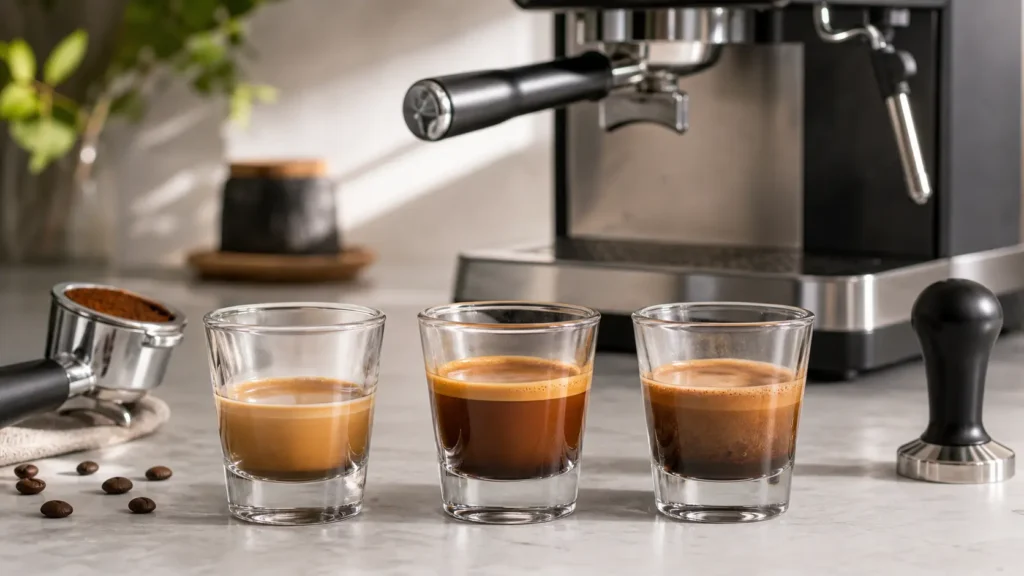
We evaluated how consistently each machine produced balanced, well-extracted shots — looking at crema development, flavor clarity, and shot-to-shot repeatability. Machines that ran too hot, too cold, or inconsistent between shots were penalized regardless of their listed specs.
2. Milk Steaming and Microfoam Quality

For any machine with a steam wand, we evaluated whether it could produce genuine microfoam — the fine, glossy, paint-like texture needed for latte art and quality flat whites. Machines with panarello attachments (auto-frothing sleeves) were tested separately, as they’re designed for convenience, not microfoam precision.
3. Heat-Up Time and Workflow Practicality

A home espresso machine has to fit a real morning. We timed heat-up from cold, noted how long you wait between pulling a shot and steaming milk on single-boiler machines, and flagged machines where the workflow creates daily friction.
4. Build Quality and Longevity Signals

We examined chassis materials, portafilter weight and fit, steam knob solidity, and the quality of water tanks and drip trays. Machines that feel fragile or show early wear signals were noted.
5. Ease of Use and Learning Curve
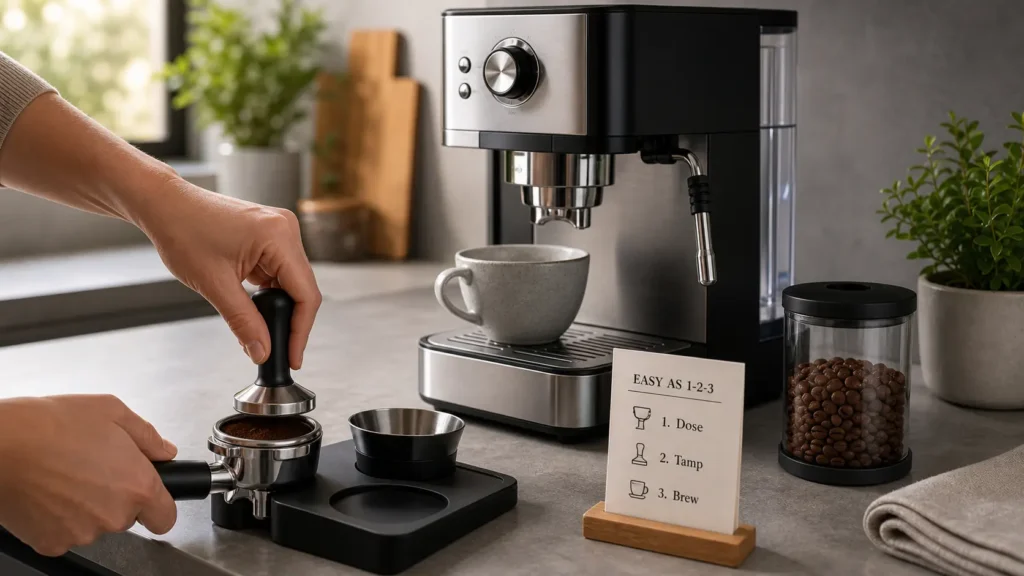
We assessed how forgiving each machine is for new users — including puck preparation, tamping, and dosing requirements — and whether the machine actively assists or simply tolerates beginner technique.
One of the biggest lessons from testing is that espresso quality depends just as much on the grinder as the machine itself, which is why our roundup of the best coffee grinders for espresso is a useful companion guide.
What We Learned
Boiler Type Matters More Than Bar Pressure
Almost every espresso machine on Amazon advertises a “15-bar pump.” This number is largely meaningless as a quality indicator. What actually determines shot quality is temperature stability — and that comes down to boiler type. Single-boiler thermoblock machines heat fast but can fluctuate during extraction. Dual boilers give independent control of brew and steam temperatures, which is why machines like the Breville Dual Boiler pull away from the pack at the prosumer level.
Automatic Milk Frothing Is Better Than It Used to Be
A few years ago, automatic steam systems were synonymous with mediocre foam. The Breville Bambino Plus changed that expectation. Its automatic steam function produces consistently textured milk that most users will be happy with, even without barista training. That said, if latte art and precise microfoam are important to you, a manual steam wand with practice will always give you more control.
Grinder Quality Is Half the Equation
The best espresso machine in this roundup will underperform with a blade grinder or low-quality burr grinder. If you’re spending $400 or more on a machine, plan to spend at least $100–$150 on a dedicated burr grinder — or choose an all-in-one like the Barista Express Impress, which includes a quality integrated grinder.
These machines all benefit from a proper burr grinder, so if you’re building a serious setup, our guide to the best coffee grinders for espresso is the next page to read.
Budget Machines Have a Real Ceiling
The De’Longhi Stilosa is genuinely capable at its price. But entry-level machines compromise somewhere — usually on steam power, boiler stability, or build longevity. If you outgrow your first machine within a year, the cost of upgrading makes the “cheap” starter machine more expensive in practice. Buy one step above what you think you need if your budget can stretch to it.
If you’re shopping below the Bambino Plus price range, it’s also worth reading our full Gevi Commercial 20 Bar Espresso Machine review to see how one of the more affordable alternatives compares in real-world use.
Most People Don’t Need a Super-Automatic
Super-automatic machines like the Breville Oracle Jet are impressive. They grind, tamp, extract, and steam at the push of a button. But they’re expensive, mechanically complex, and remove most of the hands-on craft that espresso enthusiasts enjoy. They make the most sense for households where multiple people want café-quality drinks with minimal effort — not for buyers who want to develop their home barista skills.
What to Look for in a Home Espresso Machine

Before you shortlist any model, run through these practical checkpoints:
- Boiler type: Single boiler is fine for budget and beginner use; thermoblock heats fast but may sacrifice thermal consistency; dual boiler is the gold standard for quality and convenience
- Steam wand type: Manual steam wands give precision; auto-frothing panarello attachments are easier but less flexible; automatic steam systems (like the Bambino Plus) sit in between
- Pump pressure: Look for 9-bar operating pressure (not just 15-bar max), which is the actual extraction pressure used in professional espresso
- Portafilter size: 54mm or 58mm are the standard sizes; larger portafilters (58mm) give more consistency and are compatible with a wider range of aftermarket accessories
- Built-in grinder: Convenient but harder to service; worth it at the Barista Express Impress level if you don’t want a separate grinder
- Heat-up time: Thermoblock machines heat in under 30 seconds; boiler machines take 1–5 minutes; dual boilers may take longer but hold temperature better
- Water tank size: 1.5–2L is ideal for home use; anything under 1L will require frequent refilling
- Footprint: Measure your counter space before buying — some machines, especially dual boilers, are larger than they appear in photos
- Voltage and plug compatibility: Check local compatibility if ordering from international Amazon marketplaces; US machines run on 120V, while EU/AU models run on 220–240V
If you’re leaning toward a built-in grinder setup for convenience, it’s worth comparing these picks with our guide to the best coffee machines with grinder before you buy.
The Best Espresso Machines — Full Reviews
Best Overall — Breville Bambino Plus (Black Stainless Steel)
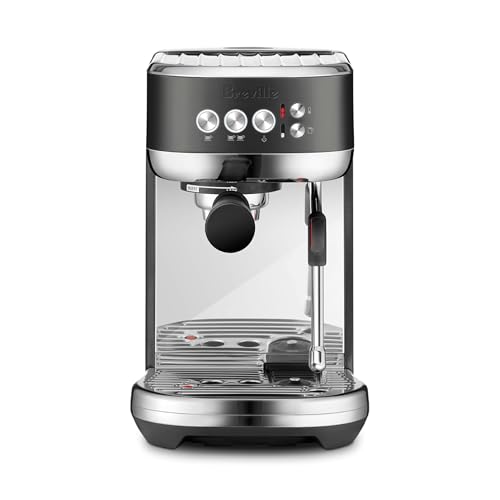
- The Breville Bambino Plus delivers third wave specialty coffee at home using the 4 keys formula and is part of the Bambi…
- DOSE CONTROL GRINDING: Achieve a consistent and balanced espresso using the right amount of ground coffee; The 54mm port…
- OPTIMAL WATER PRESSURE: Low pressure pre-infusion gradually increases pressure at the start and helps ensure all the fla…
Why it won:
The Breville Bambino Plus earns its best-overall position because it genuinely delivers on every practical expectation a home user brings to the counter. It heats up in three seconds flat using a ThermoJet heating system — faster than almost any boiler-based machine at this price — and its automatic steam wand produces consistently textured milk without requiring you to master manual frothing technique first. For a first or second espresso machine, that combination is nearly unbeatable.
What sets it apart from cheaper competitors is its 54mm portafilter (shared with larger Breville models), its pre-infusion function, and the fact that it doesn’t feel like a beginner machine in daily use. Shots are consistent, cleanup is straightforward, and the compact footprint fits real kitchens. The Black Stainless Steel finish holds up well and looks premium without being ostentatious. Based on its design, features, and strong buyer feedback across thousands of Amazon reviews, this is the machine we’d recommend to almost anyone entering the category.
✅ Pros
- 3-second heat-up via ThermoJet — no waiting around on busy mornings
- Automatic steam wand produces good microfoam without frothing skill required
- Three-way solenoid valve keeps puck cleanup dry and fast
- Pre-infusion gently saturates the puck before full pressure — improves shot consistency
- Compact footprint fits tight kitchen counter spaces
- Well-supported with accessories, aftermarket baskets, and a large user community
- Larger 64 oz water tank compared to the base Bambino
❌ Cons
- Fixed 200°F brew temperature — not ideal for very light roast espresso
- Steam power is lower than semi-commercial machines; high-volume households may feel limited
- Drip tray fills quickly and needs regular emptying
- Requires a separate quality grinder for best results — no built-in grinding
- Auto-steam wand gives less tactile control than a manual wand for advanced latte art
- Some reports of steam wand sensor issues in older production runs
What We Liked:
- 3-second heat-up via ThermoJet heating system — no waiting around in the morning
- Automatic steam wand produces good microfoam texture without frothing skill required
- Compact 54mm portafilter footprint fits tight counter spaces
- Pre-infusion function gently saturates the puck before full pressure — improves shot consistency
- Very well-supported with accessories, aftermarket baskets, and community knowledge
What We Didn’t Like:
- Steam power is lower than semi-commercial machines — high-volume households may feel limited
- Requires a separate grinder for best results; no integrated grinding
- Auto-steam wand, while good, gives less tactile control than a manual steam wand for latte art
Key Specs:
| Spec | Detail |
|---|---|
| Boiler Type | ThermoJet (thermoblock) |
| Heat-Up Time | ~3 seconds |
| Portafilter Size | 54mm |
| Steam Wand | Automatic micro-foam |
| Water Tank | 64 oz (1.9L) |
| Dimensions (approx.) | 7.7″ W × 12.2″ D × 12.4″ H |
| Voltage | 110–120V (US); check AU/EU variant |
Bottom line:
The Bambino Plus is the smartest buy in the under-$600 range. Buy it if you want real espresso quality without a steep learning curve, and pair it with a quality burr grinder for best results.
Best All-in-One — Breville Barista Express Impress BES876BSS

- The Barista Express Impress espresso machine delivers third wave specialty coffee at home, featuring the Impress puck sy…
- INTELLIGENT DOSING: The smart dosing system automatically calculates and adjusts the level of fresh coffee for the perfe…
- PRECISION MEASURMENT: This smart system auto corrects the next dose, taking the guesswork out of manual espresso making
Why it won:
The Barista Express Impress is the rare all-in-one that doesn’t feel like a compromise. It integrates a conical burr grinder directly into the machine body, meaning you go from whole beans to espresso in one workflow — dose, grind, tamp (with the Impress Puck System that guides tamping pressure), extract. For buyers who want a complete home espresso setup without sourcing and managing separate equipment, this is the most practical answer in the category.
The “Impress” version upgrades the original Barista Express with a redesigned assisted tamping system that promotes more consistent puck preparation — one of the most common points of failure for home users. Shot quality is strong, the steam wand gives genuine manual control for milk texturing, and the integrated grinder has enough dose adjustment range to suit most espresso recipes. It’s a bigger machine with a bigger footprint, but households that commit to it rarely feel the need to upgrade for years.
✅ Pros
- Integrated conical burr grinder with 25 grind settings — fresh-ground espresso in one machine
- Impress Puck System provides depth-sensing dosing and 22 lb assisted tamp — eliminates two major beginner failure points
- Intelligent dosing learns your preferences and adjusts within three shots
- PID temperature control at default 200°F with ±2°C adjustment
- Manual steam wand gives real control for milk texturing and latte art
- Strong long-term value for daily-use households
- 2L water tank supports multiple drinks before refilling
❌ Cons
- Large footprint — not suitable for small kitchens
- Single-boiler means waiting between extraction and steaming
- Integrated grinder is harder to service or replace than a standalone unit
- Single-hole steam tip is slower for steaming; not ideal for high-volume milk drinks
- 54mm portafilter is not compatible with standard 58mm aftermarket accessories
- Less manual control than separate grinder + machine setups for advanced users
What We Liked:
- Integrated conical burr grinder — fresh-ground espresso without a separate grinder
- Assisted tamping system (Impress Puck System) guides consistent puck preparation
- Manual steam wand gives real milk texturing control for latte art
- Dose control grinder with 25 grind settings
- Strong long-term value for households that use it daily
What We Didn’t Like:
- Large footprint — not ideal for small kitchens
- Integrated grinder is harder to service or replace than a standalone unit
- Single boiler means waiting between extraction and steaming
Key Specs:
| Spec | Detail |
|---|---|
| Boiler Type | Single thermocoil |
| Grinder | Integrated conical burr, 25 settings |
| Portafilter Size | 54mm |
| Steam Wand | Manual steam wand |
| Water Tank | 67.6 oz (2L) |
| Dimensions (approx.) | 13.2″ W × 15.5″ D × 16″ H |
| Voltage | 110–120V (US) |
Bottom line:
Buy the Barista Express Impress if you want a complete, fresh-ground espresso workflow in one machine and don’t want to manage a separate grinder. It’s the best all-in-one at this price tier.
Best Budget — De’Longhi Stilosa Manual Espresso Machine

- Please refer to user guide or user manual or user guide (provided below in PDF) before first use
- Includes Portafilter, measuring scoop/tamper and two filters for single or double espresso
- Stainless steel boiler is engineered to last long and work for years
Why it won:
The De’Longhi Stilosa is one of the most consistently recommended budget espresso machines across the category — and it earns that reputation. At around $100, it delivers a functional manual espresso experience with a 15-bar pump, a traditional panarello steam wand, and a no-frills workflow that teaches you the basics without a major financial risk. It’s not trying to be a prosumer machine; it’s trying to be a reliable starting point.
Compared with other budget espresso makers in this range, the Stilosa is better-built and more capable than most. The portafilter locks in solidly, the boiler heats to temperature reliably, and shots are surprisingly drinkable when dialed in correctly with a decent grind. The steam function, via its panarello frother, is better suited to cappuccino foam than microfoam, but for beginners that’s entirely acceptable. If you’ve never made espresso before and want to learn the process without spending $500 first, this is where to start.
If you end up choosing the Stilosa, bean selection matters more than most beginners expect, and our guide to the best coffee for DeLonghi machines is a useful place to start.
✅ Pros
- Genuinely affordable — the best value entry point in this roundup
- 15-bar pump delivers adequate extraction pressure for real espresso
- Simple, intuitive operation — suitable for complete beginners
- Panarello steam wand makes cappuccino-style foam easily
- Very small footprint — fits even the most compact kitchen counter
- De’Longhi brand reliability at the budget tier
❌ Cons
- Panarello frother produces airy foam rather than true microfoam — not suited for latte art
- Plastic-heavy construction is noticeably less durable than mid-range machines
- Slow thermal recovery between back-to-back shots on the single boiler
- No pre-infusion — less forgiving of uneven puck preparation
- 1L water tank requires frequent refilling with regular use
- Limited upgrade path — most users outgrow this machine within 1–2 years
What We Liked:
- Genuinely affordable entry point into manual espresso
- 15-bar pump delivers adequate extraction pressure
- Simple operation — suitable for complete beginners
- Panarello steam wand makes cappuccino-style foam easily
- Small footprint fits compact kitchens
What We Didn’t Like:
- Panarello frother produces airy foam, not microfoam — limited for latte art
- Plastic-heavy construction feels less durable than mid-range options
- Single boiler with slower thermal recovery between shots
- No pre-infusion; less forgiving of uneven puck preparation
Key Specs:
| Spec | Detail |
|---|---|
| Boiler Type | Single thermoblock |
| Pump Pressure | 15-bar pump |
| Steam Type | Panarello auto-frother |
| Water Tank | 33.8 oz (1L) |
| Portafilter Size | 51mm |
| Dimensions (approx.) | 8.07″ W × 6.3″ D × 11.22″ H |
| Voltage | 120V (US) |
Bottom line:
The De’Longhi Stilosa is the best first espresso machine under $120. Buy it if you want to learn the basics or need an honest, affordable espresso maker that won’t disappoint at its price point.
Best Semi-Auto Mid-Range — Gaggia RI9380/46 Classic Evo Pro

- Solid Steel Housing, Made in Italy
- 9 Bar Espresso Extractions
- Stainless Steel 58mm Commercial Portafilter
Why it won:
The Gaggia Classic Evo Pro has earned a devoted following in the home espresso community for one reason: it’s a true semi-automatic machine with commercial-grade bones at a mid-range price. It uses a commercial-style 58mm portafilter, a genuine single boiler with a three-way solenoid valve (which releases boiler pressure after extraction for dry, clean pucks), and a manual steam wand that gives you real milk-texturing capability. That’s a specification set normally found on machines costing twice as much.
For users who want to develop real barista skills — and who plan to improve their technique over time — the Gaggia Classic Evo Pro is where that journey genuinely starts. It’s less forgiving than the Bambino Plus and requires more attention to grind, dose, and tamp. That’s the point. It rewards effort with noticeably better espresso, and its simple, durable design tends to last for years without major issues.
✅ Pros
- 58mm commercial-size portafilter — compatible with a wide range of aftermarket accessories and baskets
- Three-way solenoid valve keeps pucks dry and cleanup fast
- Manual steam wand capable of producing genuine microfoam
- Strong reputation for build durability and long-term reliability
- Large and well-established online community for mods, tips, and troubleshooting
- Strong value proposition at its price compared to machines with equivalent specs
❌ Cons
- Demands a quality grinder and good puck prep technique to perform at its best
- Small 100ml boiler — can run out of steam during back-to-back drinks
- Single boiler means a wait between brewing and steaming
- Not beginner-friendly out of the box — requires a learning investment
- Factory pressure may run slightly higher than ideal; OPV adjustment is a common early task
- No PID temperature control on the standard model
What We Liked:
- 58mm commercial-size portafilter — compatible with wide range of aftermarket accessories
- Three-way solenoid valve — keeps pucks dry and cleanup fast
- Manual steam wand for genuine microfoam capability
- Strong build quality and long-term durability reputation
- Well-supported by a large online community (mods, accessories, troubleshooting)
What We Didn’t Like:
- Requires good technique and a quality grinder to shine
- Single boiler means a wait between brewing and steaming
- Not beginner-friendly out of the box without some learning investment
Key Specs:
| Spec | Detail |
|---|---|
| Boiler Type | Single aluminum boiler (100ml) |
| Portafilter Size | 58mm commercial |
| Steam Wand | Manual |
| Solenoid Valve | Three-way (dry pucks) |
| Water Tank | 2.1L |
| Dimensions (approx.) | 9.45″ W × 8.07″ D × 14.17″ H |
| Voltage | 120V (US); 220–240V (EU/AU versions available) |
Bottom line:
Buy the Gaggia Classic Evo Pro if you’re ready to invest in your technique and want a semi-automatic machine that rewards skill. It’s one of the best value propositions in the mid-range espresso category.
Best for Prosumer Manual Control — Rancilio Silvia Espresso Machine

- Ergonomic porta filter handle same as the proven design of Rancilio commercial machines
- Commercial grade group head for superb heat stability and extraction quality
- Articulating steam wand offers complete range of motion and professional steaming knob precisely controls steaming press…
Why it won:
The Rancilio Silvia has been a reference point in home espresso for over two decades — and the reason it keeps appearing in serious buyers’ shortlists is that it’s built like professional equipment, not like a consumer appliance. Its commercial-grade 58mm portafilter group head, stainless steel chassis, and robust steam arm are the same caliber as machines that cost significantly more. This is a machine for people who take their espresso seriously.
Where the Silvia demands respect is in its thermal management. It’s a single-boiler machine with a larger brass boiler that takes time to reach temperature — and managing that temperature carefully (a technique known among enthusiasts as “temperature surfing”) is part of using it well. Add a PID temperature controller (a popular and well-documented aftermarket mod) and it becomes one of the most capable single-boiler machines available at any price. Compared with similar models in this category, the Silvia rewards patience and technique with exceptional extraction quality.
✅ Pros
- Professional-grade stainless steel build — engineered to last years with proper maintenance
- Commercial 58mm portafilter — deep accessory, aftermarket, and upgrade ecosystem
- Larger 300ml boiler compared to Gaggia’s 100ml — more stable temperature and more sustained steam
- Powerful steam arm capable of producing high-quality microfoam
- Strong resale value and excellent long-term serviceability
- Widely moddable with PID, pressure profiling, and temperature upgrades for enthusiasts
❌ Cons
- Single boiler — requires a meaningful wait between extraction and steaming
- Temperature management requires learned technique; not plug-and-play for beginners
- No PID out of the box on the standard model — adds cost if you want one
- Heavier than most home machines at approximately 30 lbs
- Higher price than the Gaggia Classic Evo Pro for broadly similar beginner experience
- Larger footprint than entry-level and mid-range machines
What We Liked:
- Professional-grade stainless steel build — built to last years with proper maintenance
- Commercial 58mm portafilter — deep accessory and upgrade ecosystem
- Powerful steam arm for genuine microfoam production
- Strong resale value and long-term serviceability
- Widely moddable (PID, pressure profiling) for enthusiasts
What We Didn’t Like:
- Single boiler — requires waiting between extraction and steaming
- Temperature management requires technique; less plug-and-play than modern alternatives
- No PID out of the box on standard model (PID version costs more)
- Larger footprint than entry machines
Key Specs:
| Spec | Detail |
|---|---|
| Boiler Type | Single brass boiler (300ml) |
| Portafilter Size | 58mm commercial |
| Steam Wand | Commercial-grade manual arm |
| Water Tank | 67 oz (2L) |
| Build | Stainless steel |
| Dimensions (approx.) | 11.4″ W × 11.2″ D × 13.4″ H |
| Voltage | 120V (US); EU version available |
Bottom line:
The Rancilio Silvia is the classic choice for experienced home baristas who want professional-grade control without professional-grade pricing. It takes effort to master but rewards that effort with exceptional espresso.
Best Dual Boiler — Breville Dual Boiler BES920XL

- The Breville Dual Boiler with commercial features delivers third wave specialty coffee at home using the 4 keys formula;…
- DOSE CONTROL GRINDING: Achieve a consistent and balanced espresso using the right amount of ground coffee; The 58mm port…
- OPTIMAL WATER PRESSURE: The Over Pressure Valve limits the maximum pump pressure throughout extraction, helping prevent …
Why it won:
The Breville Dual Boiler BES920XL sits at the threshold between prosumer and professional espresso equipment — and it earns that position through genuinely independent temperature control for brewing and steaming simultaneously. Unlike single-boiler machines where you wait between extraction and steaming, the BES920XL lets you pull a shot and steam milk at the same time, which fundamentally changes the morning workflow for households that make multiple drinks.
Its PID temperature control on both boilers means shot temperature is dialed, consistent, and adjustable — something that directly impacts espresso flavor at a level that casual drinkers will notice and serious enthusiasts will value. The 58mm portafilter, over-pressure valve, and pre-infusion capability make this a machine you can grow with for years. From a practical everyday-use perspective, this is the best dual-boiler option for serious home users who don’t want to spend café prices.
✅ Pros
- Independent dual boilers — brew and steam simultaneously, no waiting between tasks
- PID temperature control on both boilers — precise, repeatable extraction temperatures
- Pre-infusion mode for even puck saturation and improved shot quality
- 58mm commercial portafilter — full aftermarket accessory compatibility
- Programmable shot volumes, temperature offset, and pre-infusion duration
- Best-in-class workflow for households that make multiple espresso drinks daily
- Large 2.5L water tank reduces refill frequency [Internal link: milk frother pairings — KitchEpicks]
❌ Cons
- High price — a significant financial commitment versus single-boiler alternatives
- Large physical footprint requires dedicated counter space
- Longer heat-up time than thermoblock machines — 10–15 minutes recommended for full boiler stabilization
- Steeper setup and configuration learning curve for users new to dual-boiler machines
- Overkill for single-drink households or casual espresso users
- Heavy machine — not practical to move or store frequently
What We Liked:
- Independent dual boilers — brew and steam simultaneously, no waiting
- PID temperature control on both boilers — precise, consistent extraction
- Pre-infusion mode for even saturation and better shot quality
- 58mm commercial portafilter — full accessory compatibility
- Programmable shot volumes and temperature offset
What We Didn’t Like:
- High price — a significant investment
- Large footprint requires dedicated counter space
- Longer heat-up time than thermoblock machines (10–15 minutes recommended)
- Steeper setup learning curve for new users
Key Specs:
| Spec | Detail |
|---|---|
| Boiler Type | Dual stainless steel boilers |
| PID Control | Yes, both boilers |
| Portafilter Size | 58mm |
| Steam Wand | Manual, commercial-style |
| Water Tank | 84 oz (2.5L) |
| Dimensions (approx.) | 14.8″ W × 13.4″ D × 16″ H |
| Voltage | 110–120V (US) |
Bottom line:
If you’re serious about espresso and want the best dual-boiler machine under $1,500, the Breville Dual Boiler BES920XL is the one to beat. It’s the machine home baristas buy when they’re done upgrading.
Best Super-Automatic — Breville Oracle Jet Espresso Machine

- Incorporates the 4 keys formula used by professional café machines; Designed to use the right dose of freshly ground bea…
- SWIPE AND SELECT: Simply swipe and select from your specialty café favorites with new Cold Brew and Cold Espresso; Extra…
- BARATZA BURRS: Auto grind, dose and tamp with Baratza European Precision Burrs; Fully-integrated high carbon hardened st…
Why it won:
The Breville Oracle Jet represents the upper end of what super-automatic espresso machines can do. It grinds, doses, tamps, extracts, and automatically textures milk — all at the touch of a button — while still producing espresso quality that experienced drinkers will respect. That’s a difficult balance for any machine to strike, and the Oracle Jet largely achieves it.
What distinguishes it from cheaper super-automatics is its automatic milk texturing system, which uses a sensor to heat milk to the correct temperature and texture before delivery. The result is consistent café-style drinks — flat whites, lattes, cappuccinos — without any manual technique required. For households where multiple people want quality coffee drinks quickly, or for buyers who simply want an outstanding daily experience without learning espresso craft, this is the most capable machine in its class. Pricing fluctuates across Amazon marketplaces; check local availability and pricing before purchasing.
✅ Pros
- Fully automated from bean to cup — grind, dose, tamp, extract, and steam are all hands-free
- Intelligent milk texturing system delivers consistent café-style results at the touch of a button
- Dual-boiler technology in a super-automatic form factor — extraction and steaming run simultaneously
- Built-in conical burr grinder with adjustable grind settings
- Impressive build quality and premium finish befitting its price tier
- Ideal for multi-person households where different people want different drink styles
- Minimal skill requirement — produces quality results from the first use
❌ Cons
- Very high price — the most expensive machine in this roundup
- Fully automated workflow removes the hands-on craft that espresso enthusiasts value
- Mechanically complex — internal systems are harder to service or repair than simpler machines
- Not appropriate for buyers who want to develop manual espresso technique
- Cleaning and maintenance are more involved than semi-automatic machines
- Availability may vary by region; confirm before ordering internationally
What We Liked:
- Fully automatic from bean to cup — grind, dose, tamp, extract, steam, all hands-free
- Intelligent milk texturing system delivers consistent results
- Built-in conical burr grinder with multiple grind settings
- Dual boiler technology in a super-automatic form factor
- Impressive build quality and premium finish
What We Didn’t Like:
- Very high price — the most expensive machine in this roundup
- Removes most of the hands-on craft that espresso enthusiasts enjoy
- Mechanically complex — service and repair are more involved
- Not ideal for buyers who want to develop manual espresso skills
Key Specs:
| Spec | Detail |
|---|---|
| Machine Type | Super-automatic |
| Boiler | Dual boiler |
| Grinder | Integrated conical burr |
| Milk System | Automatic intelligent texturing |
| Portafilter Size | 58mm |
| Water Tank | 84 oz (2.5L) |
| Voltage | 110–120V (US) |
Bottom line:
The Breville Oracle Jet is for buyers who want the best possible automated espresso experience without compromise. It’s a luxury machine — price it accordingly — but it delivers on its promises.
Best Boutique Pick — Diletta Mio Espresso Machine

- PID Brew Boiler: A sized-just-right insulated brew boiler carefully balances quick heat times with thermal mass for shot…
- Second Steam Circuit: A discrete 1000W thermoblock brings on-demand steaming for the occasional cappuccino or latte.
- Shot Timer: The PID screen doubles as a shot timer to help you keep track of your shots.
Why it won:
The Diletta Mio is the kind of machine that doesn’t show up on every roundup — but appears repeatedly in enthusiast communities precisely because it punches above its weight. It’s a heat exchanger machine with a professional-grade E61 group head, which is the classic thermostatically controlled group used in Italian café equipment. That translates to excellent temperature stability during extraction and a tactile, satisfying workflow that enthusiasts love.
Compared with other machines at this price point, the Diletta Mio offers a level of build quality and engineering that typically starts at a much higher price. Its E61 group provides passive pre-infusion, the steam boiler is powerful enough for genuine microfoam, and the overall machine has the kind of purposeful construction that signals long-term reliability. It’s a boutique pick in the sense that it requires more research to find — but buyers who do find it tend to keep it for years.
✅ Pros
- E61 group head — café-grade thermal stability and classic Italian workflow design
- Heat exchanger boiler — brew and steam without the wait of a single-boiler machine
- Commercial-style 58mm portafilter — compatible with professional accessories
- Professional materials and construction quality that exceeds expectations at this price
- Passive pre-infusion built into the E61 group design — improves extraction consistency
- Strong enthusiast community following and long-term reputation for durability
❌ Cons
- Steeper learning curve — requires familiarity with E61 group workflow and flushing technique
- Less mainstream brand presence means fewer local service options than Breville or De’Longhi
- Requires a high-quality grinder to get the best from its extraction capability
- Availability may vary by region — confirm stock before ordering
- Heat exchanger machines require a cooling flush before brewing after steaming for precise temperature management
- Less accessible for beginners compared to modern automated alternatives at a similar price
What We Liked:
- E61 group head — café-grade temperature stability and classic workflow
- Heat exchanger boiler — brew and steam without waiting
- Professional build quality and materials
- Strong community and enthusiast following
- Long-term durability signals in construction
What We Didn’t Like:
- Higher learning curve — requires familiarity with E61 workflow
- Less mainstream support than Breville or De’Longhi
- Requires a quality grinder to get the best from its extraction capability
- Availability may vary by region
Key Specs:
| Spec | Detail |
|---|---|
| Boiler Type | Heat exchanger |
| Group Head | E61 |
| Steam Wand | Commercial-style manual |
| Portafilter Size | 58mm |
| Build | Stainless steel |
| Voltage | Check regional compatibility before ordering |
Bottom line:
Buy the Diletta Mio if you’re an enthusiast who wants a step up from mainstream brands and genuinely café-grade build quality. It’s a boutique machine that rewards the investment.
Products We Don’t Recommend
Not every espresso machine in this category earned a spot on our list. Here’s an honest look at the types of products we filtered out — and why.
Nespresso Original/Vertuo machines (for this roundup):
Nespresso machines are convenient and consistent, but they use proprietary capsules and don’t extract espresso in the traditional sense. If you want café-style espresso with full control over beans, grind, and dose, pod systems won’t satisfy that intent. We’ve reviewed Nespresso machines separately in our dedicated pod coffee guide. [Internal link: best Nespresso machines — KitchEpicks]
Generic 15-bar “espresso makers” under $60:
Several machines in this range — sold under rotating brand names on Amazon — advertise 15-bar pumps and stainless steel finishes. In practice, they tend to suffer from inconsistent boiler temperatures, thin portafilter baskets, weak steam, and short lifespans. The De’Longhi Stilosa sits near the floor of what we’d actually recommend; anything priced significantly below it in this category is a gamble we wouldn’t take.
Super-automatics from unknown or unproven brands:
Super-automatic machines are mechanically complex. When they fail — and budget super-automatics often do — repair costs can exceed the machine’s value. We only recommend super-automatics from brands with established service and support networks.
Semi-automatic machines without a three-way solenoid valve:
Several mid-range semi-automatics skip this component to cut costs. Without it, spent puck cleanup is messy and the portafilter holds pressurized water. It’s a small spec that signals real attention to design quality — and its absence is a genuine daily inconvenience.
Frequently Asked Questions
What is the best home espresso machine for beginners?
The Breville Bambino Plus is the strongest beginner choice in 2026. Its automatic milk steaming, fast heat-up, and forgiving workflow let new users pull quality shots immediately while leaving room to develop technique over time. The De’Longhi Stilosa is a viable alternative if budget is the primary constraint.
What’s the difference between a single boiler and a dual boiler espresso machine?
A single-boiler machine uses one boiler for both brewing and steaming, which means you wait between tasks while the boiler re-heats to the correct temperature. A dual-boiler machine has separate boilers for each function, allowing simultaneous extraction and steaming — which significantly improves workflow and temperature consistency.
Do I need a separate grinder for my espresso machine?
Yes — unless your machine has a built-in grinder (like the Barista Express Impress). Espresso requires a precise, fine, consistent grind that most general-purpose grinders can’t deliver reliably. A quality burr grinder is one of the most impactful investments you can make in your espresso setup.
What does “15-bar pump” actually mean? Is higher pressure better?
The 15-bar rating refers to maximum pump capacity, not operating pressure. Espresso is extracted at approximately 9 bars of pressure — that’s the professional standard. Most home machines rated at 15 bars include an over-pressure valve that regulates extraction to around 9 bars. The 15-bar marketing figure is largely irrelevant as a quality signal.
Can I make lattes and cappuccinos with these machines?
Yes, any machine on this list with a steam wand can produce milk-based drinks. Machines with automatic steam (like the Bambino Plus) make it easy from day one. Machines with manual steam wands (like the Silvia or Dual Boiler) give more control but require practice to produce consistent microfoam.
What’s the best espresso machine under $500?
The Breville Bambino Plus at approximately $500 is the strongest performer in this range. If you need to stay under $400, the Gaggia Classic Evo Pro offers exceptional value for skill-builders with its commercial-grade 58mm portafilter and solenoid valve at a lower price point.
Are these machines compatible outside the United States?
Most machines in this roundup are sold in region-specific voltage variants. US machines typically run on 110–120V; EU and Australian versions run on 220–240V. Confirm voltage and plug type before ordering from international Amazon marketplaces, and check that the specific model number matches your region.
How often do espresso machines need to be descaled?
Descaling frequency depends on your water hardness and usage volume. Most manufacturers recommend descaling every 2–3 months with regular use and moderately hard water. Using filtered water can extend intervals and protect internal components, particularly in machines without water softening cartridges.
Why Trust KitchEpicks
- Independent product evaluation: We evaluate products based on performance criteria relevant to real home use — not on brand relationships or sponsored placement.
- Real-world comparison logic: Our assessments are built from category-wide evaluation, not individual product testing in isolation. We look at how each machine performs relative to the alternatives available at its price.
- Regular content updates: Espresso machine categories change every year. We revisit roundups when new products enter the market or when previously recommended machines change in availability or quality.
- Reader-first recommendations: Every product on this list was chosen because it genuinely serves a specific buyer well — not because it’s popular, heavily marketed, or easy to source affiliate links for.
- Affiliate transparency: We use affiliate links, which means we may earn a commission if you buy through our links. This never affects which products we recommend or how we rank them. Our editorial process is independent of affiliate considerations.
About the Reviewer
KitchEpicks Editorial Team
The KitchEpicks team is made up of kitchen equipment researchers, home cooking enthusiasts, and practical product evaluators who focus on helping everyday users make confident purchasing decisions. Our espresso coverage draws on category-wide research, buyer feedback analysis, enthusiast community knowledge, and hands-on evaluation logic built from years of reviewing kitchen appliances. We write for home users — from first-time buyers to experienced home baristas — and our goal is always to give you a clear, honest answer to the question: which machine is actually right for me?