
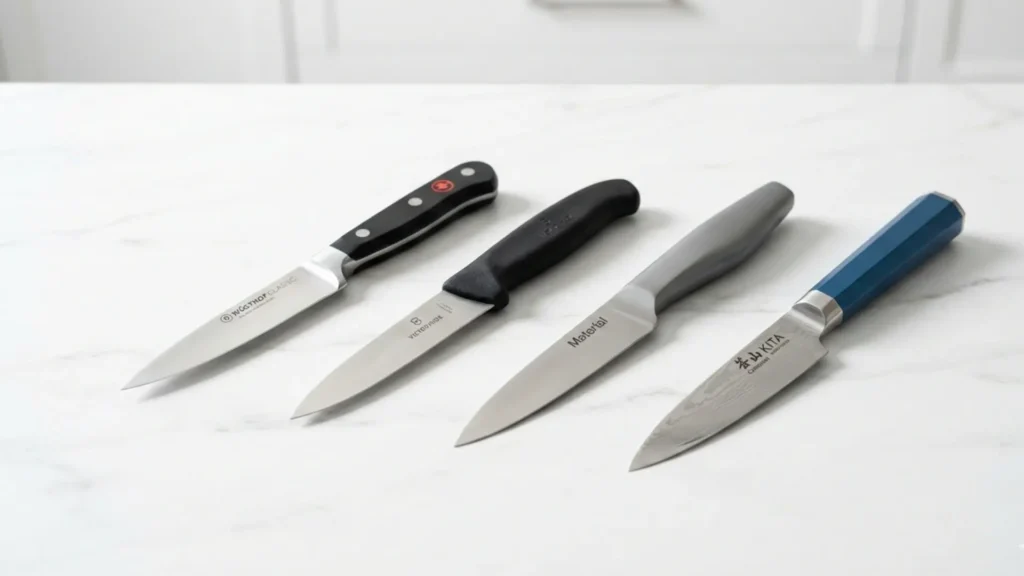
A dull paring knife that crushes tomatoes instead of slicing them cleanly, or worse, one that slips and nicks your finger mid-peel—these frustrations are all too common with low-quality blades. The right paring kitchen knife transforms tedious prep work into effortless precision, whether you’re peeling apples, deveining shrimp, or creating delicate garnishes for dinner guests.
This small but mighty tool, typically featuring a 3 to 4-inch blade, is designed specifically for detailed work that requires control and accuracy. While a chef’s knife handles the heavy chopping, your paring knife excels at intricate tasks where size and maneuverability matter most. Every home cook needs at least one quality paring knife, but with hundreds of options spanning budget picks to premium Damascus steel beauties, choosing the right one can feel overwhelming.wusthof
This guide cuts through the confusion with four thoroughly evaluated paring knives that represent the best options across different price points and cooking styles. You’ll learn what makes each knife exceptional, how to choose the right blade for your needs, and the essential techniques that turn a simple paring knife into your kitchen’s most versatile precision tool.
What Is a Paring Knife Used For?
A paring knife is a compact kitchen essential with a blade between 3 and 4 inches long, specifically designed for precision tasks that require control rather than power. The small size and pointed tip make it perfect for detailed work that would be awkward or impossible with larger knives.
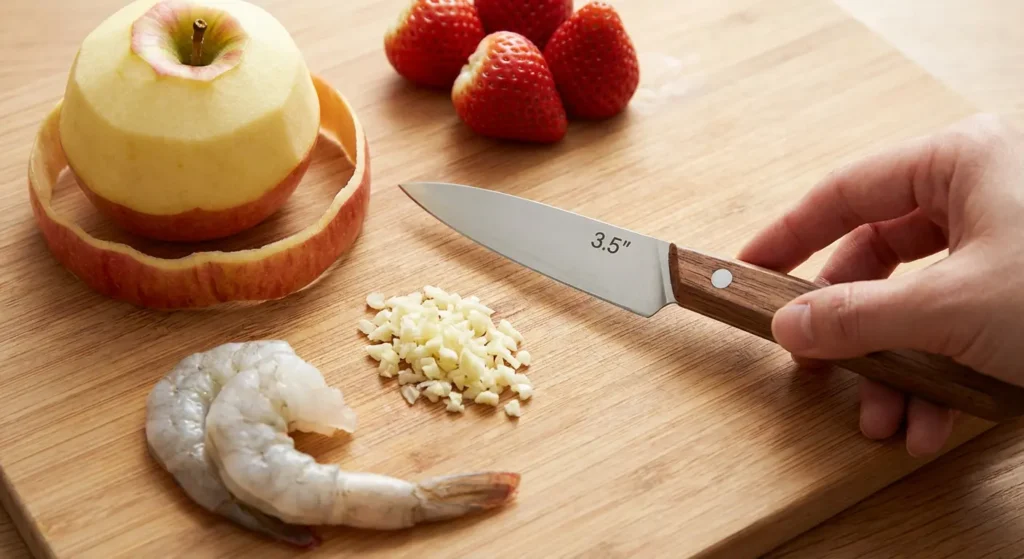
The primary uses include peeling fruits and vegetables like apples, potatoes, and carrots; trimming excess fat from meat; mincing small amounts of garlic and herbs; deveining shrimp; coring tomatoes and strawberries; and creating decorative garnishes. Unlike a chef’s knife that excels at chopping large quantities, the paring knife shines when you need precision and control for smaller ingredients. Its compact blade allows you to work directly in your hand or on a cutting board, offering flexibility that larger knives simply can’t match. Whether you’re hulling a flat of strawberries or segmenting citrus for a salad, this versatile tool handles intricate cuts with ease.
Essential Paring Knife Techniques
Mastering a few fundamental techniques transforms a paring knife from a simple peeler into your most versatile precision tool. The right grip and cutting method make tasks easier, safer, and more efficient, whether you’re prepping vegetables for dinner or creating garnishes for a special occasion.
The Four Basic Grips
Handle Grip (Hammer Grip): This is the most common and intuitive grip, where you hold the handle like a hammer with all four fingers wrapped around it and your thumb resting on top or side. It provides solid control for general cutting tasks, peeling firm vegetables, and trimming excess fat from meat. Best for tasks that don’t require extreme precision but need steady, reliable control.
Blade Grip (Pinch Grip): Position your thumb and forefinger on opposite sides of the blade just in front of the handle, with remaining fingers wrapped around the handle. This grip offers maximum control and precision for detailed work like creating garnishes, removing seeds from peppers, or making decorative cuts. Professional chefs favor this grip for intricate tasks that demand accuracy.
Away Grip: Hold the knife in either handle or blade grip, but always cut away from your body with the blade moving outward. This is the safest method for peeling apples, potatoes, and other round produce. The away motion keeps the sharp edge moving in a controlled direction that minimizes injury risk if the knife slips.
In-Hand Grip: Hold the produce in your non-dominant hand while cutting with the paring knife in your dominant hand, without a cutting board. This technique requires practice and caution but offers speed and convenience for quick peeling jobs. Only attempt this once you’re comfortable with basic paring knife control.
Common Techniques
Peeling: Use the away grip and rotate the fruit or vegetable into the blade rather than moving the knife excessively. Let the produce do the work by turning it against a stationary blade angle.
Coring: Insert the knife tip at an angle beside the stem, then cut in a circular motion around the core while angling slightly inward. Works perfectly for apples, pears, and tomatoes.
Hulling Strawberries: Insert the tip at a 45-degree angle around the stem cap, then twist the knife in a complete circle to remove the hull cleanly without wasting fruit.
Deveining Shrimp: Make a shallow cut along the curved back of peeled shrimp, then use the knife tip to lift and remove the dark vein in one smooth motion.
Mincing Garlic: Place peeled cloves on a cutting board. Rock the blade from tip to handle in a chopping motion, keeping the tip anchored as a pivot point. Gather and re-chop until you reach desired fineness.
Segmenting Citrus: After removing peel and pith, hold the fruit over a bowl and slide the blade along each membrane to release perfect citrus segments.
Safety Tips
Always cut away from your body, keeping the blade’s path clear of your hands and torso. Keep your fingers curled when holding produce, with knuckles forward as a guide surface—this “claw grip” protects fingertips from accidental cuts.
Use a stable cutting surface whenever possible for better control, even though paring knives can work in-hand. Never leave paring knives loose in drawers where reaching hands can contact sharp edges unexpectedly. Store blades in guards, sheaths, or designated knife block slots.
Keep your paring knife sharp through regular honing. Counterintuitively, sharp knives are actually safer because they require extra pressure that increases the chance of slipping.. A sharp blade cuts with minimal force, giving you better control and safer operation.
How We Tested and Selected These Paring Knives
Choosing the best paring kitchen knife is about more than reading a spec sheet, so each pick on this list was evaluated against clear, practical criteria that matter in everyday cooking. The goal was to highlight knives that feel great in the hand, glide through ingredients, and offer long-term value in a real home kitchen.
Sharpness came first. Each knife’s factory edge was assessed on how cleanly it sliced tomatoes, peeled apples, and minced garlic, with attention to whether it crushed or tore delicate ingredients. Handle comfort was next: the knives were judged on ergonomics, grip security, and how they performed during longer prep sessions without causing hot spots or fatigue.
Balance and build quality were evaluated by looking at weight distribution, full-tang construction, fit and finish, and the choice of materials in both blade and handle. Value played a major role as well, weighing price against performance, warranty, and expected lifespan so there is a strong option for every budget. Finally, versatility was considered by testing how well each knife handled a range of tasks, from hulling strawberries to trimming meat.
Product selection is based on verified specifications, material quality, brand reputation, and consistent patterns in user feedback, so you can choose with confidence rather than guesswork.
Our Top 4 Paring Kitchen Knives Reviewed
Each of these paring knives earned its place through a combination of blade quality, handle comfort, value, and edge retention. Whether you’re looking for an affordable workhorse or a premium showpiece, there’s an option here that matches your cooking style and budget.
Wüsthof Classic 3.5″ Paring Knife – Best Overall Premium Pick
When German engineering meets over 200 years of knife-making tradition, the result is the Wüsthof Classic 3.5″ Paring Knife—a precision tool that delivers professional performance for serious home cooks. This premium paring knife represents the gold standard in Western-style blade construction, combining exceptional sharpness with the durability you’d expect from Solingen, Germany’s legendary cutlery heritage.

- KITCHEN WORKHORSE – The WÜSTHOF 3.5” Classic Paring Knife is essential for preparing any meal. This all-purpose cook’s k…
- WÜSTHOF CLASSIC SERIES – The Full Tang, Triple Riveted handles of the Classic Line offer the widest range of cutlery tha…
- PARING KNIFE – The small narrow blade tapers to a point at the tip and is easy to handle making it the perfect knife to …
Key Specifications:
- Blade: 3.5″ high-carbon stainless steel
- Hardness: 58 HRC (Rockwell Hardness)
- Construction: Full tang, triple-riveted handle
- Handle Material: Stainless steel
- Weight: 1.6 ounces
- Country of Origin: Solingen, Germany
- Series: Classic Line
The precision forged construction means this knife is crafted from a single block of high-carbon stainless steel, then heat-treated and tempered to 58-degree HRC for optimal hardness. This places it in the ideal range for kitchen knives that balance sharpness with durability. The standout feature is Wüsthof’s Precision Edge Technology (PEtec), which yields a blade that’s 20% sharper with twice the edge retention compared to previous models. The full bolster and finger guard provide safety and balance, while the triple-riveted handle ensures the knife will last for generations.
The 3.5-inch blade length hits the sweet spot for paring knife versatility, offering enough length for various tasks without sacrificing the control needed for detailed work. Whether you’re slicing garlic cloves, trimming green beans, or peeling potatoes, the tapered blade maintains its edge through repeated use.wusthof
Pros:
- Professional-grade sharpness straight from the factory
- Exceptional durability with proper care
- Excellent balance despite compact size
- Classic design that’s been refined over generations
- Trusted Solingen quality designation
- Full bolster provides finger protection
Cons:
- Premium price point reflects German craftsmanship
- Heavier than budget alternatives (1.6 oz)
- Requires hand washing to maintain finish
- Stainless steel handle may feel cold initially
Best for:
Home cooks and professional chefs who want an heirloom-quality paring knife that will last decades. If you’re committed to building a serious knife collection and value precision German engineering, this investment pays dividends in daily performance.
Victorinox 3.25″ Paring Knife – Best Budget Value
The Victorinox 3.25″ Paring Knife proves you don’t need to spend a fortune to get professional-grade performance. This Swiss-made knife is the secret weapon in restaurant kitchens worldwide, offering razor-sharp precision at a price point that makes it accessible to every home cook. Originally sold under the Forschner brand name until 2011, it carries the same Swiss Army reputation for reliability and quality.

- Multipurpose straight edge paring knife designed for garnishing, mincing, peeling, slicing and dicing with razor sharp, …
- Polypropylene handle is dishwasher safe and highly durable; ergonomically designed for a non-slip grip
- Featuring a short blade for enhanced accuracy and precision, this paring knife is optimally built for jobs where control…
Key Specifications:
- Blade: 3.25″ high-carbon stainless steel
- Edge: Tapered, laser-tested for precision
- Handle Material: Polypropylene (ergonomic, non-slip)
- Dishwasher Safe: Yes
- Warranty: Lifetime against defects in material and workmanship
- Country of Origin: Switzerland
- Weight: Lightweight design
The tapered blade is ground in two directions to hold a sharp edge longer, a manufacturing technique that maximizes cutting performance while ensuring the blade can easily be resharpened when needed. Laser testing ensures each knife leaves the factory with consistent sharpness, so you’re not gambling on quality control. The ergonomically designed polypropylene handle provides a non-slip grip even when wet, making each cut safer and more efficient during busy meal prep.
What truly sets this paring knife apart in the budget category is its versatility and durability. The short blade provides enhanced accuracy and precision for intricate jobs like peeling fruits and vegetables or trimming beans, but it’s also robust enough for bigger tasks like dicing an onion or slicing mangos. Expertly crafted in Switzerland since 1884, Victorinox designs these knives for professionals who use them all day, every day—which means they’ll easily handle whatever a home kitchen demands.
Pros:
- Exceptional value for money (professional performance at budget price)
- Lifetime warranty against defects
- Dishwasher safe for easy cleanup
- Ergonomic handle stays secure even when wet
- Lightweight but well-balanced
- Versatile enough for intricate and larger tasks
Cons:
- Basic aesthetic design lacks premium visual appeal
- Handle feels less luxurious than high-end alternatives
- May require more frequent sharpening than premium options with harder steel
Best for:
Budget-conscious cooks who refuse to compromise on performance, professional kitchens that need reliable workhorse knives, and anyone purchasing their first quality paring knife. The lifetime warranty makes this a risk-free investment.
Material The Almost 4 Inch Paring Knife – Best Japanese-Style Design
Featured in GQ, Vogue, Rolling Stone, and Real Simple, Material’s paring knife brings Japanese precision and modern design sensibility to the American kitchen. This isn’t just another knife—it’s a carefully engineered tool that balances razor-sharp performance with aesthetic appeal that looks at home in contemporary kitchens.
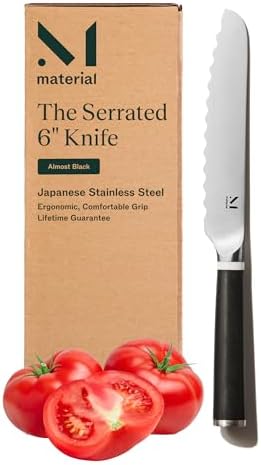
- AS FEATURED IN VOGUE & REAL SIMPLE: Praised for its versatility and design, this 6” serrated knife effortlessly handles …
- SMOOTH, PRECISE SLICING: Unlike typical bread knives, the wavy-toothed blade offers a cleaner, crisper cut through both …
- JAPANESE-INSPIRED PERFORMANCE: Crafted from high-carbon Japanese stainless steel, each knife undergoes a meticulous heat…
Key Specifications:
- Blade: 3.5″ three-layer high-carbon Japanese steel
- Edge Angle: 13 degrees per side (ultra-sharp Japanese profile)
- Construction: Cryogenically treated for maximum hardness
- Handle Material: Composite material (matte, stain-resistant)
- Design Inspiration: Traditional Japanese narrow-tipped blades
- Blade Finish: Hand-polished
The standout feature is the 13-degree edge angle, significantly sharper than the typical 16-20 degree Western knife edges. This ultra-acute angle, combined with three layers of high-carbon Japanese steel, delivers cutting performance that glides through delicate tasks like hulling strawberries or mincing garlic with minimal pressure. The blade undergoes cryogenic treatment—exposure to extremely cold temperatures that refines the steel’s molecular structure for unmatched hardness, sharpness, and durability.
Material reimagined the traditional Japanese knife handle with a modern composite material that’s firm and slightly grippy, providing a secure, comfortable hold during extended prep work. The matte finish resists staining and maintains its appearance even with daily use. The narrow, pointed tip inspired by Japanese blade design offers exceptional control for intricate cuts and detail work, from deveining shrimp to creating garnishes.
Pros:
- Razor-sharp 13-degree Japanese edge cuts effortlessly
- Beautiful, modern aesthetic that’s been media-acclaimed
- Perfect for detail-oriented tasks and precision work
- Comfortable, secure grip with modern composite handle
- Three-layer Japanese steel construction
- Cryogenic treatment ensures lasting sharpness
Cons:
- Higher price point reflects Japanese craftsmanship
- Requires careful hand washing to maintain finish
- Narrow tip may be more delicate for heavy-duty tasks
- Sharper edge requires more careful handling and storage
Best for:
Detail-oriented cooks who prioritize precision, Japanese knife enthusiasts building a collection, and those who value design aesthetics alongside performance. If you appreciate the craftsmanship behind your kitchen tools and want a conversation-starter knife, this delivers.
Cangshan KITA Series 3.5″ Paring Knife – Most Beautiful Damascus Steel
The Cangshan KITA Series paring knife is a visual masterpiece that performs as beautifully as it looks. With its distinctive Damascus steel pattern and striking blue G-10 handle, this knife makes a bold statement on any countertop while delivering the precision performance serious cooks demand. It’s the knife that makes guests ask, “Where did you get that?
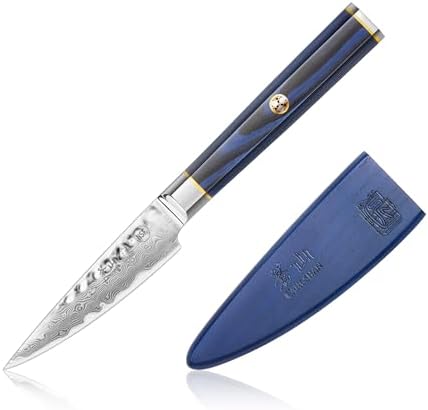
- The paring knife is a kitchen essential for tasks such as slicing small fruits, trimming mushrooms, chopping herbs, crea…
- Hand-sharpened by highly skilled artisans, the full-tang X-7 Damascus steel blade ripples with a beautifully hammered su…
- With faux wood grain in blue and black, the balanced, durable octagonal handle is secured with a single mosaic rivet as …
Key Specifications:
- Blade: 3.5″ X-7 Damascus steel with hammered texture
- Edge Angle: 16 degrees per side
- Hardness: 60 +/- 2 HRC (exceptionally hard)
- Handle Material: Blue G-10 fiberglass (octagonal shape)
- Construction: Full tang with single mosaic rivet
- Includes: Magnetic Saya-style sheath in deep blue wood
- Care: Hand wash only
The hand-sharpened X-7 Damascus steel blade features a beautifully hammered surface that serves both form and function—the rippled texture encourages sliced foods to slide right off rather than sticking to the blade. This Damascus pattern results from layering different types of steel, creating the distinctive wavy visual while enhancing blade strength and flexibility. The blade undergoes Cangshan’s proprietary ULTRA6 heat treatment, achieving a Rockwell hardness of 60 HRC—placing it at the high end of kitchen knife hardness for exceptional edge retention.
The octagonal blue G-10 handle draws inspiration from traditional Japanese knife design while using ultra-durable modern materials. G-10 is an extremely dense fiberglass laminate that’s impervious to moisture, provides excellent grip, and maintains its appearance through years of use. The handle is secured with a single mosaic rivet that serves as a luxurious finishing touch. Perhaps the most thoughtful detail is the included magnetic Saya-style sheath in matching deep blue wood, which protects the blade while doubling as a beautiful storage solution.
Pros:
- Stunning Damascus steel pattern with hammered texture
- Exceptional edge retention with 60 HRC hardness
- Beautiful blue aesthetic makes it a standout piece
- Premium magnetic sheath included for safe storage
- Perfect balance with octagonal G-10 handle
- Food releases easily from textured blade surface
- Makes an exceptional gift for knife enthusiasts
Cons:
- Premium price reflects Damascus steel craftsmanship
- Hand wash only to preserve blade finish
- Decorative pattern requires careful maintenance
- May be too beautiful for some cooks to use daily
Best for:
Knife collectors who appreciate craftsmanship, gift-giving for weddings or housewarmings, and cooks who want both peak performance and stunning aesthetics. This is the paring knife you display with pride.
Quick Comparison: Our Top Paring Knives at a Glance
Here’s how these four exceptional paring kitchen knives compare side-by-side to help you make the right choice:
| Knife | Blade Length | Material | Hardness | Best For |
|---|---|---|---|---|
| Wüsthof Classic | 3.5″ | German high-carbon steel | 58 HRC | Overall versatility |
| Victorinox | 3.25″ | Swiss high-carbon steel | N/A | Budget/value |
| Material Kitchen | 3.5″ | Japanese 3-layer steel | N/A | Modern design |
| Cangshan KITA | 3.5″ | Damascus X-7 steel | 60 HRC | Premium/Damascus |
How to Choose the Right Paring Knife
Selecting the perfect paring knife depends on understanding a few key factors that directly impact cutting performance, comfort, and longevity. Here’s what matters most when evaluating your options.
Blade Length and Shape
Paring knives typically range from 3 to 4 inches in blade length, with 3.5 inches representing the sweet spot for most cooks. Shorter blades (3-3.25 inches) offer maximum control for ultra-precise tasks like creating garnishes or hulling berries, while slightly longer blades (3.5-4 inches) provide versatility for both detailed work and small chopping tasks.
The most common style is the spear point, featuring a straight blade with a pointed tip that’s ideal for general paring tasks. Some specialized paring knives feature a bird’s beak shape with a curved blade, perfect for turning vegetables and creating decorative cuts. Match blade length to your hand size—if you have smaller hands, a 3.25-inch blade may feel more controlled, while larger hands often prefer the 3.5-inch option.
Blade Material Matters
High-carbon stainless steel is the gold standard for paring knives, offering the perfect balance of edge retention, rust resistance, and ease of sharpening. German steel, like that used in the Wüsthof, typically features a softer composition (56-58 HRC) that’s easier to maintain and more forgiving during use. Japanese steel, found in knives like Material’s offering, is harder (often 60+ HRC) and holds a sharper edge longer but requires more careful handling and maintenance.
Damascus steel adds a visual element through its distinctive layered pattern while potentially offering enhanced strength and flexibility. The Rockwell Hardness (HRC) rating indicates blade hardness—most quality kitchen knives fall between 52-62 HRC, with the ideal range being 58-60 for a balance of sharpness and durability. Higher hardness means better edge retention but can make the blade more brittle and harder to sharpen.
Handle Design and Comfort
Handle material significantly impacts grip security and comfort during extended use. Polypropylene handles, like on the Victorinox, are lightweight, dishwasher safe, and provide excellent grip even when wet. G-10 fiberglass, used on the Cangshan KITA, offers premium durability with a slightly grippy texture that ensures control. Stainless steel handles on the Wüsthof create a seamless, hygienic design but may feel cold initially.
Full tang construction, where the blade extends through the entire handle, provides better balance and durability compared to partial tang designs. Look for knives where the handle feels comfortable in your grip style—whether you prefer the hammer grip for general tasks or the pinch grip for precision work. The handle should feel balanced with the blade, not top-heavy or handle-heavy.
Edge Angle and Sharpness
Western-style paring knives typically feature edge angles between 16-20 degrees per side, offering durability and ease of maintenance. Japanese knives use sharper angles around 12-15 degrees, like Material’s 13-degree edge, which cuts more cleanly but requires more careful handling and regular maintenance.
Sharper angles excel at delicate tasks like peeling thin-skinned fruits or creating paper-thin garlic slices, while slightly wider angles provide more durability for general kitchen tasks. Consider your sharpening habits—if you regularly maintain your knives with a honing steel, a sharper Japanese edge is manageable. If you prefer low-maintenance tools, a Western edge angle may be more practical.
Paring Knife Care and Maintenance
Proper care extends your paring knife’s lifespan dramatically while maintaining peak cutting performance. Follow these essential practices to keep your knife sharp, safe, and ready for precision work.
Cleaning and Storage
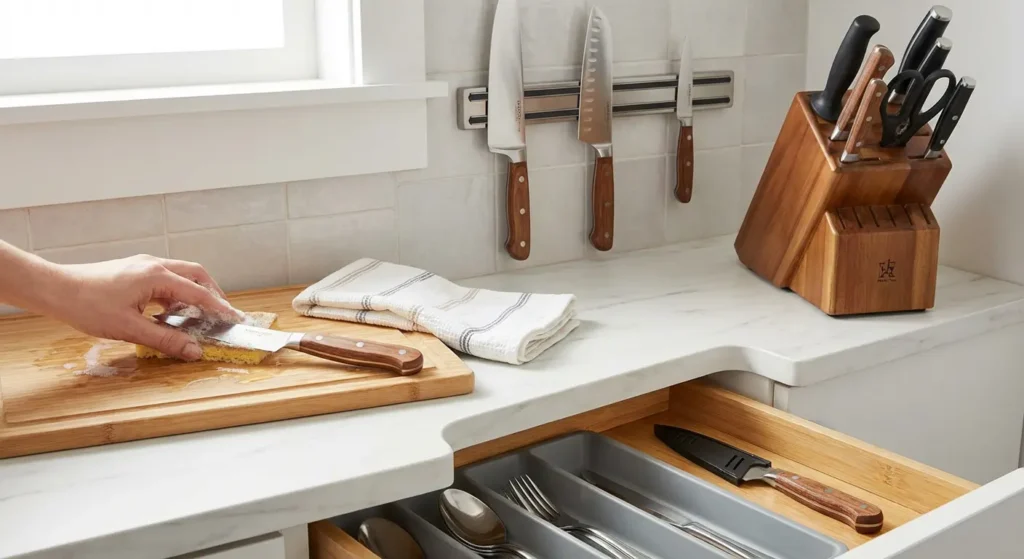
Hand washing is always the safest option for paring knives, regardless of whether they’re technically dishwasher safe. Use warm soapy water, clean the blade immediately after use, and dry completely before storage. Even dishwasher-safe models like the Victorinox can suffer from edge dulling when jostled against other utensils during the wash cycle.
Proper storage prevents both dulling and accidents. Dedicated knife blocks keep blades separated and protected, while magnetic strips mount on walls for easy access and attractive display. Blade guards or sheaths, like the one included with the Cangshan KITA, protect edges when storing knives in drawers. Never toss paring knives loose into drawers where they contact other utensils—this dulls edges quickly and creates a safety hazard.
Keeping Your Paring Knife Sharp
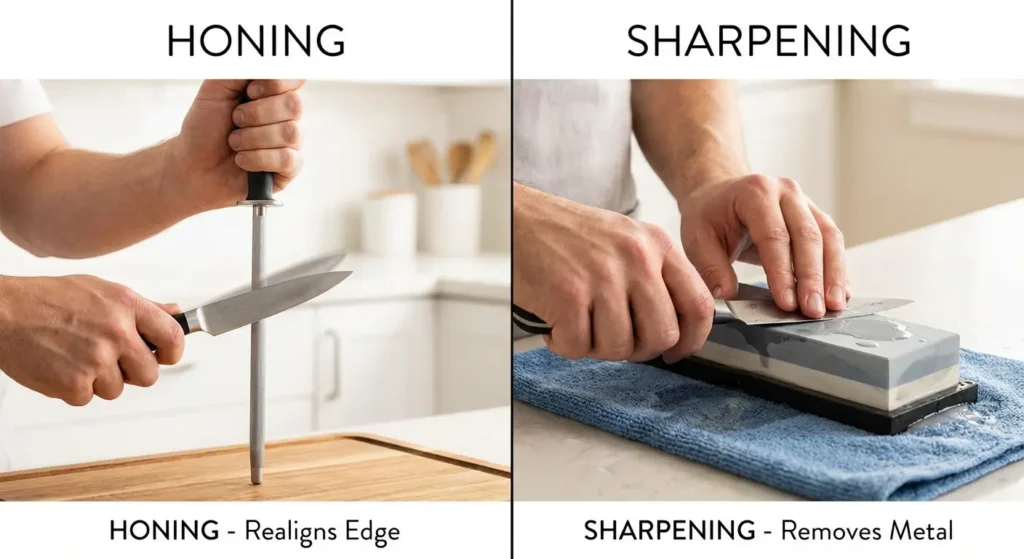
Understanding the difference between honing and sharpening is crucial for maintenance. Honing realigns a blade’s edge without removing metal, and should be done every few uses to maintain sharpness. A honing steel straightens the microscopic edge that becomes rolled or bent during normal cutting. Sharpening actually removes metal to create a new edge, and is only necessary when honing no longer restores cutting performance—typically every few months to a year depending on use frequency.
Use a honing steel correctly by holding it vertically with the tip resting on a cutting board, then sweeping the knife blade down and across the steel at a consistent angle (matching the blade’s factory angle). Perform 5-6 strokes per side before each major prep session. When the blade shows visible nicks, won’t cut tomato skin cleanly even after honing, or requires excessive pressure during cutting, it’s time for professional sharpening. Many knife shops and kitchen stores offer sharpening services, or you can learn to use whetstones for at-home sharpening.
Common Paring Knife Mistakes to Avoid
Even quality paring knives suffer from improper use and care. Avoid these common errors to maintain performance and safety.
Using your paring knife on hard surfaces like plates, countertops, or glass cutting boards damages the edge quickly—always use wood or plastic cutting boards designed for knives. Don’t force the knife through tasks it wasn’t designed for, like cutting through bones, frozen foods, or hard winter squash. A paring knife excels at precision work, not heavy-duty cutting that requires a chef’s knife or cleaver.
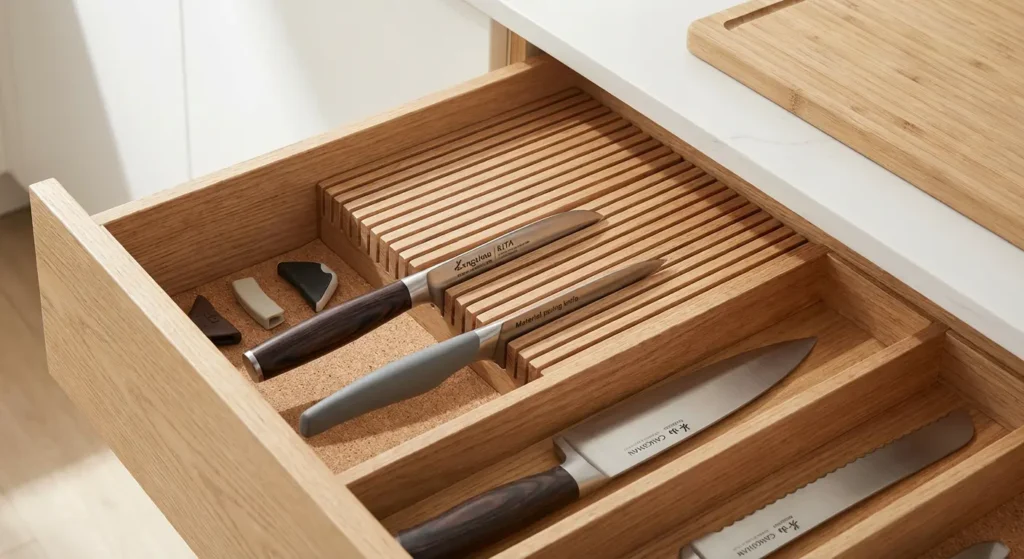
Improper storage in cluttered drawers leads to dulled edges from contact with other utensils and creates a dangerous situation when reaching for items. Neglecting regular honing is perhaps the most common mistake—many cooks only think about knife maintenance when their blade is already significantly dull, making sharpening necessary instead of simple honing.
For knives that aren’t dishwasher safe, like the Cangshan KITA and Material paring knives, dishwasher use can damage handles, strip protective coatings, and dull blades. Even “dishwasher safe” knives last longer with hand washing. Finally, using excessive force when cutting signals a dull blade—sharp knives should glide through ingredients with minimal pressure, making cuts safer and more controlled.
Frequently Asked Questions
What size paring knife is best?
The ideal paring knife size for most home cooks is 3.5 inches, which provides versatility for both detailed precision work and small general cutting tasks. This length offers enough blade to handle tasks like peeling large apples or dicing shallots while maintaining the control necessary for intricate work like hulling strawberries or deveining shrimp. If you have smaller hands or focus primarily on decorative garnishes and very precise cuts, a 3.25-inch blade like the Victorinox may feel more controlled. Cooks with larger hands or those who want one paring knife for all tasks often prefer the 3.5 to 4-inch range found on the Wüsthof, Material, and Cangshan knives.
Can I put my paring knife in the dishwasher?
This depends on the specific knife model. The Victorinox paring knife is explicitly dishwasher safe thanks to its durable polypropylene handle and stainless steel blade designed for commercial kitchen use. However, premium knives like the Wüsthof Classic, Material, and Cangshan KITA should always be hand washed to preserve blade edges, handle finishes, and protective coatings. Even for dishwasher-safe models, hand washing is recommended because dishwasher water pressure can jostle knives against other items, dulling edges faster than normal use. The few seconds required for hand washing significantly extends your knife’s lifespan and performance.
What’s the difference between a paring knife and a chef’s knife?
A paring knife features a 3-4 inch blade designed for precision tasks requiring control and detailed cuts, while a chef’s knife has an 8-10 inch blade built for chopping, slicing, and dicing larger quantities of food. Think of the chef’s knife as your power tool for volume work—mincing a full head of garlic, dicing onions, or slicing through a butternut squash. The paring knife is your precision tool for detailed work—peeling individual garlic cloves, coring tomatoes, or removing silver skin from a tenderloin. The paring knife’s compact size allows you to work in-hand without a cutting board for tasks like peeling an apple, something that’s impossible with a larger chef’s knife. Most complete knife collections include both tools since they serve complementary rather than overlapping purposes.escoffier+1
How often should I sharpen my paring knife?
Honing should happen every few uses—essentially before any major prep session where you’ll rely on the knife extensively. This quick maintenance realigns the blade edge without removing metal, keeping your knife performing at its best. Actual sharpening, which removes metal to create a new edge, is only necessary every few months to a year depending on usage frequency and how well you maintain the blade with regular honing. Signs your paring knife needs sharpening include visible nicks or damage on the edge, inability to cleanly slice tomato skin even after honing, crushing delicate ingredients instead of cutting them, and requiring excessive pressure during normal tasks. Harder steel knives with higher HRC ratings, like the Cangshan KITA at 60 HRC, hold edges longer between sharpenings than softer steels.
Are expensive paring knives worth it?
The answer depends on your cooking frequency, quality expectations, and appreciation for craftsmanship. Budget options like the Victorinox deliver professional-grade performance at under $15 and come with a lifetime warranty, making them exceptional value for occasional home cooks. Premium knives like the Wüsthof, Material, and Cangshan KITA offer tangible benefits: harder steel that holds edges longer, superior balance and ergonomics for extended use, heirloom-quality construction that lasts decades, and in some cases stunning aesthetics like Damascus steel patterns. If you cook daily and value tools that perform flawlessly while lasting a lifetime, premium knives justify their cost through years of superior performance. If you’re budget-conscious or just building your first knife collection, starting with a quality budget option like Victorinox makes perfect sense—you can always upgrade later once you understand your preferences.
What can you not cut with a paring knife?
Paring knives are precision tools, not heavy-duty cutting instruments, so avoid using them on hard vegetables like raw butternut squash or large root vegetables that require force—use a chef’s knife instead. Never attempt to cut through bones, frozen foods, or hard cheese with a paring knife, as this can chip or break the blade. Thick-skinned fruits like pineapples and melons are better suited to larger knives with more leverage. Crusty bread requires a serrated bread knife to avoid crushing the interior. Tasks requiring significant downward force or rocking motions exceed what a paring knife is designed to handle. Save your paring knife for what it does best: delicate peeling, precise trimming, small ingredient prep, coring, and detailed garnish work. Using the right knife for each task not only preserves your tools but also makes cooking safer and more efficient.
Conclusion
The right paring kitchen knife transforms everyday prep work from a frustrating chore into effortless precision. Whether you’re peeling apples for a pie, deveining shrimp for dinner, or creating delicate garnishes for guests, this compact tool delivers control that larger knives simply can’t match.
Our top recommendations cover every cooking style and budget. The Victorinox offers unbeatable value with Swiss precision and a lifetime warranty, perfect for budget-conscious cooks or first-time buyers. The Wüsthof Classic delivers German engineering excellence for those who want professional-grade performance that lasts generations. Material’s Japanese-inspired design brings razor-sharp 13-degree edges and modern aesthetics for detail-oriented cooks. The Cangshan KITA stands out as a visual masterpiece with Damascus steel that performs as beautifully as it looks.
Choose based on your cooking frequency, quality expectations, and aesthetic preferences. A quality paring knife isn’t an expense—it’s a long-term investment in easier, safer, and more enjoyable cooking. With proper care and regular maintenance, any of these four knives will serve you faithfully for years to come.
Reade more:
Best Oyster Shucking Knife: Reviews & Buying Guide