
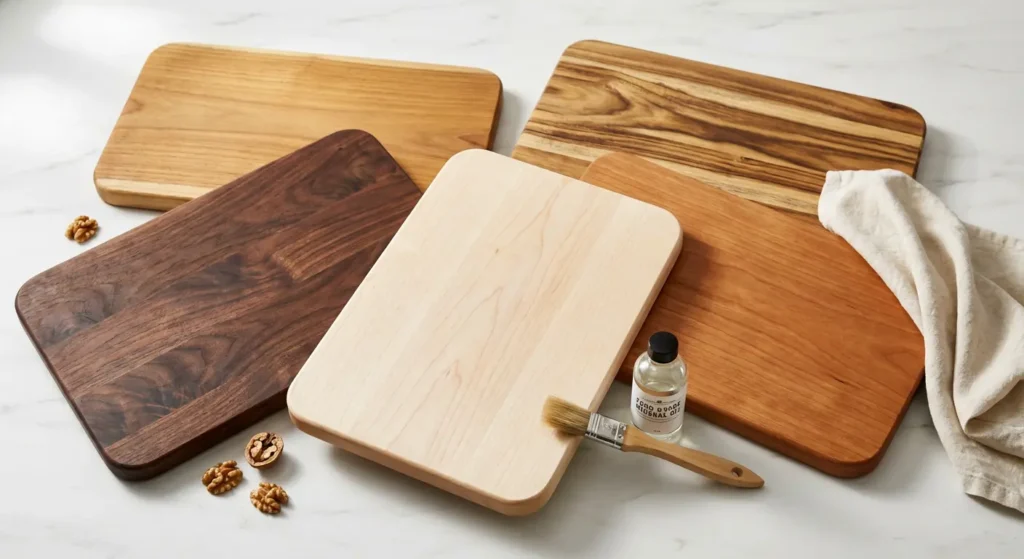
Why do some cutting boards last decades while others warp, crack, or harbor bacteria within months? The secret lies in the type of wood you choose. The best woods for cutting boards determines everything from durability and food safety to how long your knives stay sharp. Choose wrong, and you’ll deal with warping, bacterial growth, and constant replacements. This guide reveals the top woods professionals swear by, what is the best wood for a cutting board based on hardness and grain structure, and the three woods you should never use in your kitchen.
Table of Contents
Quick Criteria: What Makes the Best Wood for Cutting Boards
The best type of wood for cutting board applications falls between 900–1,500 on the Janka hardness scale. This range provides the perfect balance—soft enough to protect knife edges but hard enough to resist deep cuts and warping.
Closed-grain hardwoods are non-negotiable for food safety. They prevent moisture absorption and bacterial harborage, while open-pore woods create dangerous breeding grounds. Too soft damages easily and splinters; too hard dulls your knives faster than necessary.
Top 7 Best Woods for Cutting Boards
Maple (Hard Rock Maple)
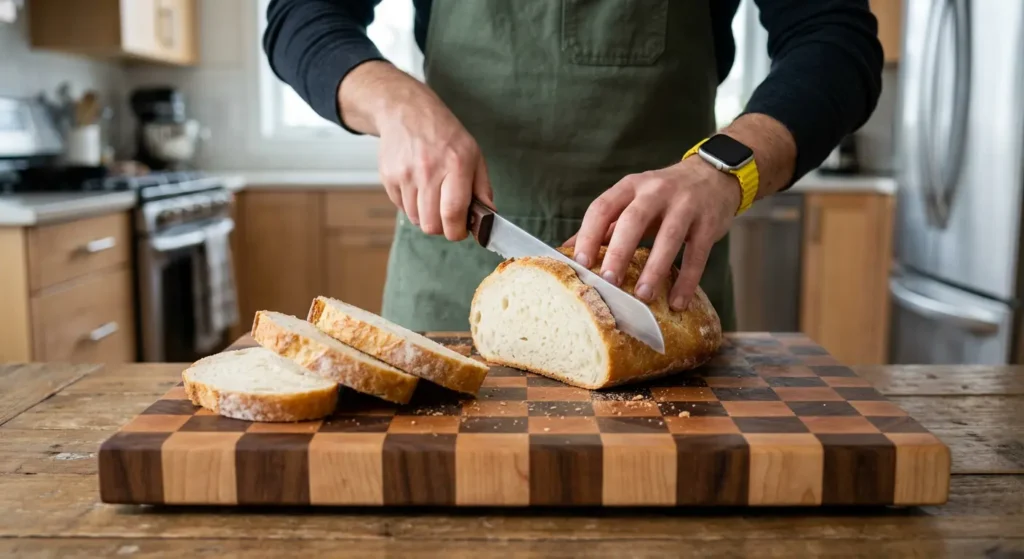
The Industry Standard for Professional Kitchens
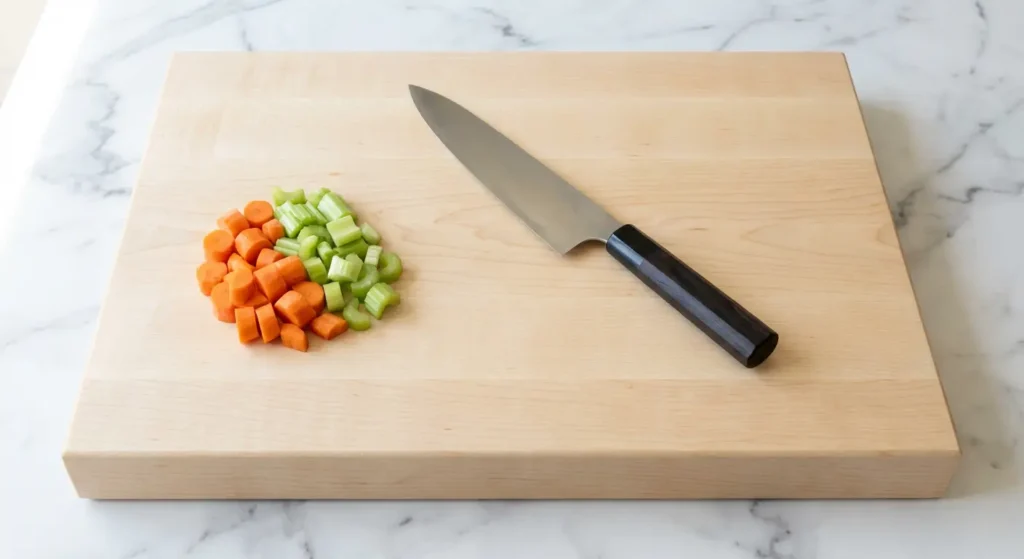
Hard rock maple delivers a Janka hardness of ~1,450, making it what wood is best for cutting boards in commercial settings. Its tight, closed-grain structure resists bacteria and moisture absorption better than almost any other option, while the light color makes it easy to spot food residue during cleaning, according to Misen’s comprehensive guide.
Maple strikes the ideal balance for knife preservation—firm enough to resist deep scoring but gentle enough to avoid premature dulling. The wood’s natural hardness means minimal warping even with daily use. The only trade-off is weight; maple boards feel substantially heavier than walnut or cherry alternatives.
Walnut (Black Walnut)
Best Balance of Beauty and Performance
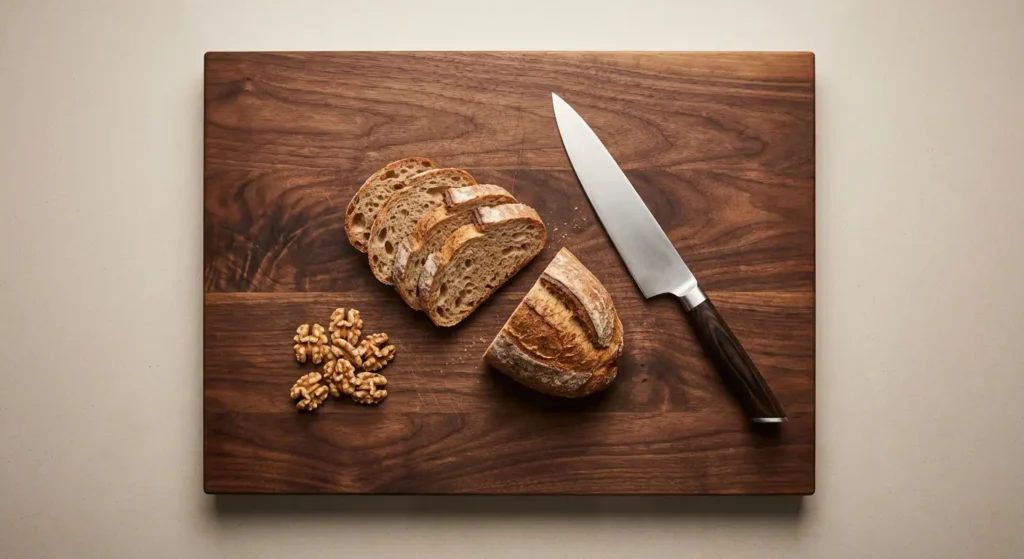
Black walnut registers ~1,010 on the Janka scale, softer than maple but still ideal for what is the best wood for a cutting board when aesthetics matter. The rich chocolate-brown color naturally hides knife marks and food stains, keeping your board looking newer longer.
This closed-grain hardwood excels at knife friendliness—it’s noticeably gentler on edges than maple while still resisting bacterial growth. Walnut’s natural oils provide slight moisture resistance without additional treatment. The downside is cost; expect to pay 40–60% more than maple, and the darker surface makes thorough cleaning verification slightly harder.
Cherry (American Cherry)
Premium Choice That Ages Beautifully
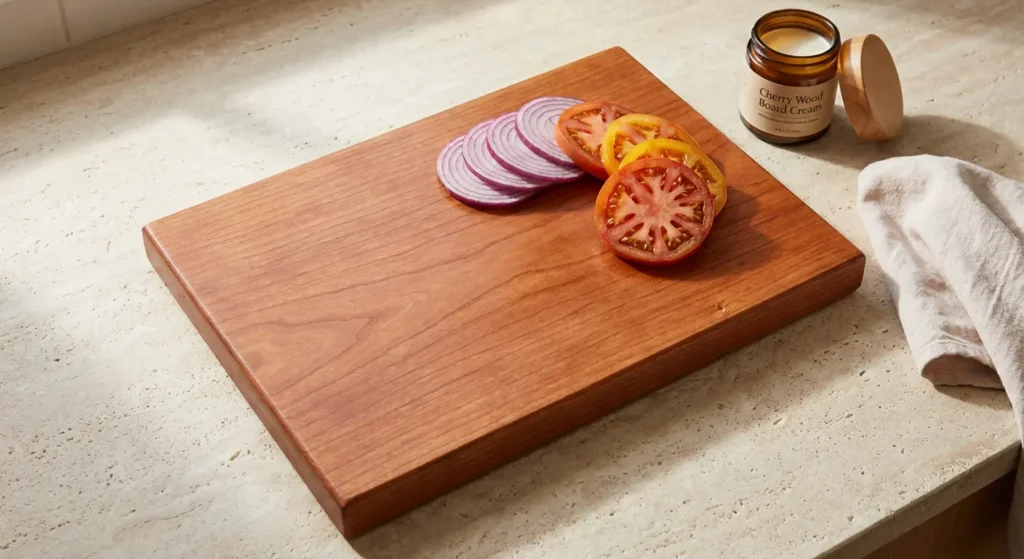
American cherry measures ~995 Janka hardness, positioning it as one of the best woods for cutting boards for those who value evolving aesthetics. The wood starts pale pinkish-tan and gradually darkens to a rich reddish-brown over months of use and light exposure.
Cherry’s fine, closed grain structure prevents moisture penetration and bacterial concerns while remaining exceptionally knife-friendly. It shows fewer visible scratches than maple due to its warm coloring. The primary consideration is initial investment—cherry commands premium pricing—and lighter starting color requires more frequent visual inspection during the break-in period before darkening occurs.
Teak
Best Moisture Resistance for Wet Environments
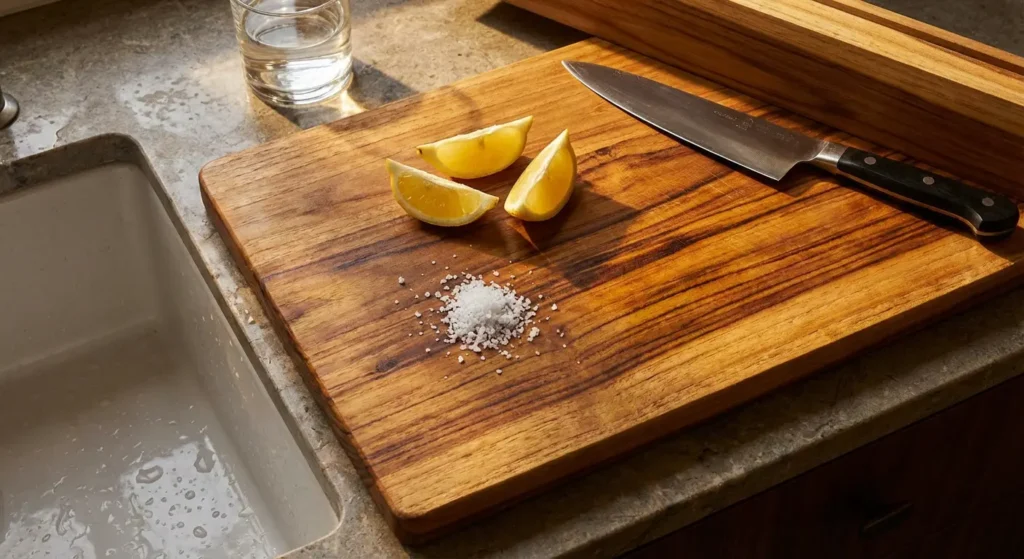
Teak’s Janka rating of ~1,155 combined with its natural oil content makes it what wood is best for a cutting board in humid kitchens or outdoor settings. The wood’s inherent oils repel water and resist warping more effectively than any other option, requiring less frequent oiling maintenance.
The tight grain structure ensures food safety while the moderate hardness protects knife edges well. Teak boards remain stable even when exposed to temperature fluctuations that would warp other woods. However, the high silica content can dull knives slightly faster than walnut or cherry, and premium teak boards often cost 2–3 times more than maple equivalents.
Beech
European Favorite for Budget-Conscious Buyers
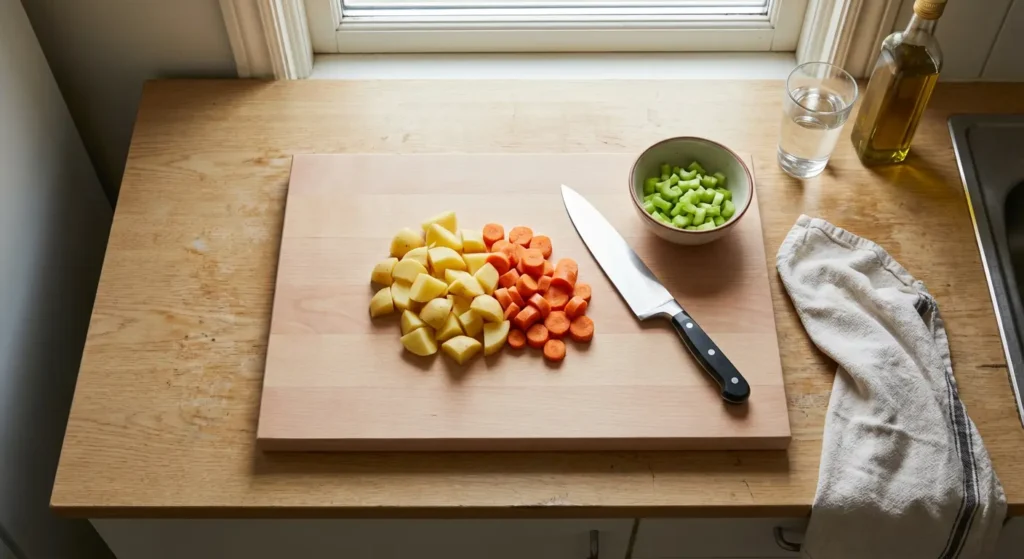
Beech wood registers ~1,300 Janka hardness, offering a compelling middle ground for the best wood for a cutting board without premium pricing. Popular in European kitchens for generations, beech’s fine, consistent grain provides reliable moisture resistance and easy sanitization.
This hardwood’s pale cream color with subtle pink undertones maintains a clean, professional appearance in any kitchen. It’s harder than walnut but more affordable than cherry or teak. The trade-off is slightly increased knife wear compared to softer options, and beech requires consistent oiling—the wood can dry out faster than naturally oily species like teak.
Acacia
Best Value with Striking Grain Patterns
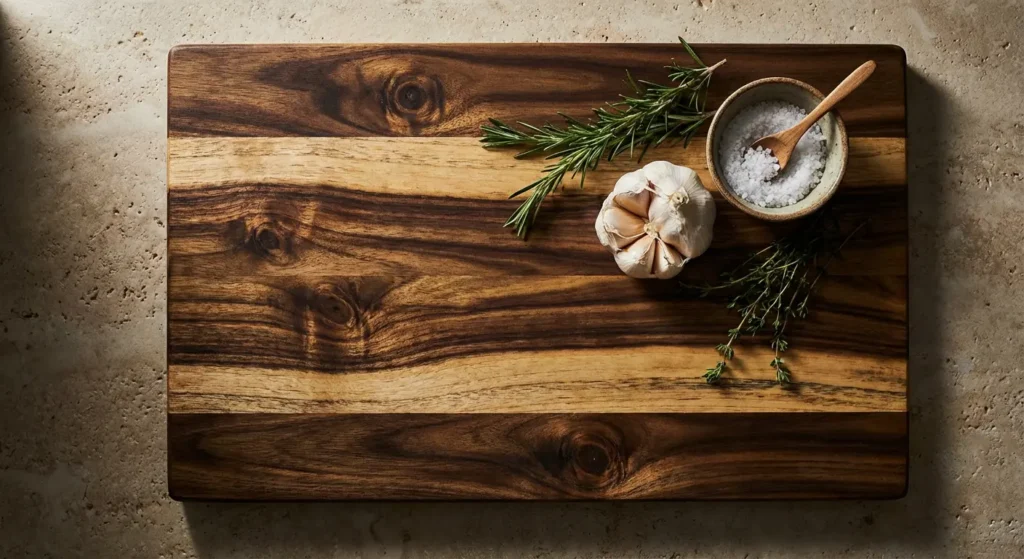
Acacia delivers impressive ~1,750 Janka hardness at price points 30–50% below maple, making it an attractive option for what is the best wood for cutting boards on a budget. The dramatic grain patterns with contrasting light and dark striping create visually stunning boards that rival exotic woods aesthetically.
The closed-grain structure handles moisture well and resists bacterial growth effectively. Acacia’s natural durability means these boards withstand years of heavy use without warping. The higher hardness does accelerate knife dulling compared to maple or walnut, and the dense wood feels noticeably heavier, which can make handling and storage less convenient.
Oak (White Oak)
Acceptable with Important Caveats
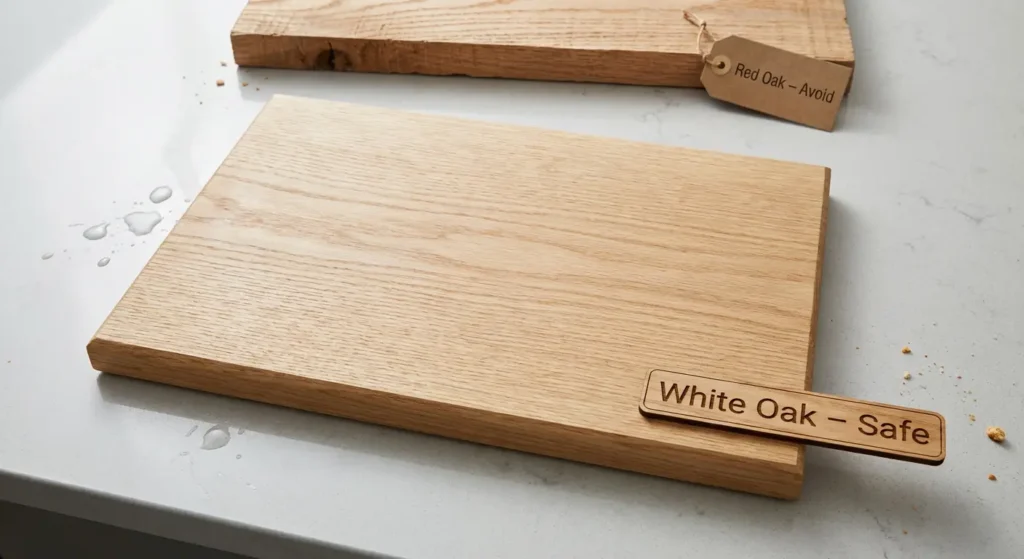
White oak measures ~1,360 Janka hardness and features a closed-grain structure unlike its red oak cousin. When asking what wood is best for cutting boards in the oak family, white oak is the only acceptable choice due to its tighter pores that resist moisture and bacterial penetration.
The wood offers good durability and knife preservation at moderate cost. Its lighter color shows cleanliness well, and the material handles daily use without excessive wear. Critical warning: never use red oak—its open pores create food safety hazards. Even with white oak, the slightly more porous structure compared to maple or walnut means extra attention to oiling and cleaning protocols.
Bamboo: The Eco-Friendly Alternative
Bamboo isn’t technically a hardwood—it’s a grass—but it’s become popular as a sustainable option for cutting boards. With a Janka hardness of ~1,380, bamboo matches maple’s durability while growing to maturity in just 3–5 years versus decades for traditional hardwoods, making it attractive for eco-conscious buyers seeking the best type of wood for cutting board alternatives.
The material offers excellent moisture resistance, lightweight handling, and affordable pricing typically 40–50% below comparable maple boards. However, bamboo’s harder surface dulls knives faster than walnut or cherry, and the laminated construction using adhesives can separate or splinter over time. The cross-grain glue joints also create potential bacterial harboring spots if the board develops cracks, requiring more vigilant inspection than solid hardwood options.

- 【CUTTING BOARDS FOR KITCHEN】Four-layer thickened cutting board set includes 3 chopping boards of various sizes: “XL” siz…
- 【INNOVATIVE DESIGN】 The unique splicing craft and the four-layer thickening design are stronger and more long-lasting th…
- 【ATTENTIVE】Rounded corners on the four sides to decrease scratches and invisible handle design does not take up extra sp…

- The Ultimate Cutting Board Set for All: If you are looking for a top notch quality cutting board that is extremely safe …
- Knife Friendly: Earth-friendly bamboo fiber surface is better for your knives and cutlery than plastic, glass, acacia, t…
- Unique Craftsmanship Cutting Board Set in 3 Sizes: Freshware has cleverly designed these boards to satisfy even the most…
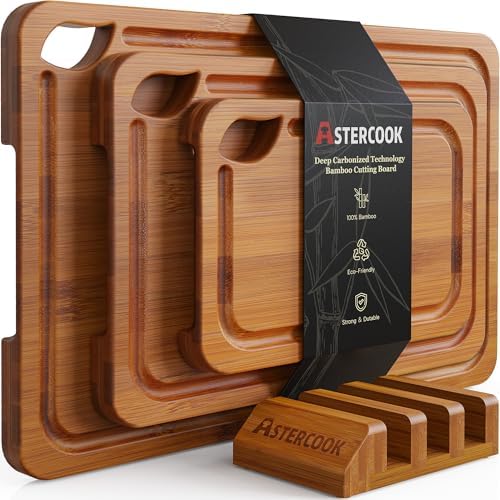
- 【Deep-Carbonized Bamboo for Lasting Strength】 Crafted from premium bamboo and treated with high-heat carbonization, this…
- 【Complete Set with Space-Saving Stand】 Unlike ordinary wooden cutting boards for kitchen that take up space, this bamboo…
- 【Sized Right for Every Task】 The set includes 15×10, 12×8, and 9×6 in cutting boards to handle everything—whether you’re…

- Non-Toxic Natural Bamboo – smirly bamboo cutting boards are made from mature bamboo with dense, natural fibers, high har…
- Why 3 Piece Cutting Board Set with Holder? – This wood cutting board set includes a 17 x 12 inch Large cutting board, a …
- Built-in Hidden Handle and Juice Groove – This cutting board with handle that offers a comfortable grip and is durable e…

- Thicker, Stronger: 1” thick and 3-layers design gives this cutting board greater durability and a longer service life.
- Deep Carbonized Bamboo: High-heat processed bamboo reduces moisture absorption and resists cracking, splintering.
- Reversible and multi-purpose: One side with deep juice grooves for catching liquids; the other side is flat for more cut…
Acacia Wood Cutting Board:Top Recommendations

- PREMIUM END GRAIN ACACIA WOOD CUTTING BOARD known for its rich colors with beautiful contrasting patterns and variations…
- MULTI-FUNCTIONAL BOARD serves as a prep station cutting and serving board for vegetables meat cheese bread charcuterie e…
- DURABLE END GRAIN WOOD CONSTRUCTION minimizes wear and tear on both cutlery and board for long lasting use with proper c…

- ✅𝗡𝗼𝗻-𝗧𝗼𝘅𝗶𝗰. 𝗙𝗿𝗲𝗲 𝗢𝗳 𝗙𝗼𝗿𝗲𝘃𝗲𝗿 𝗖𝗵𝗲𝗺𝗶𝗰𝗮𝗹𝘀. 𝗭𝗲𝗿𝗼 𝗠𝗶𝗻𝗲𝗿𝗮𝗹 𝗢𝗶𝗹: Most cutting boards are conditioned with mineral oil—a petroleu…
- ✅𝗛𝗲𝗹𝗽𝘀 𝗣𝗿𝗲𝘃𝗲𝗻𝘁 𝗖𝗿𝗼𝘀𝘀-𝗖𝗼𝗻𝘁𝗮𝗺𝗶𝗻𝗮𝘁𝗶𝗼𝗻 𝗗𝘂𝗿𝗶𝗻𝗴 𝗙𝗼𝗼𝗱 𝗣𝗿𝗲𝗽: Each board in the set features a laser-engraved icon—meat, veggies,…
- ✅𝗧𝗵𝗿𝗲𝗲 𝗦𝗶𝘇𝗲𝘀, 𝗘𝗻𝗱𝗹𝗲𝘀𝘀 𝗨𝘀𝗲𝘀 – 𝗕𝘂𝗶𝗹𝘁 𝗳𝗼𝗿 𝗗𝗮𝗶𝗹𝘆 𝗖𝗼𝗼𝗸𝗶𝗻𝗴: With large (17×11″), medium (14×9″), and small (11×7″) boards, thi…

- Acacia Wood Cutting Board Set – This cutting board set comes in 3 sizes, 17×12 inches, 12×10 inches, and 12×7 inches, wh…
- This cutting board set uses a new process, triple-layer water-locking technology, to keep the water content of the cutti…
- Excellent workmanship–Selected 30 years old high hardness Acacia wood, after 5 times of mechanical sanding, 3 times of …

- DOUBLE-SIDED DESIGN: PREP ON ONE SIDE, SERVE ON THE OTHER: Each board features a flat cutting surface on one side and de…
- DURABLE, KNIFE-FRIENDLY SURFACE: These boards resist cracking and warping over time. Acacia wood is naturally strong yet…
- THREE SIZES FOR ANY KITCHEN TASK: Set includes large (15.711.8 inches), medium (139.5 inches), and small (10.27 inches) …
End Grain vs Edge Grain: Construction Matters
Best Wood for End Grain Cutting Board Benefits
End grain construction positions wood fibers vertically, so knife edges cut between the fibers rather than across them. This creates a self-healing surface where the wood fibers naturally close back together after cutting, dramatically extending both board life and knife sharpness.
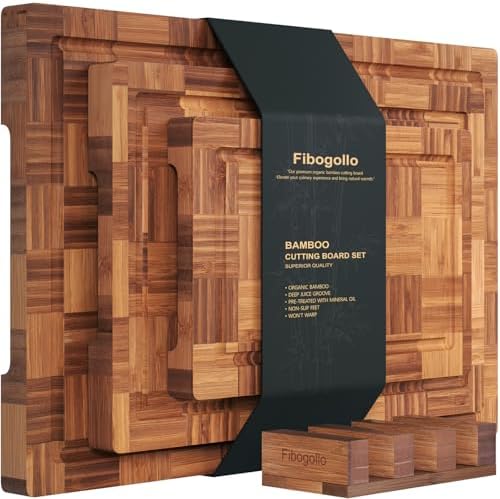
- 【Splicing Craft,Innovative Design】This chopping board features a bamboo unique splicing craft design, crafted with a fin…
- 【Natural Bamboo Material】Crafted from high-quality natural bamboo,each piece is meticulously selected to ensure toughnes…
- 【Bamboo Cutting Boards with Mineral Oil Treatment】 This bamboo cutting board is pre-treated with mineral oil to create a…
End grain boards represent the most knife-friendly option available and show minimal visible scarring even after years of use. Professional chefs prefer this construction for heavy prep work. The primary considerations are cost (typically 2–3 times higher than edge grain) and weight—end grain boards are substantially heavier and require more care during cleaning to prevent water absorption through the exposed fiber ends.
Edge Grain Characteristics
Edge grain construction orients wood planks on their long edge, creating a more affordable and lighter-weight option. These boards cost 40–60% less than end grain equivalents and are easier to handle for daily cleaning and storage.
The flatter surface shows knife marks and scratches sooner since blades cut across rather than between fibers. Edge grain boards require more frequent sanding to maintain a smooth cutting surface, and they’re slightly harder on knife edges than end grain alternatives. However, for home cooks who don’t perform hours of daily prep work, edge grain construction offers an excellent balance of performance and value when choosing the best wood for cutting boards.

- EDGE GRAIN CUTTING BOARDS: THE CLASSIC CHOICE — Built for daily use, this edge grain wood cutting board is a true kitche…
- PREMIUM TEAK: EXCEPTIONAL DURABILITY & WATER RESISTANCE — Treasured for its rich, golden-brown hue, Teak is a premium ha…
- SMART DESIGN FOR ORGANIZED, MESS-FREE PREP — This large cutting board ensures an effortless workflow. One side has three…
3 Woods to Avoid (Safety Risks)
- Red Oak: Open-pore structure traps liquids and bacteria deep in the wood grain where cleaning cannot reach, creating serious food safety hazards particularly with raw meat
- Pine and Softwoods: Janka ratings under 500 make these woods too soft—they splinter easily, develop deep cuts that harbor bacteria, and warp quickly from moisture exposure
- Exotic or Unknown Species: Many exotic woods contain natural toxins, allergens, or saps that can contaminate food; always verify food-safe certification before use
- Chemically Treated Woods: Pressure-treated lumber or woods finished with non-food-safe stains release harmful chemicals into food
Open-pore woods create bacterial breeding grounds that are impossible to sanitize properly, no matter how thoroughly you clean. Never compromise on closed-grain hardwoods when selecting what is the best wood for cutting boards for your kitchen.
Food Safety Guidelines for Wood Selection
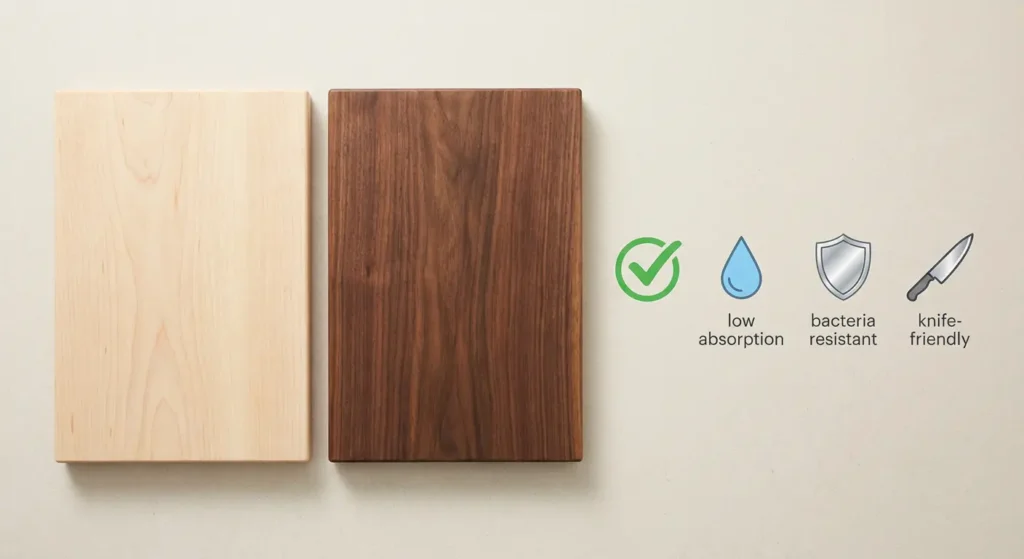
- Choose only closed-grain hardwoods like maple, walnut, or cherry for the best wood for cutting board safety
- Avoid all open-pore woods including red oak and ash, especially for raw meat and poultry preparation
- Verify Janka hardness ratings fall between 900–1,500 for optimal bacteria resistance and knife preservation
- Ensure wood is certified food-safe with no chemical treatments, stains, or unknown finishes
- Consider darker woods like walnut for meat prep—they hide staining better than light maple while maintaining food safety
- Replace boards showing deep cuts, cracks, or warping that create bacterial harboring spots
Best Oil for Wood Cutting Board Maintenance
Food-grade mineral oil remains the industry standard and best oil for wood cutting board care. It’s odorless, tasteless, and never goes rancid like vegetable oils, providing consistent moisture protection without flavor contamination.

- FOOD GRADE – This butcher block conditioner is lab tested to ensure that it meets food safety standards, and is also col…
- PROTECTION – Use this mineral oil for cutting board restoration and protection to prevent cracking and drying. It also m…
- EASY APPLICATION – This butcher block oil has a push-applicator cap and squeeze-bottle design that makes maintenance a b…
Apply mineral oil monthly for new boards, then every 2–3 months once the wood is fully seasoned. For enhanced protection, board cream combining mineral oil with beeswax creates a moisture barrier while conditioning the wood. Never use cooking oils—they oxidize and turn rancid, creating unpleasant odors and potential bacterial growth.

- Cutting Board Oil is a deep penetrating 100% Pure USP Food Grade Mineral Oil that is tasteless, odorless, colorless, and…
- Cutting Board Oil rejuvenates dry wood, including: cutting boards, butcher blocks, countertops, wooden bowls and utensil…
- Deeply penetrates into wood pores, bringing out the rich natural wood color and helps prevent drying and cracking
After oiling, let the board absorb for 4–6 hours or overnight before wiping excess. This maintenance schedule applies to all the best woods for cutting boards including maple, walnut, cherry, and teak, though naturally oily teak requires slightly less frequent treatment.
Frequently Asked Questions
Is oak good for cutting boards?
White oak is acceptable for cutting boards due to its closed-grain structure and ~1,360 Janka hardness. However, never use red oak—its open pores trap bacteria and moisture. White oak requires more diligent oiling than maple or walnut to maintain food safety.
Can I put my wood cutting board in the dishwasher?
No, never put wood cutting boards in the dishwasher. The high heat and prolonged water exposure causes warping, cracking, and joint separation regardless of which best wood for cutting board you choose. Always hand-wash with mild soap and dry immediately.
How often should I oil my cutting board?
Oil new boards monthly for the first 3–4 months, then every 2–3 months for maintenance. When water no longer beads on the surface, it’s time to reapply the best oil for wood cutting board care—food-grade mineral oil or board cream.
What’s the best wood for cutting boards overall?
Hard rock maple is the best wood for cutting boards overall, combining optimal 1,450 Janka hardness, tight closed grain for food safety, excellent knife preservation, and reasonable cost. For softer knife-friendly options, black walnut offers the best balance of performance and aesthetics.
Is bamboo better than wood?
Bamboo is more sustainable but not better functionally. It’s harder on knives than maple or walnut, can splinter at glue joints, and the laminated construction creates potential bacterial spots. For longevity and knife preservation, traditional hardwoods remain superior choices for what is the best wood for a cutting board.
What’s the difference between end grain and edge grain?
End grain boards position wood fibers vertically so knives cut between fibers, creating self-healing surfaces that stay sharp and show minimal scarring. Edge grain boards orient wood on the long edge, costing 40–60% less but showing more knife marks and requiring more frequent maintenance. End grain is best wood for end grain cutting board applications where maximum knife preservation matters.
Are softwoods like pine safe for food prep?
No, softwoods like pine are unsafe for cutting boards. Their Janka ratings below 500 mean they splinter easily, develop deep cuts that harbor bacteria, and warp from moisture exposure. Only closed-grain hardwoods between 900–1,500 Janka provide safe, durable cutting surfaces for food preparation.
Read More
Titanium vs Wooden Cutting Boards: Which Is Better?
End Grain vs Edge Grain Cutting Board: Complete Guide 2025
Personalized Laser Engraved Cutting Boards for Your Kitchen