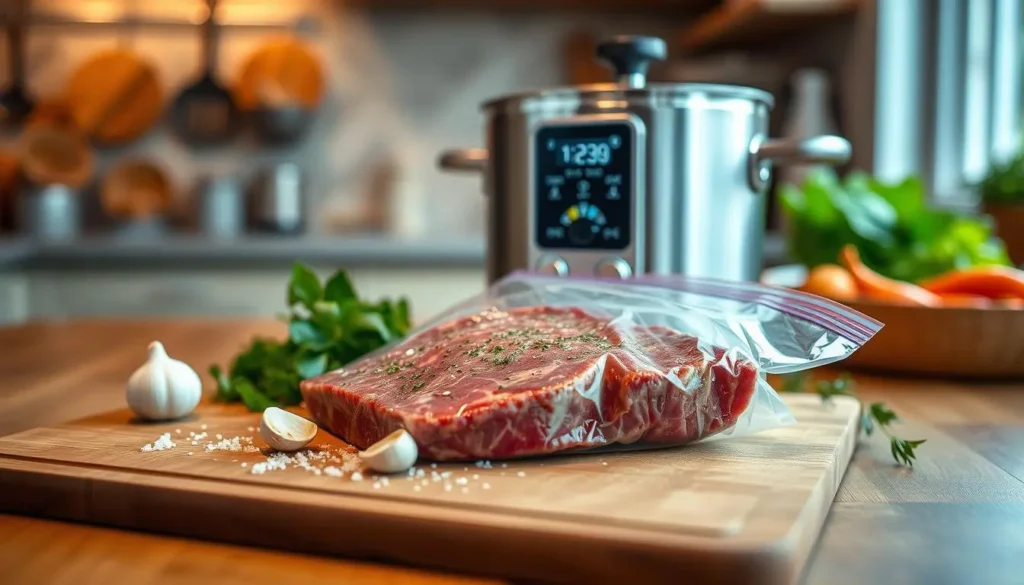
I’m thrilled to take you through my comprehensive, hassle-free guide to the ideal sous vide skirt steak, a technique that transforms an inexpensive, frequently misinterpreted cut into something consistently tender and of restaurant quality. You’ll learn how to choose the ideal skirt cut, choose the ideal temperature and time, make the two marinades I always reach for, and finish the steak with a razor-sharp crust in the brief time you’ll spend reading (and the few hours your cooker will spend doing the heavy lifting).
Sous vide cooking is essential because it guarantees consistent doneness from edge to edge, gently breaks down connective tissue, and maintains beefy flavor without overcooking. Whether you’re cooking steak for fajitas, tacos, or a simple plate with chimichurri on top, this technique is always successful.
Why This Works: In skirt steak, a tasty, reasonably priced cut from the plate, Sous vide cooking produces edge-to-edge doneness and gently breaks down connective tissue without overcooking. While you marinate, the water bath preserves the beefy flavor, and a smoking-hot sear produces a crust fit for a restaurant.
My Sous Vide Skirt Steak Journey
A small Christmas gift changed the way I cook steak forever: a precision immersion circulator. This was the start of my sous vide adventure. Before that, the best thing I ever ate was at a Miami Hurricanes tailgate, where a friend passed around churrasco, which is thin strips of beef that were perfectly charred, so tender they fell apart, and full of beefy flavor. That moment stayed with me.
Skirt steak was the first cut that came to mind when I thought about trying out my new cooker. With its bold flavor and thin, fibrous grain, it seemed like an ideal match for sous vide cooking. This method could transform such strong beefy characteristics into tenderness and even doneness without losing texture. After many experiments with inside skirt and outside skirt at various thicknesses, marinating times, and searing techniques, I have found a way to produce juicy flavor-packed results that work well whether you are making tacos or fajitas with chimichurri on the side.
If you’ve mastered sous vide ribeye or sirloin steak, skirt is your next frontier—it rewards the same precision with even more bold, beefy punch.
Why Sous Vide Skirt Steak Works So Well
I picked skirt steak because of its intense, beefy flavor and affordable price—qualities that often make it outshine more expensive cuts once you know how to handle it. Yes, it has a pronounced grain and can feel fibrous if treated roughly, but sous vide is the secret weapon that transforms it.
What Makes Skirt Steak Special
Skirt steak comes from the diaphragm muscle attached to the plate (ribs 6–12). There are two types:
- Outside skirt: More tender, richly marbled, preferred by restaurants; most pieces end up in commercial kitchens.
- Inside skirt: Leaner, slightly tougher, more common at retail butcher shops; still excellent when cooked sous vide.
For most home cooks I recommend the outside skirt when available—it delivers more flavor and a better mouthfeel after sous vide. When I test recipes at home I usually buy a 1.5–2 lb piece and cut it into portions that fit my bags. If you’re familiar with cooking sous vide flank steak, you’ll notice skirt has a more open grain and even richer taste.
Benefits of Sous Vide for This Cut
Sous vide is perfect for skirt because:
- Precise temperature control: The water bath delivers even heat from edge to edge, so every bite hits the same doneness—no grey banding, no guesswork.
- Gentle collagen breakdown: Low, steady heat converts tough connective tissue to gelatin without drying the meat.
- Flavor infusion: Vacuum-sealing with marinades locks aromatics and acids tight against the meat for deeper flavor penetration.
- Consistency: Whether you’re cooking one steak or six, each piece comes out identical—crucial for meal prep or entertaining.
For me, that consistency plus the ability to flavor the meat in-bag (vacuum or water displacement) is why I keep coming back to sous vide for skirt and other thin, flavorful cuts like flank.
What to Look for When Buying Skirt Steak

Choosing the right piece makes a big difference in your final result. Here’s what I check every time:
- USDA Grade: Aim for Choice or Prime if you can—the extra marbling helps flavor and keeps the meat juicy under sous vide. Select will work but may be a bit leaner.
- Thickness: Ideal thickness for even sous vide results is about ½ to 1 inch—this cooks quickly and slices nicely across the grain.
- Appearance: Look for bright red color and good marbling; avoid pieces with excessive silver skin or big tough connective tissue that would need trimming.
- Portioning: If you see a large 3–4 lb slab, ask your butcher to portion it into 6–10 oz pieces so each bag lays flat and cooks evenly.
Yield & Scaling: Each 1.5–2 lb skirt serves about 4 people for tacos or fajitas; scale marinade ingredients 1:1 as you increase quantity.
Essential Ingredients and Equipment
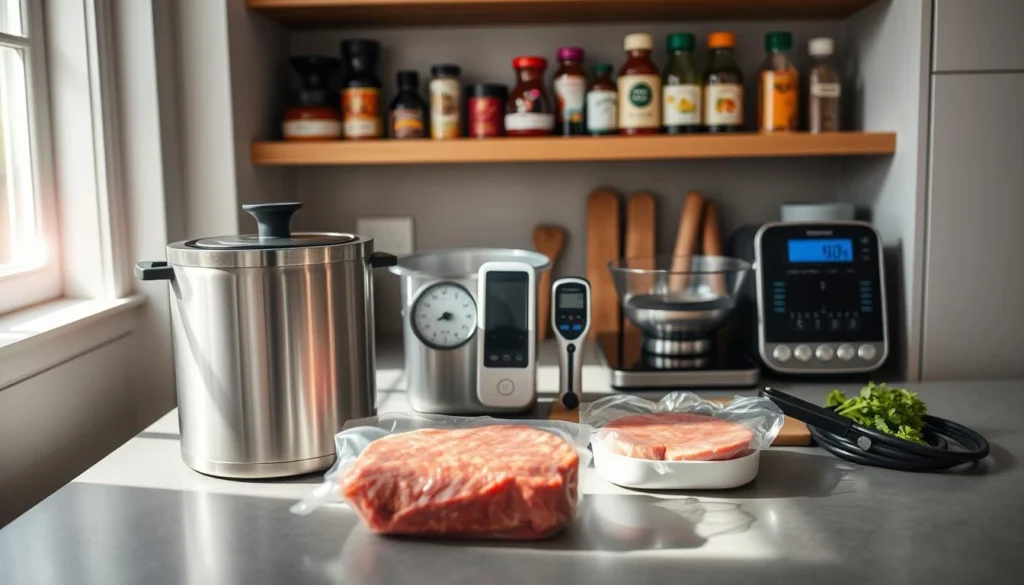
Having the right gear and fresh ingredients makes all the difference when I aim for restaurant-quality results at home. Over the years I’ve learned a few tool and ingredient rules that reliably deliver a perfect sous vide skirt steak.
Must-Have Tools for a Perfect Cook
| Equipment Type | Essential Features | Best Options | Alternative Choices |
|---|---|---|---|
| Precision Cooker | Accurate temperature control | Immersion circulator | Water oven unit |
| Sealing System | Air removal capability | Vacuum sealer | Freezer bags with water method |
| Searing Surface | High heat retention | Cast iron skillet | Hot grill or stainless steel |
| Oil for Searing | High smoke point | Avocado oil | Vegetable or grapeseed oil |
A reliable precision cooker (immersion circulator) is the heart of sous vide—it maintains exact water temperature so your steak cooks evenly from edge to edge. I use a compact circulator that clamps to a pot; a water oven unit works too if you have the space.
For sealing, a vacuum sealer plus food-grade vacuum bags is ideal: removing air improves heat transfer and keeps marinades tight against the meat. If you don’t have one, high-quality freezer bags and the water displacement method work perfectly well—just make sure to push out as much air as possible before sealing the bag.
Finally, a heavy cast iron skillet or a very hot grill will give you the crust you want for finishing. Those surfaces hold heat best and form a proper sear.
Key Ingredients, Marinades, and Seasonings
Start with a good skirt steak (outside skirt preferred when available), kosher salt, and freshly cracked black pepper—they’re the foundation. I often add a splash of olive oil in marinades and use high smoke-point oils like avocado or grapeseed for searing so the pan gets smoking hot without burning.
Core ingredients you’ll see in the recipe card:
- Skirt steak, 1–2 lbs (adjust yield as needed)
- Kosher salt and black pepper
- Avocado oil or grapeseed oil for searing
- Olive oil for marinades
Best Temperature and Time for Sous Vide Skirt Steak
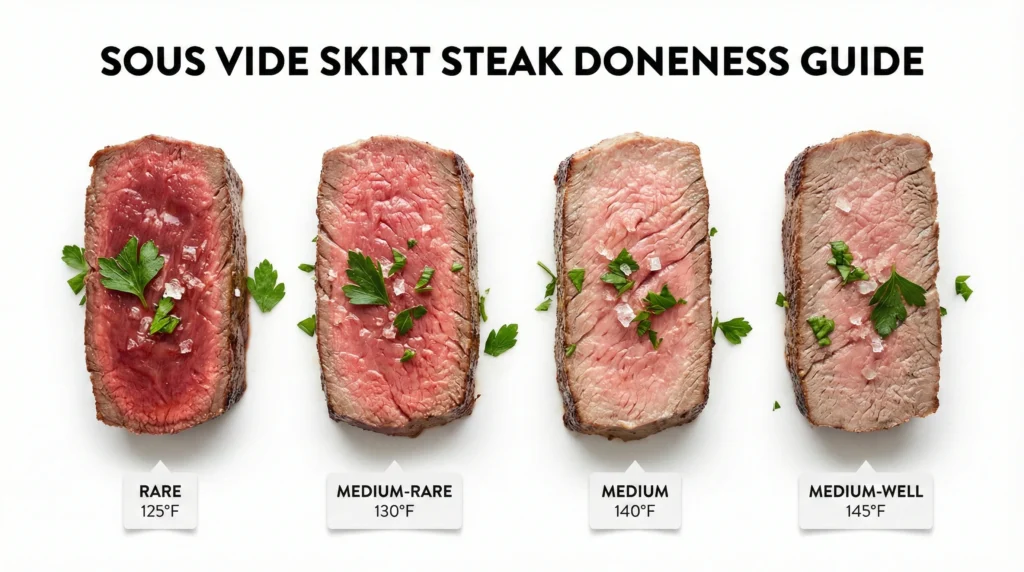
Below is my tested temperature and time chart for skirt steak cooked sous vide, based on repeated testing with both inside and outside skirt cuts at ½–1 inch thickness. These windows balance collagen breakdown and muscle texture so you get predictable, juicy results in the water bath.
| Doneness Level | Temperature (°F) | Time Range (Hours) | Texture Result |
|---|---|---|---|
| Rare | 125°F | 1–2 | Very tender with a red center |
| Medium-Rare (OPTIMAL) | 130–132°F | 2–4 | Best balance of tenderness and beefy flavor for skirt |
| Medium | 135–140°F | 2–4 | Firmer, still juicy |
| Medium-Well | 145°F | 2–3 | Meatier bite, little pink |
⚠️ Warning: For skirt steak specifically, do NOT exceed 4 hours at the temperatures above unless you deliberately choose the long-cook method below. Skirt is thin and fibrous; beyond ~4 hours the muscle fibers can break down excessively and the texture becomes soft or mushy rather than pleasantly tender.
Alternative Long-Cook Option
If you want super-soft, shreddable slices—similar to what you’d get with a sous vide brisket but much faster—try 132°F for 8–10 hours. This gives extra collagen conversion but changes the mouthfeel: expect a much softer, almost fall-apart texture rather than the snappy bite of a 2–4 hour cook.
How to Choose Your Cook
- Pick the 2–4 hour medium-rare window (130–132°F) for steak-like slices that hold together and slice well for tacos, fajitas, or chimichurri plates.
- Choose the 8–10 hour 132°F option only when you want very tender, pull-apart meat for bowls or shredded preparations.
Quick tip: If cooking from frozen, add about 1 extra hour to the selected time. And make sure your bags are fully submerged in the water bath so the center reaches the target temperature evenly.
Marinade Recipes
Two marinades I reach for again and again for sous vide skirt steak—one Latin-forward for churrasco-style flavor, and one Korean-inspired bulgogi that brings sweet-savory umami. Both are written for roughly 1–2 lbs of skirt steak; scale up as needed.
Latin Churrasco Marinade
- ¼ cup lime juice
- ¼ cup orange juice
- 4 cloves garlic, minced
- ½ onion, diced (finely)
- 1 tbsp Mexican oregano
- ¼ cup olive oil
- Salt and freshly ground black pepper to taste
Instructions: Combine ingredients in a bowl, taste for seasoning, then place steak and marinade in a vacuum bag or high-quality freezer bag. Massage to coat, remove air (vacuum seal or water displacement), and refrigerate. Marinate 2–4 hours only—do NOT exceed 4 hours with citrus-based marinades.
Asian Bulgogi-Style Marinade
- ¼ cup soy sauce
- 2 tbsp sesame oil
- 1 tbsp brown sugar
- 3 cloves garlic, minced
- 1 tbsp fresh ginger, grated
- 1 Asian pear, grated (acts as a tenderizer)
Instructions: Whisk ingredients together until sugar dissolves. Add steak to the bag, coat evenly, remove air, and refrigerate. Marinate 2–12 hours—the pear helps tenderize, so this longer window is fine. Pat the steak dry before sous vide if you prefer less surface liquid.
⚠️ Warning: Citrus marinades should not exceed 2–4 hours to prevent a mushy texture—the acid can prematurely break down proteins in thin cuts like skirt.
Optional Dry Rub
If you prefer to avoid extra liquid in the bag, try this quick dry rub:
- 1 tbsp kosher salt
- 1 tsp freshly ground black pepper
- 1 tsp smoked paprika
Rub evenly over the steak and vacuum-seal (or use water displacement). This builds a clean, concentrated beef flavor that sears beautifully—similar to the approach I use for sous vide ribeye.
How to Prep and Bag Skirt Steak for Sous Vide
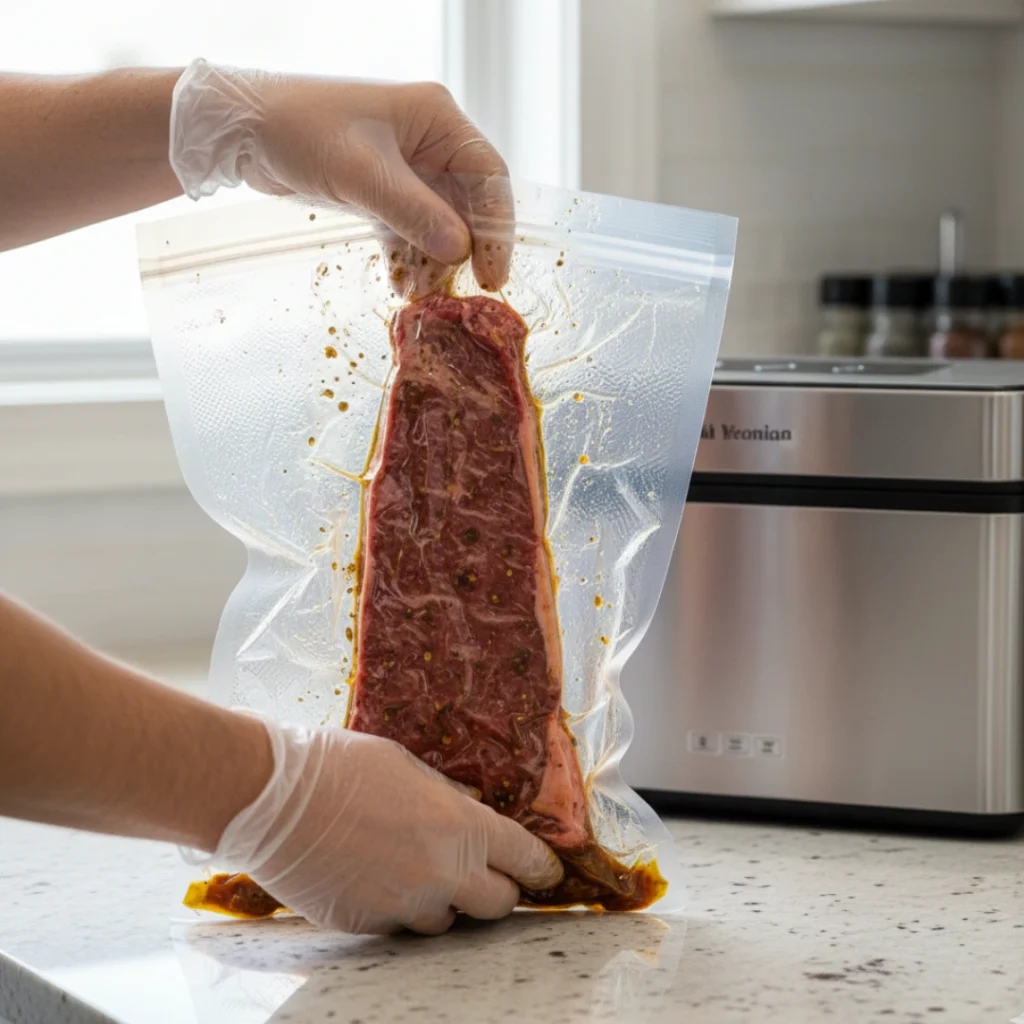
The magic of a perfect meal starts with thoughtful prep. Spend a little time before the cooker goes on and you’ll be rewarded with evenly cooked, deeply flavored skirt steak every time.
Preparing the Steak
- Trim: Lay the skirt steak flat and remove any large pieces of silver skin or thick connective tissue. I leave a little fat for flavor but trim anything that would be tough to chew.
- Portioning: Cut long strips into 6-inch pieces so they fit flat in your bags—for a 1.5–2 lb skirt, I usually make 3–4 portions. If you bought a 3–4 lb slab, portion into 6–10 oz pieces so each bag cooks evenly.
- Season: Generously season all sides with kosher salt and freshly ground black pepper. For extra flavor, apply a light rub or one of the marinades above.
Vacuum Sealing and Marinade Tips
- Place the steak and any marinade into a sous vide bag or a high-quality freezer bag. Massage the marinade so it coats the meat evenly.
- Remove air: Use a vacuum sealer if you have one—it gives the best contact between marinade and meat. If you don’t, use the water displacement method: partially seal the bag, slowly lower it into the water bath to push air out, then finish sealing.
- Bag placement: Lay each piece in a single layer with space between pieces—overlapping causes uneven cooking. Make sure each bag lies flat in the water.
- If the bag floats: Weigh it down. I keep binder clips handy and slide a sturdy spoon inside the clip as a little weight, or use sous vide magnets or bag clips designed for immersion. These simple tricks keep the bag fully submerged.
Marinate timing: For citrus-based marinades, marinate 2–4 hours max. For bulgogi-style marinades, 2–12 hours is fine thanks to the pear tenderizer.
Cooking Notes and Checking Doneness
Place the sealed bags in the water bath and set your target temperature and time according to the chart above. For typical skirt steak (½–1″ thick) follow the 2–4 hour windows for medium-rare at 130–132°F. Do NOT exceed 4 hours at those temps unless you intentionally choose the 132°F for 8–10 hours method—that yields a very soft, shreddable texture.
When the cook is done, remove a bag, open it, and use an instant-read thermometer to spot-check the center of the thickest piece—this is the best way to confirm doneness. Pat the steak dry with paper towels before searing; moisture is the enemy of a good crust.
Final pro tip: If you’re cooking from frozen, add about 1 extra hour to your selected cook time so the center reaches temperature. And always make sure bags are fully submerged and the circulator remains unobstructed for steady water circulation.
How to Sear Sous Vide Skirt Steak for a Perfect Crust
The last step turns perfectly cooked sous vide skirt steak into something unforgettable—a deeply browned crust that contrasts the tender interior. Get this right and you’ll taste the difference.
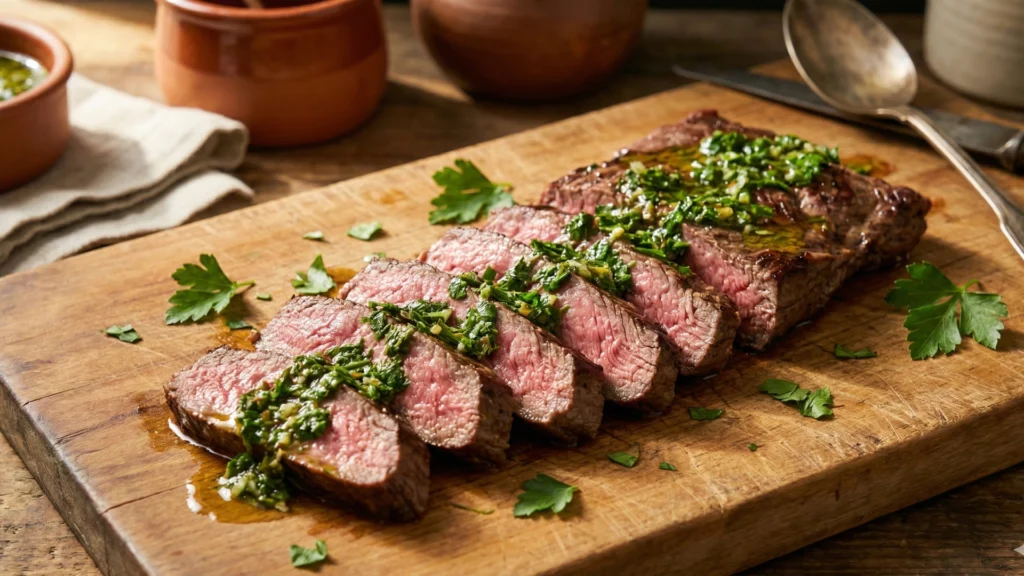
After you remove the meat from the bag, pat it very dry with paper towels—moisture is the enemy of a good sear because it creates steam instead of a crust.
Choosing Between Pan Searing and Grilling
Both a hot cast iron pan and a hot grill work great. I prefer a cast iron skillet for indoor cooks because it holds heat so well; the grill adds beautiful smoky flavor if you have access to one. The key is getting the surface smoking hot (500°F+ surface temperature) so you form a crust quickly without overcooking the interior.
Achieving the Perfect Crust
Use a high smoke-point oil—avocado or grapeseed are my go-tos—and preheat your pan until it’s nearly smoking. Add a small amount of oil, then lay the steak down and leave it alone to develop color.
For skirt steak strips, aim for about 1–2 minutes per side over a smoking-hot surface to create a deep brown crust. This timing works well for pieces that were cooked to 130–132°F in the water bath and will avoid pulling the interior above your target. You don’t need to flip every few seconds; give the crust time to form.
Once both sides have a beautiful crust formed, transfer the steak to a cutting board and let it rest for 10–15 minutes before slicing—this rest time lets the juices redistribute and makes for cleaner slices. Finally, slice thinly against the grain to shorten muscle fibers and maximize tenderness.
Troubleshooting Common Problems
Even with sous vide’s precision, small issues can pop up. Here’s how to fix them:
- Bag floating: If a bag floats, it won’t heat evenly. Weigh it down with a binder clip + spoon or use sous vide magnets/bag clips so the bag stays fully submerged.
- Air pockets in the bag: Air causes uneven cooking. Use a vacuum sealer or the water-displacement method to remove air—make sure the seal is tight before starting the cook.
- Uneven cooking: Ensure each steak lies flat in a single layer with no overlapping. If pieces overlap, reposition them or cook in separate bags to guarantee even heat circulation.
- Mushy texture: If the steak is soft or mushy, it was likely cooked too long at the recommended temp—do NOT exceed 4 hours for the standard 130–132°F window unless you intentionally use the 8–10 hour low-and-slow option (132°F) for a different, shreddable result.
- Crust won’t form: Pat the meat very dry with paper towels, preheat the pan until smoking hot (500°F+ surface), and use a high smoke-point oil (avocado or grapeseed). Don’t overcrowd the pan.
- Checking doneness: Use an instant-read thermometer in the thickest part of the meat to confirm internal temperature; this is the most reliable check after the water bath.
Quick fixes:
- Bag floats → weigh it down
- Crust doesn’t form → dry more and raise pan temp
- Interior feels off → verify with an instant-read thermometer and adjust your next cook’s time by small increments (15–30 minutes)
Serving Ideas And Flavor Variations
One of my favorite things about sous vide skirt steak is how easily it adapts to so many plates—from classic churrasco to quick weeknight tacos. After the careful cook and high-heat sear, you’ve got a versatile, flavor-packed protein that plays nicely with bright sauces, warm sides, and bold seasonings.
Classic Chimichurri & Simple Sides
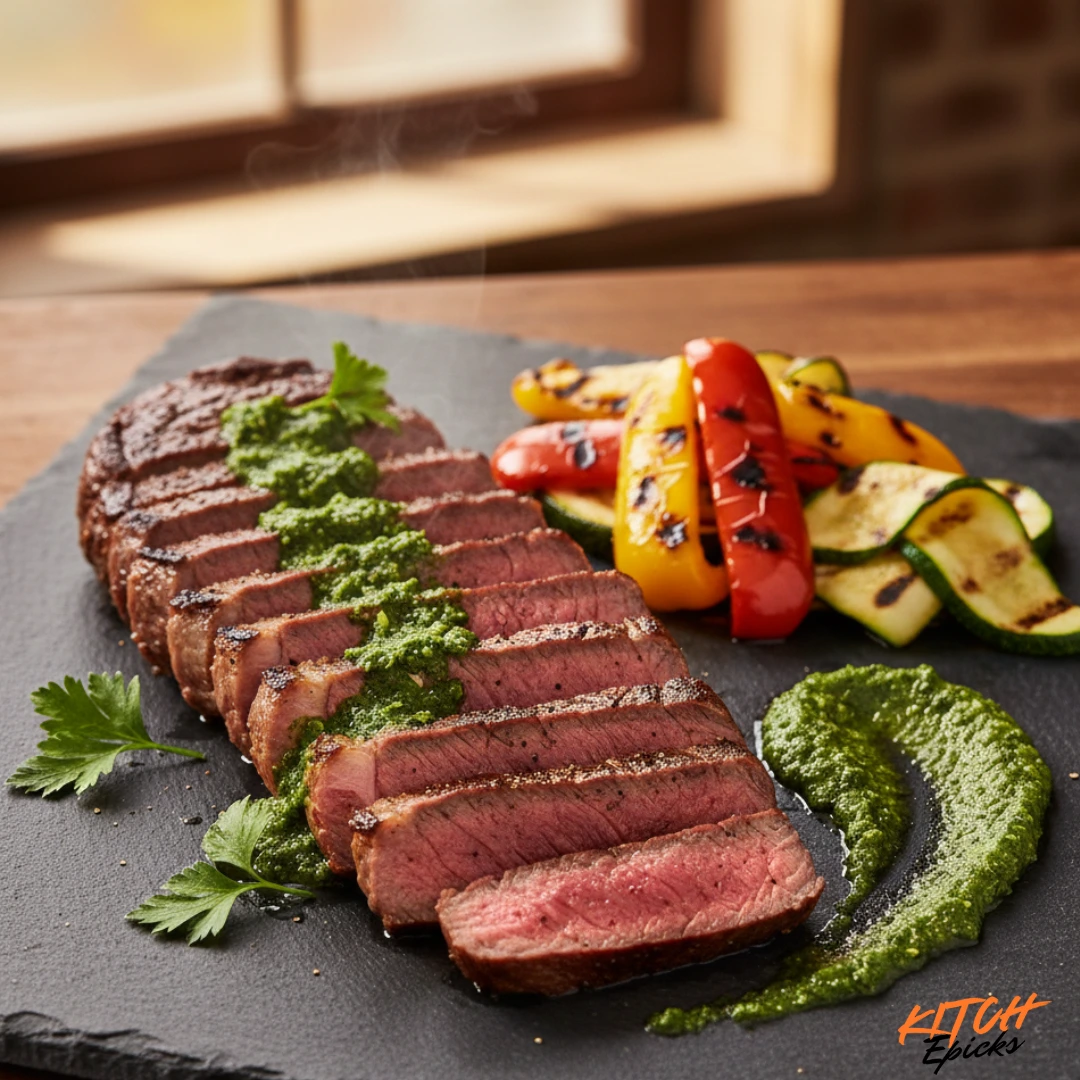
Serve sliced skirt steak with a spoonful of vibrant chimichurri for a true churrasco vibe. The fresh herb and acid cut through the beefy richness—pair with grilled vegetables or roasted potatoes for an easy, balanced side.
Skirt Steak Fajitas
Quick build: warm tortillas, sauté sliced bell peppers and onions in the same high-heat skillet for 3–5 minutes until softened, then pile on thin slices of steak. Finish with a squeeze of lime and a sprinkle of cilantro. These fajitas are fast, flavorful, and perfect for feeding a crowd.
Korean-Style Lettuce Wraps
Slice the steak thin and toss with a little gochujang-mayo or reserved bulgogi-style marinade. Serve in crisp lettuce leaves with pickled carrots, sliced cucumber, and steamed sticky rice on the side—assemble as hands-on wraps.
Steak Tacos with Pico de Gallo
Warm corn tortillas, top with thin slices of steak, fresh pico de gallo, a drizzle of lime crema, and a few cilantro leaves. The contrast of warm meat and bright pico really showcases that sous vide flavor.
Grain Bowls (Purple Rice or Quinoa)
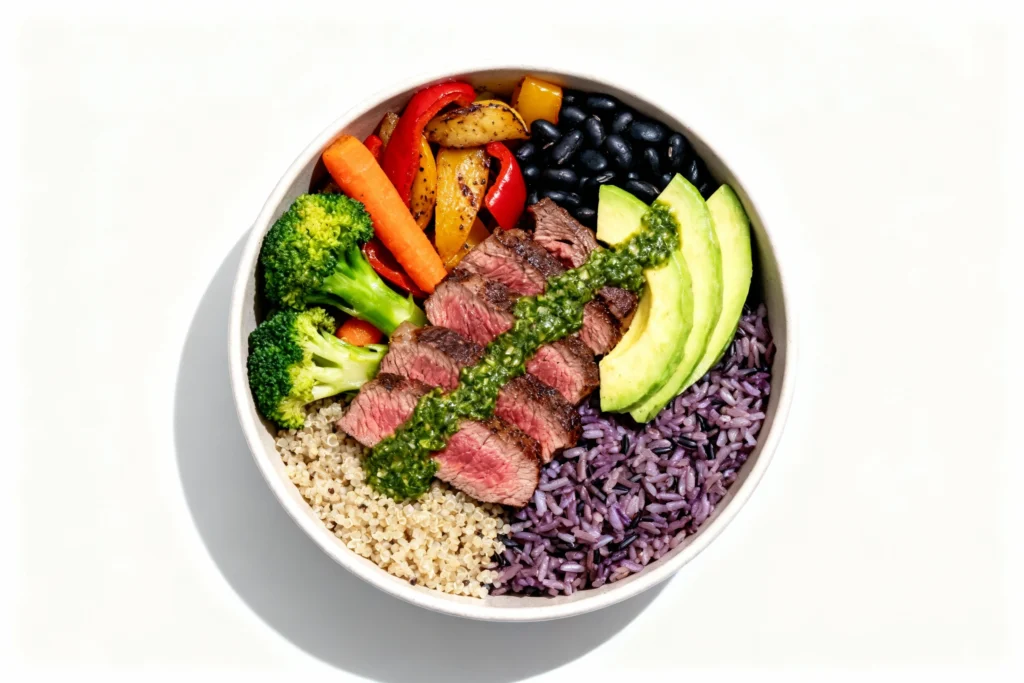
Build a grain bowl with purple rice or quinoa, roasted vegetables, a scoop of black beans or edamame, and sliced skirt steak on top. Drizzle with chimichurri or sesame dressing for a hearty, balanced meal that’s great for meal prep.
Sliced Over Caesar Salad
Want something lighter and elegant? Lay warm, thinly sliced steak over a classic Caesar salad—the savory seared crust and tender center pair beautifully with tangy dressing and crunchy croutons.
Small serving tips: Slice thinly across the grain, keep sauces bright to cut the richness, and warm tortillas or bowls before assembling.
From Grill to Leftovers: Make the Most of Your Skirt Steak
Sous vide skirt steak is perfect for meal prep—it holds up beautifully in the fridge and reheats gently without overcooking.
Storing Leftovers
- Slice the cooked, cooled steak thinly and store in an airtight container in the refrigerator for up to 4 days.
- For longer storage, freeze sliced steak in vacuum-sealed bags or freezer bags for up to 3 months.
Reheating Tips
- Stovetop: Warm slices in a skillet over medium heat with a splash of broth or oil for 1–2 minutes—just until heated through.
- Sous vide reheat: Place sealed bags in a 130°F water bath for 30–45 minutes to gently bring back to serving temperature without overcooking.
Leftover Recipe Ideas
- Steak Quesadillas: Layer sliced steak, cheese, and peppers between tortillas; grill until crispy.
- Grain Bowls: Top cooked quinoa or rice with leftover steak, fresh veggies, and a drizzle of chimichurri or sesame dressing.
- Steak Salads: Toss mixed greens with sliced steak, cherry tomatoes, avocado, and a tangy vinaigrette.
- Breakfast Tacos: Scramble eggs with leftover steak slices, salsa, and cheese for a protein-packed morning meal.
Nutrition Information
Here’s a quick nutrition snapshot for cooked skirt steak (per 4 oz / ~113 g serving). Values are approximate—sodium will vary significantly depending on the marinade and how much salt you add.
| Nutrient | Per 4 oz Serving |
|---|---|
| Calories | ~200 |
| Protein | 25 g |
| Fat | 10 g |
| Saturated Fat | 4 g |
| Sodium | Varies by marinade / salt used |
| Carbohydrates | 0 g |
Note: These numbers are estimates for plain cooked skirt steak; adding marinades, sauces, or finishing salts will change the calories, sodium, and carbs. For exact tracking, enter your specific ingredients into a nutrition calculator.
Serving Suggestions
- Top with fresh chimichurri sauce
- Build into fajitas with sautéed peppers and onions
- Serve in tacos with pico de gallo and lime crema
- Add to grain bowls with quinoa or purple rice
- Layer in Korean lettuce wraps with gochujang-mayo
Conclusion
What I love about sous vide is how it blends scientific precision with straightforward cooking: the water bath takes the guesswork out of doneness, and you get consistent, restaurant-quality results every time. Whether you set the circulator for a short 1–2 hour rare or the optimal 2–4 hour medium-rare window, the process is forgiving and reliable.
One of the best perks is timing flexibility—you can prep in advance and finish with a hot sear when you’re ready to eat. That said, make sure to follow the recommended time windows for skirt steak to preserve texture and prevent over-softening.
Use this method to transform affordable cuts into extraordinary meals, and don’t be afraid to experiment with marinades and serving styles from chimichurri to tacos and grain bowls. Once you master skirt, try the same precision approach with sous vide brisket for longer, melt-in-your-mouth results, or explore other steaks like sirloin and flank.
Sous Vide Skirt Steak
Ingredients
Equipment
Method
- Trim and portion the skirt steak: Lay the skirt steak flat on a cutting board. Remove any large pieces of silver skin or tough connective tissue with a sharp knife. Cut the steak into 6-inch portions (about 6-10 oz each) so they fit flat in your bags. Pat dry with paper towels.
- Season or marinate: If using a marinade, combine all marinade ingredients in a bowl and whisk until well combined. If using the dry rub, mix the salt, pepper, and smoked paprika in a small bowl. Generously season all sides of each steak portion with salt and black pepper, or apply the dry rub evenly.
- Bag and marinate: Place the steak portions into vacuum-seal bags or heavy-duty freezer bags. If using marinade, pour it over the steak and massage the bag to coat the meat evenly. Remove air using a vacuum sealer or the water displacement method: slowly lower the partially sealed bag into water, allowing water pressure to push out air, then seal completely. Refrigerate for 2–4 hours (churrasco marinade) or 2–12 hours (bulgogi marinade). WARNING: Do not exceed 4 hours with citrus-based marinades to prevent mushy texture.
- Preheat water bath: Fill a large pot or container with water (at least 8 quarts). Attach your immersion circulator and set the temperature to 130–132°F (54–56°C) for medium-rare. Allow the water to reach target temperature before adding bags (usually 15–20 minutes).
- Cook sous vide: Once the water reaches 130–132°F, carefully lower the sealed bags into the water bath. Make sure bags are fully submerged and lying flat with no overlapping. If bags float, weigh them down with a binder clip and spoon, or use sous vide weights. Cook for 2–4 hours. Do NOT exceed 4 hours at this temperature unless using the alternative long-cook method (132°F for 8–10 hours for shreddable texture).
- Check doneness: After the cook time, remove one bag and open it. Use an instant-read thermometer to spot-check the thickest part of the steak—it should read 130–132°F. Remove all bags from the water bath and open them. Transfer the steaks to a plate lined with paper towels and pat very dry on all sides. Moisture prevents proper crust formation.
- Preheat your searing surface: Heat a cast iron skillet over high heat until it's smoking hot (surface temperature 500°F+), about 5–7 minutes. Alternatively, preheat your grill to high heat. Add 1–2 tablespoons of high smoke-point oil (avocado or grapeseed) to the skillet and swirl to coat.
- Sear the steak: Carefully lay the dried steak portions in the hot skillet (work in batches if needed to avoid overcrowding). Sear for 1–2 minutes per side without moving the steak, until a deep brown, crusty exterior forms. Use tongs to flip once. The interior temperature should not rise more than 2–3 degrees during this quick sear.
- Rest and slice: Transfer the seared steaks to a clean cutting board and let rest for 10–15 minutes. This allows juices to redistribute throughout the meat. Using a sharp chef's knife, slice the steak thinly (about 1/4-inch thick) against the grain—look for the direction of the muscle fibers and cut perpendicular to them. This shortens the fibers and maximizes tenderness.
- Serve immediately: Arrange sliced steak on plates or build into your chosen serving style (tacos, fajitas, grain bowls, or with chimichurri sauce). Enjoy while hot for the best texture and flavor.
Notes
– Rare: 125°F for 1–2 hours (very red center)
– Medium-Rare (OPTIMAL): 130–132°F for 2–4 hours (best balance)
– Medium: 135–140°F for 2–4 hours (firmer, still juicy)
– Medium-Well: 145°F for 2–3 hours (minimal pink)
– Long-cook shreddable: 132°F for 8–10 hours (very soft texture) Marinade Tips:
– Citrus-based marinades (churrasco): Maximum 2–4 hours to prevent mushy texture
– Bulgogi marinade: Safe for 2–12 hours due to pear’s gentle tenderizing action
– Can marinate in the sealed bag before cooking for deeper flavor penetration Make-Ahead & Storage:
– After sous vide, you can quick-chill bags in ice water and refrigerate for up to 3 days before searing
– Cooked and sliced steak stores in the fridge for 4 days in an airtight container
– Freeze sliced cooked steak for up to 3 months Serving Suggestions:
– Classic: Top with fresh chimichurri sauce and serve with roasted vegetables
– Tacos: Warm corn tortillas, add sliced steak, pico de gallo, lime crema, cilantro
– Fajitas: Sauté peppers and onions, pile into flour tortillas with steak
– Grain Bowls: Layer over purple rice or quinoa with roasted veggies and chimichurri
– Lettuce Wraps: Korean-style with gochujang-mayo, pickled carrots, cucumber Troubleshooting:
– Bag floats: Weigh down with clips or sous vide magnets
– No crust forms: Pat steak completely dry and ensure pan is smoking hot (500°F+)
– Mushy texture: Cooked too long; stick to 2–4 hour window for standard texture
– Cooking from frozen: Add 1 extra hour to your selected cook time
FAQs
What is the ideal temperature for a juicy result?
I find 130–132°F (54–56°C) gives a perfect medium-rare for sous vide skirt steak—tender, beefy, and easy to slice. For rare, drop to 125°F; for a firmer medium, aim for 135–140°F.
How long should I cook it to make it tender?
For skirt steak, use the 2–4 hour window at 130–132°F for optimal medium-rare slices. Do NOT exceed 4 hours at those temperatures unless you intentionally use the long-cook option (132°F for 8–10 hours), which produces a much softer, shreddable texture.
Can I marinate the beef in the bag?
Yes—vacuum-sealing in the marinade is ideal for flavor penetration. Remember: citrus-based marinades should be limited to 2–4 hours to avoid a mushy texture; bulgogi-style marinades (with grated Asian pear) can go longer.
What’s the best way to get a good crust after cooking?
Pat the meat very dry with paper towels, preheat a cast iron skillet or grill until smoking hot (surface 500°F+), add a high smoke-point oil like avocado or grapeseed, and sear for about 1–2 minutes per side to form a deep brown crust.
Is special equipment required?
You’ll need an immersion circulator (precision cooker) and either a vacuum sealer or good freezer bags with the water-displacement method. A heavy skillet or a hot grill is necessary for finishing.
Should I let the meat rest after searing?
Yes—rest the skirt steak for 10–15 minutes after searing. This allows juices to redistribute and makes slicing against the grain much cleaner.
Can I cook skirt steak from frozen?
Yes—add about 1 extra hour to your chosen cook time when starting from frozen and ensure the bag is fully submerged so the center reaches the target temperature.
Our Experience & Expertise: This recipe was developed and tested by the team at KitchePicks after multiple rounds of testing with both inside and outside skirt cuts, adjusting for thickness, marinade timing, and sear technique to deliver consistent, restaurant-quality results at home.
Related Recipes:
Sous Vide Ribeye Steak: The Ultimate Step-by-Step Guide
Beef Sirloin Steak Sous Vide: Perfect Results Every Time
Cooking Sous Vide Flank Steak: Expert Tips and Tricks
Sous Vide Brisket: The Complete Guide to Perfectly Tender Beef Every Time