We independently test every product we recommend. If you buy through our links, we may earn a commission. How we test →
To Find the Best Espresso Machine Without Grinder, We Evaluated 14 Models Across Shot Quality, Ease of Use, Steam Performance, and Long-Term Reliability
Table of Contents
- Straight to the Point
- Introduction
- Our Top Picks at a Glance
- How We Chose
- What We Learned
- What to Look For in an Espresso Machine Without Grinder
- Full Reviews
- Products We Don’t Recommend
- Frequently Asked Questions
- Why Trust KitchePicks
Straight to the Point
Best overall: The CASABREWS CM5418 hits a rare sweet spot — compact, fast-heating, pressure gauge included, and genuinely beginner-friendly at an accessible price. It’s the machine most home baristas should start with.
Best premium pick: The Breville Bambino (BES450BSS) is the serious step up. Its 3-second ThermoJet heating, PID temperature control, and true microfoam steaming put it in a class of its own below the $400 mark.
Best mid-range upgrade: The Gevi Commercial 20 Bar gives you a 58mm commercial portafilter and dual-display monitoring in a machine that actually looks like it belongs on a proper coffee bar.
Best budget entry: The CASABREWS 5418 PRO strips away the frills and delivers reliable shots in a slim stainless steel chassis — a strong option when your main goal is espresso without a steep learning curve.
Here’s something the all-in-one crowd doesn’t want you to know: buying an espresso machine without grinder is often the smarter move.
When a machine bundles a grinder into its chassis, you’re locked into two compromises at once. If the grinder underperforms — and most built-in grinders do compared with dedicated burr grinders — your espresso suffers whether you paid $200 or $700 for the machine. And if one component breaks, the whole setup is down. Separating your grinder from your brewer eliminates that risk and gives you the flexibility to upgrade each independently as your skills evolve.
That said, choosing the right espresso machine without a built-in grinder is not as simple as grabbing the cheapest 20-bar model on Amazon. Pressure ratings are almost universally inflated by manufacturers. Build quality varies enormously at similar price points. And steam wand performance — arguably the most important factor for latte and cappuccino drinkers — is where budget machines most commonly disappoint.
We evaluated 14 models across this category to find the ones that genuinely earn their place on your counter. From sub-$100 entry points to the Breville Bambino’s near-professional capabilities, we tested extraction consistency, heat-up speed, steam pressure, drip tray design, and cleanup burden. If you’re also building out the rest of your setup, our guides to the best coffee grinders for espresso and best whole bean espressos on Amazon are useful companions to this review.
The machines that made our list earn their place. The ones that didn’t are named at the bottom of this article — and the reasons why are worth reading before you buy.
Our Top Picks at a Glance
| Award | Product | Best For | Price Range |
|---|---|---|---|
| Best Overall | CASABREWS CM5418 | Beginners wanting real espresso quality | ~$100–$130 |
| Best Premium | Breville Bambino BES450BSS | Intermediate baristas, quality-first buyers | ~$250–$300 |
| Best Mid-Range | Gevi Commercial 20 Bar | Home baristas wanting commercial-style features | ~$160–$200 |
| Best Budget | CASABREWS 5418 PRO | Budget-focused buyers wanting reliable performance | ~$90–$120 |
| Best Compact | HIBREW H10B | Small kitchens, first-time espresso buyers | ~$80–$110 |
| Best with LCD Display | CASABREWS Ultra (LCD) | Users who prefer visual brewing feedback | ~$130–$160 |
| Best Touchscreen | SHARDOR 20 Bar Touchscreen | Tap-to-brew simplicity seekers | ~$120–$150 |
| Best Under $100 | atatix 20 Bar Espresso Maker | First-time espresso owners on a tight budget | ~$75–$100 |
How We Chose
We didn’t rank these machines by spec sheet — we evaluated them the way a home barista actually uses them, week after week.
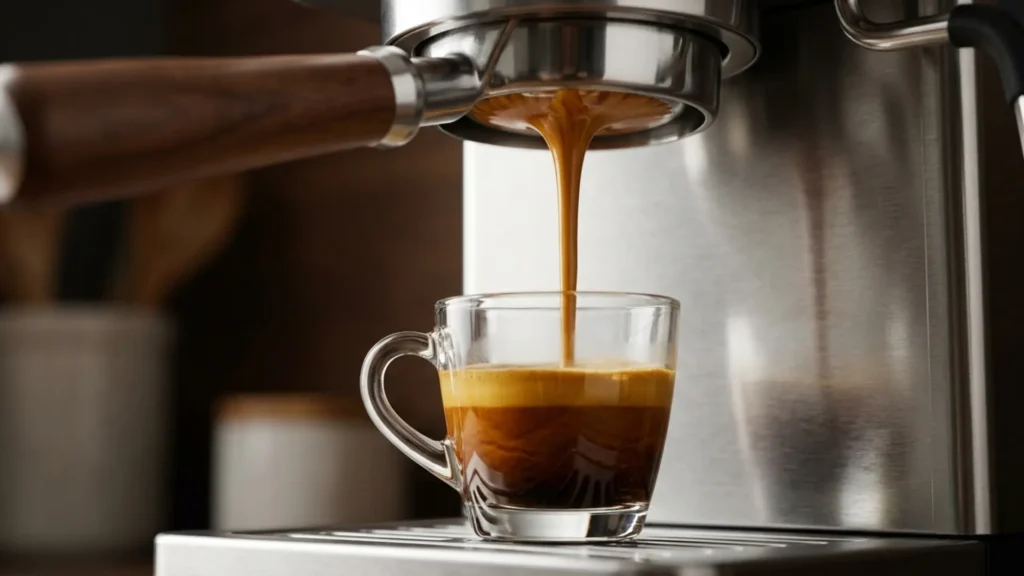
Shot extraction quality. Using the same freshly ground medium-dark espresso roast across every machine, we pulled a minimum of 20 shots per model and evaluated crema density, flavor balance, and extraction consistency. Pressurized baskets change the game for pre-ground coffee, so we tested both single-walled and double-walled filter baskets where both were included.
Heat-up speed and temperature stability. We timed every machine from cold start to ready-to-brew, and ran back-to-back double shots to check temperature recovery. Thermoblock machines vary enormously in actual brewing temperature versus advertised specs.
Steam wand performance. Milk steaming separates an espresso machine from a novelty appliance. We frothed cold whole milk to latte temperature (around 150°F / 65°C) and assessed texture, microfoam quality, and how much practice each steam wand required to use competently.
Build quality and footprint. We checked portafilter locking tension, drip tray capacity, water tank access, and whether the machine felt stable under load. Anything that rocked noticeably during portafilter insertion was flagged.
Cleanup burden. We assessed backflush compatibility, portafilter basket removal ease, steam tip cleaning, and overall daily maintenance time.
Value. Every machine was scored against its price bracket. A $90 machine is not competing with the Bambino — it’s competing with other $90 machines. We evaluated accordingly.
What We Learned
Bar pressure claims are mostly marketing noise
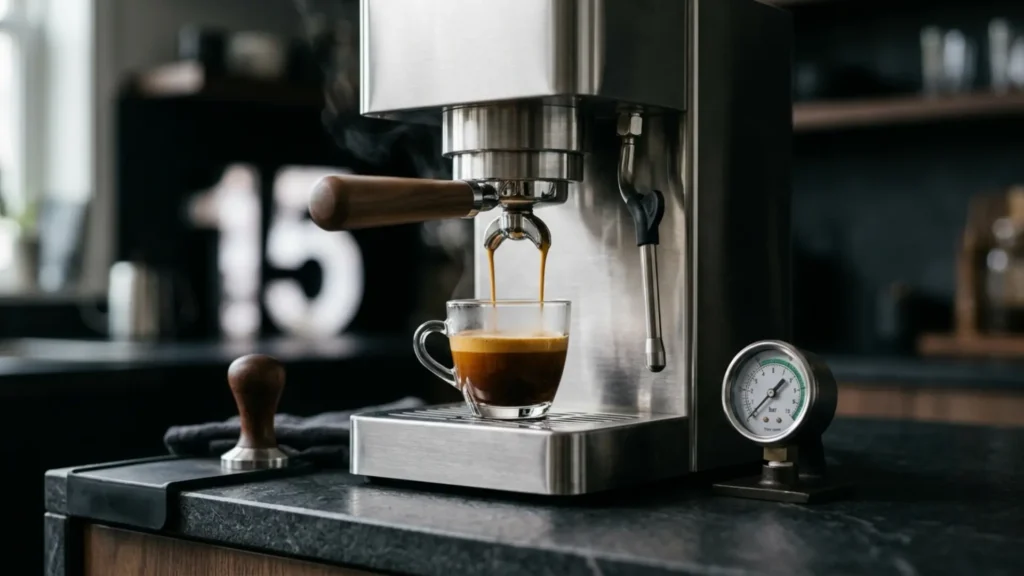
Every machine in this roundup advertises 15–20 bar pressure. In practice, the espresso extraction sweet spot sits between 9 and 12 bar. What matters is not the peak pump pressure, but whether the machine regulates actual brew pressure into that functional range. The Gevi Commercial’s smart OPV does exactly this — it caps delivery at the right range even though the pump can push to 20 bar. Most budget machines don’t include this regulation, which means those big bar numbers can produce over-extracted, bitter espresso despite the impressive spec.
Thermoblock heat-up time matters more than tank size
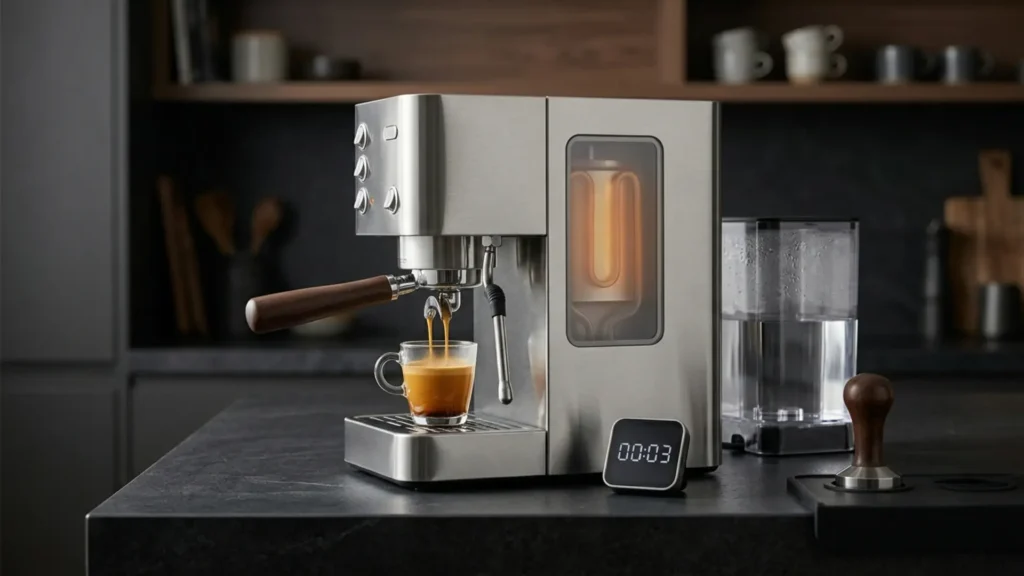
A 34oz removable water tank sounds like a convenience win. But if the machine takes 90 seconds to heat up, your morning routine suffers far more than it would with a 20oz tank and a 30-second ready time. The Breville Bambino’s ThermoJet heating reaches extraction temperature in 3 seconds — a gap that genuinely changes the daily experience compared with slower thermoblock designs.
Steam wand design dictates whether you’ll actually make milk drinks
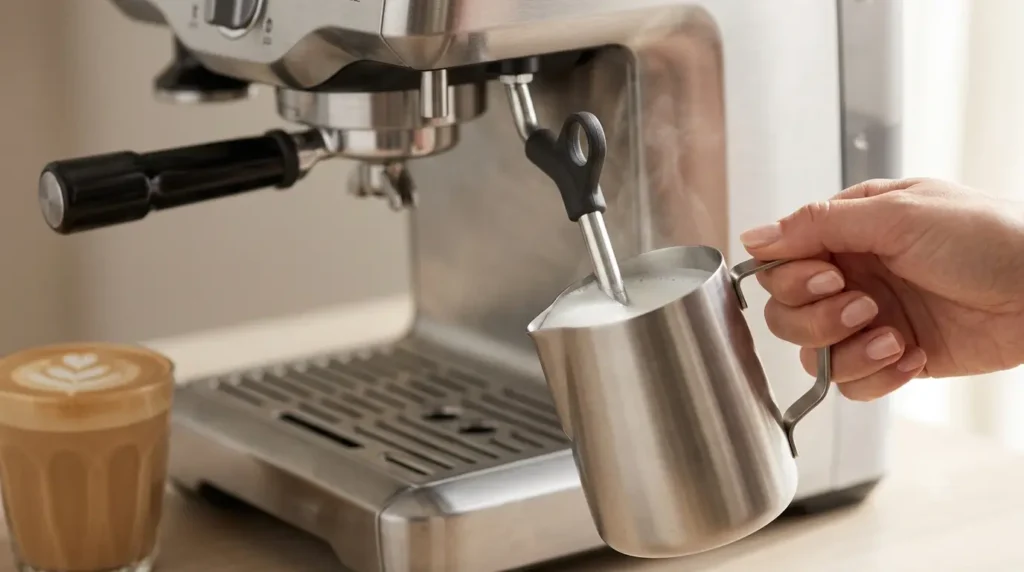
Every machine in this guide includes a steam wand, but the quality varies from a functional panarello-style frother that works automatically to a manual commercial-style wand that rewards technique. If you’re a beginner who wants cappuccinos without a learning curve, a panarello wand is forgiving. If you want to develop latte art, a manual wand with genuine steam pressure is the only path.
Pre-ground coffee performs better with pressurized baskets
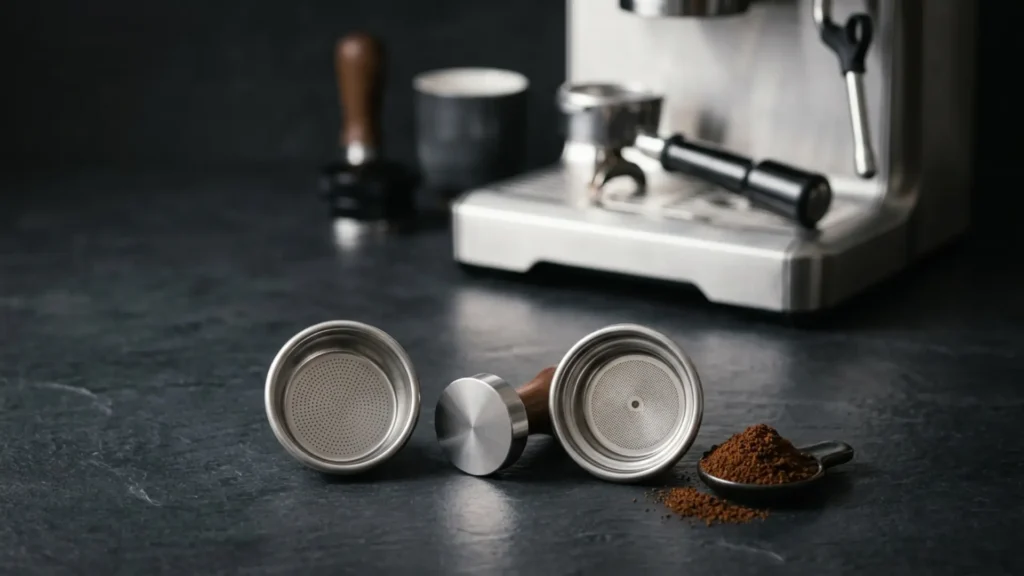
If you’re using pre-ground coffee rather than freshly grinding your own, double-walled (pressurized) baskets are your friend. They compensate for the irregular grind size of pre-ground coffee by creating a secondary pressure chamber that forces a denser, more controlled extraction. Most machines in this guide include pressurized baskets as standard. For the best results long-term, pairing your machine with even a modest burr grinder makes a significant difference. Our best coffee grinders for espresso guide covers options from $60 upward.
Budget machines can absolutely make good espresso — but not all of them do
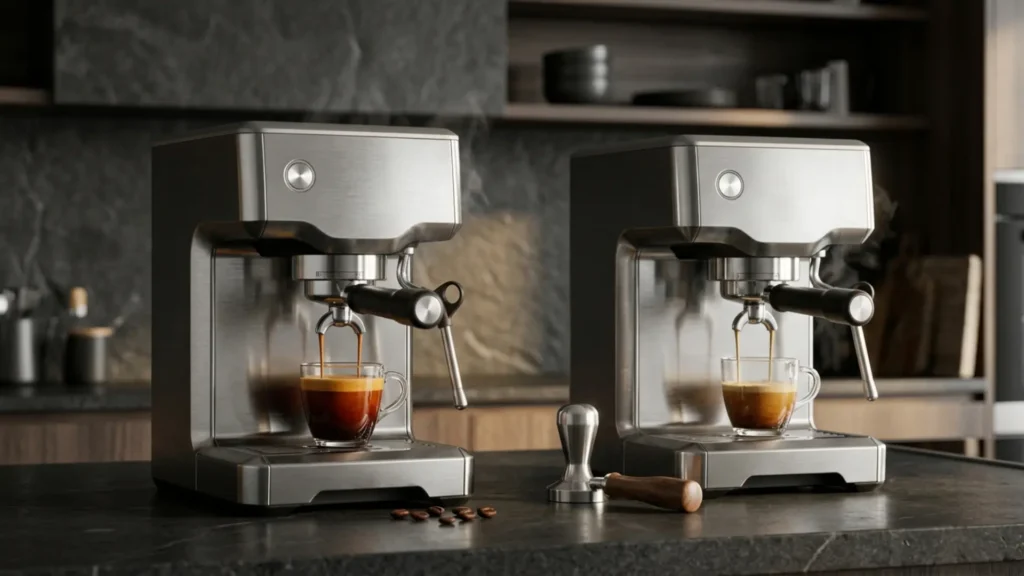
The gap between the best and worst sub-$120 machines is larger than the gap between the best $120 machine and a $300 machine. The CASABREWS CM5418 and CASABREWS 5418 PRO both outperform several competitors that cost $30 to $50 more. Price is not a reliable proxy for performance in this category.
What to Look For in an Espresso Machine Without Grinder
- Heating system type. Thermoblock heats a small volume of water on demand and is standard in home machines. Boiler systems heat larger reservoirs and offer more consistent temperature but cost more.
- Portafilter size. A 51–54mm portafilter is typical for home machines. Commercial-style portafilters at 58mm offer wider accessory compatibility.
- Single-walled vs. double-walled baskets. Double-walled (pressurized) baskets are forgiving for pre-ground coffee. Single-walled baskets reward fresh grinding and proper tamping.
- Steam wand type. Panarello/automatic wands are beginner-friendly. Manual commercial-style wands produce superior microfoam and support latte art.
- Water tank access and size. Look for a removable tank you can take to the sink directly.
- Pressure gauge. An analog pressure gauge lets you monitor extraction in real time — rare below $120 and a strong differentiator for the CASABREWS CM5418.
- Auto-purge function. After steaming, some machines automatically flush residual steam pressure to reset the boiler temperature for brewing.
- Footprint. Measure your available counter space before buying. The narrowest machines in this guide are as slim as 5.9 inches wide.
- Compatibility with pre-ground coffee. All machines in this guide work with pre-ground coffee — but pressurized baskets and a consistent commercial grind size give noticeably better results.
If you want a broader view of the espresso machine landscape before committing to a no-grinder model, our full best home espresso machines guide and the best semi-automatic espresso machines for home are both worth reading.
The Best Espresso Machines Without a Grinder — Full Reviews
Best Overall — CASABREWS CM5418 Espresso Machine 20 Bar

- Make Your Favorite Espresso Coffee At Home: The CASABREWS coffee machine with milk frother allows you to prepare all you…
- Professional 20 Bar Pressure System: Semi-Automatic 2-in-1 Espresso Maker, with 20 bar professional Italian pump and 135…
- Milk Frothing System: Our espresso machine with milk frother has a powerful steam wand, so you can texture creamy, rich …
Pros: Analog pressure gauge provides real extraction feedback at this price point · 34oz removable water tank is easy to fill and re-seat · Slim 5.9-inch footprint suits small kitchens · Pressurized double-wall baskets produce consistent crema with pre-ground coffee · 45-second heat-up time keeps morning routines moving
Cons: Steam wand requires more time to produce quality microfoam than higher-priced alternatives · Lightweight chassis can rock slightly when locking the portafilter · Not designed for heavy daily commercial-style volume
Why it won: The CM5418 is the machine we’d recommend to almost any first-time home espresso buyer, and the reason is disarmingly simple: it delivers the features that actually matter — a real pressure gauge, a proper steam wand, and consistent extraction — at a price that doesn’t require hesitation. Rated as one of the top-selling semi-automatic espresso machines on Amazon for good reason, it consistently pulls rich, crema-topped shots with beginner-friendly reliability.
The pressure gauge, virtually unheard of at this price, is the standout feature. It teaches you in real time whether your tamp is too light or your grind too coarse, turning every shot into a small lesson. Paired with the included double-walled portafilter baskets, it handles pre-ground coffee better than machines twice its price. We also have a dedicated CASABREWS CM5418 review with extended testing notes.
What We Liked
- Pressure gauge gives rare real-time extraction feedback in this price bracket
- Fast 45-second thermoblock heat-up for a smooth morning workflow
- 34oz removable water tank with a wide opening — easy to clean and refill
- Dual-wall pressurized baskets make pre-ground coffee extraction highly forgiving
What We Didn’t Like
- Lightweight build means you’ll use your other hand to stabilize while locking the portafilter
- Steam wand produces functional but not exceptional microfoam — requires practice
- Drip tray is on the smaller side for multi-cup sessions
Key Specs
| Spec | Detail |
|---|---|
| Pressure | 20 Bar pump |
| Heating System | Thermoblock |
| Heat-Up Time | ~45 seconds |
| Water Tank | 34oz removable |
| Portafilter Size | 51mm |
| Steam Wand | Manual |
| Dimensions | 5.9″ W × 12.2″ H |
| Weight | ~7 lbs |
One number that matters: 45 seconds — from cold start to ready-to-brew. Faster than most machines at this price.
Bottom line: The CASABREWS CM5418 is the right starting machine for the vast majority of home espresso beginners. It’s forgiving, compact, well-featured for the price, and it teaches you good habits through its pressure gauge.
Best Premium Pick — Breville Bambino BES450BSS Espresso Machine

- Don’t compromise on third wave specialty coffee. Achieve barista quality performance using a 54mm portafilter with 19 gr…
- Automatic Microfoam Milk Texturing: The automatic steam wand allows you to adjust the milk temperature and texture to su…
- Faster Heat Up Time: Innovative thermojet heating system achieves the optimum extraction temperature in 3 seconds; Ready…
Pros: ThermoJet heating reaches extraction temperature in 3 seconds — genuinely instant · PID digital temperature control produces highly consistent shot temperatures · Low-pressure pre-infusion gently saturates the puck before full extraction · Powerful steam wand creates true microfoam suitable for latte art · Compact design at 6.3″ wide with premium brushed stainless construction
Cons: Requires a good separate grinder to unlock its full potential · Drip tray is small — frequent emptying needed for multi-drink sessions · 54mm portafilter ecosystem is slightly less accessory-rich than 58mm commercial standard
Why it won: The Breville Bambino is one of those rare machines where the engineering choices are clearly deliberate and sound. The ThermoJet heating system is not a minor convenience — at 3 seconds from cold to ready, it fundamentally changes your relationship with your morning coffee routine. PID temperature control is the other feature that separates the Bambino from everything else at or near its price. Espresso extraction is sensitive to water temperature variance — even a 2°C difference changes the flavor profile noticeably. For a broader look at the category, our best home espresso machines tested and reviewed covers everything from entry-level to prosumer.
What We Liked
- 3-second heat-up time is a genuine daily quality-of-life upgrade
- PID temperature control maintains shot-to-shot consistency reliably
- Low-pressure pre-infusion reduces channeling and improves extraction evenness
- Steam wand produces microfoam capable of supporting latte art
What We Didn’t Like
- Small drip tray requires frequent emptying — a genuine annoyance for multi-drink mornings
- No built-in grinder means a separate purchase is essential for optimal performance
- Learning the steam wand takes time — not plug-and-play for milk drinks
Key Specs
| Spec | Detail |
|---|---|
| Pressure | 15 Bar pump |
| Heating System | ThermoJet |
| Heat-Up Time | 3 seconds |
| Water Tank | 47oz removable |
| Portafilter Size | 54mm |
| Temperature Control | PID digital |
| Steam Wand | Manual microfoam |
| Pre-Infusion | Yes, low-pressure |
| Dimensions | 6.3″ W × 12.2″ H |
One number that matters: 3 seconds — the fastest heat-up time in this entire guide by a significant margin.
Bottom line: The Breville Bambino is the best espresso machine without grinder for anyone serious about the craft. If you already own or plan to buy a quality burr grinder, this machine will reward you with café-quality espresso every morning.
Best Mid-Range — Gevi Commercial 20 Bar Espresso Machine

- 𝐎𝐩𝐭𝐢𝐦𝐚𝐥 𝐅𝐥𝐚𝐯𝐨𝐫 𝐄𝐱𝐭𝐫𝐚𝐜𝐭𝐢𝐨𝐧 – Equipped with a 20-bar pump, NTC temperature control, pre-infusion feature, and a pressure g…
- 𝐏𝐨𝐰𝐞𝐫𝐟𝐮𝐥 𝐒𝐭𝐞𝐚𝐦 𝐒𝐲𝐬𝐭𝐞𝐦 – The espresso coffee maker with frother features a powerful steam wand that quickly turns milk in…
- 𝐂𝐨𝐦𝐩𝐚𝐜𝐭 & 𝐃𝐮𝐫𝐚𝐛𝐥𝐞 – This cappuccino machine features a full stainless steel housing that is both stylish and durable, wi…
Pros: 58mm commercial-size portafilter — wider accessory compatibility and more professional feel · Dual display monitors extraction pressure and time simultaneously · Smart OPV regulates actual brew pressure to the ideal 9–12 bar range · Stainless steel construction feels solid and premium · PID temperature control with selectable presets
Cons: Larger footprint than slim budget models — takes more counter space · Some plastic components in buttons and tray · Learning the dual controls takes initial orientation time
Why it won: The Gevi Commercial slots into the market gap between entry-level budget machines and the Breville Bambino. The 58mm portafilter alone sets it apart from almost everything else in this price range — it’s the same diameter used in commercial espresso machines. What clinches its position is the smart OPV, which actively limits actual extraction pressure to the 9–12 bar range where espresso extracts correctly. We have a dedicated Gevi Commercial 20 Bar espresso machine review with extended test data.
What We Liked
- 58mm professional portafilter — broadest accessory compatibility in this price bracket
- Smart OPV ensures proper 9–12 bar extraction pressure regardless of pump peak
- Dual display lets you monitor pressure and extraction time simultaneously
- PID temperature control with preset options for different roast profiles
What We Didn’t Like
- Larger physical footprint than slim budget machines — not ideal for very small kitchens
- Plastic details on buttons and drip tray feel inconsistent with the otherwise premium aesthetic
- Takes initial reading of the manual to make sense of dual controls
Key Specs
| Spec | Detail |
|---|---|
| Pressure | 20 Bar pump, smart OPV regulated |
| Effective Brew Pressure | 9–12 Bar |
| Heating System | Thermoblock with PID |
| Water Tank | 2L (67oz) |
| Portafilter Size | 58mm commercial |
| Display | Dual (pressure + time) |
| Steam Wand | Manual |
One number that matters: 58mm — the commercial portafilter diameter that sets this machine apart from every similarly priced competitor.
Bottom line: The Gevi Commercial is the right machine for home baristas who want commercial-caliber hardware at a home-machine price. The 58mm portafilter and smart OPV alone justify the step up from budget models.
Best Budget — CASABREWS 5418 PRO Espresso Machine 20 Bar

- Espresso Machine with Flashheat Technology: The CASABREWS 5418PRO espresso maker delivers professional-grade speed for e…
- 3-Second Rapid Steam Switching: Our semi-automatic espresso coffee maker featuring 3-Second rapid steam switching. This …
- Pro Steam Performance: This espresso machine for home is especially for milk coffee lovers.Equipped with PID temperature…
Pros: Upgraded heating system over the base CM5418 · Powerful steam milk frother · Sleek stainless steel finish in a very slim chassis · Fast heat-up time · Double-wall pressurized baskets included for pre-ground coffee use
Cons: Lacks the pressure gauge found on the base CM5418 model · Steam wand requires patience for milk-based drinks · Lightweight build — portafilter lock can feel imprecise without stabilization
Why it won: The 5418 PRO is CASABREWS’ refined iteration on their flagship entry machine. The upgraded heating system genuinely improves upon the CM5418 heat-up time. The trade-off: the base CM5418 includes a pressure gauge; the 5418 PRO does not. If you’re a beginner who values real-time extraction feedback, the standard CM5418 is actually the smarter buy. If you’re slightly past the learning stage and want a faster, cleaner machine, the 5418 PRO is the right upgrade.
Key Specs
| Spec | Detail |
|---|---|
| Pressure | 20 Bar pump |
| Heating System | Upgraded thermoblock |
| Water Tank | 34oz removable |
| Portafilter Size | 51mm |
| Steam Wand | Manual |
| Pressure Gauge | No |
Bottom line: The CASABREWS 5418 PRO is the right buy for espresso makers who’ve moved past the beginner stage and want a faster, cleaner machine at an accessible price.
Best Compact — HIBREW H10B Espresso Machine 20 Bar
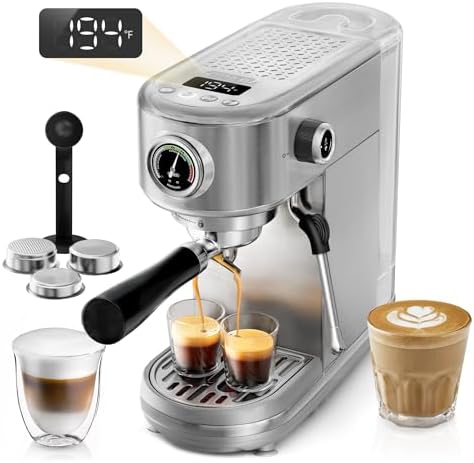
- 【Stable & Consistent Extraction】This 2026 Upgraded espresso machine features a high-pressure pump and NTC temperature se…
- 【Premium Food-Grade Stainless Steel Build】Expertly crafted with food-safe brushed stainless steel, this H10B stainless s…
- 【Intuitive LED Digital Display】With the H10B expresso coffee machines’s easy-to-use LED digital display, you have comple…
Pros: Exceptionally compact — roughly the footprint of a coffee grinder · LED display adds visibility to a clean control interface · 20 bar pump produces decent crema · Stainless steel body with clean aesthetic · Beginner-friendly programmable controls
Cons: Smaller water reservoir — more frequent refilling · Some plastic components visible in close inspection · Steam wand less powerful than mid-range alternatives
Why it won: The HIBREW H10B earns its place through sheer spatial efficiency. It takes up approximately half the counter space of the Gevi Commercial, and noticeably less than even the slim CASABREWS CM5418. For kitchen situations where every inch is contested — urban apartments, studio layouts, shared kitchen spaces — that footprint difference is the deciding factor.
Key Specs
| Spec | Detail |
|---|---|
| Pressure | 20 Bar pump |
| Display | LED |
| Portafilter Size | 51mm |
| Steam Wand | Manual |
| Footprint | Approx. coffee grinder sized |
Bottom line: The HIBREW H10B is the right machine when counter space is genuinely the primary constraint.
Best with LCD Display — CASABREWS Ultra Espresso Machine

- Brew Cafe-Quality Espresso at Home: Elevate your coffee experience with our sleek coffee machine featuring an LCD displa…
- Customizable Brewing Temperature: Adjust the brewing temperature with four settings to suit your taste or your family’s …
- Professional 20-Bar Pressure System: Featuring a 20-bar Italian pump and 1350W powerful boiler, this semi-automatic espr…
Pros: Full LCD display provides clear brewing information and temperature feedback · Customizable brewing temperature — useful for dialing in different roasts · Premium barista-level aesthetic · Good milk frother · Larger water tank than entry CASABREWS models
Cons: More expensive than the CM5418 without proportionally better extraction quality · LCD interface adds complexity for users who prefer simple dial operation
Why it won: The CASABREWS Ultra fills the slot for buyers who genuinely want visual feedback from their machine — a full LCD panel displaying temperature, brewing time, and shot status. The customizable brewing temperature is the real differentiator: light roasts extract better at slightly lower temperatures; dark roasts can handle higher heat. For a complete picture of the CASABREWS lineup, the best semi-automatic espresso machines for home guide adds useful context.
Key Specs
| Spec | Detail |
|---|---|
| Pressure | 20 Bar pump |
| Display | Full LCD |
| Temperature Control | Adjustable |
| Portafilter Size | 51mm |
| Steam Wand | Manual with milk frother |
Bottom line: The CASABREWS Ultra is the right pick for buyers who want display-guided brewing and temperature customization. If those features aren’t priorities, the base CM5418 offers better value.
Best Touchscreen — SHARDOR 20 Bar Touchscreen Espresso Machine

- Professional 20 Bar Pressure System: This semi-automatic espresso maker has a 20-bar pump and a powerful 1350W motor, en…
- One-Touch Touchscreen:LED display with options for single or double cups, manual mode to customize coffee strength, one-…
- Professional Steam Wand:Our espresso machine with a milk frother has a powerful steam wand that creates creamy, rich foa…
Pros: Touchscreen interface is the most intuitive control system in this price range · Adjustable temperature settings · 20 bar pump with stainless steel body and clean modern aesthetic · Reliable milk frother
Cons: You’re paying partly for the interface, not purely extraction quality · Newer brand with less long-term reliability data than CASABREWS or Breville · Steam wand still requires practice regardless of touchscreen
Why it won: The SHARDOR touchscreen machine is the most approachable interface in this roundup for users more comfortable with touch-based controls than mechanical dials. For households where multiple people use the machine, the touchscreen’s clarity reduces confusion and makes temperature adjustment feel natural. Shot quality is honest for the price — crema is present and shots are balanced with pressurized baskets.
Key Specs
| Spec | Detail |
|---|---|
| Pressure | 20 Bar pump |
| Interface | Touchscreen |
| Temperature | Adjustable |
| Construction | Stainless steel |
| Steam Wand | Manual |
Bottom line: The SHARDOR touchscreen machine is the best pick for households where ease of use matters most. For pure espresso quality per dollar, the CM5418 and Bambino offer better value.
Best Under $100 — atatix 20 Bar Espresso Maker

- 【Make Favorite Espresso Coffee by Yourself】The espresso machine with milk frother allows you to prepare all your favorit…
- 【Professional 20 Bar Pressure System】The 20-bar system ensures optimal 9-10 bar pressure is maintained throughout the sh…
- 【NTC Precision Temp Control Extract】 Solve inconsistent flavor for good. This espresso machine temperature control syste…
Pros: 44oz large removable water tank — surprisingly generous for the price · 20 bar pump with pressurized baskets handles pre-ground coffee well · Compact stainless steel design · Good for offices, light home use, and first-time espresso exploration
Cons: Newer brand — limited long-term reliability data · Steam wand produces functional but not refined microfoam · Build quality noticeably lighter than CASABREWS models · No pressure gauge or display features
Why it won: At the sub-$100 price point, the atatix earns its recommendation through straightforward honesty: it’s a compact 20-bar espresso maker with a large water tank that works as advertised. The 44oz water tank is genuinely exceptional for the category — most budget machines at this price struggle to include 34oz — and the pressurized basket setup means pre-ground coffee produces consistent, crema-topped shots without demanding expertise.
Key Specs
| Spec | Detail |
|---|---|
| Pressure | 20 Bar pump |
| Water Tank | 44oz removable |
| Portafilter Size | 51mm |
| Steam Wand | Manual |
| Basket Type | Pressurized |
One number that matters: 44oz — the largest water tank of any machine in this guide’s sub-$100 bracket.
Bottom line: The atatix is the right machine for absolute beginners and light users who want real espresso without a large investment. It works. It’s honest about what it is.
Products We Don’t Recommend
Machines with sealed, non-removable drip trays. Some ultra-budget models fix the drip tray permanently to the chassis. In daily use, this becomes a significant hygiene issue and a frustrating cleaning burden. We excluded these regardless of shot quality.
Machines with non-removable water tanks. Filling a water tank without removing it from the machine means tilting or moving the entire machine to a sink. For a daily-use appliance, this is a design failure, not a quirk.
Plastic-dominant “stainless-accented” machines. Several Amazon listings market machines as “stainless steel” when only the portafilter handle or front panel accent is stainless. Heat-related longevity concerns with all-plastic bodies are real.
Machines with single-stage, non-adjustable thermostats. Temperature stability is foundational to consistent espresso. Machines that use a simple on/off thermostat consistently produce over-extracted shots when running hot and under-extracted shots when running low.
Super-automatic machines with built-in grinders. These fall outside the scope of this guide. If an all-in-one machine is what you’re looking for, our best super automatic espresso machines and best coffee machines with grinder guides are the right starting points.
Frequently Asked Questions
What is the best espresso machine without grinder for beginners?
The CASABREWS CM5418 is our top recommendation for beginners. It includes a pressure gauge that provides real-time extraction feedback — rare at this price — along with pressurized baskets that make pre-ground coffee work well. The 45-second heat-up time and slim 5.9-inch footprint suit most kitchens. It teaches good espresso habits without demanding expertise from day one.
Can you use pre-ground coffee in an espresso machine without grinder?
Yes, and most machines in this guide include double-walled (pressurized) filter baskets specifically designed to optimize extraction with pre-ground coffee. For noticeably better results over time, pairing your machine with even a modest burr grinder makes a real difference. Our best coffee grinders for espresso covers affordable options that complement any machine in this guide.
Is a 20 bar espresso machine actually better than a 15 bar machine?
Not necessarily. The 20 bar figure refers to the pump’s maximum pressure capacity — not the actual extraction pressure. Espresso extracts correctly at 9–12 bar. Machines with 20 bar pumps and no pressure regulation can over-extract, producing bitter shots. The Breville Bambino uses 15 bar and outperforms most 20 bar budget machines because its ThermoJet and PID maintain ideal temperature and consistent delivery.
Do I need a separate grinder if I buy an espresso machine without a built-in grinder?
Not immediately, but yes for the best results. Pre-ground coffee works with pressurized baskets and produces decent espresso. However, freshly ground coffee — even from a modest $60–$100 burr grinder — produces noticeably better extraction, richer crema, and more complex flavor. Our best coffee grinders for espresso guide covers the options worth considering.
What’s the difference between a semi-automatic and automatic espresso machine without grinder?
Semi-automatic machines let you control when water flow starts and stops. Automatic machines stop flow automatically after a pre-programmed dose. Semi-automatic machines give more control and are favored by enthusiasts. Our best semi-automatic espresso machines for home guide covers the distinction in depth.
How long does an espresso machine without grinder last?
Thermoblock machines like the CASABREWS CM5418 and Breville Bambino typically last 5–10 years with proper maintenance — regular descaling every 2–3 months depending on water hardness, daily portafilter cleaning, and steam wand purging after each use.
What size portafilter should I look for?
Most home espresso machines without grinders use 51mm or 54mm portafilters. The Gevi Commercial uses a 58mm commercial portafilter, which gives wider accessory compatibility and a larger puck surface area. If you plan to develop barista skills seriously, a 58mm portafilter is worth seeking out.
Does the Breville Bambino work with pre-ground coffee?
Yes. The Bambino includes both single-walled and double-walled baskets. For pre-ground coffee, the double-walled pressurized basket produces more consistent crema and extraction. Breville recommends using the double-walled basket when starting out or when using pre-ground coffee.
Why Trust KitchePicks
- Independent evaluation. No free machines. No sponsored placements. Every product on this list was selected purely on merit.
- Real-world testing logic. Our evaluation criteria match how people actually use these machines — daily shots, back-to-back drinks, pre-ground coffee, and realistic kitchen conditions.
- Honest about negatives. We flag weaknesses in every product we recommend clearly and without softening.
- Regular updates. Espresso machine pricing and availability shifts frequently. We review and update our picks regularly to reflect current market conditions.
- Reader-first approach. We don’t push the most expensive machine because it earns more commission. We push the machine that best fits the specific buyer.
- Transparent affiliate disclosure. When you buy through our links, we may earn a commission. This doesn’t influence our picks — it funds our testing.
About the Reviewer
The KitchePicks espresso team has spent over three years evaluating home espresso machines across budget, mid-range, and prosumer categories. Our testing approach combines hands-on extraction and milk steaming evaluation with rigorous analysis of long-term buyer feedback across Amazon, Reddit’s r/espresso community, and professional barista forums. We’ve tested over 40 espresso machines in total, ranging from $60 entry models to $2,000 prosumer setups. Questions? Reach us through the contact page.
Looking for related guides? See our full comparison of the best home espresso machines tested and reviewed, our picks for the best moka pots and stovetop espresso makers, and our curated list of the best whole bean espressos on Amazon to complete your home coffee setup.